7 Tagine Varieties to Try in Morocco
Order a tagine in Morocco and you are not ordering one dish — you are ordering a whole family of dishes. The word tagine names the clay pot first: a shallow earthenware base with a tall conical lid that traps steam, lets it condense, and rains it back down onto the food. Meat, vegetables, and spices braise for an hour or two in their own juices, and the result arrives at your table still bubbling, the lid lifted like a small ceremony.
That slow steam-bath is why tagine tastes like nothing you make at home in a hurry — and why the first rule of ordering one matters more than any menu choice: a real tagine cannot be rushed. Order it the moment you sit down, or eat it at lunchtime when the pots have been simmering since morning. 📸
What makes a tagine a tagine
Under the lid, a few constants show up in almost every version: good olive oil, onions melted down to a jam, and a spice logic built on cumin, paprika, turmeric, ginger, and cinnamon — sometimes blended into ras el hanout, the spice merchant’s signature mix. Preserved lemons (lemons packed in salt for weeks until the rind turns silky and intensely perfumed) and smen, a pungent aged butter, are the two ingredients that separate a Moroccan tagine from any other slow-cooked stew. Bread is the utensil: you tear a piece of khobz, pinch the food with it, and scoop. Knives and forks are for tourists.
With that understood, here are the seven varieties worth seeking out — each with its own personality, its own region, and its own moment.
1. Tagine Kefta — the meatball tagine
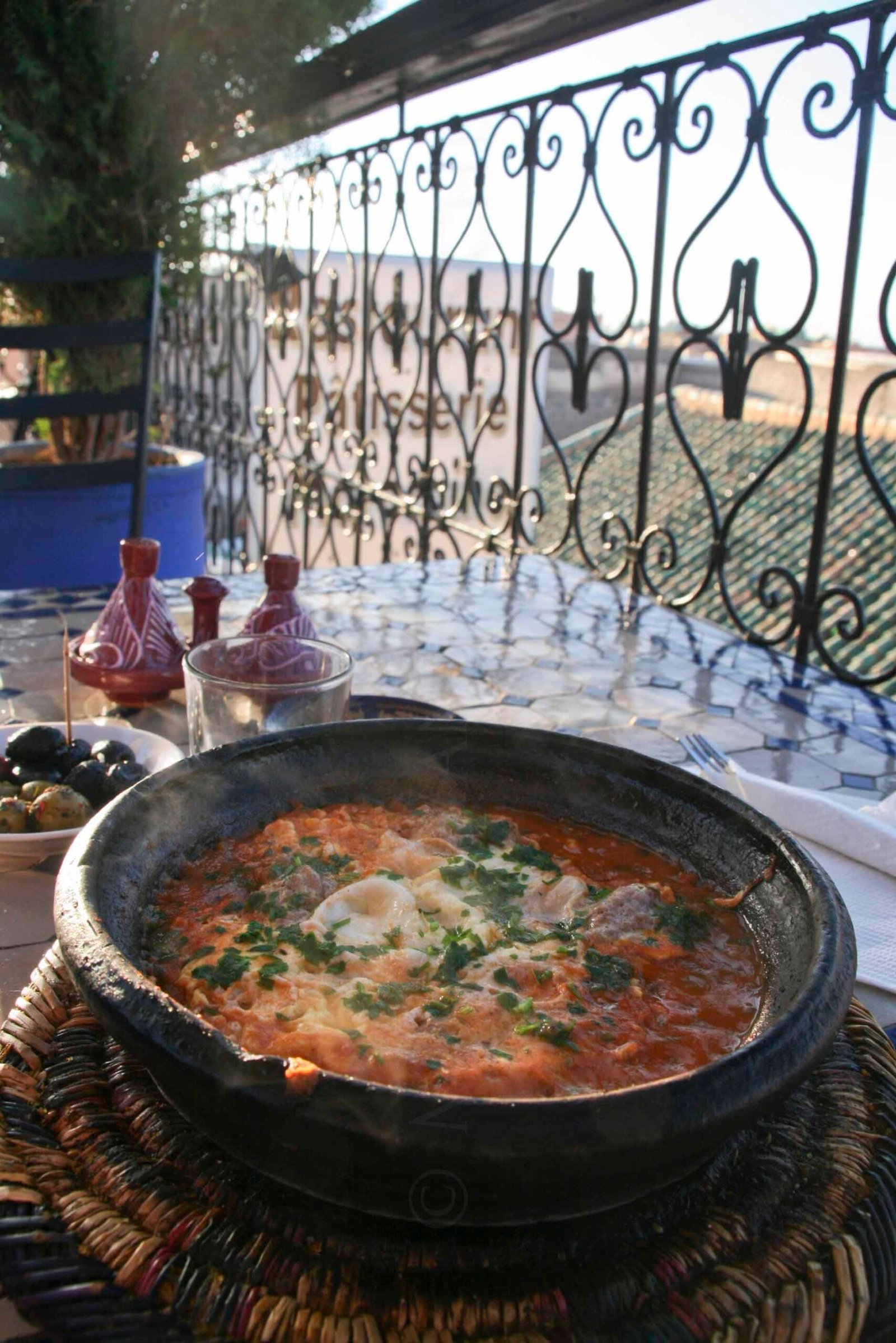
Ground beef or lamb is seasoned with cumin, paprika, parsley, and onion, rolled into small meatballs, and poached directly in a tomato sauce inside the tagine. It is the fastest of the great tagines — meatballs cook through in under an hour — which is why it shows up on lunch menus everywhere from Casablanca snack-bars to family kitchens.
The upgrade to look for is kefta bil beid: eggs cracked over the meatballs in the last minutes of cooking, the whites just set, the yolks still runny. Scoop yolk, sauce, and meatball in one piece of bread and you will understand why Moroccans order this one without thinking twice.
2. Chicken Tagine with Preserved Lemon and Olives — the classic
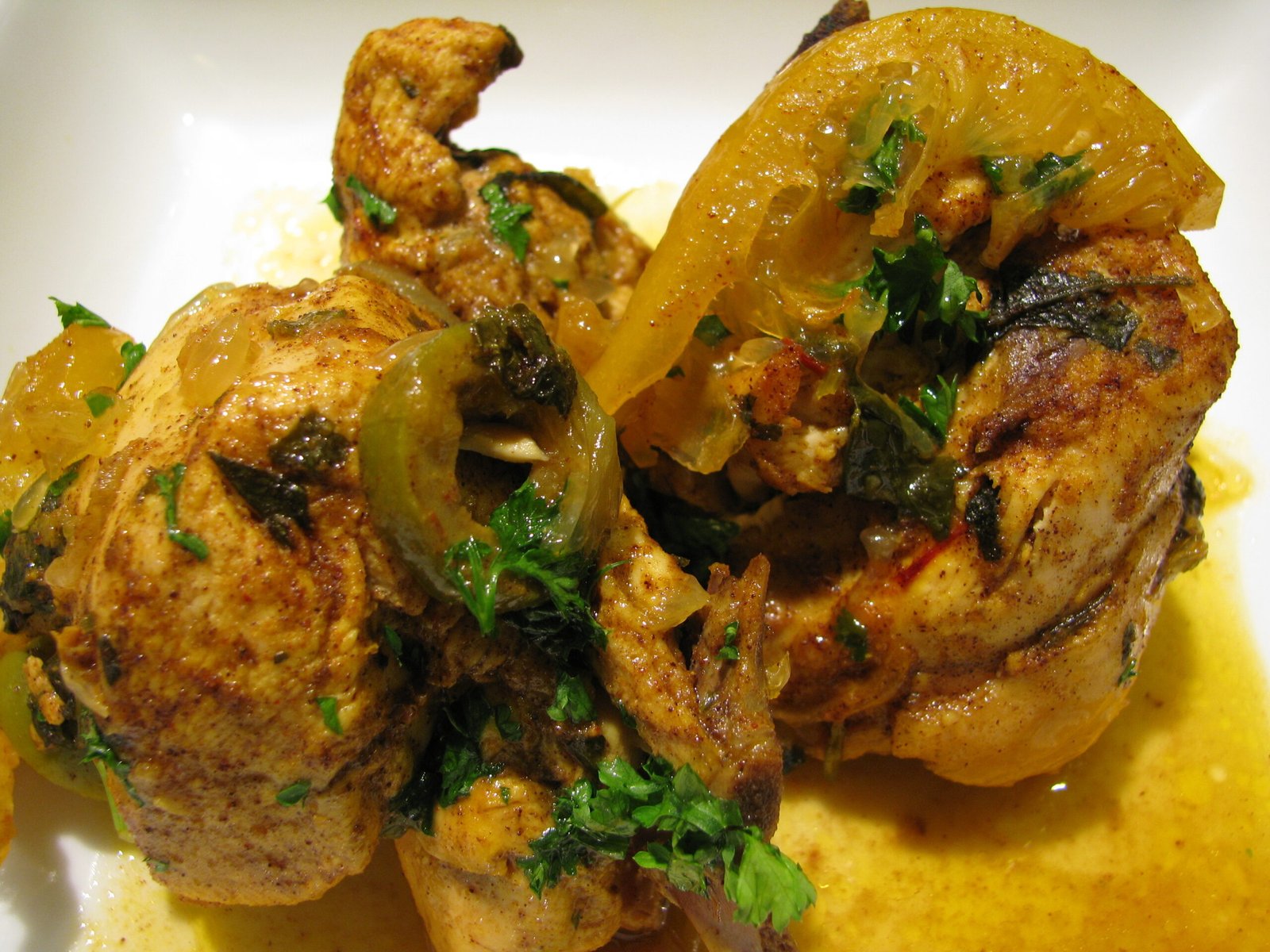
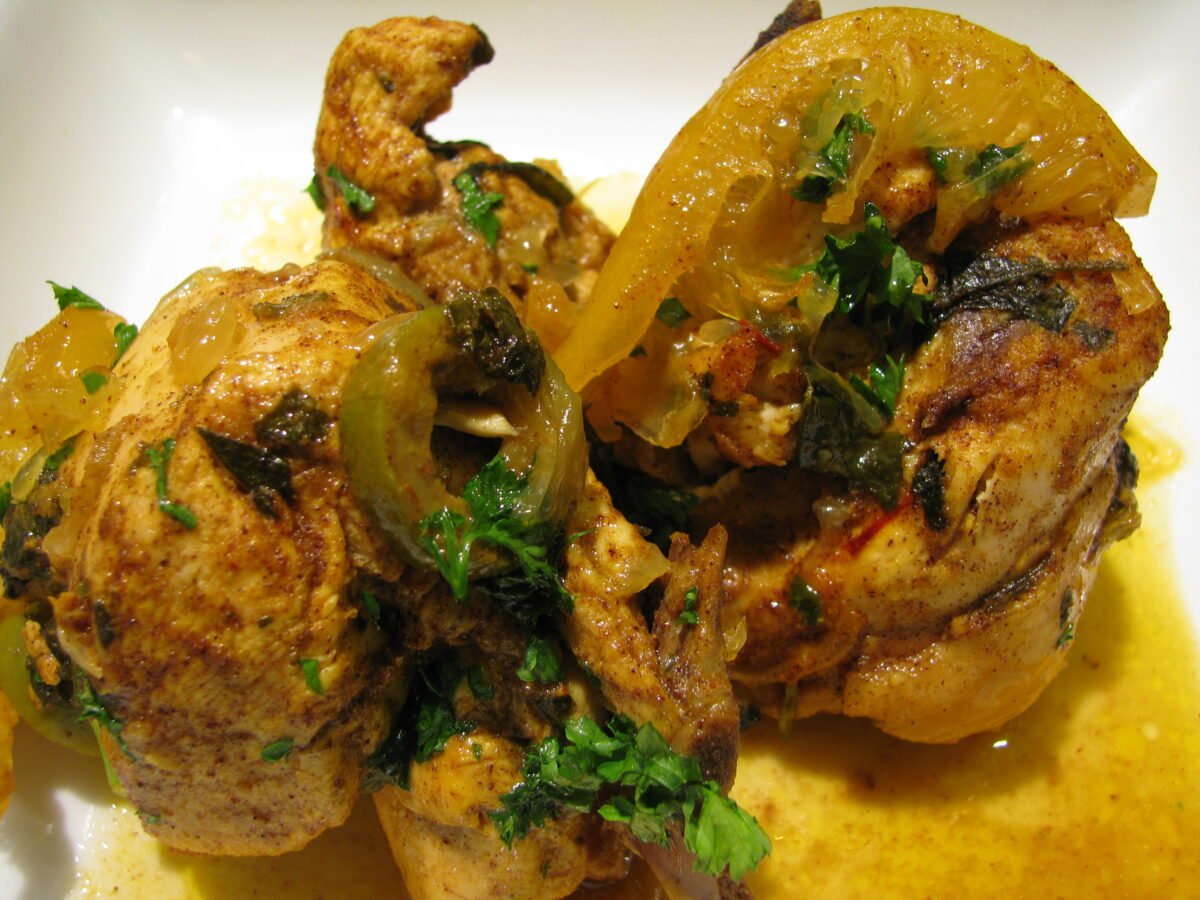
If you eat only one tagine in Morocco, make it this one. Chicken on the bone simmers with onions, turmeric or saffron, ginger, and a handful of green olives, and the whole dish is lifted by preserved lemon — sour, salty, floral, nothing like a fresh lemon. The meat falls off the bone; the sauce, reduced and glossy, is the part you will be mopping up long after the chicken is gone.
In Fès, the old imperial capital, cooks lean heavier on saffron and serve this tagine at family gatherings; in the countryside it is the Friday dish as often as couscous is. When a menu lists simply “tagine djaj,” this is almost always the version you will get.
3. Lamb Tagine with Prunes and Almonds — the sweet-savory one
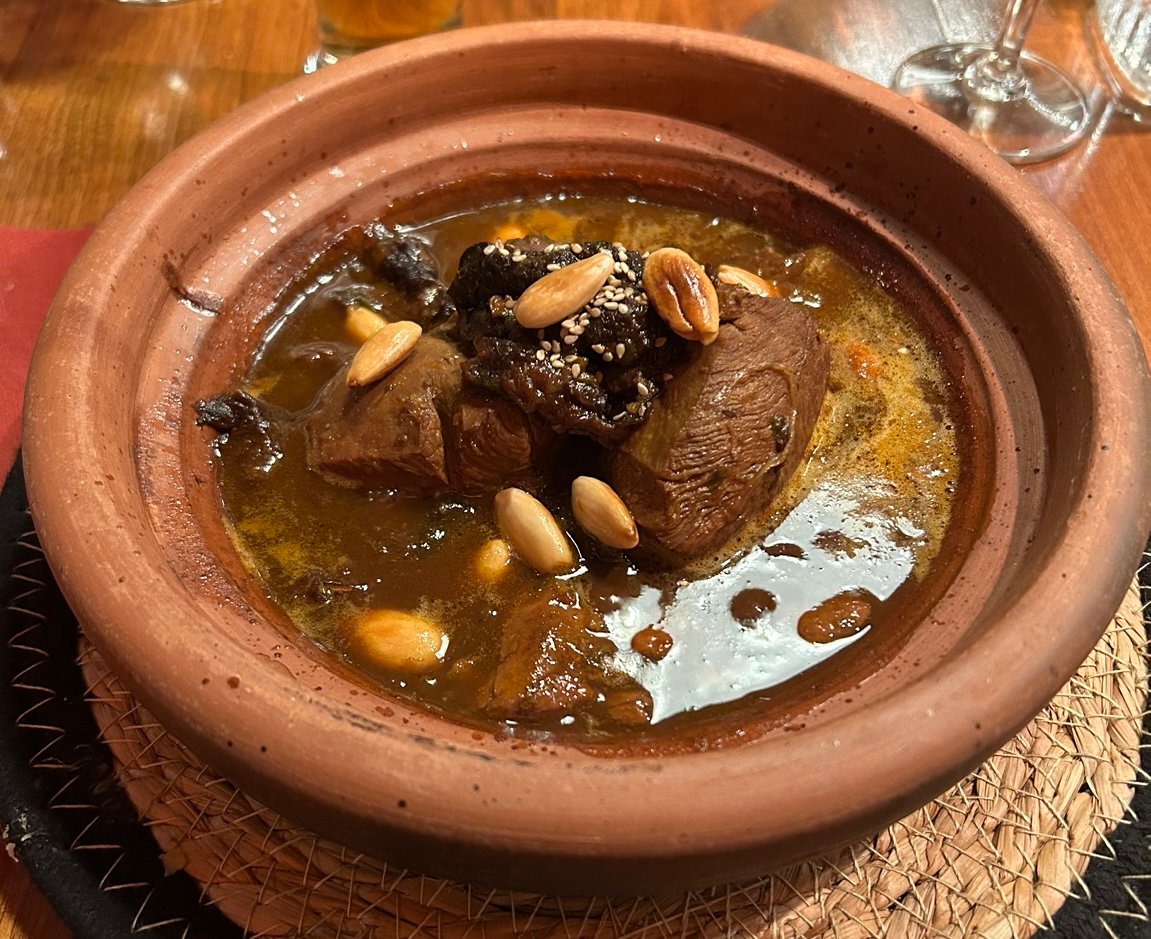
Moroccan cooking has never been afraid of sweetness in savory food, and this tagine is the proof. Lamb shoulder braises until tender, then prunes softened in cinnamon (sometimes a spoon of honey) join the pot, and toasted almonds go over the top for crunch. The result is deep, dark, and festive — this is wedding and Eid food as much as restaurant food.
Expect the balance to shift by region: in the south the honey is more generous; around Marrakech the cinnamon is bolder. If a menu offers lamb with apricots instead of prunes, take it — same logic, slightly brighter fruit.
4. Fish Tagine with Chermoula — the coastal one
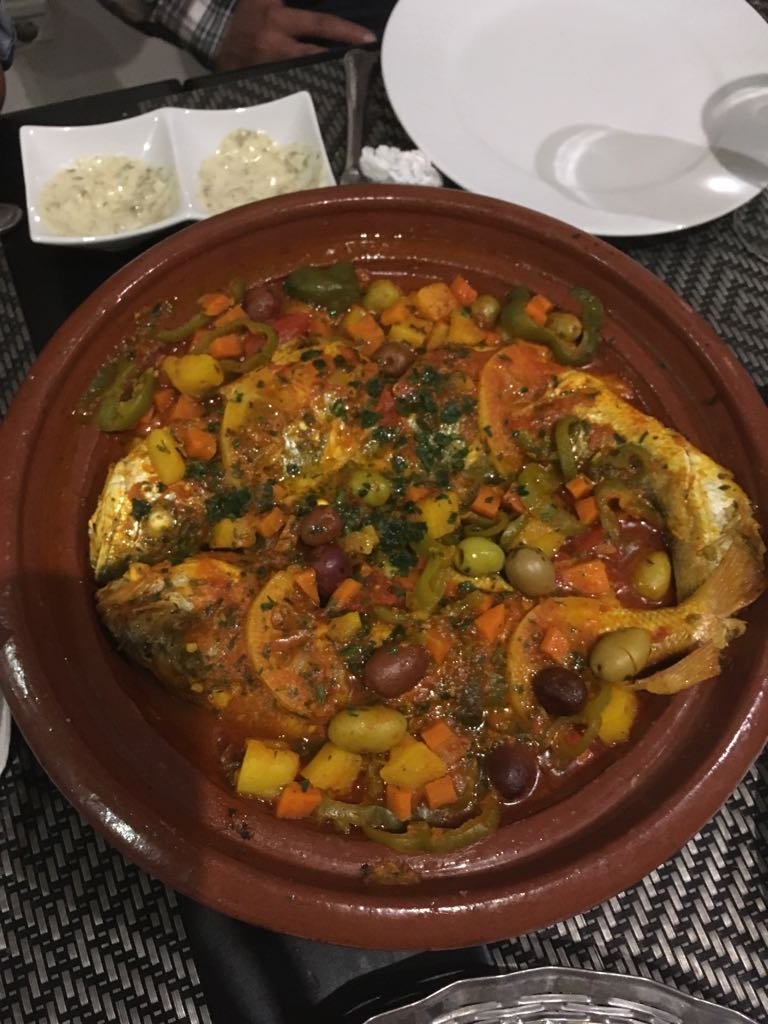
Head to Essaouira or Agadir and the tagine changes character completely. Firm white fish — sea bream (dorade), sea bass, or whatever came off the boats that morning — is marinated in chermoula: cilantro, parsley, garlic, cumin, paprika, and lemon, pounded into a vivid green-red paste. It cooks fast, layered over tomatoes, peppers, and potatoes.
This is the lightest tagine on the list and the one most visitors skip, which is a mistake. Order it where you can see the fishing boats, at lunch, and it will recalibrate everything you thought a tagine had to be.
5. Seven-Vegetable Tagine — the vegetarian one
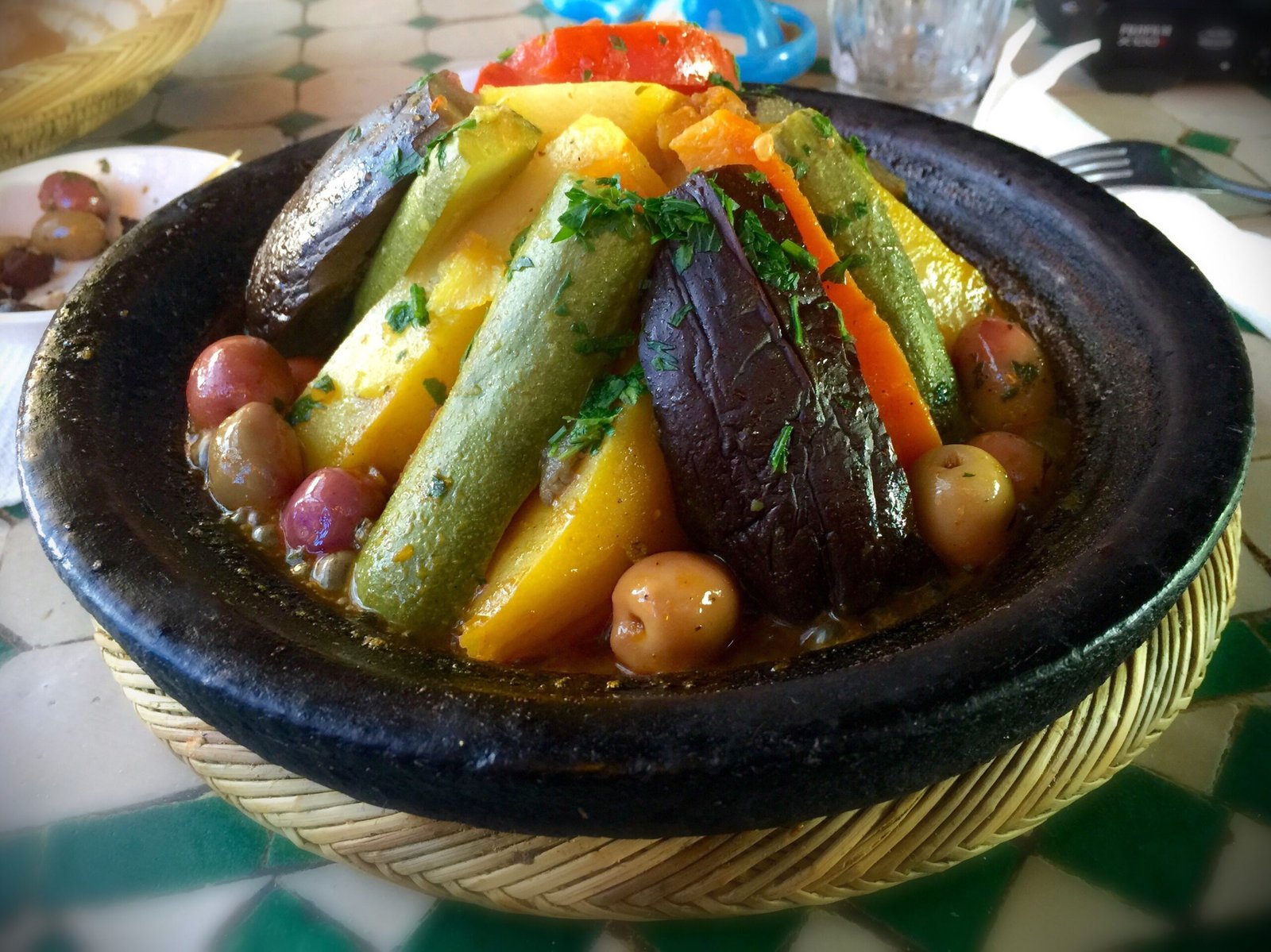
Tagine l’khoudra, sometimes called the “seven vegetables” tagine (sebaa khodra), is Morocco’s built-in vegetarian answer: carrots, zucchini, potatoes, tomatoes, pumpkin, and whatever the market offered that morning, arranged in rings over caramelized onions and steamed under the conical lid. No meat, no compromise — the vegetables cook in olive oil and their own sweetness.
Mountain versions in the Atlas add turnips and cabbage for a heartier winter pot. If you eat vegetarian in Morocco, learn this name; it is on nearly every menu and it is genuinely good, not an afterthought.
6. Tanjia Marrakchia — the one that is not a tagine
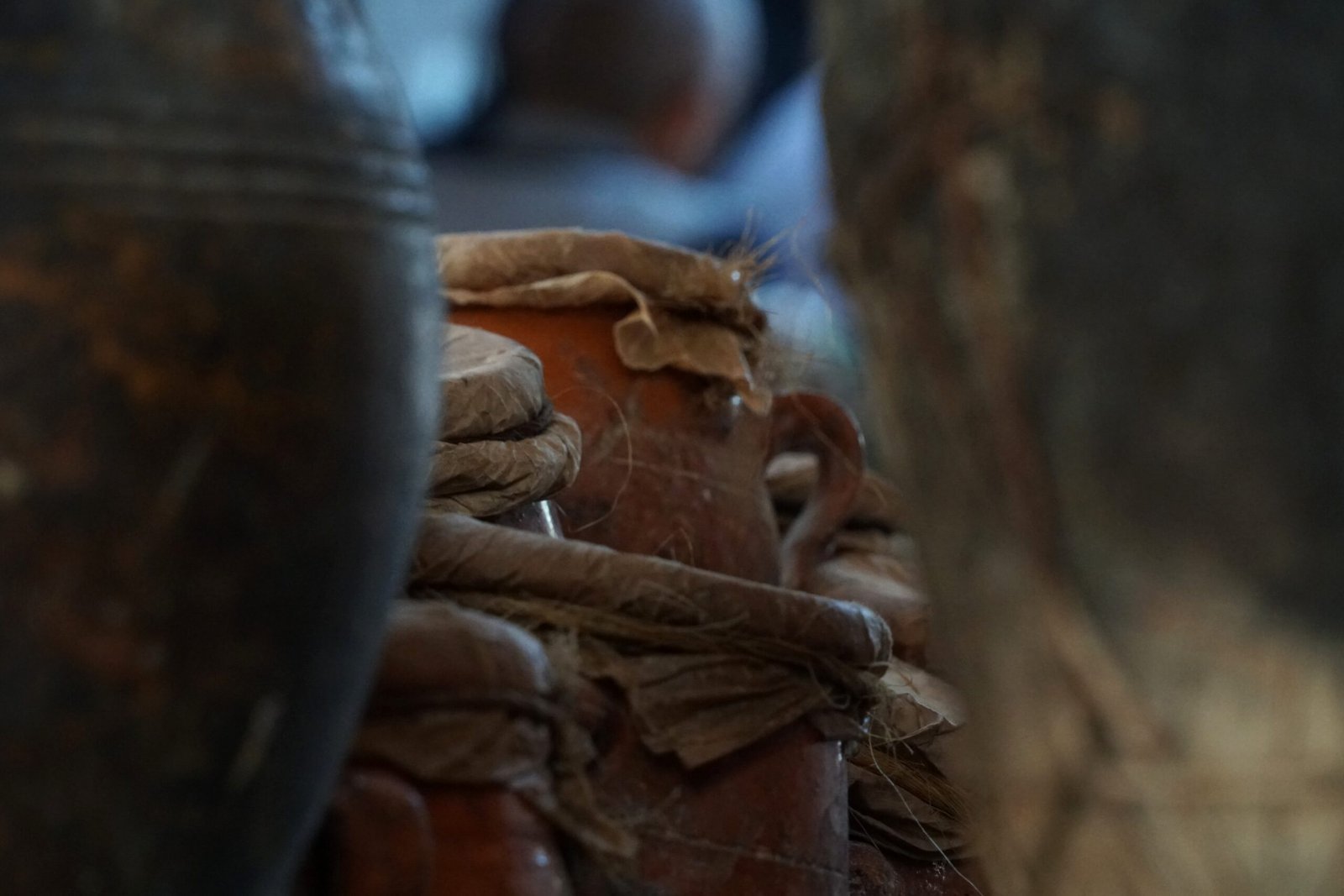
Despite the similar name, tanjia is a different dish with a different pot and a different ritual. Beef (traditionally shank) goes into a tall clay urn with garlic, cumin, preserved lemon, and olive oil — no water. The urn is sealed with paper and string and buried in the hot ashes of a hammam (public bathhouse furnace), where it slow-cooks for six to eight hours until the meat surrenders into shreds.
You will only find the real thing in Marrakech, and you cannot order it on a whim at 8 p.m. — it is a dish that started cooking before dawn. Look for restaurants that specialize in it, or join a food tour that includes a tanjia stop; that is the reliable way to taste it. 📸
7. Berber Tagine — the mountain one
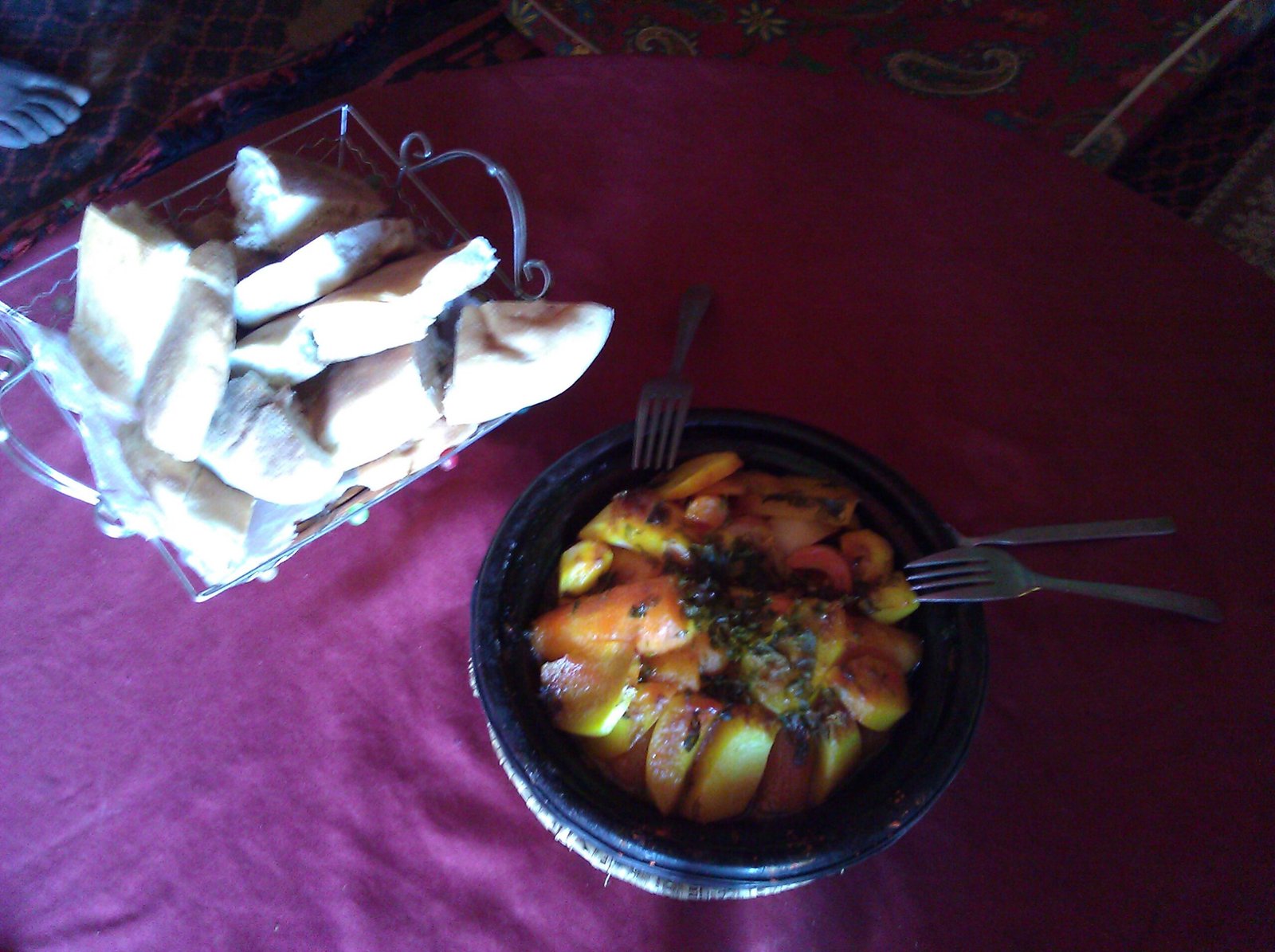
Climb into the Atlas or push south toward the desert, and tagine cooking gets heartier and simpler. The Berber tagine is lamb or goat with root vegetables, cooked a little longer and seasoned a little more boldly — mountain food for cold nights. In some villages you will find it enriched with khlii (salt-cured dried beef) and finished with eggs, a combination that sounds unlikely and eats beautifully after a day of walking.
This is the tagine you meet in mountain gîtes and desert camps, eaten communally around one pot. It tastes of woodsmoke and altitude, and it is the version most travelers remember longest.
How to order tagine like a local
- Eat it at lunch. Tagines are daytime food in Morocco. The pots go on in the morning; by midday they are ready, and the best small restaurants sell out of the good ones by early afternoon.
- Ask what is cooking today. Many places make two or three tagines a day, not the whole menu. “What do you have today?” gets you the fresh pot, not the reheated one.
- Expect bread, not cutlery. A basket of khobz arrives with the tagine. Tear, pinch, scoop. Eat with your right hand — the left is considered impolite at the table.
- Budget a few dozen dirhams. In a neighborhood restaurant a tagine is one of the cheapest hot meals you can buy; in tourist districts and hotel restaurants the same dish costs noticeably more. For a realistic sense of what meals cost across the country, see our Morocco food prices guide.
- Finish with mint tea. Tagine then tea is the Moroccan sequence. Ordering tea with the meal is fine, but the classic rhythm is food first, tea after.
If you are still learning the ropes of Moroccan restaurant etiquette — how to get a table, what to expect, how tipping works — our guide to ordering like a local in a Moroccan restaurant covers it step by step. And if tanjia has you curious about Marrakech specifically, start with where to eat in Marrakech and our broader complete tagine guide.
Tourist mistakes to avoid
- Ordering a tagine at 9 p.m. and expecting it in ten minutes. A proper tagine takes one to two hours from order to table unless the pot was already simmering. At dinner, choose restaurants where you can see tagines already cooking, or order something grilled and save the tagine for lunch.
- Asking for couscous on the side. Couscous is a standalone dish in Morocco — Friday’s dish, steamed and served on its own platter. Nobody eats it next to a tagine.
- Expecting “spicy.” Moroccan tagine is aromatic, not hot. The warmth comes from ginger, cinnamon, cumin, and pepper — not chili. If you want heat, ask for harissa on the side.
- Skipping the sauce. The sauce is the dish. When the meat is gone, keep going with bread until the clay base is clean — that is what the bread is for.
Frequently asked questions
Is Moroccan tagine spicy?
No — it is fragrant rather than hot. The flavor comes from cumin, paprika, turmeric, ginger, cinnamon, and preserved lemon. Chili heat is rare; ask for harissa separately if you want it.
How long does a tagine take to cook?
One to two hours for meat tagines, a bit less for kefta or fish. That is why lunch is the ideal tagine meal: the pots have been simmering since morning. Tanjia is the extreme case — six to eight hours in hot ashes.
Can vegetarians eat tagine in Morocco?
Easily. The seven-vegetable tagine is a standard menu item everywhere, and most restaurants will make a vegetable version of almost anything. Just confirm no meat stock is used if that matters to you.
What is the difference between tagine and tanjia?
A tagine is a stew slow-cooked in a shallow clay dish with a conical lid. Tanjia is beef sealed inside a tall clay urn and slow-cooked for hours in the ashes of a hammam furnace — a Marrakech specialty with a deeper, almost confit texture.
Photo credits: Chicken tagine — Foodista (CC BY 2.0); Lamb tagine with prunes — LilKil (CC BY-SA 4.0); Kefta tagine — magnusmaximus (CC BY-SA 2.0); Fish tagine — Jobsdev (CC BY-SA 4.0); Vegetable tagine — Turajski (CC BY-SA 4.0); Tanjia — Adam Harangozó (CC BY-SA 4.0); Berber tagine, Zagora — yotut (CC BY 2.0). All via Wikimedia Commons.
7 Tagine Varieties to Try in Morocco
Order a tagine in Morocco and you are not ordering one dish — you are ordering a whole family of dishes. The word tagine names the clay pot first: a shallow earthenware base with a tall conical lid that traps steam, lets it condense, and rains it back down onto the food. Meat, vegetables, and spices braise for an hour or two in their own juices, and the result arrives at your table still bubbling, the lid lifted like a small ceremony.
Order a tagine in Morocco and you are not ordering one dish — you are ordering a whole family of dishes. The word tagine names the clay pot first: a shallow earthenware base with a tall conical lid that traps steam, lets it condense, and rains it back down onto the food. Meat, vegetables, and spices braise for an hour or two in their own juices, and the result arrives at your table still bubbling, the lid lifted like a small ceremony.
That slow steam-bath is why tagine tastes like nothing you make at home in a hurry — and why the first rule of ordering one matters more than any menu choice: a real tagine cannot be rushed. Order it the moment you sit down, or eat it at lunchtime when the pots have been simmering since morning. 📸
That slow steam-bath is why tagine tastes like nothing you make at home in a hurry — and why the first rule of ordering one matters more than any menu choice: a real tagine cannot be rushed. Order it the moment you sit down, or eat it at lunchtime when the pots have been simmering since morning. 📸
What makes a tagine a tagine
Under the lid, a few constants show up in almost every version: good olive oil, onions melted down to a jam, and a spice logic built on cumin, paprika, turmeric, ginger, and cinnamon — sometimes blended into ras el hanout, the spice merchant’s signature mix. Preserved lemons (lemons packed in salt for weeks until the rind turns silky and intensely perfumed) and smen, a pungent aged butter, are the two ingredients that separate a Moroccan tagine from any other slow-cooked stew. Bread is the utensil: you tear a piece of khobz, pinch the food with it, and scoop. Knives and forks are for tourists.
Under the lid, a few constants show up in almost every version: good olive oil, onions melted down to a jam, and a spice logic built on cumin, paprika, turmeric, ginger, and cinnamon — sometimes blended into ras el hanout, the spice merchant’s signature mix. Preserved lemons (lemons packed in salt for weeks until the rind turns silky and intensely perfumed) and smen, a pungent aged butter, are the two ingredients that separate a Moroccan tagine from any other slow-cooked stew. Bread is the utensil: you tear a piece of khobz, pinch the food with it, and scoop. Knives and forks are for tourists.
With that understood, here are the seven varieties worth seeking out — each with its own personality, its own region, and its own moment.
With that understood, here are the seven varieties worth seeking out — each with its own personality, its own region, and its own moment.
1. Tagine Kefta — the meatball tagine
Ground beef or lamb is seasoned with cumin, paprika, parsley, and onion, rolled into small meatballs, and poached directly in a tomato sauce inside the tagine. It is the fastest of the great tagines — meatballs cook through in under an hour — which is why it shows up on lunch menus everywhere from Casablanca snack-bars to family kitchens.
Ground beef or lamb is seasoned with cumin, paprika, parsley, and onion, rolled into small meatballs, and poached directly in a tomato sauce inside the tagine. It is the fastest of the great tagines — meatballs cook through in under an hour — which is why it shows up on lunch menus everywhere from Casablanca snack-bars to family kitchens.
The upgrade to look for is kefta bil beid: eggs cracked over the meatballs in the last minutes of cooking, the whites just set, the yolks still runny. Scoop yolk, sauce, and meatball in one piece of bread and you will understand why Moroccans order this one without thinking twice.
The upgrade to look for is kefta bil beid: eggs cracked over the meatballs in the last minutes of cooking, the whites just set, the yolks still runny. Scoop yolk, sauce, and meatball in one piece of bread and you will understand why Moroccans order this one without thinking twice.
2. Chicken Tagine with Preserved Lemon and Olives — the classic
If you eat only one tagine in Morocco, make it this one. Chicken on the bone simmers with onions, turmeric or saffron, ginger, and a handful of green olives, and the whole dish is lifted by preserved lemon — sour, salty, floral, nothing like a fresh lemon. The meat falls off the bone; the sauce, reduced and glossy, is the part you will be mopping up long after the chicken is gone.
If you eat only one tagine in Morocco, make it this one. Chicken on the bone simmers with onions, turmeric or saffron, ginger, and a handful of green olives, and the whole dish is lifted by preserved lemon — sour, salty, floral, nothing like a fresh lemon. The meat falls off the bone; the sauce, reduced and glossy, is the part you will be mopping up long after the chicken is gone.
In Fès, the old imperial capital, cooks lean heavier on saffron and serve this tagine at family gatherings; in the countryside it is the Friday dish as often as couscous is. When a menu lists simply “tagine djaj,” this is almost always the version you will get.
In Fès, the old imperial capital, cooks lean heavier on saffron and serve this tagine at family gatherings; in the countryside it is the Friday dish as often as couscous is. When a menu lists simply “tagine djaj,” this is almost always the version you will get.
3. Lamb Tagine with Prunes and Almonds — the sweet-savory one
Moroccan cooking has never been afraid of sweetness in savory food, and this tagine is the proof. Lamb shoulder braises until tender, then prunes softened in cinnamon (sometimes a spoon of honey) join the pot, and toasted almonds go over the top for crunch. The result is deep, dark, and festive — this is wedding and Eid food as much as restaurant food.
Moroccan cooking has never been afraid of sweetness in savory food, and this tagine is the proof. Lamb shoulder braises until tender, then prunes softened in cinnamon (sometimes a spoon of honey) join the pot, and toasted almonds go over the top for crunch. The result is deep, dark, and festive — this is wedding and Eid food as much as restaurant food.
Expect the balance to shift by region: in the south the honey is more generous; around Marrakech the cinnamon is bolder. If a menu offers lamb with apricots instead of prunes, take it — same logic, slightly brighter fruit.
Expect the balance to shift by region: in the south the honey is more generous; around Marrakech the cinnamon is bolder. If a menu offers lamb with apricots instead of prunes, take it — same logic, slightly brighter fruit.
4. Fish Tagine with Chermoula — the coastal one
Head to Essaouira or Agadir and the tagine changes character completely. Firm white fish — sea bream (dorade), sea bass, or whatever came off the boats that morning — is marinated in chermoula: cilantro, parsley, garlic, cumin, paprika, and lemon, pounded into a vivid green-red paste. It cooks fast, layered over tomatoes, peppers, and potatoes.
Head to Essaouira or Agadir and the tagine changes character completely. Firm white fish — sea bream (dorade), sea bass, or whatever came off the boats that morning — is marinated in chermoula: cilantro, parsley, garlic, cumin, paprika, and lemon, pounded into a vivid green-red paste. It cooks fast, layered over tomatoes, peppers, and potatoes.
This is the lightest tagine on the list and the one most visitors skip, which is a mistake. Order it where you can see the fishing boats, at lunch, and it will recalibrate everything you thought a tagine had to be.
This is the lightest tagine on the list and the one most visitors skip, which is a mistake. Order it where you can see the fishing boats, at lunch, and it will recalibrate everything you thought a tagine had to be.
5. Seven-Vegetable Tagine — the vegetarian one
Tagine l’khoudra, sometimes called the “seven vegetables” tagine (sebaa khodra), is Morocco’s built-in vegetarian answer: carrots, zucchini, potatoes, tomatoes, pumpkin, and whatever the market offered that morning, arranged in rings over caramelized onions and steamed under the conical lid. No meat, no compromise — the vegetables cook in olive oil and their own sweetness.
Tagine l’khoudra, sometimes called the “seven vegetables” tagine (sebaa khodra), is Morocco’s built-in vegetarian answer: carrots, zucchini, potatoes, tomatoes, pumpkin, and whatever the market offered that morning, arranged in rings over caramelized onions and steamed under the conical lid. No meat, no compromise — the vegetables cook in olive oil and their own sweetness.
Mountain versions in the Atlas add turnips and cabbage for a heartier winter pot. If you eat vegetarian in Morocco, learn this name; it is on nearly every menu and it is genuinely good, not an afterthought.
Mountain versions in the Atlas add turnips and cabbage for a heartier winter pot. If you eat vegetarian in Morocco, learn this name; it is on nearly every menu and it is genuinely good, not an afterthought.
6. Tanjia Marrakchia — the one that is not a tagine
Despite the similar name, tanjia is a different dish with a different pot and a different ritual. Beef (traditionally shank) goes into a tall clay urn with garlic, cumin, preserved lemon, and olive oil — no water. The urn is sealed with paper and string and buried in the hot ashes of a hammam (public bathhouse furnace), where it slow-cooks for six to eight hours until the meat surrenders into shreds.
Despite the similar name, tanjia is a different dish with a different pot and a different ritual. Beef (traditionally shank) goes into a tall clay urn with garlic, cumin, preserved lemon, and olive oil — no water. The urn is sealed with paper and string and buried in the hot ashes of a hammam (public bathhouse furnace), where it slow-cooks for six to eight hours until the meat surrenders into shreds.
You will only find the real thing in Marrakech, and you cannot order it on a whim at 8 p.m. — it is a dish that started cooking before dawn. Look for restaurants that specialize in it, or join a food tour that includes a tanjia stop; that is the reliable way to taste it. 📸
You will only find the real thing in Marrakech, and you cannot order it on a whim at 8 p.m. — it is a dish that started cooking before dawn. Look for restaurants that specialize in it, or join a food tour that includes a tanjia stop; that is the reliable way to taste it. 📸
7. Berber Tagine — the mountain one
Climb into the Atlas or push south toward the desert, and tagine cooking gets heartier and simpler. The Berber tagine is lamb or goat with root vegetables, cooked a little longer and seasoned a little more boldly — mountain food for cold nights. In some villages you will find it enriched with khlii (salt-cured dried beef) and finished with eggs, a combination that sounds unlikely and eats beautifully after a day of walking.
Climb into the Atlas or push south toward the desert, and tagine cooking gets heartier and simpler. The Berber tagine is lamb or goat with root vegetables, cooked a little longer and seasoned a little more boldly — mountain food for cold nights. In some villages you will find it enriched with khlii (salt-cured dried beef) and finished with eggs, a combination that sounds unlikely and eats beautifully after a day of walking.
This is the tagine you meet in mountain gîtes and desert camps, eaten communally around one pot. It tastes of woodsmoke and altitude, and it is the version most travelers remember longest.
This is the tagine you meet in mountain gîtes and desert camps, eaten communally around one pot. It tastes of woodsmoke and altitude, and it is the version most travelers remember longest.
How to order tagine like a local
- Eat it at lunch. Tagines are daytime food in Morocco. The pots go on in the morning; by midday they are ready, and the best small restaurants sell out of the good ones by early afternoon.
- Eat it at lunch. Tagines are daytime food in Morocco. The pots go on in the morning; by midday they are ready, and the best small restaurants sell out of the good ones by early afternoon.
- Ask what is cooking today. Many places make two or three tagines a day, not the whole menu. “What do you have today?” gets you the fresh pot, not the reheated one.
- Ask what is cooking today. Many places make two or three tagines a day, not the whole menu. “What do you have today?” gets you the fresh pot, not the reheated one.
- Expect bread, not cutlery. A basket of khobz arrives with the tagine. Tear, pinch, scoop. Eat with your right hand — the left is considered impolite at the table.
- Expect bread, not cutlery. A basket of khobz arrives with the tagine. Tear, pinch, scoop. Eat with your right hand — the left is considered impolite at the table.
- Budget a few dozen dirhams. In a neighborhood restaurant a tagine is one of the cheapest hot meals you can buy; in tourist districts and hotel restaurants the same dish costs noticeably more. For a realistic sense of what meals cost across the country, see our Morocco food prices guide.
- Budget a few dozen dirhams. In a neighborhood restaurant a tagine is one of the cheapest hot meals you can buy; in tourist districts and hotel restaurants the same dish costs noticeably more. For a realistic sense of what meals cost across the country, see our Morocco food prices guide.
- Finish with mint tea. Tagine then tea is the Moroccan sequence. Ordering tea with the meal is fine, but the classic rhythm is food first, tea after.
- Finish with mint tea. Tagine then tea is the Moroccan sequence. Ordering tea with the meal is fine, but the classic rhythm is food first, tea after.
If you are still learning the ropes of Moroccan restaurant etiquette — how to get a table, what to expect, how tipping works — our guide to ordering like a local in a Moroccan restaurant covers it step by step. And if tanjia has you curious about Marrakech specifically, start with where to eat in Marrakech and our broader complete tagine guide.
If you are still learning the ropes of Moroccan restaurant etiquette — how to get a table, what to expect, how tipping works — our guide to ordering like a local in a Moroccan restaurant covers it step by step. And if tanjia has you curious about Marrakech specifically, start with where to eat in Marrakech and our broader complete tagine guide.
Tourist mistakes to avoid
- Ordering a tagine at 9 p.m. and expecting it in ten minutes. A proper tagine takes one to two hours from order to table unless the pot was already simmering. At dinner, choose restaurants where you can see tagines already cooking, or order something grilled and save the tagine for lunch.
- Ordering a tagine at 9 p.m. and expecting it in ten minutes. A proper tagine takes one to two hours from order to table unless the pot was already simmering. At dinner, choose restaurants where you can see tagines already cooking, or order something grilled and save the tagine for lunch.
- Expecting “spicy.” Moroccan tagine is aromatic, not hot. The warmth comes from ginger, cinnamon, cumin, and pepper — not chili. If you want heat, ask for harissa on the side.
- Expecting “spicy.” Moroccan tagine is aromatic, not hot. The warmth comes from ginger, cinnamon, cumin, and pepper — not chili. If you want heat, ask for harissa on the side.
- Skipping the sauce. The sauce is the dish. When the meat is gone, keep going with bread until the clay base is clean — that is what the bread is for.
- Skipping the sauce. The sauce is the dish. When the meat is gone, keep going with bread until the clay base is clean — that is what the bread is for.
Frequently asked questions
Is Moroccan tagine spicy?
No — it is fragrant rather than hot. The flavor comes from cumin, paprika, turmeric, ginger, cinnamon, and preserved lemon. Chili heat is rare; ask for harissa separately if you want it.
No — it is fragrant rather than hot. The flavor comes from cumin, paprika, turmeric, ginger, cinnamon, and preserved lemon. Chili heat is rare; ask for harissa separately if you want it.
How long does a tagine take to cook?
One to two hours for meat tagines, a bit less for kefta or fish. That is why lunch is the ideal tagine meal: the pots have been simmering since morning. Tanjia is the extreme case — six to eight hours in hot ashes.
One to two hours for meat tagines, a bit less for kefta or fish. That is why lunch is the ideal tagine meal: the pots have been simmering since morning. Tanjia is the extreme case — six to eight hours in hot ashes.
Can vegetarians eat tagine in Morocco?
Easily. The seven-vegetable tagine is a standard menu item everywhere, and most restaurants will make a vegetable version of almost anything. Just confirm no meat stock is used if that matters to you.
Easily. The seven-vegetable tagine is a standard menu item everywhere, and most restaurants will make a vegetable version of almost anything. Just confirm no meat stock is used if that matters to you.
What is the difference between tagine and tanjia?
A tagine is a stew slow-cooked in a shallow clay dish with a conical lid. Tanjia is beef sealed inside a tall clay urn and slow-cooked for hours in the ashes of a hammam furnace — a Marrakech specialty with a deeper, almost confit texture.
A tagine is a stew slow-cooked in a shallow clay dish with a conical lid. Tanjia is beef sealed inside a tall clay urn and slow-cooked for hours in the ashes of a hammam furnace — a Marrakech specialty with a deeper, almost confit texture.
Photo credits: Chicken tagine — Foodista (CC BY 2.0); Lamb tagine with prunes — LilKil (CC BY-SA 4.0); Kefta tagine — magnusmaximus (CC BY-SA 2.0); Fish tagine — Jobsdev (CC BY-SA 4.0); Vegetable tagine — Turajski (CC BY-SA 4.0); Tanjia — Adam Harangozó (CC BY-SA 4.0); Berber tagine, Zagora — yotut (CC BY 2.0). All via Wikimedia Commons.
Photo credits: Chicken tagine — Foodista (CC BY 2.0); Lamb tagine with prunes — LilKil (CC BY-SA 4.0); Kefta tagine — magnusmaximus (CC BY-SA 2.0); Fish tagine — Jobsdev (CC BY-SA 4.0); Vegetable tagine — Turajski (CC BY-SA 4.0); Tanjia — Adam Harangozó (CC BY-SA 4.0); Berber tagine, Zagora — yotut (CC BY 2.0). All via Wikimedia Commons.