How to read prices in Morocco
All prices in Morocco are in dirhams (MAD). When this guide was published, 1 USD bought roughly 10 dirhams and 1 EUR bought roughly 11, so a 10-dirham item costs about a dollar. Coins of 1, 2, 5 and 10 dirhams and notes of 20, 50, 100 and 200 dirhams cover almost everything you’ll buy.
Prices below are real ranges gathered from published guides and recent visitor reports, not guesses. They move with inflation and differ between Marrakech and smaller towns, so treat them as planning bands rather than promises. What matters for your budget is the order of magnitude: eating in Morocco is cheap, and even a generous food budget buys a lot.
Street food: the cheapest calories in the country
Street food is where Morocco’s reputation for cheap eating comes from. A breakfast of msemen or sfenj with mint tea costs 10–20 MAD (roughly $1–2). Harira or bissara from a soup stall runs 5–15 MAD.
At the grill stalls, brochettes (skewers) cost around 10–20 MAD per skewer, and a merguez sandwich or kefta sandwich runs 15–30 MAD. A filling street-food lunch — skewers, bread, a soup — lands around 30–60 MAD ($3–6).
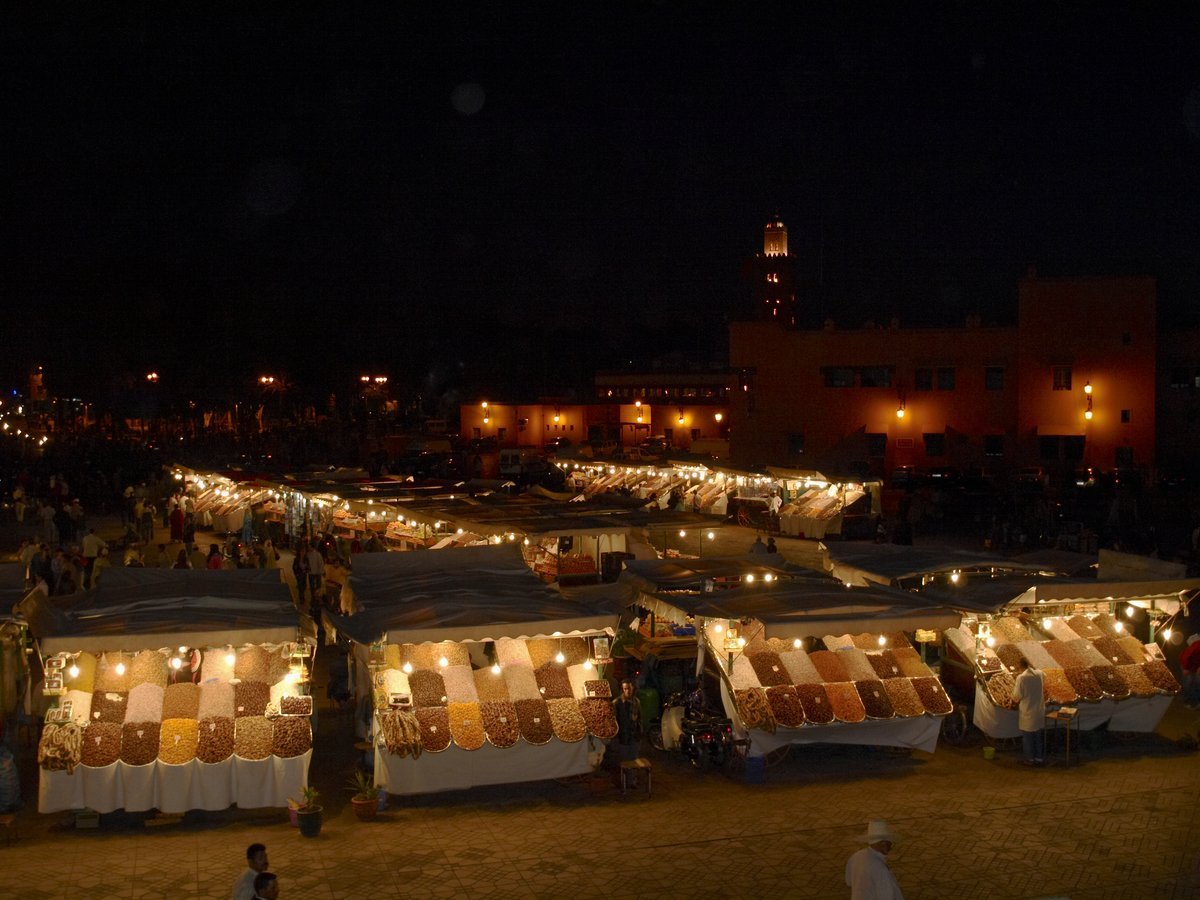
The famous evening scene on Jemaa el-Fna in Marrakech is pricier than an average street corner but still modest: a full grilled dinner at the numbered stalls typically costs 80–150 MAD per person including bread and tea. It’s the most tourist-priced street food in the country, and it’s still a bargain.
Restaurants: gargotes, mid-range, and rooftops
The cheapest sit-down option is the gargote — the tiny workers’ canteen serving tagine, couscous and grilled meat to locals. A tagine with bread at a gargote costs 25–50 MAD ($2.50–5). This is the best value in Moroccan dining, full stop.
A mid-range restaurant meal — a tagine or couscous, a salad, bread, and a drink — runs 70–150 MAD per person ($7–15). In tourist-heavy medinas the same meal trends toward the top of that range; a few streets away from the main squares it drops.
Rooftop restaurants with views over the medina charge a premium for the setting: expect 150–300 MAD per person for dinner with drinks ($15–30). The food is often similar to mid-range spots — you’re paying for the terrace.
Cafés: coffee, tea, and the famous café culture
Moroccan café culture runs on small, strong coffees and endless mint tea. A nouss-nouss (half coffee, half milk) or espresso costs 10–15 MAD at a neighborhood café. Mint tea runs 8–15 MAD.
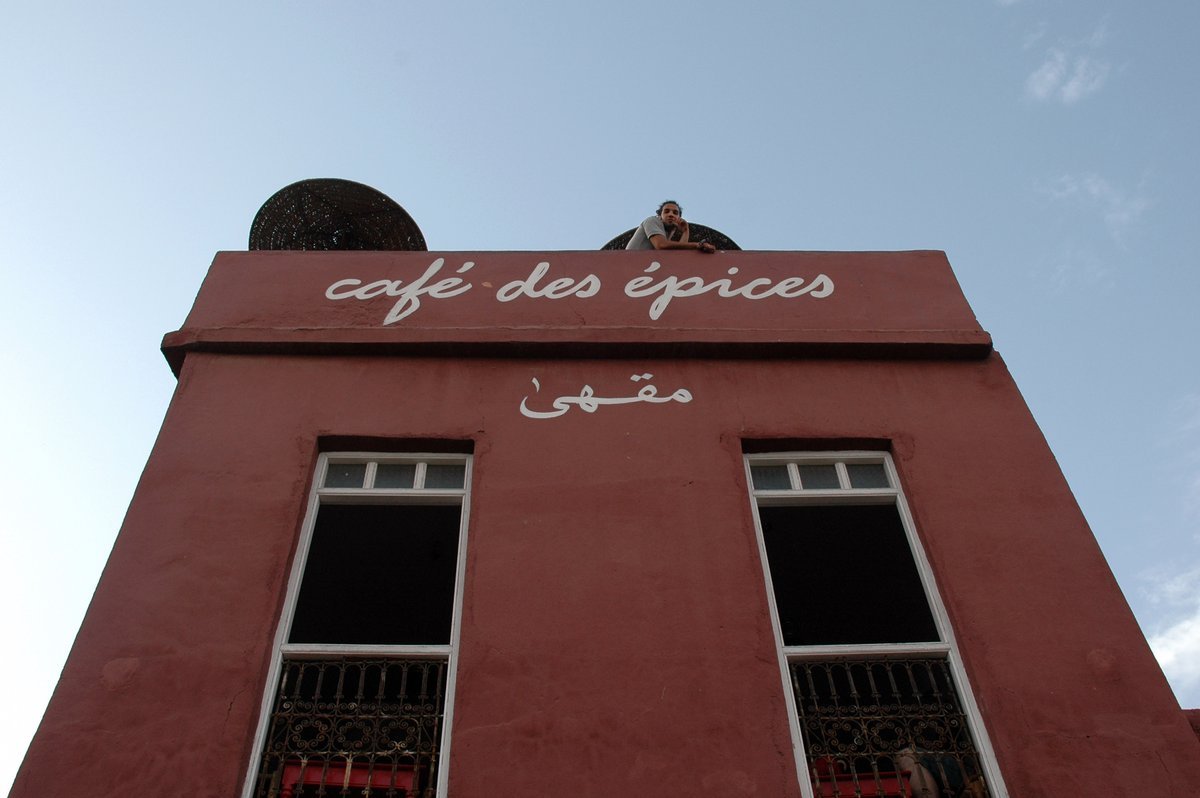
The famous grand cafés on the big boulevards and the prettiest medina terraces charge more — 20–35 MAD for a coffee — but you’re renting the seat and the view for as long as you like. Nobody will hurry you.
Markets and groceries: eating from the souk
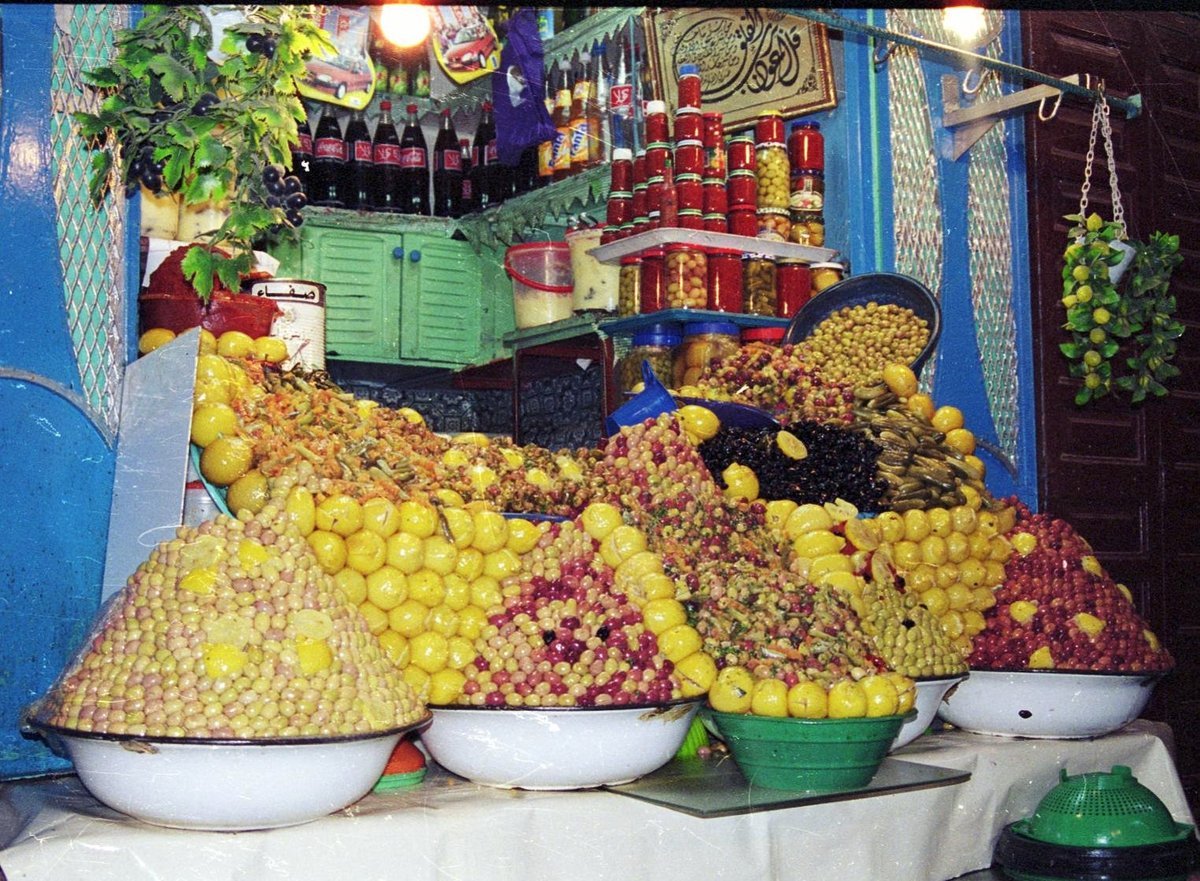
The souk is the cheapest way to eat well. Bread (khobz) costs 1–2 MAD per round loaf. Seasonal fruit — oranges, bananas, dates — runs 5–15 MAD per kilo. Olives from the olive stalls cost 20–40 MAD per kilo, and you’ll eat them by the handful.
A picnic assembled from the market — bread, olives, fruit, cheese, dates — feeds two people for 30–50 MAD. If your riad or apartment has a kitchen, cooking from souk produce is the absolute floor of Moroccan food spending.
Drinks: juice stands and bottled water
Fresh juice is one of Morocco’s great bargains. A glass of fresh-squeezed orange juice from a dedicated stand costs 5–10 MAD. A panaché (layered fruit smoothie) runs 15–25 MAD — a meal in a glass.
Bottled water (1.5L) costs 5–8 MAD in shops. Soft drinks in restaurants run 10–15 MAD. Alcohol is a different story: Morocco taxes it heavily, so a beer in a licensed restaurant costs 40–60 MAD — often more than your tagine.

Tipping: what to leave
Tipping in Morocco is expected but modest. The standard is 10% at restaurants when service isn’t included — check the bill first, as some tourist restaurants add it. At cafés, leaving 2–5 MAD on the table is the norm. Street-food stalls don’t expect tips, though rounding up is always appreciated.
Guides, drivers and riad staff are tipped separately and more generously, but that’s outside the food budget. For food alone, budget roughly 10% on top of sit-down meals.
Daily food budgets: three traveler profiles
Budget traveler — 100–150 MAD/day ($10–15). Breakfast from a msemen stand, lunch at a gargote or from the souk, street-food dinner, mint tea throughout. Entirely comfortable.
Mid-range traveler — 200–350 MAD/day ($20–35). Café breakfast, sit-down lunch, a nicer dinner — maybe a rooftop one night. This is the sweet spot for most visitors.
Comfort traveler — 400–600+ MAD/day ($40–60+). The prettiest terraces, multi-course dinners, fresh juice everywhere, no price-checking. Still less than a single dinner out in most Western cities.
These bands assume you’re eating Moroccan food at Moroccan places. International restaurants, hotel dining and alcohol push spending up fast.
FAQ
Is Morocco cheap for food? Yes — it’s one of the cheapest food destinations in the world for the quality. A full day of excellent eating costs $10–35 for most travelers.
How much is a tagine in Morocco? 25–50 MAD at a local gargote, 70–150 MAD at a mid-range restaurant, more on a tourist rooftop. The dish is the same idea at every level; the setting changes the price.
Do I need cash for food? Yes. Street stalls, souks and small cafés are cash-only. Restaurants in tourist areas increasingly take cards, but cash in small denominations is essential.
Is tipping included in restaurant bills? Sometimes in tourist areas — check the bill. Otherwise add about 10%. At cafés, a few dirhams on the table is the custom.
Why is alcohol so expensive? Morocco taxes alcohol heavily. A beer can cost more than your meal. Most travelers just drink the excellent fresh juice and mint tea instead.
Are prices higher in Marrakech? Yes, somewhat — especially around Jemaa el-Fna and the main tourist streets. Walk a few blocks into the local neighborhoods and prices drop noticeably. The street food guide covers where the value is.
Photo night stalls: courtesy of the photographer, CC0, via Wikimedia Commons. Photo café terrace: courtesy of the photographer, CC0, via Wikimedia Commons. Photo souk produce: courtesy of the photographer, CC0, via Wikimedia Commons. Photo mint tea: courtesy of the photographer, CC0, via Wikimedia Commons.