Where to Stay in Marrakech for Food Lovers: Areas & Riad Guide
In Marrakech, dinner starts with the address of your hotel. This is a city that eats late and eats in the open air — and the distance between your bed and the nearest grill changes the whole trip. Sleep next to Jemaa el-Fna and charcoal smoke drifts over your rooftop at eight in the evening. Sleep in the Palmeraie and you need a taxi to taste anything at all. This guide is for travelers who plan their days around food: which neighborhoods put the best cooking within walking distance, what a riad gives you that a hotel does not, and the mistakes that turn a food trip into a commute.
The short answer
- Food is the priority? Stay in the medina, within a 10–15 minute walk of Jemaa el-Fna.
- Quiet nights plus good restaurants? Guéliz or Hivernage, with short taxi rides.
- The holiday is mostly about the resort? The Palmeraie.
- Can’t decide? Split the trip: three nights in a medina riad, then two in the new town.
The rule is simple: every minute of walking distance from the food streets is a meal you will skip because you are tired. Choose the bed by the stomach.
The medina, street by street: where the food actually is
The medina is the walled old city, and it is enormous — 30 to 40 minutes on foot end to end. What matters for a food lover is which part of it.
Around Jemaa el-Fna: the square is the restaurant
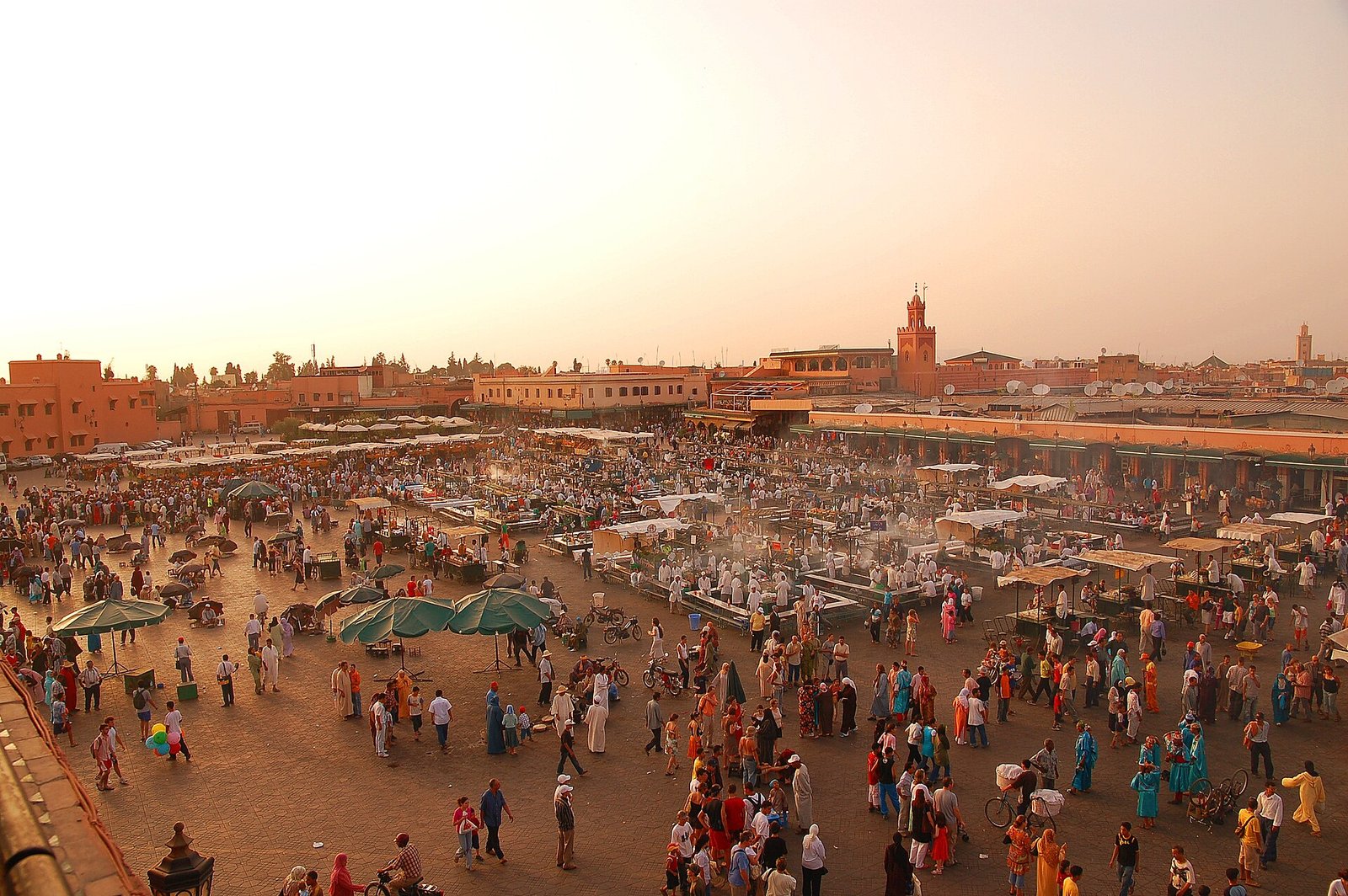
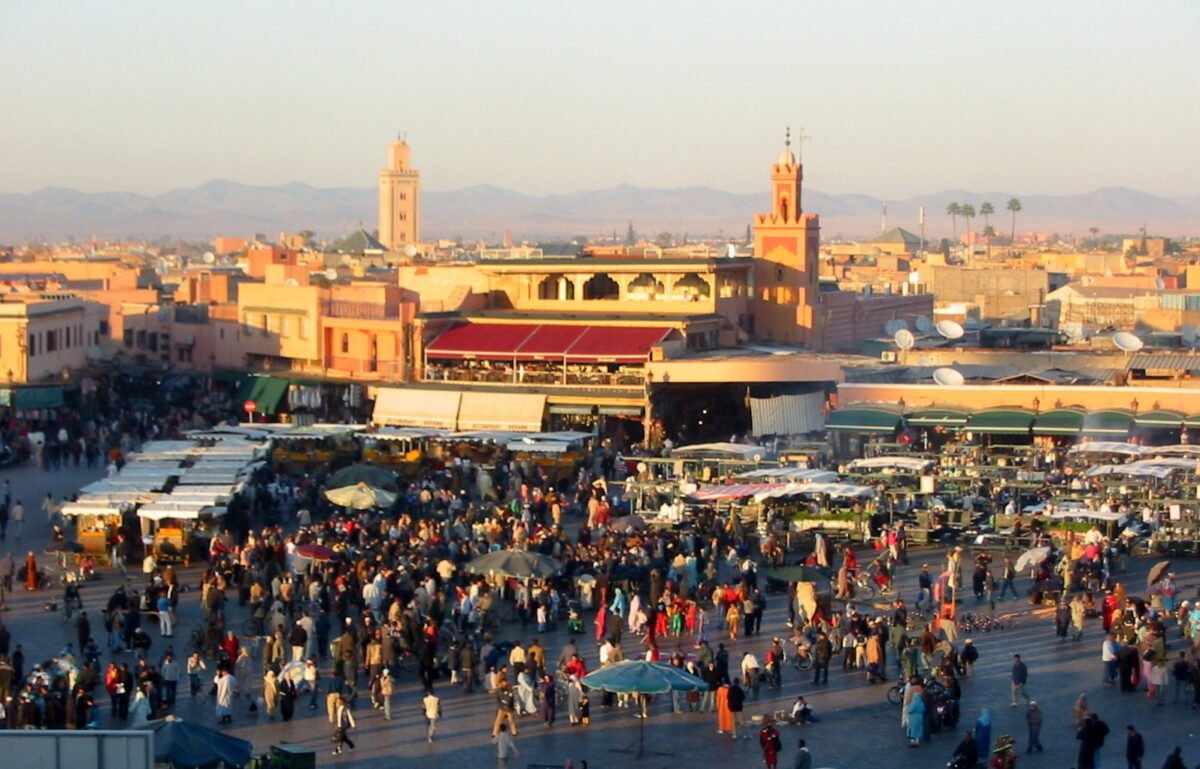
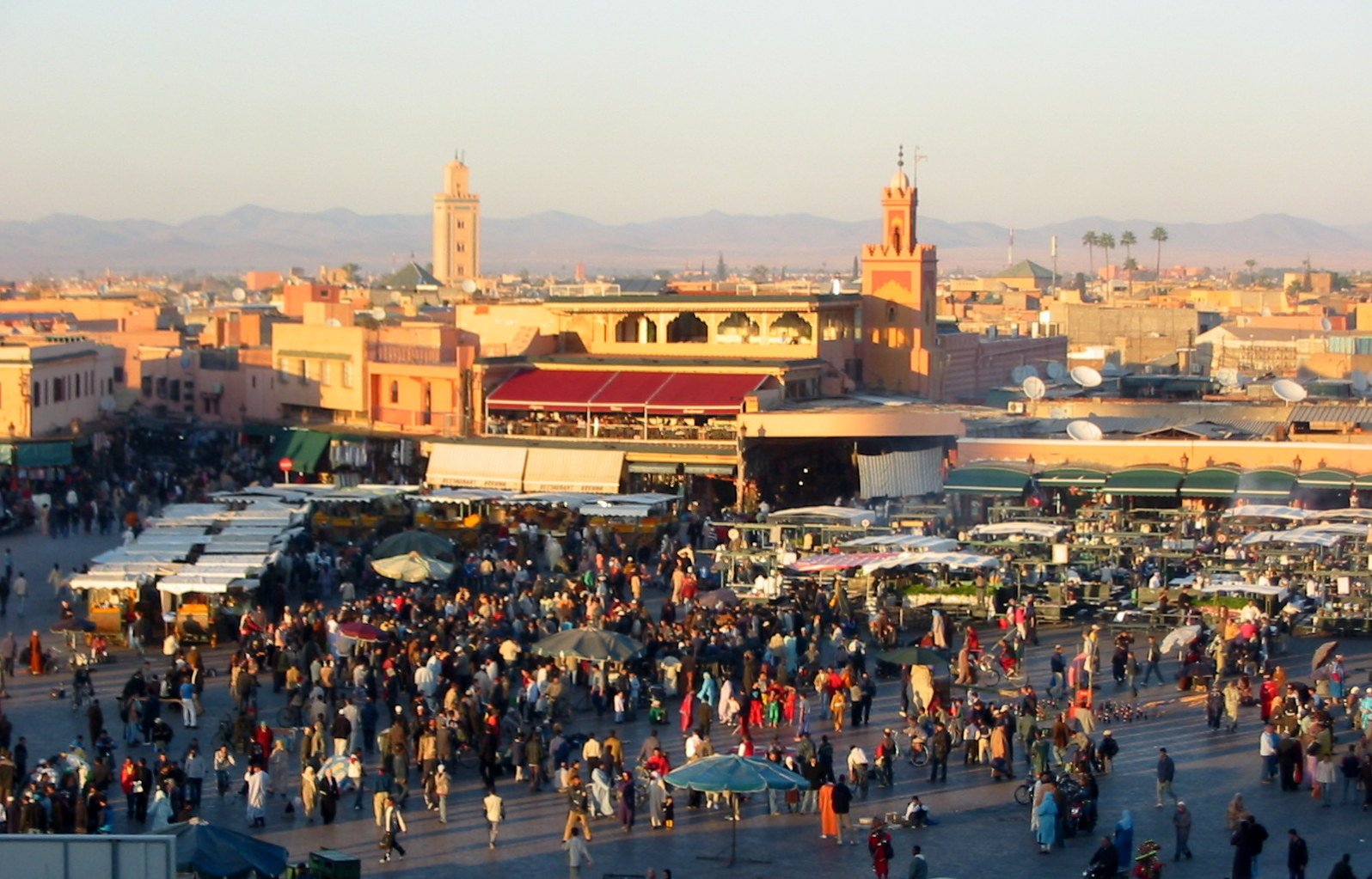
Jemaa el-Fna is the main square of Marrakech, and at night it becomes one of the largest open-air dining rooms in North Africa. From late afternoon, more than a hundred numbered stalls roll in: brochettes of lamb and kefta, whole grilled fish, bowls of harira, mechoui pulled from the pit, and the famous snail soup, babbouche, from steaming carts. By day the square runs on different fuel — fresh orange juice stands and vendors selling dates, dried figs, and almonds by the bag.
Sleeping a few streets away means dinner is a three-minute walk. The trade-off is noise: drums, crowds, and the call to prayer late into the night. Ask for an upper-floor room away from the street. The rooftops around the square are part of the deal — order a mint tea up there at sunset and watch the smoke rise. Our guide to eating on Jemaa el-Fna at night explains the numbered stalls and what to order.
📸 Sunset mint tea on a rooftop facing the square, stalls lighting up below.
Mouassine and the souk streets: the best “walk out and eat” zone
North of the square, the covered souks begin — and between the craft alleys run some of the medina’s best food streets. Derb Dabachi has daytime grills, msemen and baghrir pancake stalls, and tiny counters serving harira to shoppers. Around the Mouassine fountain and along Souk Jeld Sidi Abdelaziz, old merchant houses became restaurants with gardens and rooftop terraces, serving lighter modern Moroccan cooking: salads, grilled meats, fresh juices.
This is arguably the best all-day food base in the city: you can graze from 9 am to 10 pm without repeating a meal, ten minutes on foot from Jemaa el-Fna for the night session. The catch is that the alleys are a real maze after dark. Save your riad’s location offline and learn one landmark near your door.
Bab Doukkala and the northern medina: the locals’ pantry
The northwest corner is where Marrakchis shop for their own kitchens. The covered food market at Bab Doukkala overflows with produce, olives by the barrel, and fish stalls in the morning; around it, midday grills feed workers — kefta, brochettes, lentil soup — at prices well below the tourist streets, with nobody pulling you inside by the sleeve. It is twenty-plus minutes on foot from the night scene, so it suits a second stay, when you know the city and want to eat the way residents do. Go early: the market setting up is the attraction. 📸 The olive and pickle stalls of Bab Doukkala in the morning light.
The Kasbah and the Mellah: the quiet end
South of the square, past the Saadian Tombs and El Badi Palace, the medina turns residential. The Kasbah is calmer, its streets wider, its nights genuinely quiet — still only ten to fifteen minutes on foot from Jemaa el-Fna. Food here is neighborhood food: family-run grills, corner bakeries pulling khobz from wood-fired ovens, small shops selling amlou and preserved lemons. Fewer late-night options, so eat before you walk home.
Outside the walls: Guéliz, Hivernage, Palmeraie
Guéliz: the modern dining room
Guéliz is the new town — wide avenues, cafés with proper espresso, patisseries, and a contemporary restaurant scene the medina doesn’t have: modern Moroccan cooking, brasseries, international food done well. The catch is distance: Jemaa el-Fna is ten to fifteen minutes by petit taxi, not a pleasant walk in the heat. Budget a few taxi rides a day into your food plans.
Hivernage: calm, upscale, close to the action
Between Guéliz and the medina walls, Hivernage holds the big upscale hotels — pools, gardens, soundproofed rooms. The medina’s edge is five to ten minutes by taxi. Dinner tends to mean hotel restaurants and a handful of modern addresses rather than street food: a good base for one serious dinner out per day and total comfort the rest of the time.
The Palmeraie: only if the resort is the point
The palm groves northeast of the city hold the resort belt — green, quiet, fifteen to twenty-five minutes by car from the medina. For a food-first trip it is the wrong base: you will eat most dinners at the resort or live in taxis. It works for a slow week where food is one pleasure among the pool and the spa.
Riad or hotel? What it means for a food lover
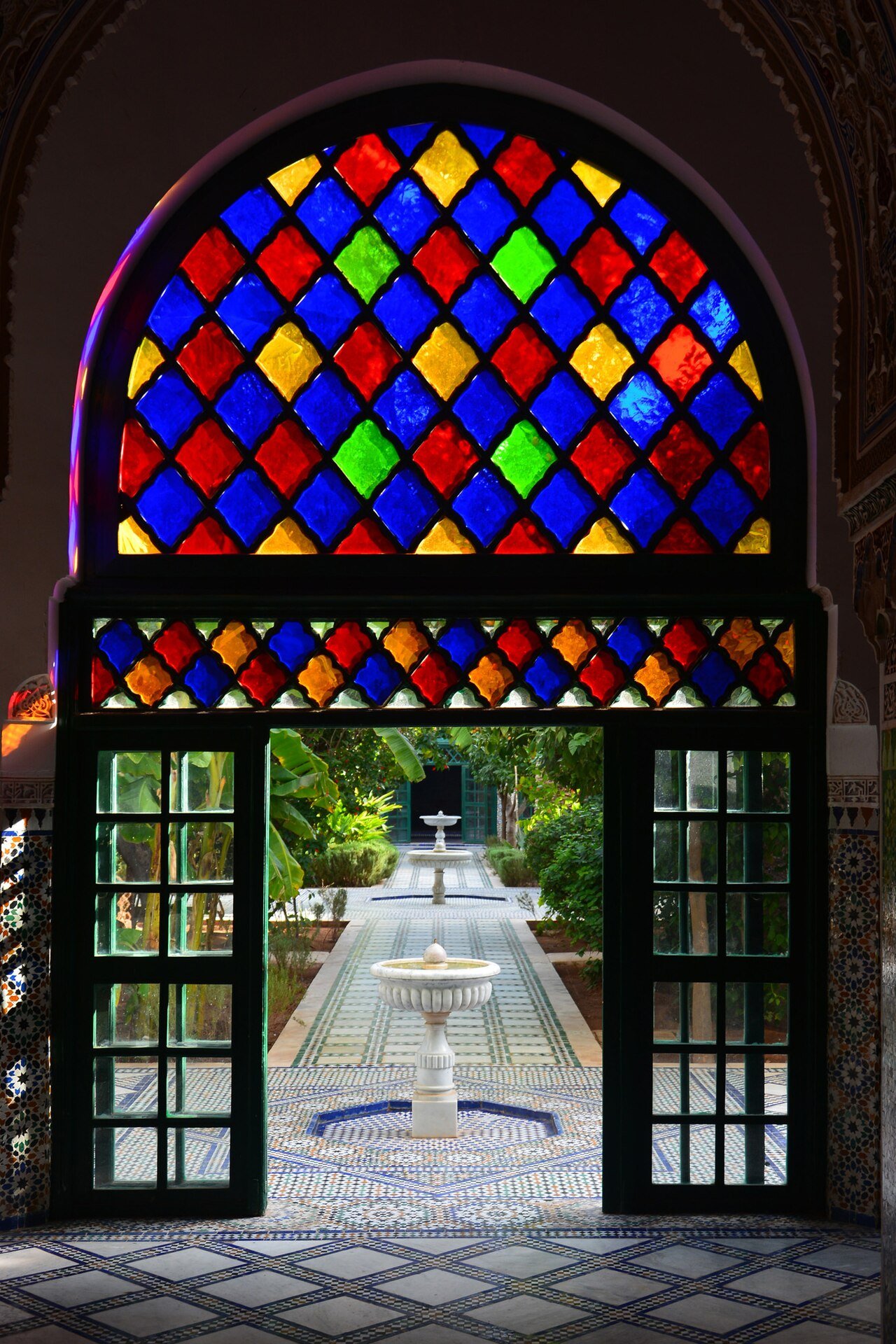
A riad is a traditional townhouse built around an interior courtyard, and in the medina most guest accommodation is one. For a food traveler it has three real advantages. First, breakfast: usually included, served on the terrace or in the courtyard — msemen, baghrir, olives, amlou, fresh orange juice, mint tea — often the most genuinely Moroccan meal of the day. Second, the rooftop: your private viewing platform over the city’s food map. Third, the hosts: a good riad team tells you which grill alley is worth the walk and which tourist-trap street to skip, advice no concierge desk matches.
The trade-offs are concrete. Most riads do not serve lunch or dinner — you eat out every evening, which is the point, but plan for it. Rooms open onto the courtyard or the street, so light sleepers should ask about noise. You arrive on foot, meeting the riad’s porter at a fixed point, because cars can’t enter the alleys.
A hotel gives you predictable rooms, buffet breakfasts, a pool, and quiet — but the cooking you came for is a taxi away. The classic food-traveler move is to do both: start with three or four nights in a medina riad while every meal is an expedition, then finish with a night or two in Guéliz or Hivernage for long sleep and a civilized dinner.
How to choose: five questions
- How sensitive are you to noise? The medina is loud until late. Ask for an upper-floor room away from the street — or choose Guéliz.
- Do you want dinner within a five-minute walk? Then the medina: near Jemaa el-Fna, Mouassine, or the Kasbah.
- Kids, or visiting in July–August? A pool and real air conditioning matter more than a courtyard. Look at the new town.
- What time do you arrive? Medina riads need a transfer or meeting point; finding a door in the derbs alone after dark is a bad first evening.
- What does breakfast mean to you? Slow terrace msemen and mint tea, or a big buffet before sightseeing? Half the decision is in the answer.
Mistakes food travelers make
- Booking the Palmeraie for a three-day food trip. You will live in taxis and eat half your meals at the resort.
- Choosing a riad “in the medina” without checking the walk. The medina is huge. Check the walking time to Jemaa el-Fna specifically, not just “medina”.
- Assuming the riad serves dinner. Most serve breakfast only. Your evenings happen outside — exactly what you want, as long as you planned it.
- Skipping the arrival transfer. Agree a meeting point with the riad in advance. The alleys all look the same at midnight.
- Eating only at the hotel restaurant. Usually the least interesting food within a kilometer of your bed. The point of Marrakech is outside the door.
One more thing: Marrakech eats late. Kitchens hit their stride around 8–9 pm and the Jemaa el-Fna stalls are best after dark. A food tour on your first evening is a good move: you learn the map once, then eat on your own.
What it costs (roughly)
Treat these as orientation, not quotes — travel guides published in 2025–2026 put mid-range medina riads at roughly €80–200 per night, Guéliz hotels around €70–300, and upscale Hivernage from about €150. Budget riads exist below those bands; luxury runs far above. March, April, October, and December sell out first — book months ahead. For what meals cost once you’re there, see food prices in Morocco in 2026.
FAQ
Is it better to stay in the medina or Guéliz for food?
The medina, if food is the reason for the trip. The densest, most interesting eating — the Jemaa el-Fna stalls, the souk grills, the markets — is inside the walls and best experienced on foot, late, without watching the taxi meter. Guéliz is the better base for modern restaurants, quiet rooms, and a pool, with the medina as a planned outing.
Are medina riads noisy?
Often, yes — especially near Jemaa el-Fna. Street life, music, and the early call to prayer are part of the package. Upper floors and courtyard-facing rooms are quieter, and the Kasbah side is calmer than the square.
Can I walk from Guéliz to Jemaa el-Fna?
It’s about 30–40 minutes on foot along Avenue Mohammed V, but few people do it twice. Take a petit taxi (10–15 minutes) and save your legs for the souks.
Do riads serve dinner?
Most serve breakfast only, sometimes lunch on request. Dinner is eaten out — which suits a food trip: the riad feeds you in the morning, the city feeds you at night.
Photo credits: Jemaa el-Fna market by Luc Viatour, CC BY-SA 3.0, via Wikimedia Commons; Jemaa el-Fna in the evening by Donar Reiskoffer, CC BY-SA 3.0, via Wikimedia Commons; riad-style courtyard at Bahia Palace by George Rex, CC BY-SA, via Wikimedia Commons.
Where to Stay in Marrakech for Food Lovers: Areas & Riad Guide
In Marrakech, dinner starts with the address of your hotel. This is a city that eats late and eats in the open air — and the distance between your bed and the nearest grill changes the whole trip. Sleep next to Jemaa el-Fna and charcoal smoke drifts over your rooftop at eight in the evening. Sleep in the Palmeraie and you need a taxi to taste anything at all. This guide is for travelers who plan their days around food: which neighborhoods put the best cooking within walking distance, what a riad gives you that a hotel does not, and the mistakes that turn a food trip into a commute.
In Marrakech, dinner starts with the address of your hotel. This is a city that eats late and eats in the open air — and the distance between your bed and the nearest grill changes the whole trip. Sleep next to Jemaa el-Fna and charcoal smoke drifts over your rooftop at eight in the evening. Sleep in the Palmeraie and you need a taxi to taste anything at all. This guide is for travelers who plan their days around food: which neighborhoods put the best cooking within walking distance, what a riad gives you that a hotel does not, and the mistakes that turn a food trip into a commute.
The short answer
- Food is the priority? Stay in the medina, within a 10–15 minute walk of Jemaa el-Fna.
- Food is the priority? Stay in the medina, within a 10–15 minute walk of Jemaa el-Fna.
- Quiet nights plus good restaurants? Guéliz or Hivernage, with short taxi rides.
- The holiday is mostly about the resort? The Palmeraie.
- Can’t decide? Split the trip: three nights in a medina riad, then two in the new town.
- Can’t decide? Split the trip: three nights in a medina riad, then two in the new town.
The rule is simple: every minute of walking distance from the food streets is a meal you will skip because you are tired. Choose the bed by the stomach.
The rule is simple: every minute of walking distance from the food streets is a meal you will skip because you are tired. Choose the bed by the stomach.
The medina, street by street: where the food actually is
The medina is the walled old city, and it is enormous — 30 to 40 minutes on foot end to end. What matters for a food lover is which part of it.
The medina is the walled old city, and it is enormous — 30 to 40 minutes on foot end to end. What matters for a food lover is which part of it.
Around Jemaa el-Fna: the square is the restaurant
Jemaa el-Fna is the main square of Marrakech, and at night it becomes one of the largest open-air dining rooms in North Africa. From late afternoon, more than a hundred numbered stalls roll in: brochettes of lamb and kefta, whole grilled fish, bowls of harira, mechoui pulled from the pit, and the famous snail soup, babbouche, from steaming carts. By day the square runs on different fuel — fresh orange juice stands and vendors selling dates, dried figs, and almonds by the bag.
Jemaa el-Fna is the main square of Marrakech, and at night it becomes one of the largest open-air dining rooms in North Africa. From late afternoon, more than a hundred numbered stalls roll in: brochettes of lamb and kefta, whole grilled fish, bowls of harira, mechoui pulled from the pit, and the famous snail soup, babbouche, from steaming carts. By day the square runs on different fuel — fresh orange juice stands and vendors selling dates, dried figs, and almonds by the bag.
Sleeping a few streets away means dinner is a three-minute walk. The trade-off is noise: drums, crowds, and the call to prayer late into the night. Ask for an upper-floor room away from the street. The rooftops around the square are part of the deal — order a mint tea up there at sunset and watch the smoke rise. Our guide to eating on Jemaa el-Fna at night explains the numbered stalls and what to order.
Sleeping a few streets away means dinner is a three-minute walk. The trade-off is noise: drums, crowds, and the call to prayer late into the night. Ask for an upper-floor room away from the street. The rooftops around the square are part of the deal — order a mint tea up there at sunset and watch the smoke rise. Our guide to eating on Jemaa el-Fna at night explains the numbered stalls and what to order.
📸 Sunset mint tea on a rooftop facing the square, stalls lighting up below.
Mouassine and the souk streets: the best “walk out and eat” zone
North of the square, the covered souks begin — and between the craft alleys run some of the medina’s best food streets. Derb Dabachi has daytime grills, msemen and baghrir pancake stalls, and tiny counters serving harira to shoppers. Around the Mouassine fountain and along Souk Jeld Sidi Abdelaziz, old merchant houses became restaurants with gardens and rooftop terraces, serving lighter modern Moroccan cooking: salads, grilled meats, fresh juices.
North of the square, the covered souks begin — and between the craft alleys run some of the medina’s best food streets. Derb Dabachi has daytime grills, msemen and baghrir pancake stalls, and tiny counters serving harira to shoppers. Around the Mouassine fountain and along Souk Jeld Sidi Abdelaziz, old merchant houses became restaurants with gardens and rooftop terraces, serving lighter modern Moroccan cooking: salads, grilled meats, fresh juices.
This is arguably the best all-day food base in the city: you can graze from 9 am to 10 pm without repeating a meal, ten minutes on foot from Jemaa el-Fna for the night session. The catch is that the alleys are a real maze after dark. Save your riad’s location offline and learn one landmark near your door.
This is arguably the best all-day food base in the city: you can graze from 9 am to 10 pm without repeating a meal, ten minutes on foot from Jemaa el-Fna for the night session. The catch is that the alleys are a real maze after dark. Save your riad’s location offline and learn one landmark near your door.
Bab Doukkala and the northern medina: the locals’ pantry
The northwest corner is where Marrakchis shop for their own kitchens. The covered food market at Bab Doukkala overflows with produce, olives by the barrel, and fish stalls in the morning; around it, midday grills feed workers — kefta, brochettes, lentil soup — at prices well below the tourist streets, with nobody pulling you inside by the sleeve. It is twenty-plus minutes on foot from the night scene, so it suits a second stay, when you know the city and want to eat the way residents do. Go early: the market setting up is the attraction. 📸 The olive and pickle stalls of Bab Doukkala in the morning light.
The northwest corner is where Marrakchis shop for their own kitchens. The covered food market at Bab Doukkala overflows with produce, olives by the barrel, and fish stalls in the morning; around it, midday grills feed workers — kefta, brochettes, lentil soup — at prices well below the tourist streets, with nobody pulling you inside by the sleeve. It is twenty-plus minutes on foot from the night scene, so it suits a second stay, when you know the city and want to eat the way residents do. Go early: the market setting up is the attraction. 📸 The olive and pickle stalls of Bab Doukkala in the morning light.
The Kasbah and the Mellah: the quiet end
South of the square, past the Saadian Tombs and El Badi Palace, the medina turns residential. The Kasbah is calmer, its streets wider, its nights genuinely quiet — still only ten to fifteen minutes on foot from Jemaa el-Fna. Food here is neighborhood food: family-run grills, corner bakeries pulling khobz from wood-fired ovens, small shops selling amlou and preserved lemons. Fewer late-night options, so eat before you walk home.
South of the square, past the Saadian Tombs and El Badi Palace, the medina turns residential. The Kasbah is calmer, its streets wider, its nights genuinely quiet — still only ten to fifteen minutes on foot from Jemaa el-Fna. Food here is neighborhood food: family-run grills, corner bakeries pulling khobz from wood- fired ovens, small shops selling amlou and preserved lemons. Fewer late-night options, so eat before you walk home.
Outside the walls: Guéliz, Hivernage, Palmeraie
Guéliz: the modern dining room
Guéliz is the new town — wide avenues, cafés with proper espresso, patisseries, and a contemporary restaurant scene the medina doesn’t have: modern Moroccan cooking, brasseries, international food done well. The catch is distance: Jemaa el-Fna is ten to fifteen minutes by petit taxi, not a pleasant walk in the heat. Budget a few taxi rides a day into your food plans.
Guéliz is the new town — wide avenues, cafés with proper espresso, patisseries, and a contemporary restaurant scene the medina doesn’t have: modern Moroccan cooking, brasseries, international food done well. The catch is distance: Jemaa el-Fna is ten to fifteen minutes by petit taxi, not a pleasant walk in the heat. Budget a few taxi rides a day into your food plans.
Hivernage: calm, upscale, close to the action
Between Guéliz and the medina walls, Hivernage holds the big upscale hotels — pools, gardens, soundproofed rooms. The medina’s edge is five to ten minutes by taxi. Dinner tends to mean hotel restaurants and a handful of modern addresses rather than street food: a good base for one serious dinner out per day and total comfort the rest of the time.
Between Guéliz and the medina walls, Hivernage holds the big upscale hotels — pools, gardens, soundproofed rooms. The medina’s edge is five to ten minutes by taxi. Dinner tends to mean hotel restaurants and a handful of modern addresses rather than street food: a good base for one serious dinner out per day and total comfort the rest of the time.
The Palmeraie: only if the resort is the point
The palm groves northeast of the city hold the resort belt — green, quiet, fifteen to twenty-five minutes by car from the medina. For a food-first trip it is the wrong base: you will eat most dinners at the resort or live in taxis. It works for a slow week where food is one pleasure among the pool and the spa.
The palm groves northeast of the city hold the resort belt — green, quiet, fifteen to twenty-five minutes by car from the medina. For a food-first trip it is the wrong base: you will eat most dinners at the resort or live in taxis. It works for a slow week where food is one pleasure among the pool and the spa.
Riad or hotel? What it means for a food lover
A riad is a traditional townhouse built around an interior courtyard, and in the medina most guest accommodation is one. For a food traveler it has three real advantages. First, breakfast: usually included, served on the terrace or in the courtyard — msemen, baghrir, olives, amlou, fresh orange juice, mint tea — often the most genuinely Moroccan meal of the day. Second, the rooftop: your private viewing platform over the city’s food map. Third, the hosts: a good riad team tells you which grill alley is worth the walk and which tourist-trap street to skip, advice no concierge desk matches.
A riad is a traditional townhouse built around an interior courtyard, and in the medina most guest accommodation is one. For a food traveler it has three real advantages. First, breakfast: usually included, served on the terrace or in the courtyard — msemen, baghrir, olives, amlou, fresh orange juice, mint tea — often the most genuinely Moroccan meal of the day. Second, the rooftop: your private viewing platform over the city’s food map. Third, the hosts: a good riad team tells you which grill alley is worth the walk and which tourist-trap street to skip, advice no concierge desk matches.
The trade-offs are concrete. Most riads do not serve lunch or dinner — you eat out every evening, which is the point, but plan for it. Rooms open onto the courtyard or the street, so light sleepers should ask about noise. You arrive on foot, meeting the riad’s porter at a fixed point, because cars can’t enter the alleys.
The trade-offs are concrete. Most riads do not serve lunch or dinner — you eat out every evening, which is the point, but plan for it. Rooms open onto the courtyard or the street, so light sleepers should ask about noise. You arrive on foot, meeting the riad’s porter at a fixed point, because cars can’t enter the alleys.
A hotel gives you predictable rooms, buffet breakfasts, a pool, and quiet — but the cooking you came for is a taxi away. The classic food-traveler move is to do both: start with three or four nights in a medina riad while every meal is an expedition, then finish with a night or two in Guéliz or Hivernage for long sleep and a civilized dinner.
A hotel gives you predictable rooms, buffet breakfasts, a pool, and quiet — but the cooking you came for is a taxi away. The classic food-traveler move is to do both: start with three or four nights in a medina riad while every meal is an expedition, then finish with a night or two in Guéliz or Hivernage for long sleep and a civilized dinner.
How to choose: five questions
- How sensitive are you to noise? The medina is loud until late. Ask for an upper-floor room away from the street — or choose Guéliz.
- How sensitive are you to noise? The medina is loud until late. Ask for an upper-floor room away from the street — or choose Guéliz.
- Do you want dinner within a five-minute walk? Then the medina: near Jemaa el-Fna, Mouassine, or the Kasbah.
- Do you want dinner within a five-minute walk? Then the medina: near Jemaa el-Fna, Mouassine, or the Kasbah.
- Kids, or visiting in July–August? A pool and real air conditioning matter more than a courtyard. Look at the new town.
- Kids, or visiting in July–August? A pool and real air conditioning matter more than a courtyard. Look at the new town.
- What time do you arrive? Medina riads need a transfer or meeting point; finding a door in the derbs alone after dark is a bad first evening.
- What time do you arrive? Medina riads need a transfer or meeting point; finding a door in the derbs alone after dark is a bad first evening.
- What does breakfast mean to you? Slow terrace msemen and mint tea, or a big buffet before sightseeing? Half the decision is in the answer.
- What does breakfast mean to you? Slow terrace msemen and mint tea, or a big buffet before sightseeing? Half the decision is in the answer.
Mistakes food travelers make
- Booking the Palmeraie for a three-day food trip. You will live in taxis and eat half your meals at the resort.
- Booking the Palmeraie for a three-day food trip. You will live in taxis and eat half your meals at the resort.
- Choosing a riad “in the medina” without checking the walk. The medina is huge. Check the walking time to Jemaa el-Fna specifically, not just “medina”.
- Choosing a riad “in the medina” without checking the walk. The medina is huge. Check the walking time to Jemaa el-Fna specifically, not just “medina”.
- Assuming the riad serves dinner. Most serve breakfast only. Your evenings happen outside — exactly what you want, as long as you planned it.
- Assuming the riad serves dinner. Most serve breakfast only. Your evenings happen outside — exactly what you want, as long as you planned it.
- Skipping the arrival transfer. Agree a meeting point with the riad in advance. The alleys all look the same at midnight.
- Skipping the arrival transfer. Agree a meeting point with the riad in advance. The alleys all look the same at midnight.
- Eating only at the hotel restaurant. Usually the least interesting food within a kilometer of your bed. The point of Marrakech is outside the door.
- Eating only at the hotel restaurant. Usually the least interesting food within a kilometer of your bed. The point of Marrakech is outside the door.
One more thing: Marrakech eats late. Kitchens hit their stride around 8–9 pm and the Jemaa el-Fna stalls are best after dark. A food tour on your first evening is a good move: you learn the map once, then eat on your own.
One more thing: Marrakech eats late. Kitchens hit their stride around 8–9 pm and the Jemaa el-Fna stalls are best after dark. A food tour on your first evening is a good move: you learn the map once, then eat on your own.
What it costs (roughly)
Treat these as orientation, not quotes — travel guides published in 2025–2026 put mid-range medina riads at roughly €80–200 per night, Guéliz hotels around €70–300, and upscale Hivernage from about €150. Budget riads exist below those bands; luxury runs far above. March, April, October, and December sell out first — book months ahead. For what meals cost once you’re there, see food prices in Morocco in 2026.
Treat these as orientation, not quotes — travel guides published in 2025–2026 put mid-range medina riads at roughly €80–200 per night, Guéliz hotels around €70–300, and upscale Hivernage from about €150. Budget riads exist below those bands; luxury runs far above. March, April, October, and December sell out first — book months ahead. For what meals cost once you’re there, see food prices in Morocco in 2026.
FAQ
Is it better to stay in the medina or Guéliz for food?
The medina, if food is the reason for the trip. The densest, most interesting eating — the Jemaa el-Fna stalls, the souk grills, the markets — is inside the walls and best experienced on foot, late, without watching the taxi meter. Guéliz is the better base for modern restaurants, quiet rooms, and a pool, with the medina as a planned outing.
The medina, if food is the reason for the trip. The densest, most interesting eating — the Jemaa el-Fna stalls, the souk grills, the markets — is inside the walls and best experienced on foot, late, without watching the taxi meter. Guéliz is the better base for modern restaurants, quiet rooms, and a pool, with the medina as a planned outing.
Are medina riads noisy?
Often, yes — especially near Jemaa el-Fna. Street life, music, and the early call to prayer are part of the package. Upper floors and courtyard-facing rooms are quieter, and the Kasbah side is calmer than the square.
Often, yes — especially near Jemaa el-Fna. Street life, music, and the early call to prayer are part of the package. Upper floors and courtyard-facing rooms are quieter, and the Kasbah side is calmer than the square.
Can I walk from Guéliz to Jemaa el-Fna?
It’s about 30–40 minutes on foot along Avenue Mohammed V, but few people do it twice. Take a petit taxi (10–15 minutes) and save your legs for the souks.
It’s about 30–40 minutes on foot along Avenue Mohammed V, but few people do it twice. Take a petit taxi (10–15 minutes) and save your legs for the souks.
Do riads serve dinner?
Most serve breakfast only, sometimes lunch on request. Dinner is eaten out — which suits a food trip: the riad feeds you in the morning, the city feeds you at night.
Most serve breakfast only, sometimes lunch on request. Dinner is eaten out — which suits a food trip: the riad feeds you in the morning, the city feeds you at night.
Photo credits: Jemaa el-Fna market by Luc Viatour, CC BY-SA 3.0, via Wikimedia Commons; Jemaa el-Fna in the evening by Donar Reiskoffer, CC BY-SA 3.0, via Wikimedia Commons; riad-style courtyard at Bahia Palace by George Rex, CC BY-SA, via Wikimedia Commons.
Photo credits: Jemaa el-Fna market by Luc Viatour, CC BY-SA 3.0, via Wikimedia Commons; Jemaa el-Fna in the evening by Donar Reiskoffer, CC BY-SA 3.0, via Wikimedia Commons; riad-style courtyard at Bahia Palace by George Rex, CC BY-SA, via Wikimedia Commons.