If Morocco had to be summed up in a single dish, it would be the tagine. Ask for “the tagine” in just about any restaurant in the country and something wonderful will arrive at your table, still bubbling, in the very pot it cooked in. The word means two things at once: the slow-cooked stew, and the clay vessel it is cooked in. Understanding both is the key to understanding Moroccan food itself.
This guide covers the pot, the cooking method, the classic varieties worth knowing, how to eat a tagine properly, and the difference between a tagine and its often-confused cousin, the tangia.
The Pot That Gives the Dish Its Name
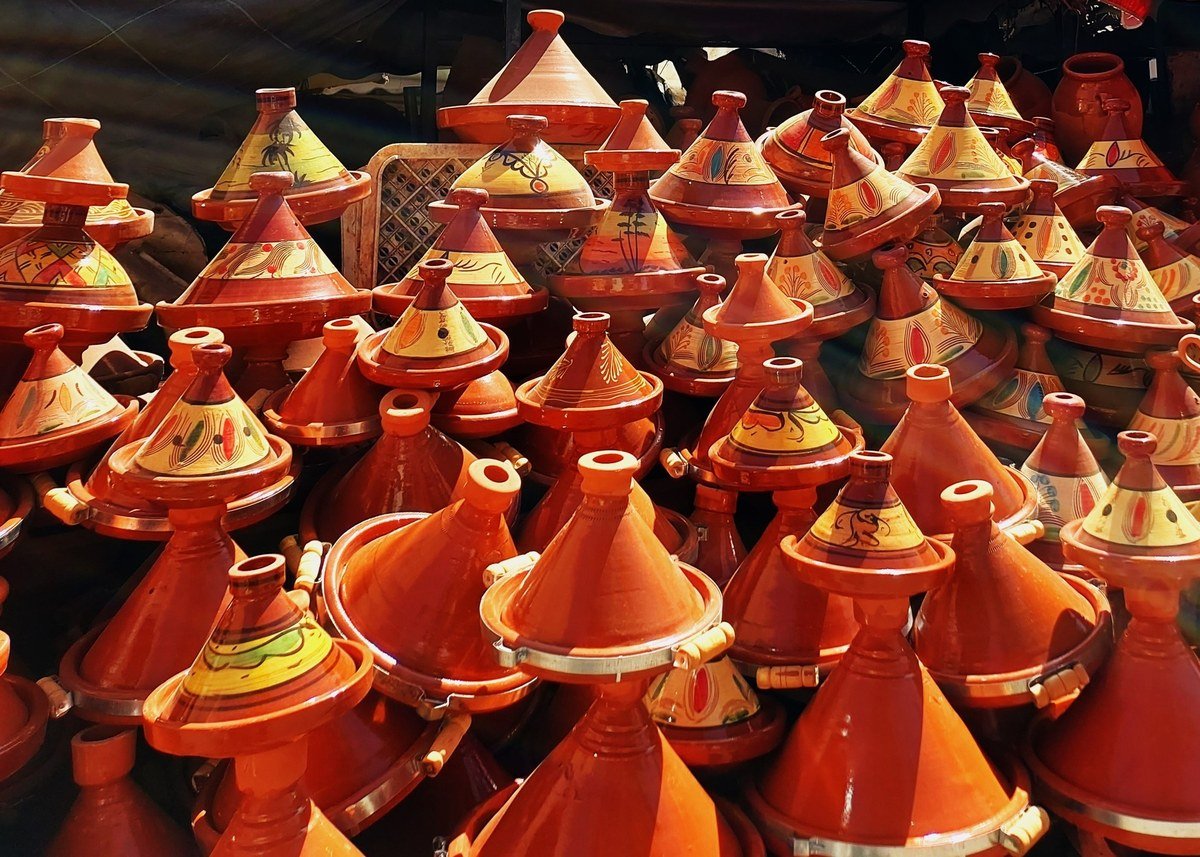
A tagine pot has two parts: a wide, shallow circular base and a tall conical lid that sits on top like a pointed hat. It is traditionally made of clay, sometimes glazed, sometimes left in its natural terracotta state. (Beware the brightly painted tagines sold in souks as decoration — many are not made for cooking.)
The shape is not decorative. As the food simmers, steam rises into the cone, cools, condenses on the lid’s inner surface, and drips back down onto the food. The dish essentially bastes itself. Very little water is needed, tough cuts of meat turn meltingly tender, and flavors stay concentrated instead of boiling away. It is an elegant piece of low-tech engineering, and it works just as well over a charcoal fire as on a low gas flame — which is why the tagine became the everyday cooking pot across Morocco long before modern kitchens arrived.
Slow Cooking and the Moroccan Spice Palette
A tagine is never rushed. Ingredients are layered into the base — sliced onions first, then the meat, then vegetables, dried fruit, or olives on top — a little water or broth is added, the lid goes on, and the pot sits over gentle heat, usually well over an hour, while everything softens into a rich sauce.
The seasoning is what makes it unmistakably Moroccan. The foundation is ginger, turmeric, cumin, paprika, and black pepper, with garlic, fresh coriander, and flat-leaf parsley. Cinnamon appears in the sweet-savory versions; saffron in the more festive ones; and many cooks reach for ras el-hanout, the complex house-blend spice mix whose name means “head of the shop.” Two ingredients deserve special mention: preserved lemons — lemons cured in salt and their own juice until the rind turns silky and intensely fragrant — and olives, which add a briny counterpoint to the sweetness of dried fruit.
The Classics: Five Tagines Worth Knowing
Chicken with preserved lemon and olives
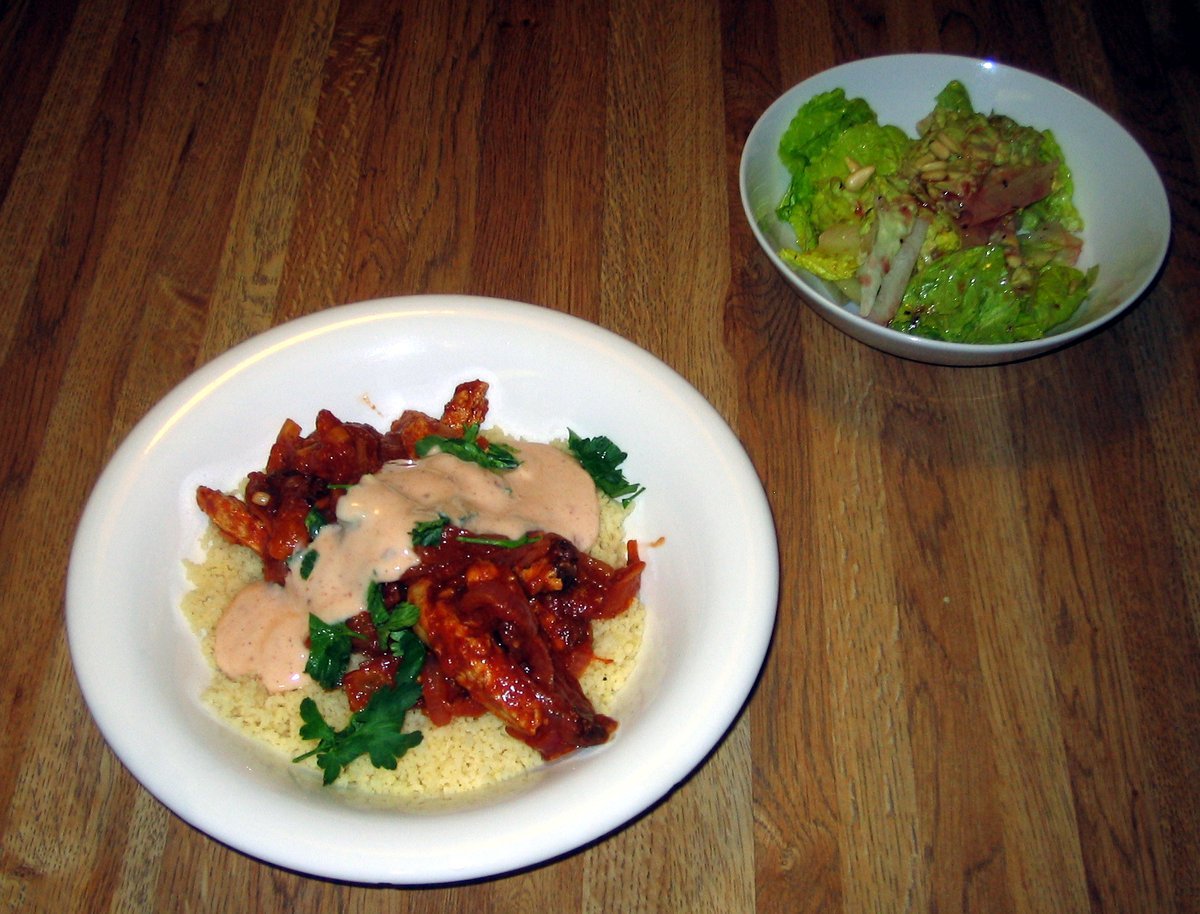
This is the everyday classic, the tagine most Moroccan families make most often. Chicken pieces are simmered with onions, ginger, turmeric, and saffron until tender, then finished with strips of preserved lemon rind and a handful of green or violet olives. The result is savory, tangy, and aromatic rather than sweet — the benchmark against which all other tagines are quietly judged.
Lamb with prunes and almonds
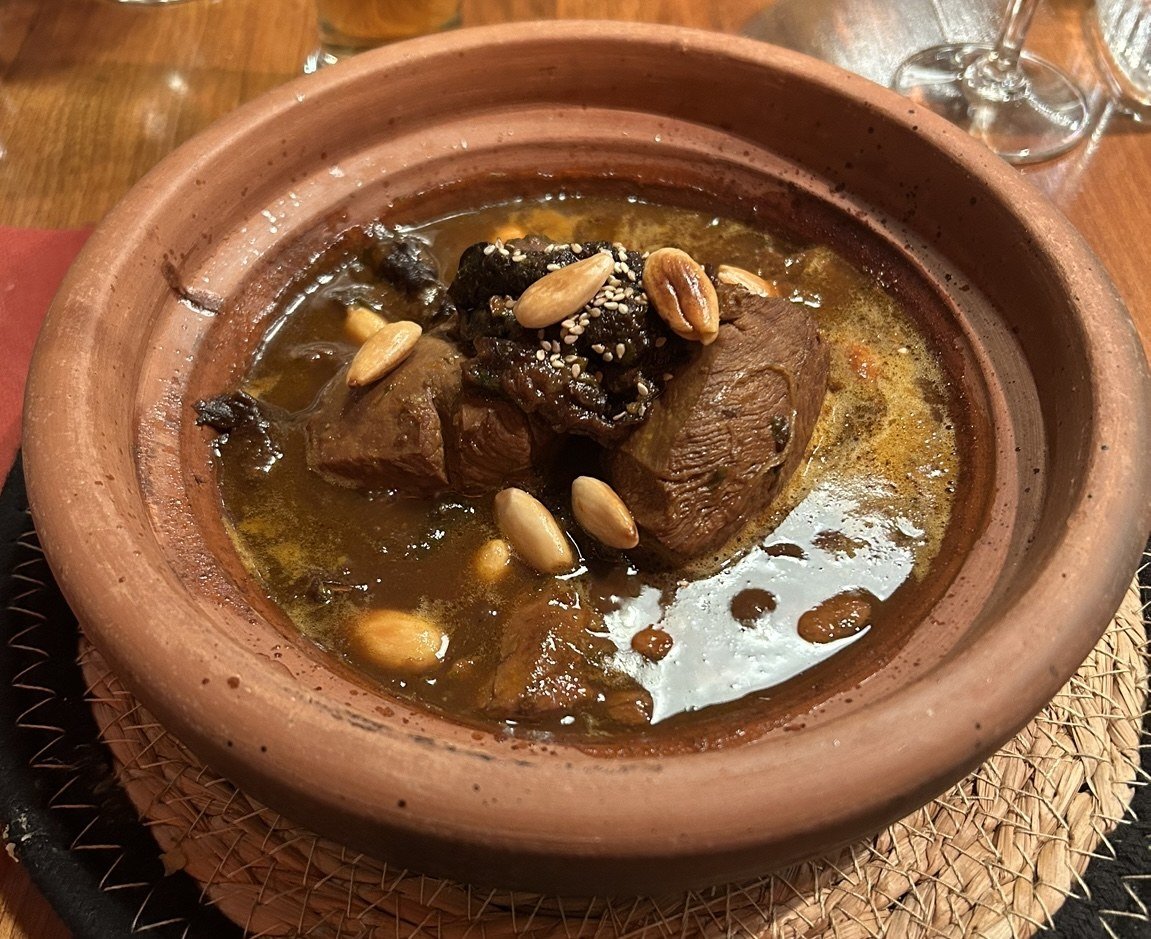
The great sweet-savory tagine. Lamb (beef appears too) cooks slowly with caramelized onions, cinnamon, and ginger until the meat gives way, then dried prunes are added and everything is crowned with fried almonds and a dusting of sesame. It is a dish of contrasts — rich meat, jammy fruit, crunch — and a fixture at celebrations and family gatherings.
Kefta tagine
Kefta is spiced minced meat — usually beef or lamb mixed with cumin, paprika, coriander, parsley, and onion — shaped into small meatballs or patties. In tagine form, the kefta simmers in a tomato-based sauce, and the classic finishing touch is to crack eggs over the top and let them set in the heat of the sauce. It is hearty, inexpensive, and deeply comforting.
Fish tagine with chermoula
Along the coasts, the tagine goes to sea. Firm white fish is marinated in chermoula — a punchy blend of coriander, parsley, garlic, cumin, paprika, and lemon — then layered with sliced potatoes, tomatoes, carrots, and olives. Lighter than its meat cousins but just as fragrant, it is the tagine to order in Essaouira, Agadir, or any Atlantic port town.
Vegetable tagine
No meat required. Seasonal vegetables — carrots, zucchini, potatoes, tomatoes, pumpkin, sometimes chickpeas — are layered with the same spice base and slow-cooked until they collapse into a sweet, golden stew. It is naturally vegetarian (vegan, too, if no butter sneaks in) and proof that the tagine method flatters vegetables as much as meat.
Tagine vs Tangia: Don’t Mix Them Up
Visitors to Marrakech often encounter a second word that sounds almost the same: tangia. It is a different dish entirely. Tangia is Marrakech’s own specialty: beef (sometimes lamb) seasoned simply, sealed inside a tall, urn-shaped clay vessel, and slow-cooked for hours in hot ashes. No conical lid, no layered vegetables, no dried fruit — just meat, time, and patience. If you see tangia on a menu in Marrakech, know that you are looking at something distinct from the tagine family, with its own traditions.
How to Eat a Tagine
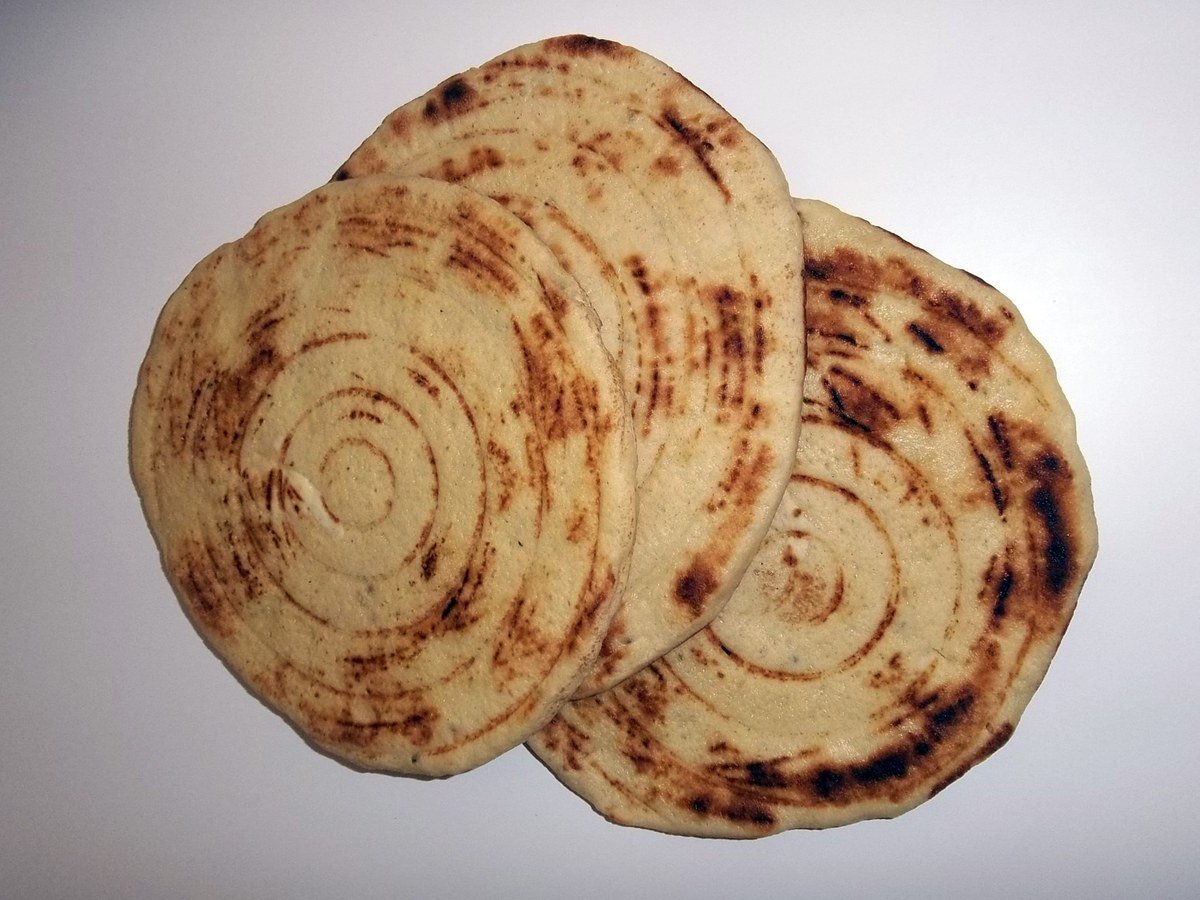
A tagine arrives at the table in its cooking pot, lid lifted with a flourish, and it is placed in the middle for sharing. There is one essential accompaniment: khobz, the round Moroccan bread. You tear off a piece, fold it into a scoop, and use it to pick up meat, vegetables, and sauce. That is the traditional way — no fork required, though restaurants will happily provide cutlery if you ask.
Eating from a shared pot with bread is the norm, not a rustic exception. Take from the section in front of you, and let the meal unfold slowly. A tagine is not fast food; it is an invitation to sit, talk, and linger.
Where Tagine Tastes Best
Honestly? Almost everywhere. But a few settings are hard to beat. On the terraces near Ouzoud Falls, restaurants serve tagines within sight and sound of the cascades after the walk down. At night, the food stalls of Jemaa el-Fna in Marrakech grill and simmer for crowds under the lights. And some of the most memorable tagines come from the simplest places — roadside grills and village kitchens where the pot has barely left the coals.
What to Drink With It
Water is fine, but the classic pairing is mint tea, served after the meal rather than during it. Gunpowder green tea brewed with fresh mint and poured from a height into small glasses — sweet, refreshing, and the traditional full stop at the end of a Moroccan meal.

Frequently Asked Questions
Is tagine spicy-hot? Generally no. Moroccan tagines are warmly spiced, not fiery. If you want heat, ask for harissa on the side — many places keep it available.
Can I make a tagine without a clay tagine pot? Yes. A heavy pot with a tight lid, like a Dutch oven, gives good results. The conical lid helps circulate moisture, but the spice balance and slow cooking matter more than the vessel.
Is tagine served with couscous? No — tagine is eaten with bread. Couscous is a separate dish with its own traditions (including the famous Friday couscous). Don’t ask for them together.
Is tagine gluten-free? The stew itself usually is, since it is thickened by slow cooking rather than flour. But it is traditionally eaten with wheat bread, so ask if you need a fully gluten-free meal.
How long does a tagine take to cook? Low and slow is the rule — typically well over an hour for meat versions, until the meat is completely tender. This is not a dish to hurry.
Tagine pots photo: EslamSalah99, CC BY-SA 4.0, via Wikimedia Commons. Chicken tagine photo: Karen and Brad Emerson, CC BY 2.0, via Wikimedia Commons. Lamb tagine photo: LilKil, CC BY-SA 4.0, via Wikimedia Commons. Khobz photo: Meriemou, CC BY-SA 4.0, via Wikimedia Commons. Mint tea photo: Sarkar Sayantan, CC BY-SA 4.0, via Wikimedia Commons.
Recipe: Chicken Tagine with Preserved Lemon and Olives
The classic djaj m’qualli — the tagine Moroccans cook when guests come. Everything happens in one pot, on the lowest heat you have.
Ingredients (serves 4–6)
- 1 whole chicken (about 1.5 kg), cut into 6–8 pieces
- 2 large onions, grated
- 4 garlic cloves, crushed
- 1 teaspoon ground ginger
- 1 teaspoon turmeric
- 1/2 teaspoon black pepper
- 1 pinch saffron threads, crumbled (optional but recommended)
- 1 preserved lemon, quartered, pulp removed
- 100 g violet or green olives
- 1 small bunch flat-leaf parsley and cilantro, tied together
- 4 tablespoons olive oil
- Salt to taste
- 250 ml water
Preparation
- In a large bowl, rub the chicken pieces with the garlic, ginger, turmeric, pepper, saffron, a little salt, and half the olive oil. Add the tied herbs. Cover and marinate at least 1 hour — overnight in the fridge is better.
- Spread the grated onion over the base of a tagine (or a heavy pot). Arrange the chicken on top, pour in the remaining oil and the water.
- Cover and cook over the lowest possible heat for 45 minutes. The onion melts into a thick sauce; add a splash of water only if it looks dry.
- Tuck the preserved lemon quarters and the olives around the chicken. Cover and cook 15 minutes more, until the chicken is tender and the sauce is thick and glossy.
- Discard the herb bundle. Serve straight from the tagine with warm khobz for scooping up the sauce.
Tip: never rush a tagine with high heat — the magic is the slow steam trapped under the conical lid.