Mechoui: Morocco’s Slow-Roasted Lamb
You smell it before you see it. On a narrow lane off the north end of Jemaa el-Fna, the air turns thick with rendered lamb fat and woodsmoke, and a row of men in white aprons are hauling something golden and glistening out of a hole in the floor. That is mechoui — a whole lamb, slow-roasted in an underground pit until the meat surrenders and falls off the bone — and it is one of the few Moroccan dishes that is better eaten standing at a tiled counter at noon than anywhere else, ever.
If you came to Morocco expecting tagine and couscous, mechoui will rewire your map. No sauce to hide behind, no stack of spices — just fire, time, salt, and cumin.
What Mechoui Really Is
The word mechoui (مشوي) simply means “roasted” in Arabic. In Morocco it has come to mean one specific thing: a whole lamb — sometimes a sheep — roasted slowly until the outside turns crisp and amber and the inside collapses into threads of meat. A whole animal weighs 15 to 30 kilograms, so this is never a dish one person cooks for a Tuesday dinner. It is a dish of scale: built for weddings, for feasts, for a street full of hungry people.
The seasoning is almost insultingly simple. The meat goes into the pit with salt and little else — some pit-masters rub it with smen (Morocco’s pungent preserved butter) or garlic, but many use nothing at all. The cumin comes later, at the table, ground and mixed with salt in small bowls, and you season each bite yourself. The whole philosophy is the opposite of a tagine: instead of building flavor with a dozen spices, mechoui strips everything back so you taste the animal, the smoke, and the fat.
How It’s Cooked: The Pit Oven
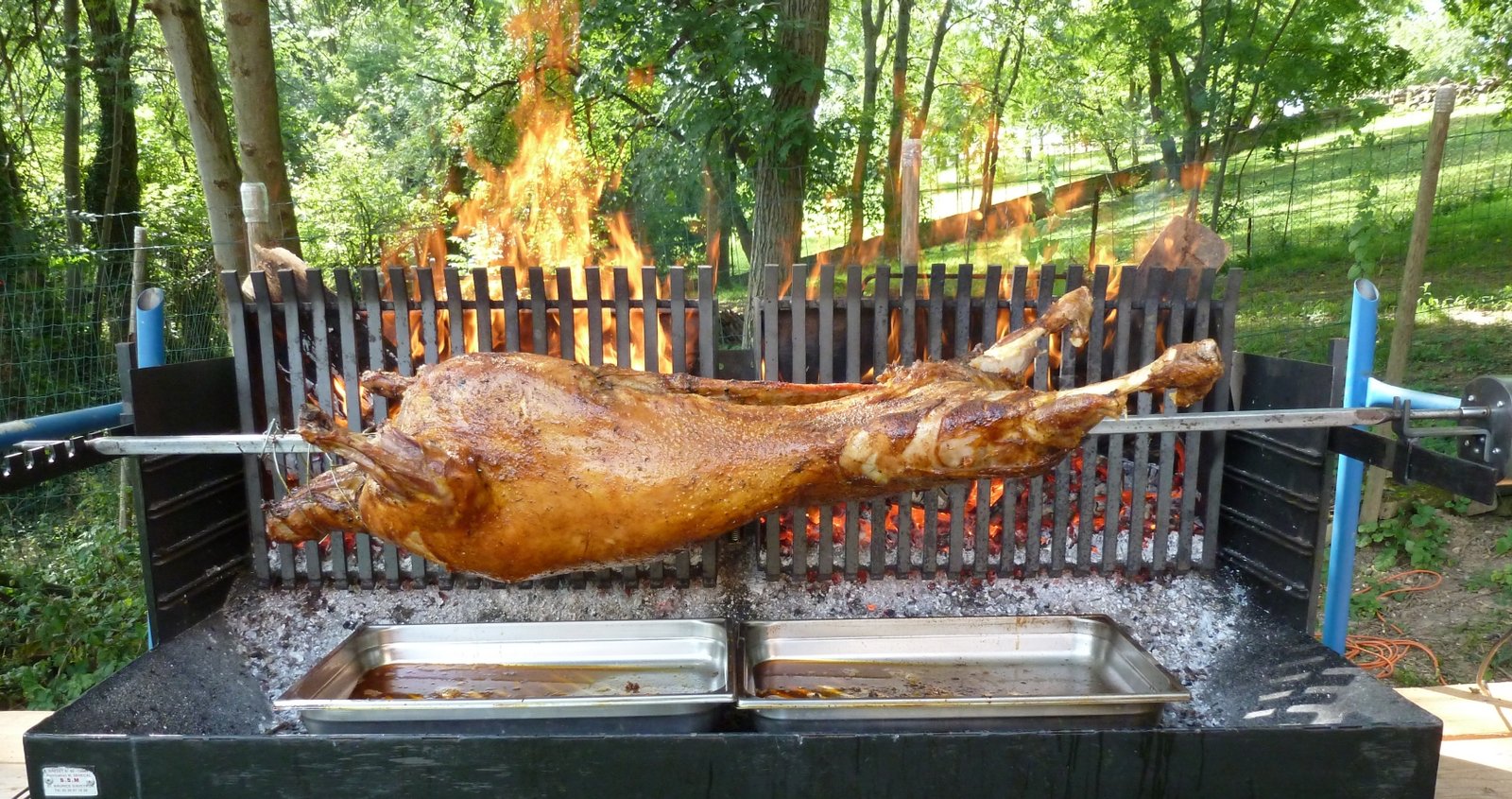
The traditional oven is called a feran beldi — a clay pit dug into the ground. Embers are pushed to the sides and the bottom, and the whole lamb hangs inside vertically, uncovered. The opening is sealed with clay so the heat has nowhere to go, and the meat cooks in trapped, smoky air for around two hours. Some pit-masters then wrap the lamb and rest it for hours more before a single cut is made.
The lamb often goes into the pit the night before, roasted slowly in the residual heat and pulled out the next morning — so the mechoui you eat at noon started cooking while you were asleep.
Where to Try It: Marrakech’s Mechoui Alley
The single best place to eat mechoui as a traveler is the short row of shopfronts just off the northern edge of Jemaa el-Fna — on Derb Semmarine, near the entrance to the spice souk — that locals call mechoui alley. Whole lambs disappear into clay pits under the floor, and from late morning the men pull them out, hack off whatever you point at, weigh it, and hand it over with bread, cumin, and salt. That is the whole operation, and it is one of the great lunches in Morocco.
The practical rules are simple and non-negotiable. Go at lunchtime, because when the lamb is gone it is gone — most stalls sell out by early afternoon. Bring cash. Ask for the shoulder (épaule): it is fattier and better than the leg, which is the cut locals reach for. Eat it right there if you can — mechoui travels badly, and twenty minutes in a takeaway bag dulls the crackle of the skin.
Outside Marrakech, mechoui is mostly a celebration dish — wedding halls, festival tables, and family homes during Eid al-Adha, when whole neighborhoods smell of it at once. In rural areas, villages still roast communally in large outdoor pits.
📸 Spot for your own photo here: the row of mechoui pits with lambs hanging, mid-morning in the alley.
How to Eat It Like a Local
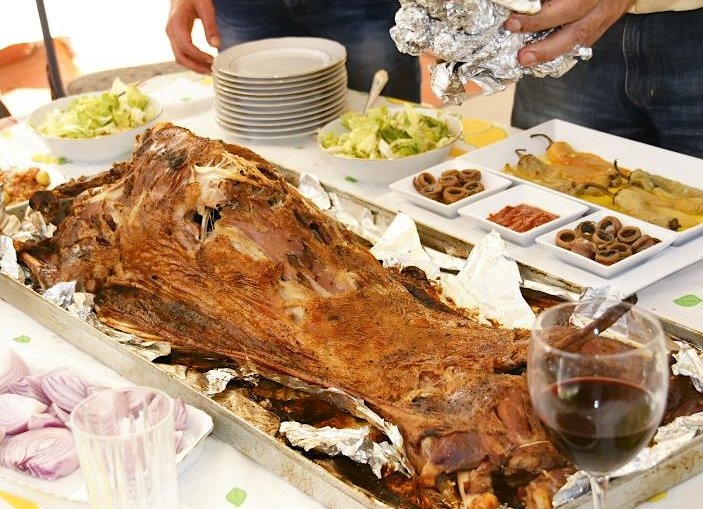
There are no forks involved and no ceremony to learn. The meat arrives in a torn heap on a platter or in paper, and you eat with your right hand, pulling off strips and pressing them into warm bread. The bread is not a side dish — it is your spoon, your plate, and your napkin all at once. Tear a piece of khobz, pinch the meat with it, dip it in the cumin-salt, eat.
The cumin is the only seasoning that matters. Dip, don’t dump: a light roll through the bowl is enough, because the point is to season the fat, not bury it. If a stall hands you a lemon wedge, squeeze it over the meat — the acid cuts the richness the way mint tea will do afterward.
Order like a local: ask for a shoulder cut, watch it weighed, and don’t be shy about pointing. “Shoulder, please” in French — l’épaule, s’il vous plaît — works everywhere in Marrakech. The meat is sold by weight, so the price follows the scale, not a menu. For a fuller picture of how pricing works across Moroccan food, see our Morocco food prices guide for 2026.
Mechoui at Celebrations: Weddings and Eid
A whole roasted lamb is the centerpiece Morocco reaches for when something matters. At weddings it arrives as a procession — carried in whole, set down in front of the guests, and torn apart by hand at the table. It is the most generous thing a host can serve.
Eid al-Adha brings the same fire to family courtyards: the whole neighborhood roasts at once, and the meal is as much about the gathering as the meat.
This is why mechoui tastes better at a celebration than at a restaurant. It is a dish that scales with the crowd: the more people waiting, the faster the lamb turns over, the fresher every cut.
On the Plate: What Comes With Mechoui
Mechoui arrives with a short, fixed cast of companions. Each one has a job, and none of them is decoration.
Mechoui
The star: whole lamb, pit-roasted for hours until the skin crisps and the meat pulls apart in strands. The shoulder is the prized cut — fattier, silkier, gone first. The leg is leaner. Ribs give you the crackling edges. Ask for a mix on your first visit.
Khobz
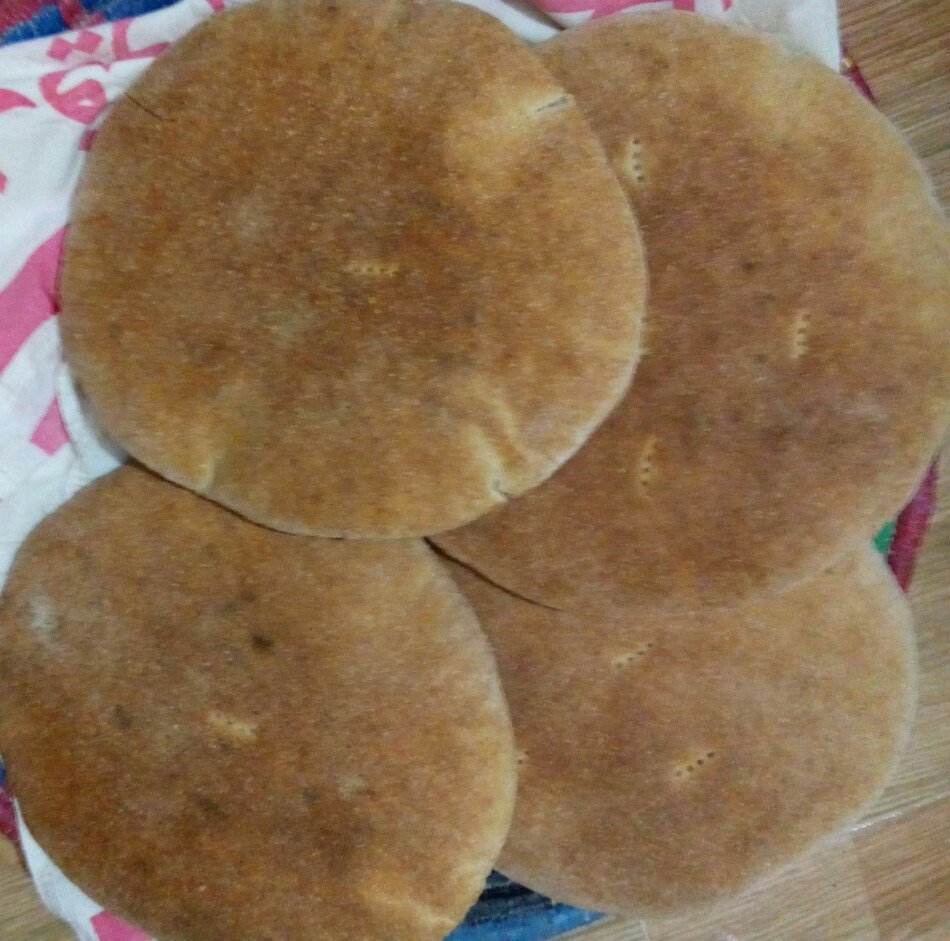
The round Moroccan flatbread, baked fresh and served warm, does triple duty: it scoops the meat, it soaks up the fat, and it carries the cumin-salt to your mouth. Never ask for a fork — the bread is the cutlery.
Cumin and Salt
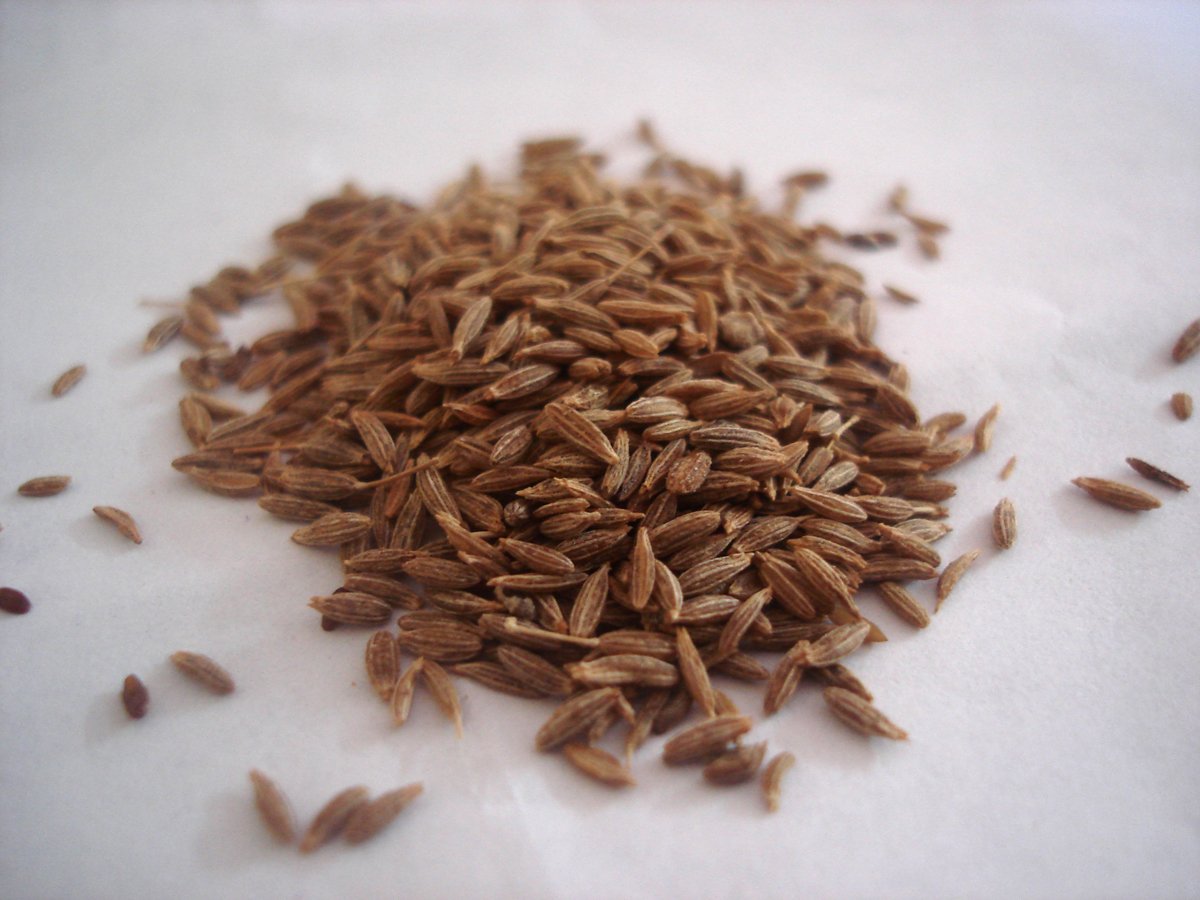
Ground cumin mixed with coarse salt, served in a small bowl or a twist of paper. This is the entire spice rack for mechoui, and it is all the dish needs. The cumin’s earthy warmth was made for lamb fat — the two flavors lock together the way they do in a slow tagine, only here there is nothing else in the way.
Mint Tea
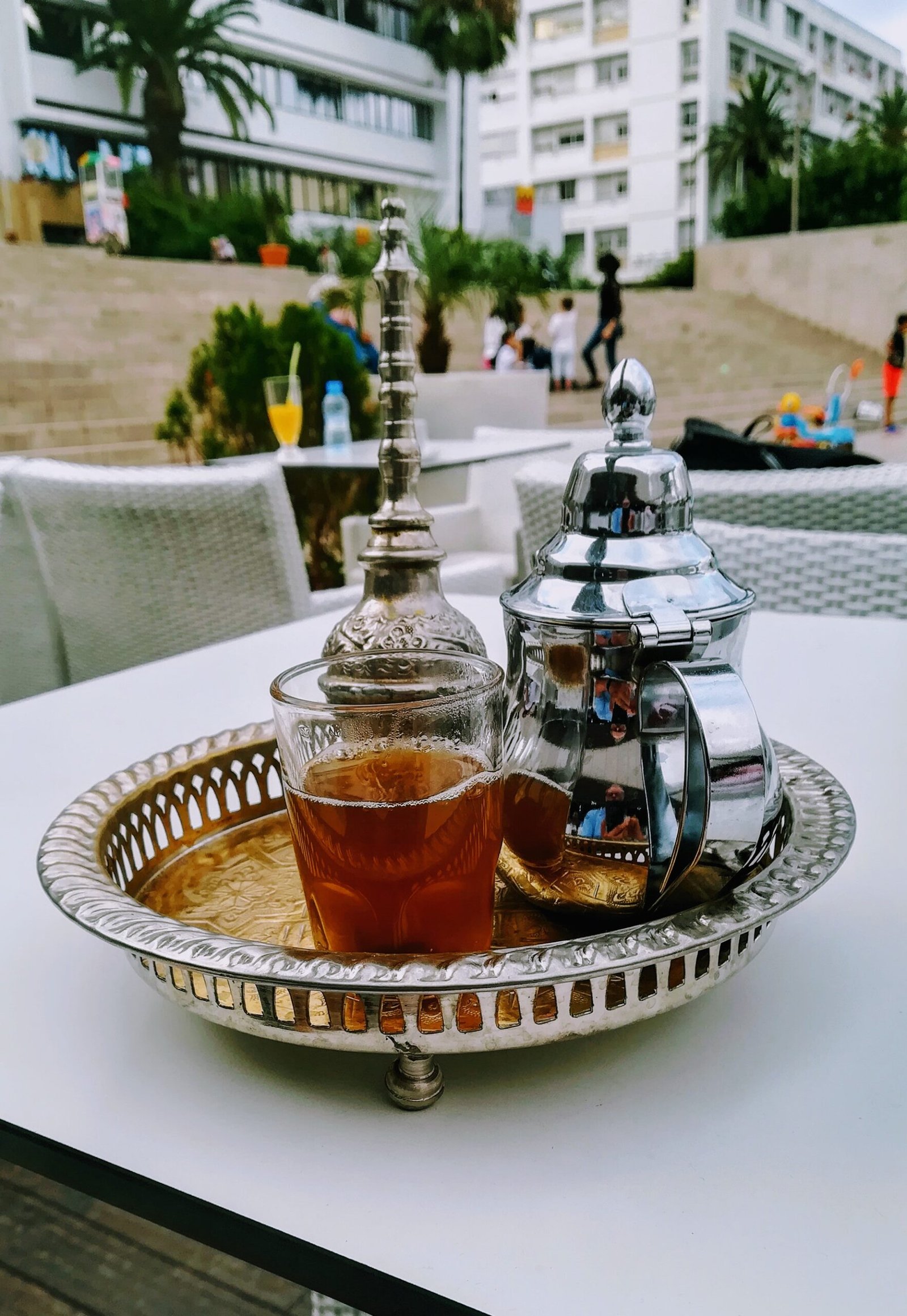
Poured from a height to raise the foam, sweet, and scalding — mint tea is the second half of the meal. The tannin and the heat cut through the fat and reset your palate, which is why Moroccans can eat quantities of roast lamb that would flatten a tourist. Accept the second glass; it is the one that does the work.
Mechoui vs Tanjia: Don’t Confuse Them
Marrakech has two famous slow lamb dishes and visitors mix them up constantly. Mechoui is roasted in a pit oven — dry heat, crisp skin, pulled apart by hand. Tanjia is the opposite technique: meat sealed in a clay urn with garlic, cumin, and preserved lemon, slow-cooked for hours in the ashes of a hammam furnace into a rich stew. One is about fire and crispness; the other about steam and silk. Try both — but don’t call one by the other’s name at the stall.
Common Mistakes Tourists Make
Showing up at dinner. Mechoui is a lunch dish. The pits are emptied by early afternoon, and anything sold after that has been waiting. Plan your day around noon, not the evening.
Confusing it with skewers. Grilled qotban (kebabs) are quick, smoky, and eaten at night stalls. Mechoui is slow, whole-animal, and pulled, not cubed. If it comes on a skewer, it isn’t mechoui.
Expecting a menu and cutlery. The pit stalls have no printed menu; you point, they weigh, you pay. There are no forks. This is the format, not a lack of service.
Asking for it “spicy” or rare. Mechoui is cooked through — hours through. There is no medium-rare setting on a clay pit, and chili has no business here. The warmth comes from the cumin, not from peppers.
Skipping the fat. The crisp, rendered edges are the point. Trimming the fat off throws away the best bites on the platter.
📸 Spot for your own photo here: your own hand tearing a piece of shoulder, bread and cumin bowl in frame.
FAQ
What is mechoui made of?
A whole lamb or sheep, slow-roasted in an underground clay pit with salt and little else, then served by hand with bread, ground cumin, and salt.
Where is the best place to eat mechoui in Morocco?
Marrakech’s mechoui alley — the pit-roasting shops off the north end of Jemaa el-Fna, on Derb Semmarine near the spice souk — serves it daily at lunchtime. Elsewhere it is mostly a wedding and Eid dish.
How much does mechoui cost?
It is sold by weight with no fixed menu price — a few dirhams’ worth makes a generous lunch. Bring cash, watch the weighing, and check our 2026 food prices guide for the going rates.
Is mechoui eaten with cutlery?
No. You pull the meat apart with your right hand, pinch it with torn pieces of khobz, and dip it in cumin and salt. The bread is your spoon.
What is the difference between mechoui and tanjia?
Mechoui is whole lamb roasted in a dry pit oven — crisp skin, hand-pulled meat. Tanjia is meat sealed in a clay urn and slow-cooked in hammam ashes into a rich stew. Same city, completely different technique.
When is mechoui served?
At lunch, from late morning until it sells out — usually early afternoon — and at weddings and Eid al-Adha feasts. Don’t look for it at the night stalls; those belong to grills and skewers (see our Jemaa el-Fna night food guide).
Photos: “Mechoui-2h” by Grey Geezer, Public domain (Wikimedia Commons); “Mechoui-01” by Tonton Jaja, CC BY-SA 2.0 (Wikimedia Commons); “The Moroccan bread” by Bidiyoutchi, CC BY-SA 4.0 (Wikimedia Commons); “Cumin Seeds” by Sugeesh, CC BY-SA 3.0 (Wikimedia Commons); “Moroccan mint tea on a traditional tray” by Munfarid1, CC BY-SA 4.0 (Wikimedia Commons).