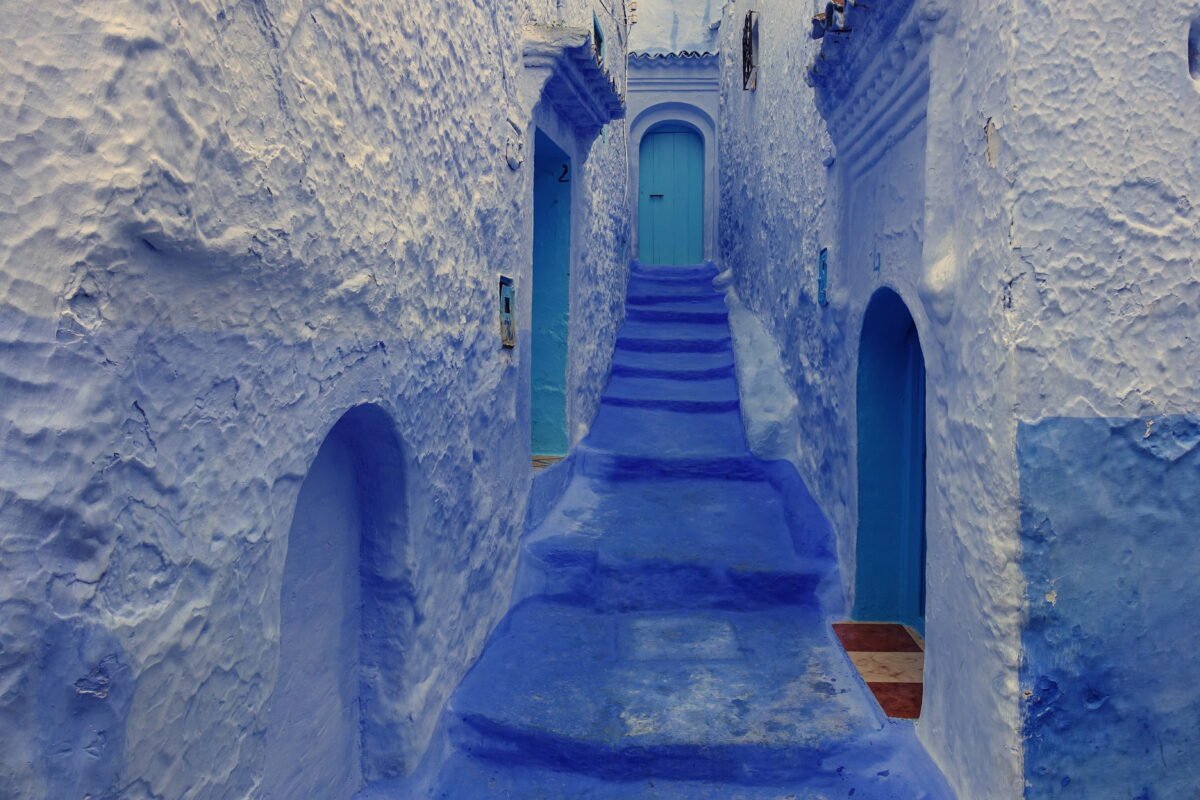
Chefchaouen Food Guide: Mountain Flavors in the Blue City
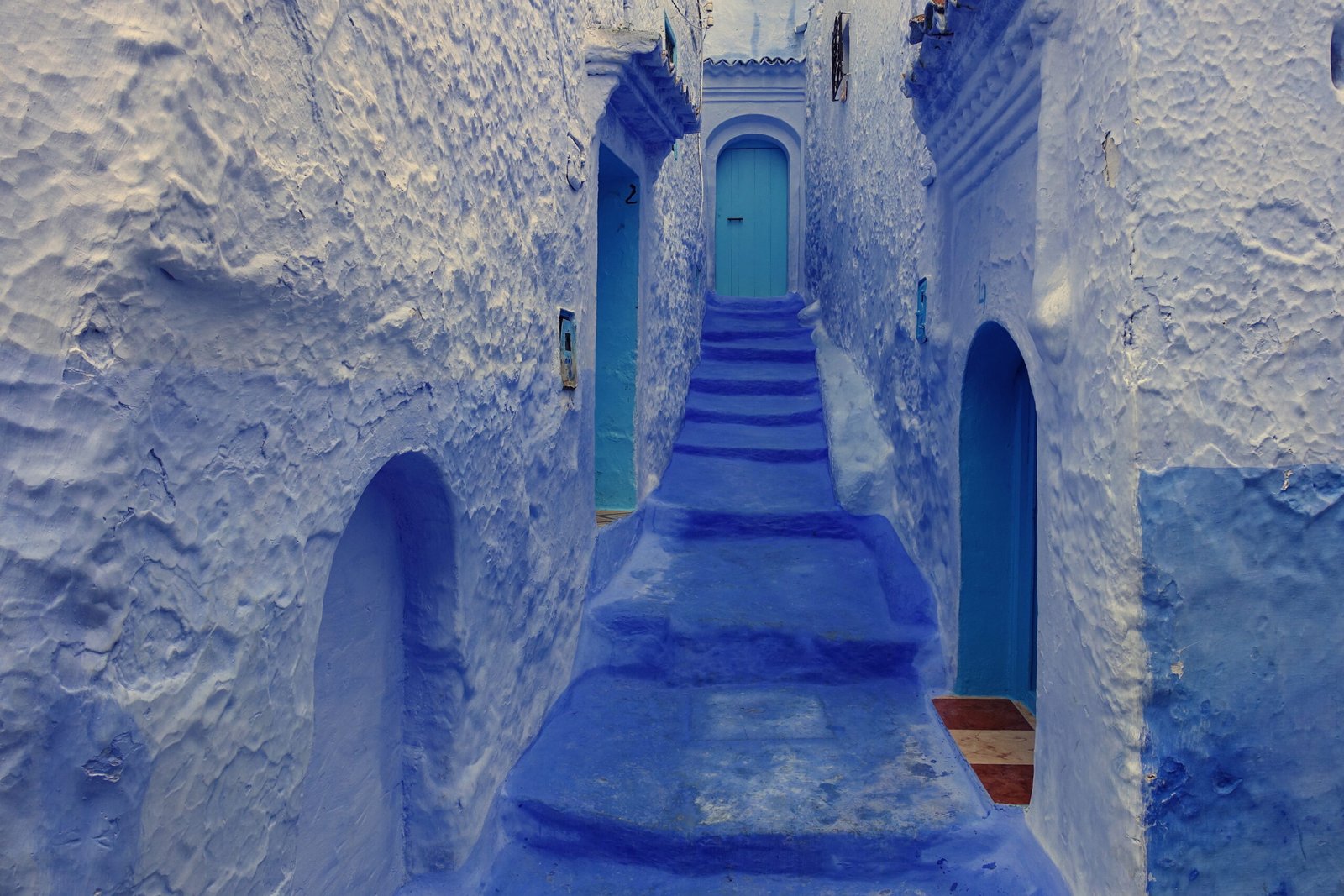
Chefchaouen is famous for its blue-washed medina, but travelers who stay only for photos miss the town’s other big draw: the food. At 600 meters up in the Rif Mountains, Chefchaouen eats differently from the big cities — goats graze on wild mountain pastures, olives grow in the valleys below, and breakfast is a hot bowl of fava bean soup, not a croissant. What to eat, where locals actually eat, and the tourist trap everyone falls into on the main square: this guide covers it, dish by dish.
Why Chefchaouen Tastes Different: The Rif Mountain Effect
The Rif range is Morocco’s northern mountain backbone, and Chefchaouen sits deep inside it. That geography shapes the plate in three concrete ways. First, the town’s farmers and herders work small mountain plots and free-grazing herds, so the local food economy still runs on the immediate land: olives, goat’s milk, fava beans, wheat, mountain herbs. Second, the small, historically isolated town kept a distinctly northern kitchen instead of absorbing the courtly cuisine of Fes or the menus of Tangier. Third, the day-trippers who flood the blue medina at noon leave by 5 PM, so the evening food scene belongs to locals and overnight travelers.
The flavor signature is simpler and earthier than in the big cities: olive oil poured straight from unmarked bottles, bread baked that morning, food eaten communally from shared bowls. Spices are used with restraint — cumin, paprika, garlic — because the base ingredients carry the dish.
Specific Dishes to Try in Chefchaouen
Bissara: The Fava Bean Soup That Starts the Day
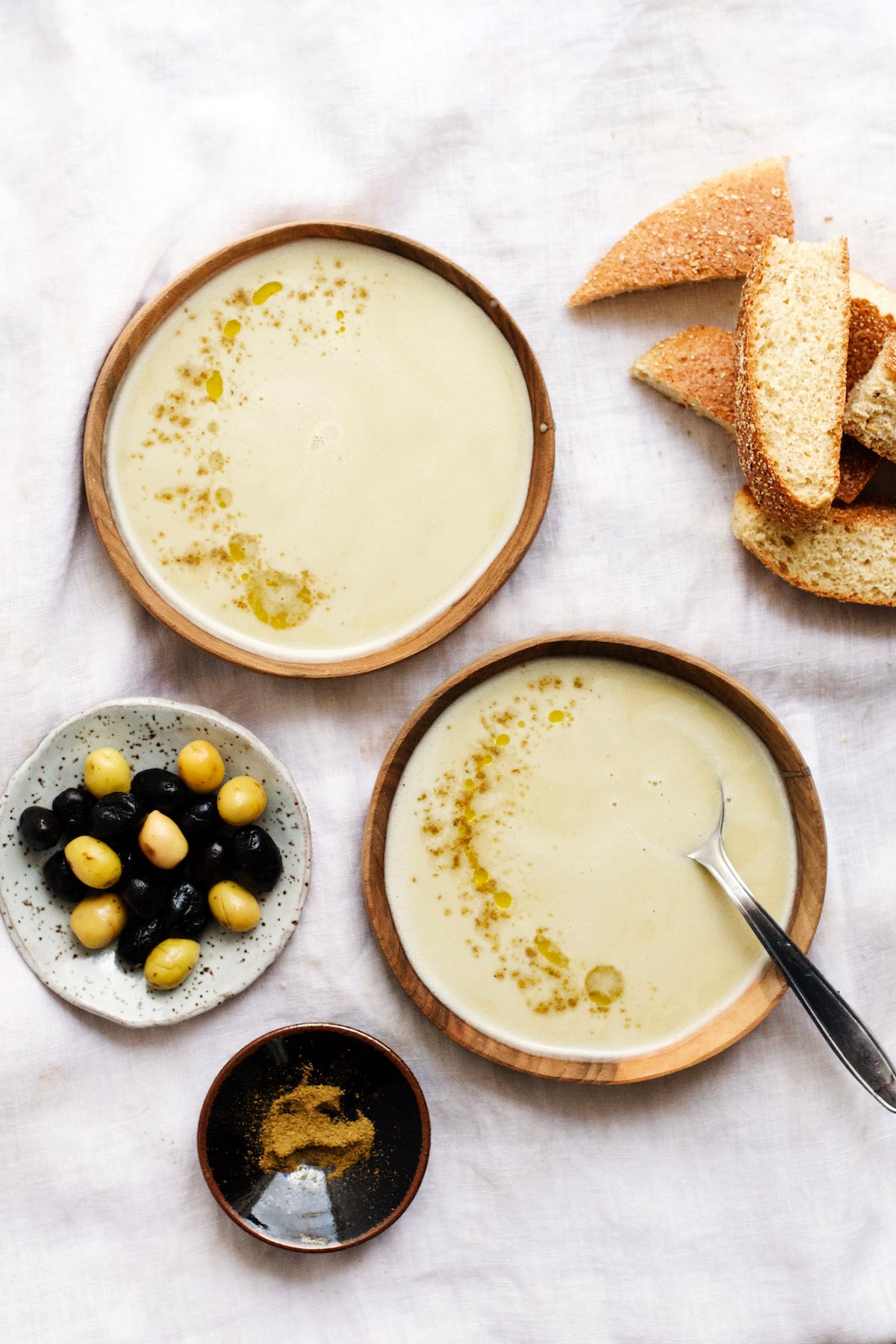
Bissara is the dish most closely tied to northern Morocco, and in Chefchaouen it is breakfast: dried fava beans (sometimes with split peas) cooked down to a thick, creamy purée, finished with olive oil, cumin, and lemon. Vendors and small gargotes serve it in the morning hours only — by noon the pots are empty. You eat it the way locals do: with torn pieces of fresh bread used as a scoop.
The difference from the south is real. In Marrakech, bissara is a late-night street soup. In Chefchaouen, it is the standard working breakfast, warming laborers and farmers before they head into the hills. Order it with bread, not a spoon. The cumin is the soul of the dish — watch how the vendor dusts it on at the end.
Jben: The Fresh Goat Cheese You Can Only Find Here
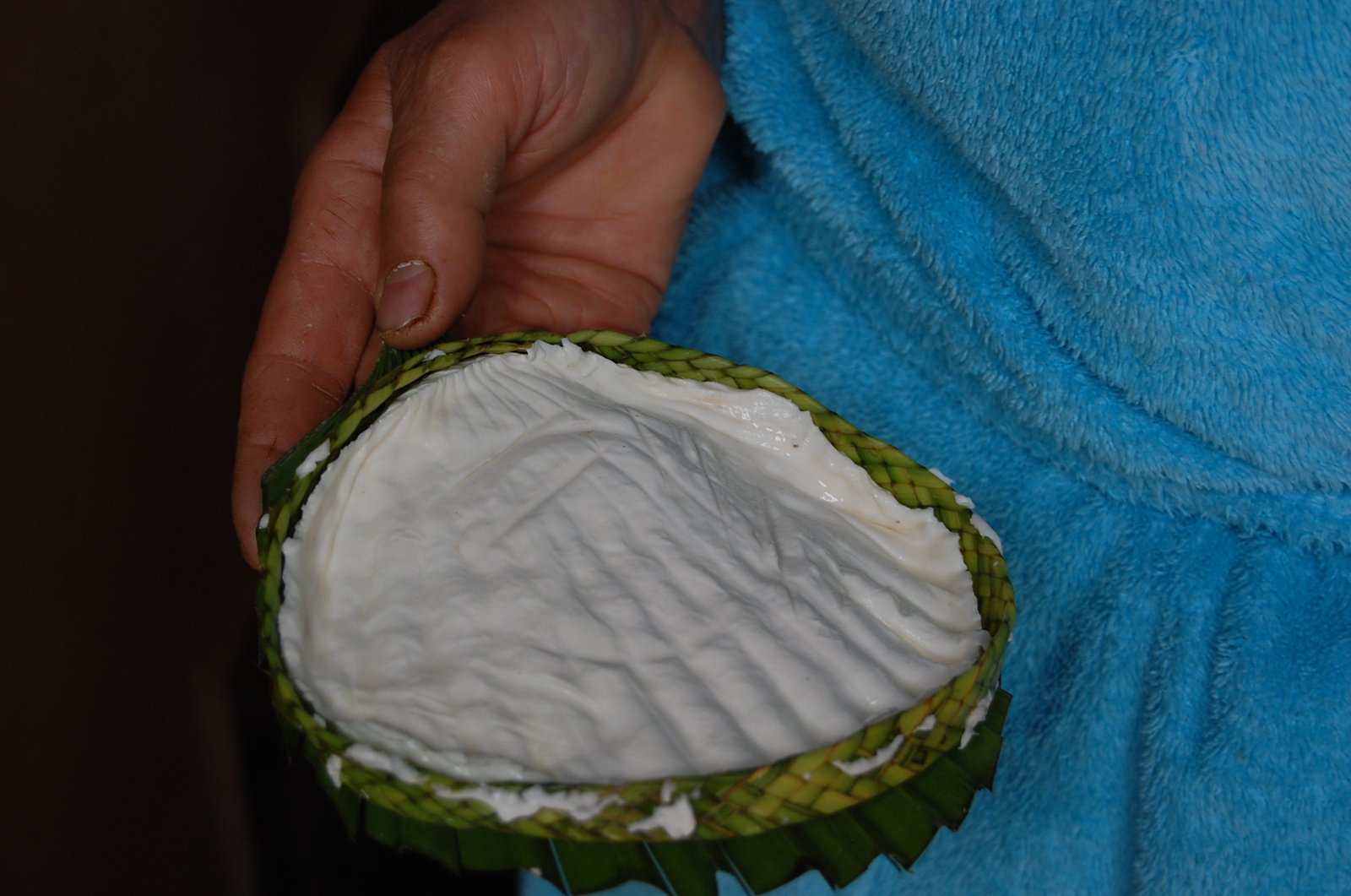
Jben is the single most Chefchaouen-specific food on this list: a fresh cheese from raw, unpasteurized goat’s milk, made by small farmers whose goats graze freely on mountain pastures full of wild thyme and medicinal plants — the herbs give the cheese a distinctive character you will not find in pasteurized dairy. It is sold mainly in the souks, wrapped simply, and rarely appears printed on menus. The practical trick: ask the waiter. Restaurants almost always have jben in the kitchen and will serve it fresh, with olive oil or in a warm salad with honey and walnuts.
Eat it two ways if you can. Plain and fresh, it is creamy with a gentle tang. Warmed over hot bread with honey, the saltiness turns sweet and it becomes the best breakfast bite in town. Because it is made from raw milk and sold informally, buy it where the turnover is high and eat it the same day.
Rif Olives: A Dish, Not a Garnish
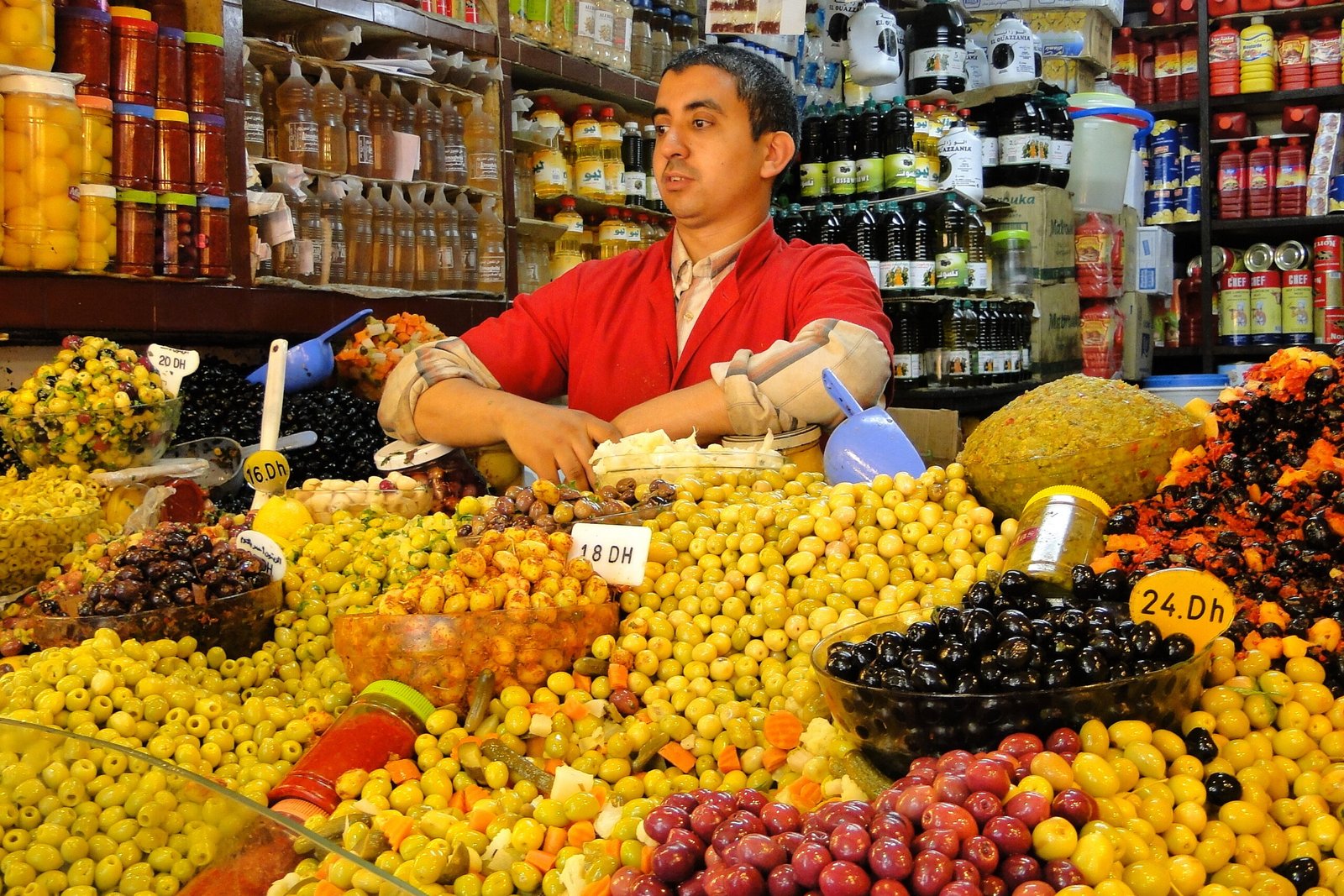
The northern valleys around Chefchaouen grow some of Morocco’s best olives, and in the souk they are a market spectacle: mounds of green olives cracked and marinated with harissa and preserved lemon, black olives in salt, small violet ones from the mountain groves. Buy a small bag from a vendor with a long queue; locals judge olive stalls by how fast they sell out.
At the table, olives arrive free before almost every meal, the way bread arrives in France. Taste them deliberately: the cracked green olives with harissa are the ones locals buy by the kilo for home. If you stay in a riad, buy a bag from the market for your hiking day — they travel perfectly.
Mountain Tagines: Lamb, Prunes, and Restraint
Tagine exists everywhere in Morocco, but the mountain version leans toward slow-cooked lamb or goat with prunes or apricots, scented with cinnamon and saffron, cooked until the meat falls apart. The northern style is noticeably less sweet than the tourist versions in the big cities — the fruit rounds the flavor, it does not sugar the dish. Chicken tagine with preserved lemon and olives is the other workhorse; when made well, the olives are Rif olives, which makes it a genuinely local plate.
Order tagines in the evening, when the kitchens have had time to cook them slowly. A tagine thrown together for the lunch rush is not the same dish as one that sat on coals for three hours — the single most practical tagine rule in Morocco.
Msemen and Baghrir: The Northern Breakfast Spread
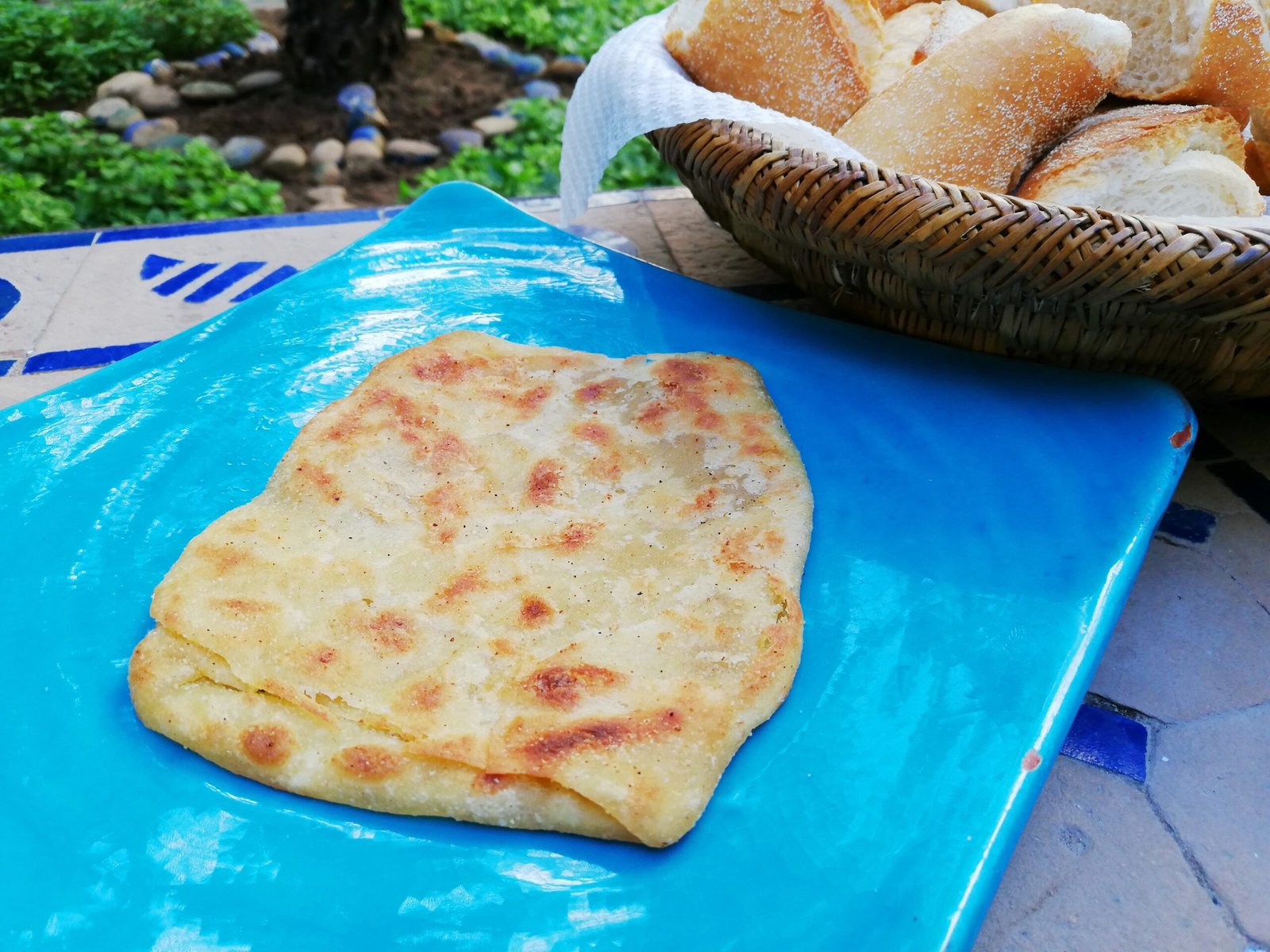
The Moroccan breakfast of msemen (flaky, pan-fried square flatbread) and baghrir (spongy thousand-hole pancakes) is a national treasure, but in Chefchaouen it comes with the mountain context that makes it special: local honey that tastes of wild thyme, fresh jben instead of processed cheese, mint tea poured from a height. Riads serve this spread every morning, and small breakfast gargotes near the souk do it for a few dirhams — always order the msemen fresh from the griddle, because it loses its crisp layers fast.
Where Locals Eat vs the Tourist Square
Plaza Uta el-Hammam is the beating heart of the medina — cafés and restaurants on all sides, the kasbah on one end, the Grand Mosque’s octagonal minaret on the other. Almost every visitor eats at least once on the square, and you should too: one mint tea on a terrace overlooking the plaza is part of the experience. But the menus are long, the kitchens serve the standard national repertoire, and prices run higher than anywhere else in town because the rent on those terraces is paid by foot traffic, not by food quality.
The local eating circuit is everywhere else. Small gargotes — humble worker’s restaurants — cluster in the lanes behind and above the square, especially along the streets climbing toward the east gate (Bab al-Ansar) and near the covered souk. These are the places with three or four dishes written nowhere, food served fast, bread in baskets. A gargote has no terrace view and no English menu, and that is exactly the point: lunch on the square if you want the view, dinner in the lanes if you want the food.
One honest note: no restaurant is named here on purpose — they change hands, cooks, and quality faster than any guide can track. Use the signals instead: a busy morning crowd for bissara, a menu you can read in two minutes, and staff who ask what you want rather than reciting a script.
Practical Tips: Meal Times and Breakfast Culture
Moroccan meal times run later than most travelers expect. Breakfast is 8 to 10 AM, but in the medina’s gargotes the bissara pots are out by 7:30 and gone by noon. Lunch is the big meal, roughly 1 to 3 PM — tagines and couscous. Dinner starts late: most kitchens do not fire up until 8 PM, and 9 PM is a normal dinner time. Sit down at 6:30 PM and you get whatever was left from lunch.
Breakfast here is a full event: hot bissara or msemen from the griddle, fresh jben, olives, honey, and tea, all arriving together. Riads serve it between 8 and 10, but the best version is in the gargotes, where it costs pocket money and comes with the morning energy of the town. One morning, eat where the workers eat. 📸 (This is the spot where your own photo of a gargote breakfast spread would be perfect — a bissara bowl next to msemen and honey.)
Stay overnight. Chefchaouen is sold to most visitors as a day trip, but the day-trip schedule means you eat lunch in the square crowds and miss both the breakfast culture and the evening kitchens. One night in the medina doubles the town’s food quality at the same price.
Common Mistakes Travelers Make
Lunch on the square at noon, once, then leaving. The plaza at noon is the town’s most expensive and least interesting plate. Walk up into the lanes, or save your meal for the evening.
Skipping breakfast. The bissara window is short and it is the most Chefchaouen meal of the day. Sleep through it and you miss the town’s signature dish.
Not asking for jben. It is not on the menu, but the waiter has it. Three days here without tasting its most famous cheese is your own fault.
Ordering tagine at lunch and judging it. A rushed lunch tagine is a pale version. Save your tagine judgment for a slow evening kitchen.
FAQ: Eating in Chefchaouen
What food is Chefchaouen famous for?
Jben, the fresh goat cheese made from mountain goat’s milk — produced by local farmers and hard to find elsewhere. Bissara (fava bean breakfast soup) and Rif mountain olives complete the local trio.
Is bissara eaten for breakfast in Chefchaouen?
Yes. In the north, bissara is the standard working breakfast — a thick, hot fava bean soup with olive oil, cumin, and bread, served mornings only. The pots are empty by noon.
How much does food cost in Chefchaouen?
Generally cheaper than Marrakech or Fes for comparable food. A gargote lunch costs a few dirhams; a square-terrace dinner with tagine and tea runs moderate by Moroccan standards. Full breakdown in our food prices guide for 2026.
Where do locals eat in Chefchaouen?
In the small gargotes in the lanes behind and above Plaza Uta el-Hammam — worker’s restaurants with a handful of dishes, no view, no English menu. Learn about how gargotes work and how to order like a local.
Is Chefchaouen’s street food safe to eat?
The same rules apply as everywhere in Morocco: eat where the crowd is, eat food cooked fresh and hot, avoid raw items at quiet stalls. See our guide on Moroccan street food safety.
Can you eat well on a day trip?
You can eat fine, but you will miss the best of it. Day-trippers arrive at noon (the square’s worst hour) and leave before the evening kitchens start. One overnight stay is the biggest upgrade you can make to your Chefchaouen food experience.
📸 (Second 📸 spot: a photo from your own terrace dinner — the blue medina at dusk with a tagine on the table — would close this article perfectly.)
Photos: “2018 01 (Blue) – Chaouen” by Fbrandao.1963, CC BY-SA 4.0 (Wikimedia Commons); “Bissara Moroccan split pea and fava bean soup” by Ruby Josephine Smith, CC BY-SA 4.0 (Wikimedia Commons); “Ary-jben makêye Rif coirbeye” by Lucyin, CC BY-SA 4.0 (Wikimedia Commons); “Olive Seller in Market – Tangier – Morocco” by Adam Jones, Ph.D., CC BY-SA 3.0 (Wikimedia Commons); “Msemmen” by Popo le Chien, CC0 (Wikimedia Commons).