Fès Food Guide: Tasting Morocco’s Culinary Capital
Ask Moroccan cooks where their cuisine reaches its highest level and the answer comes fast: Fès. Founded in 789, the oldest imperial city has had twelve centuries to refine its kitchen. Andalusi refugees brought layered pastry and a taste for sweet-savory contrast in the 9th century; Sephardic Jews added their own pickling, pastry and spice techniques from the 15th; Fassi merchant families kept the whole inheritance alive inside courtyard houses where recipes passed from mother to daughter. The result is Morocco’s most elaborate food culture — precise, generous, and sweet exactly where it should be.
Why Fès earned the title
Walk through Fès el-Bali, the old medina and the largest car-free urban area on earth, and the claim explains itself. The two great arteries — Talaa Kebira, “the big hill”, and Talaa Seghira, “the small hill” — run from Bab Boujloud down toward the Qarawiyyin quarter, and food is woven into both. Under the lattice roofing: butchers with strings of merguez and chicken skewers, produce stalls piled with pomegranates and dates, communal ovens baking the neighborhood’s bread each morning, grills working charcoal near the tanneries. Fondouks that stored saffron and sugar now hold honey merchants; the copper beaters at Seffarine Square still hammer out tagine pots within earshot of the food stalls.
The signature Fassi move is the sweet-savory pairing, pushed further here than anywhere else in the country. Where a Marrakchi cook adds spice, a Fassi cook adds honey, caramelized fruit, almonds and orange blossom water. Pigeon pastilla dusted with sugar and cinnamon. Lamb braised with quince or prunes until the sauce turns to syrup. This is the Andalusi inheritance — pastry, almond paste, contrast on a single plate — and Fès is where Morocco preserved it best.
The Fassi dishes you must taste
Pastilla au pigeon
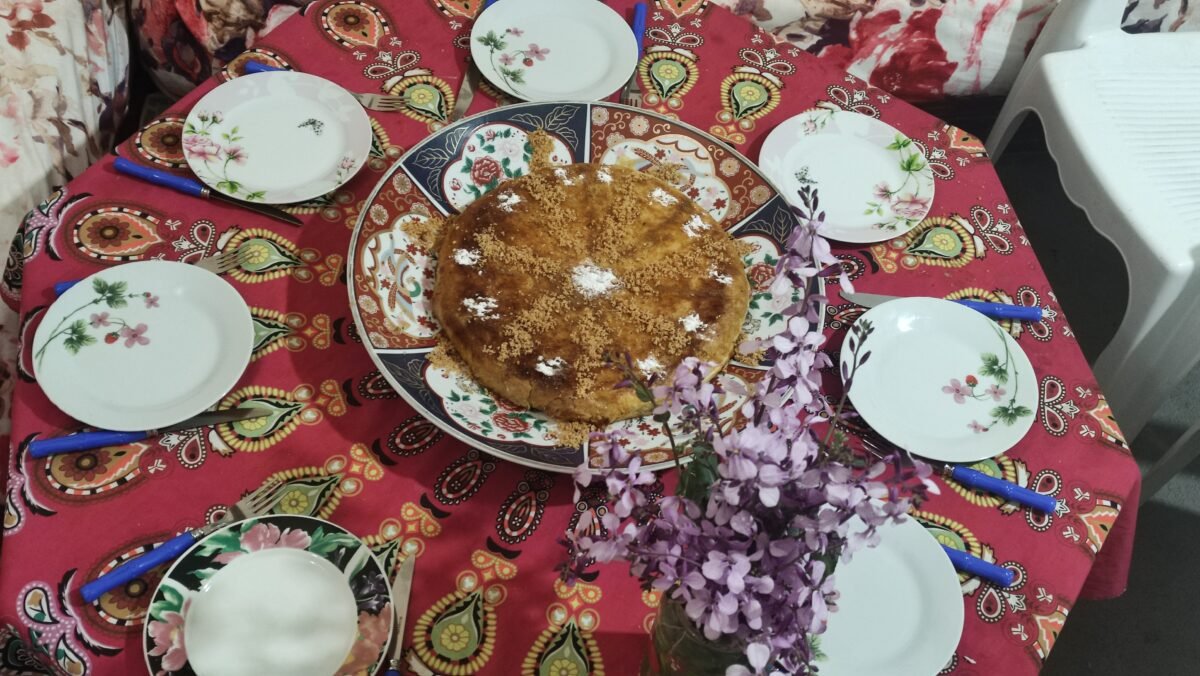
The signature dish of Fès, and the one no visitor should skip. Thin warka pastry wraps shredded pigeon simmered with onions, ginger and saffron, a layer of spiced scrambled eggs, and fried almonds crushed with sugar. The whole round pie bakes until the pastry shatters, then is dusted with powdered sugar and cinnamon. One bite carries the four Fassi flavors at once: savory, sweet, fragrant, crunchy. Fassi families traditionally serve pigeon pastilla at weddings and large celebrations. It is labor-intensive, so many medina kitchens make it to order — ask in the morning for the real slow version rather than a reheated shortcut.
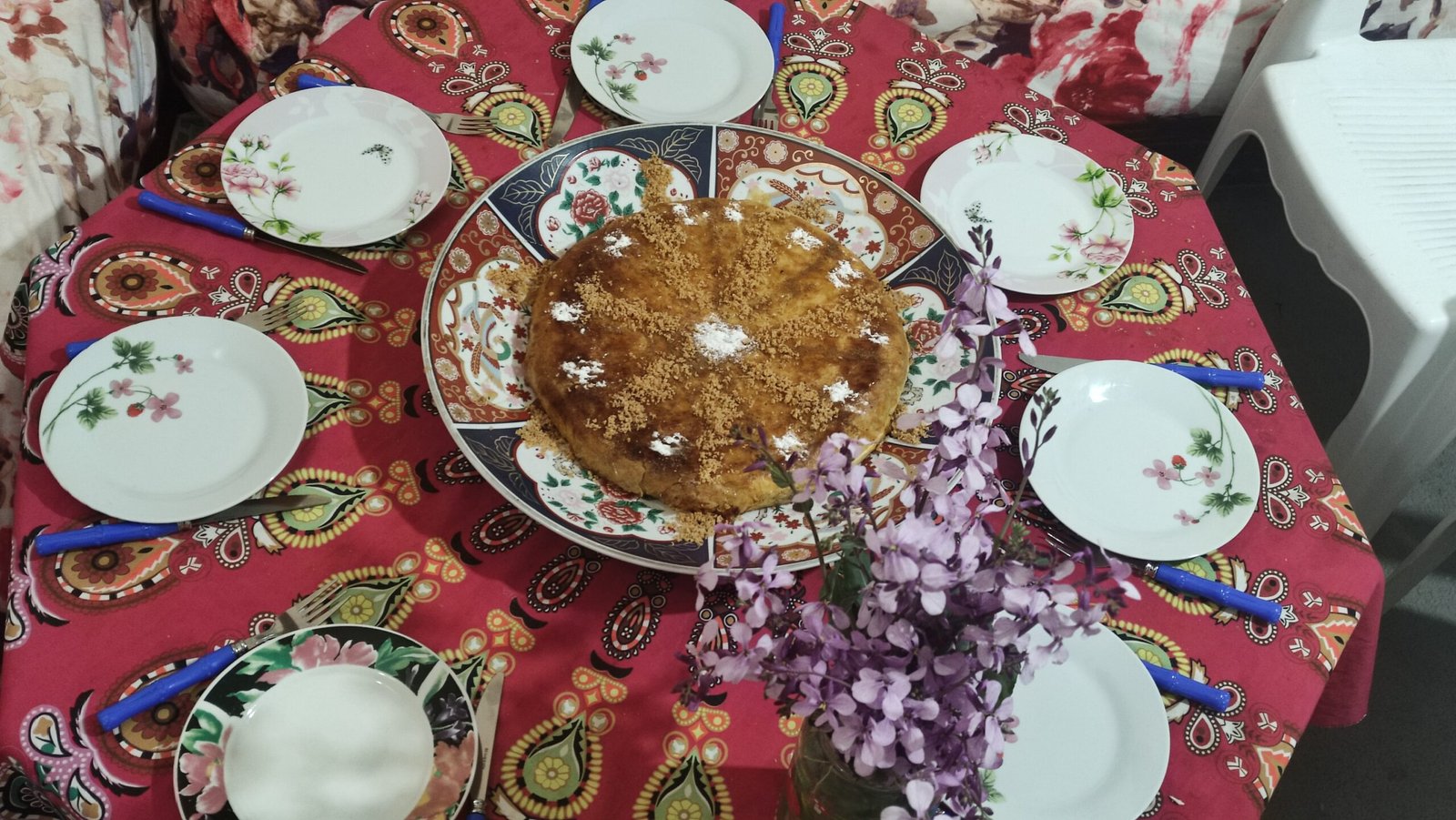
📸 Your own photo here: a pastilla being cut at the table, the steam and the sugar-dusted top visible.
Lamb tagine with caramelized quince
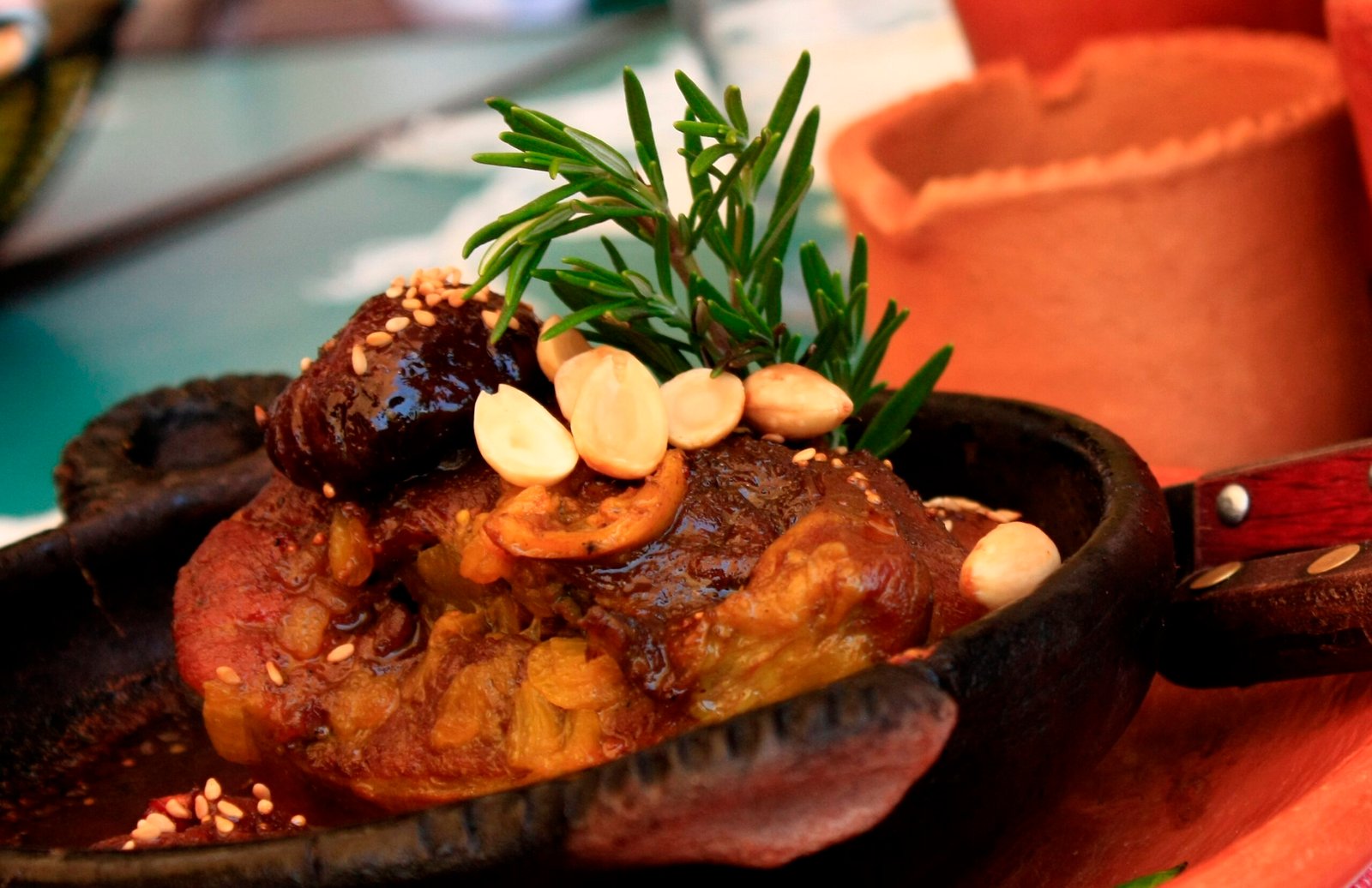
The Fassi tagine travelers remember longest is the sweet one. Lamb braised with ginger, saffron and cinnamon until it loosens from the bone, crowned with quince — sfarjel — or prunes caramelized in honey until amber and almost floral. Quince is harsh raw; simmered in syrup it becomes the perfect counterweight to rich lamb. This tagine belongs to family gatherings and celebrations across Fès, and it is the clearest taste of what separates Fassi cooking from the rest of Morocco. For the full picture, see our complete tagine guide.
Mechoui
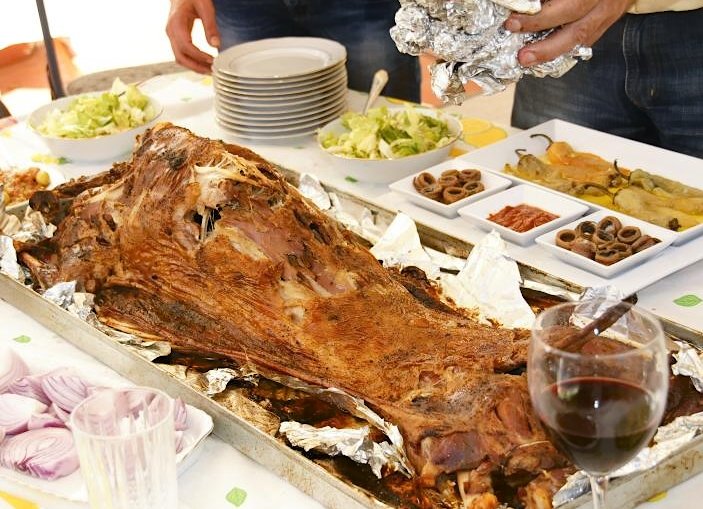
Mechoui is whole lamb rubbed with salt and cumin, roasted for hours over embers or in a pit until the skin crisps and the meat falls apart at the touch. In Fès it is wedding and celebration food, carved off the carcass and eaten with bread and cumin salt: no sauce, no garnish, nothing to hide behind. The exact opposite of the delicate Fassi pastry kitchen — one animal, fire, patience — and both belong on every serious Fès itinerary.
Harira
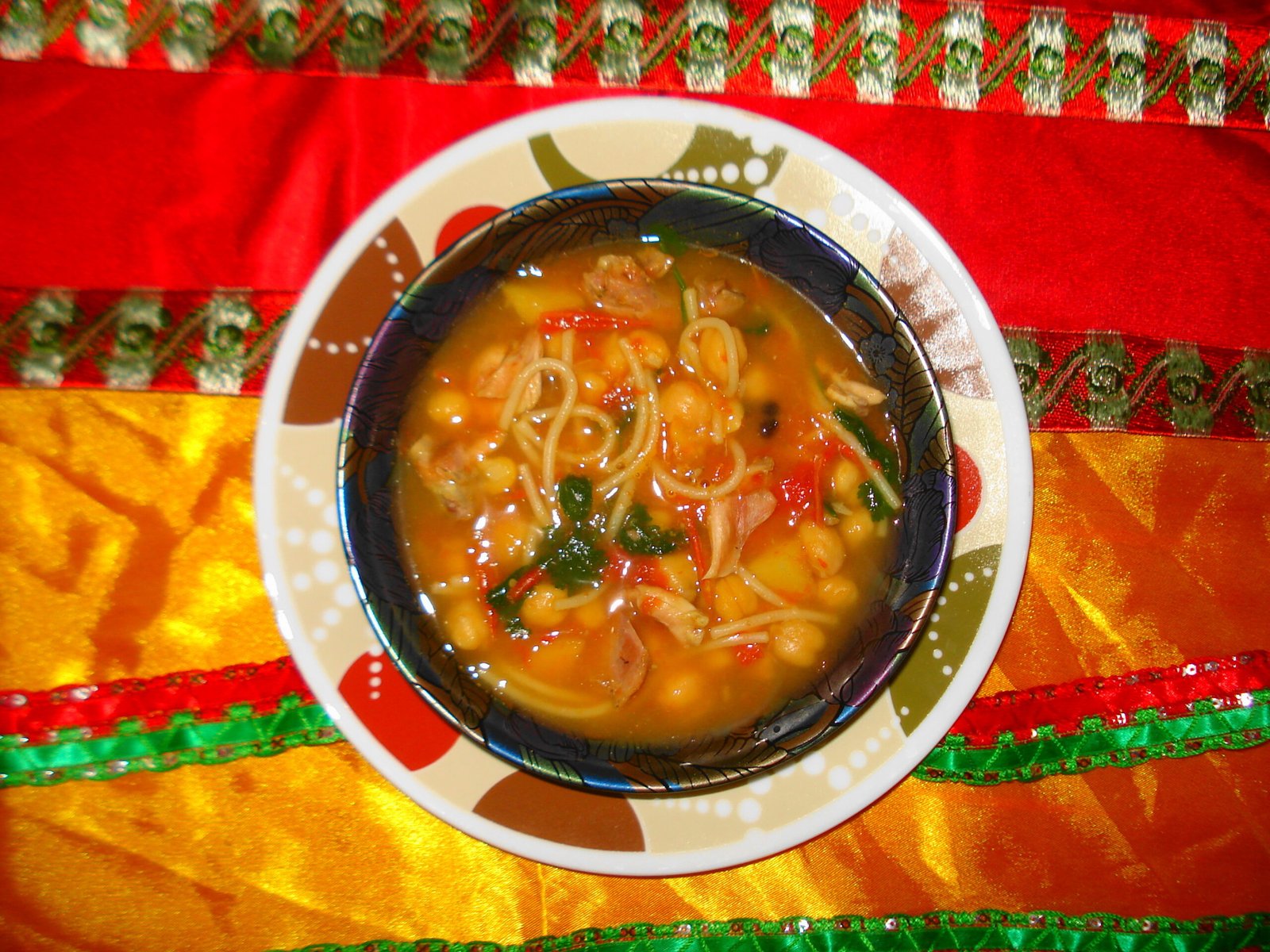
The soup of Ramadan evenings, and a Fès street staple the rest of the year. Tomatoes, chickpeas and lentils simmer with celery, parsley and coriander, thickened with tedouira — flour and water stirred in at the end — and finished with a pinch of smen. Served with lemon and torn bread; during Ramadan it is the first thing eaten after the fast. In any medina gargote you get the everyday version: rich, tangy, filling, and among the cheapest bowls of good food you will find.
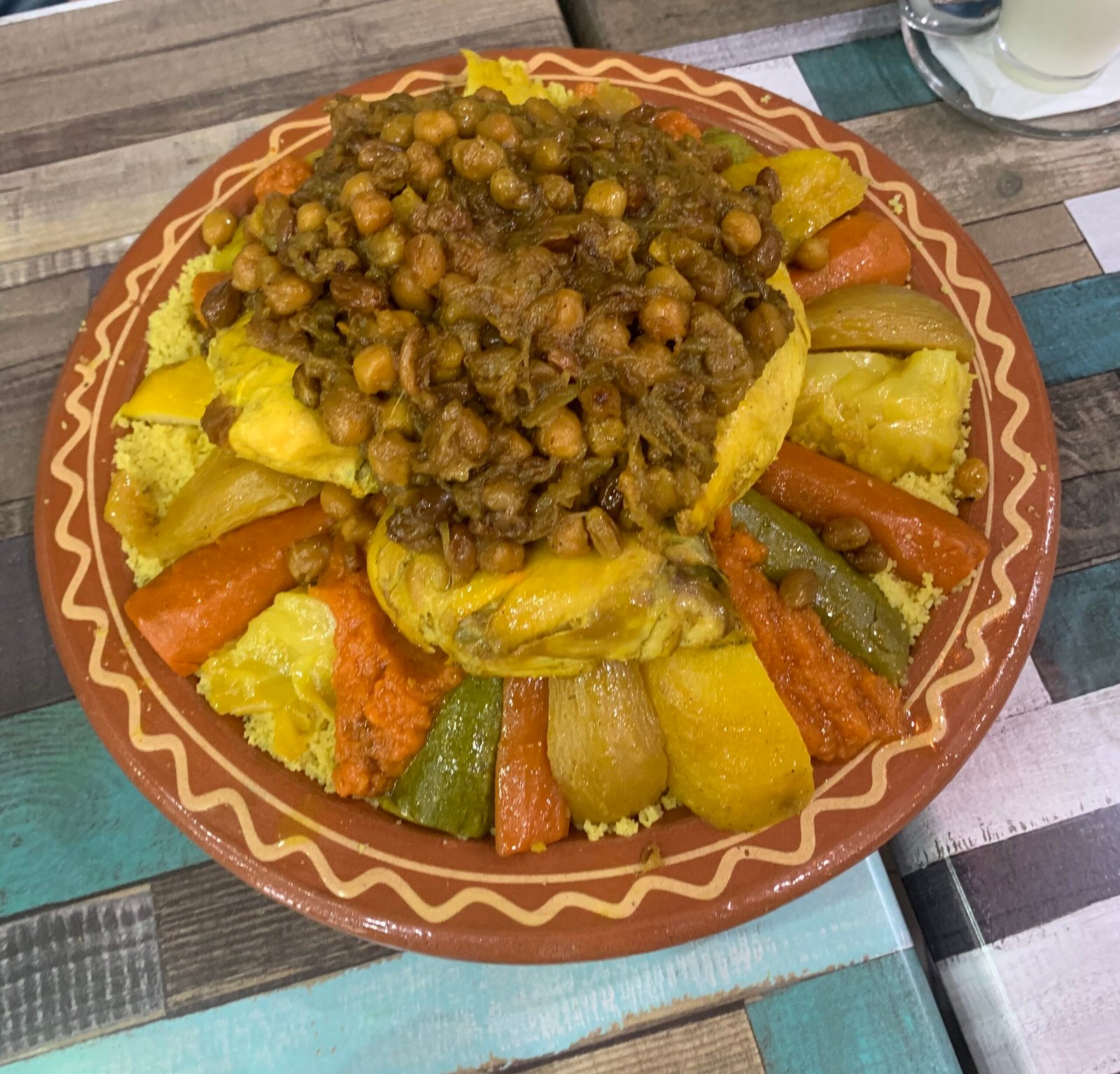
Friday seven-vegetable couscous
Couscous belongs to Friday, and Fès makes the classic version. Fine semolina steamed two or three times until every grain stands separate, mounded with the seven vegetables — carrots, zucchini, pumpkin, turnips, cabbage, tomatoes, chickpeas — around a centerpiece of tfaya, onions caramelized with raisins and cinnamon. Families eat it after Friday prayer; restaurants serve couscous on Friday only, so time your visit accordingly. Our Friday couscous guide explains the ritual.
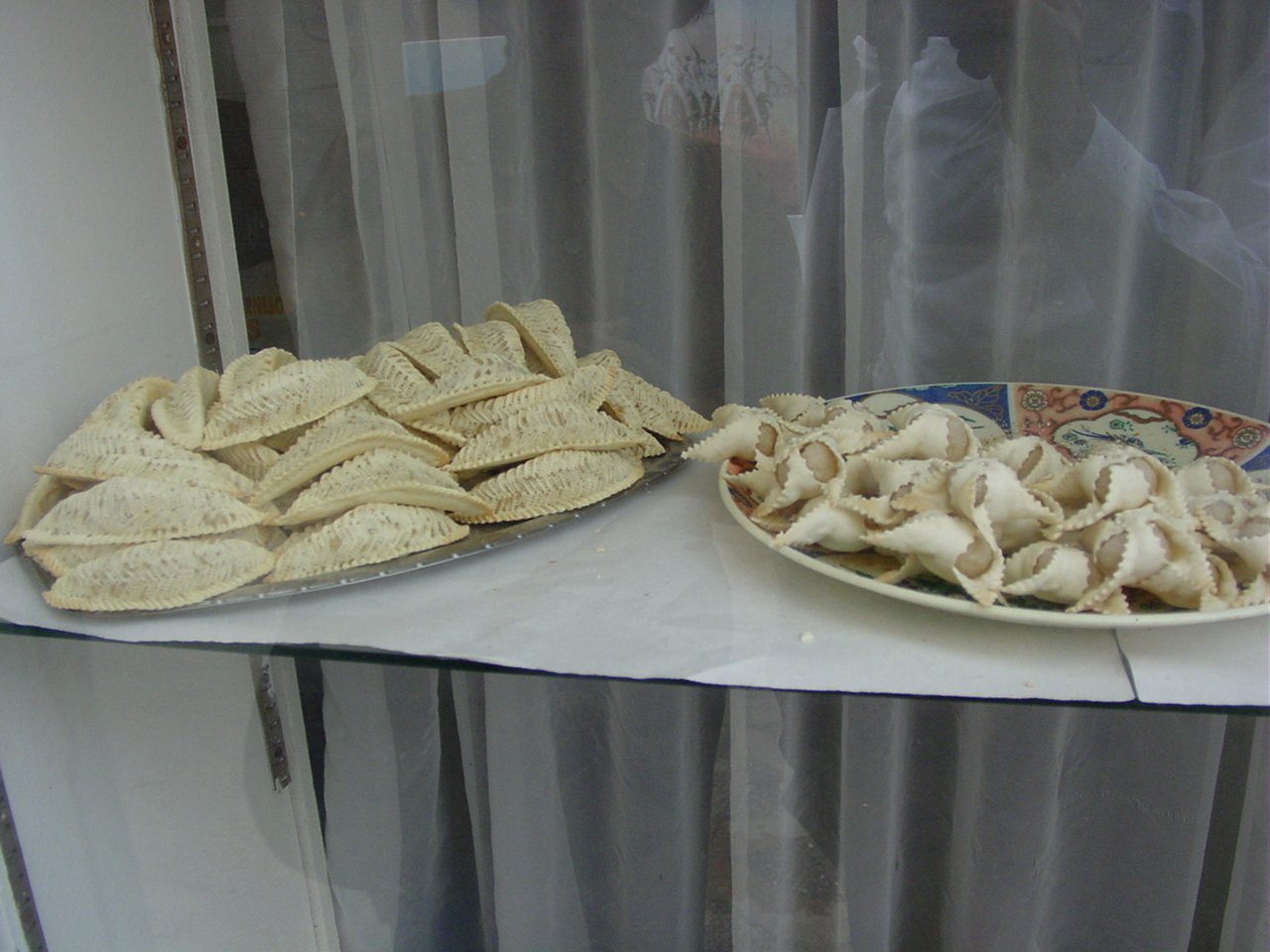
Fassi sweets: kaab el ghazal and chebakia
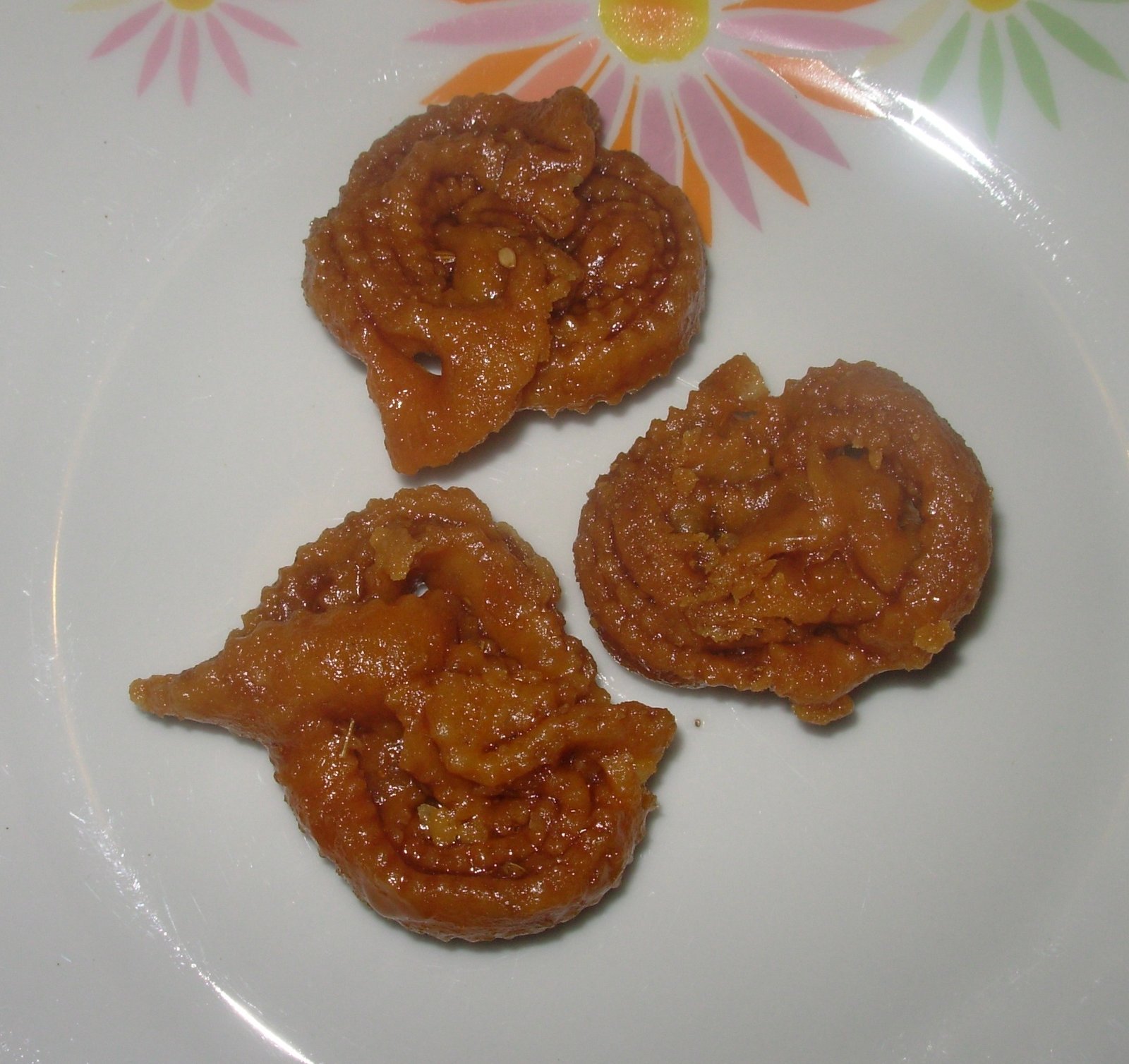
Fès is Morocco’s pastry capital, and two sweets carry the flag. Kaab el ghazal — “gazelle’s horns” — are crescent pastries filled with almond paste scented with orange blossom water, baked pale and often dusted. Chebakia is their opposite: sesame dough rolled thin, cut into flower shapes, fried crisp, drowned in hot honey while still warm. Both fill every pâtisserie window along the medina’s main streets, sold by weight — a mixed box is the standard gift when invited to a Fassi home.
Where locals actually eat
Fès eats at three speeds, and each has its own address in the city.
Gargotes — the hole-in-the-wall canteens
The gargote is a tiled room with plastic chairs, a grill at the door, and a ten-second menu: harira, bean and lentil stews, kefta tagine, brochettes off the charcoal. Craftsmen, students and shopkeepers eat lunch here — and so should you. Follow the smoke along Talaa Kebira and Talaa Seghira, around Bab Boujloud: a full lunch costs a few dirhams, and turnover is so high the food never sits. Our guide to Moroccan restaurant types explains how gargotes, snack-bars and full restaurants differ.
Riad restaurants
The second speed is the courtyard: converted medina houses where dinner runs several courses under a carved-cedar ceiling. This is where you eat pastilla properly, followed by a sweet tagine and Fassi sweets with mint tea — slower, pricier, worth it once. Most need a reservation in high season, and pastilla is often made to order, so mention it when you book.
Food streets and squares
Start at Bab Boujloud and walk Talaa Kebira downhill: butchers, produce markets, juice stalls, grill smoke. Near Seffarine Square, the coppersmiths’ quarter, small cafés serve strong coffee and mint tea to artisans on their breaks — sit among them. And do not miss Fondouk Kaat Smen, the honey souk, where merchants pour tastings of wild honey — orange blossom, lavender, caper, carob — sold by weight. For eating on foot across the country, see our Moroccan street food guide.
📸 Your own photo here: the grill smoke and stalls on Talaa Kebira at lunchtime.
How Fassi cooking differs from Marrakech and Casablanca
Eat through the three cities and the gradient is unmistakable. Marrakech cooks bold and street-first: the night mechoui pits, the msemen griddles, and tangia — beef sealed in an urn with garlic, preserved lemon and cumin, slow-cooked in hammam ashes — the city’s cult dish. Casablanca cooks cosmopolitan: seafood-driven, restaurant-heavy, less tied to one canon. Fès keeps the Andalusi refinement — sweeter tagines, more almond pastry, subtler spicing, a kitchen raised indoors in courtyard houses rather than on the street grill. Fès is the most elaborate, and the one where a single meal teaches you the most. Our Marrakech food guide covers the other end.
Practical tips for eating your way through Fès
- Friday is couscous day. Restaurants serve couscous on Friday only; on other days, do not expect it on the menu.
- Ramadan rewrites the schedule. Daytime eateries mostly close; at sunset the medina becomes a feast of harira and chebakia. Travel then and you eat late, with the crowds.
- Order pastilla ahead. The good version is made to order — tell your riad or restaurant in the morning and it is ready by dinner.
- Eat by the calendar. Quince tagine is an autumn and winter dish; chebakia floods the shops during Ramadan. Seasonal food tastes better and costs less.
- Bread is your cutlery. Tear khobz and scoop — forks are for the salad course, if one appears.
- Mint tea everywhere, bottled water in the medina. Tea is made with boiled water; stick to bottles for plain water.
📸 Your own photo here: a spread of Fassi sweets bought at the honey souk.
Frequently asked questions
Is Fès really Morocco’s food capital?
By the reckoning of Moroccan cooks, yes — and the argument is twelve centuries long. Fès absorbed Andalusi, Sephardic and Arab cooking traditions into one kitchen and refined them in private homes before they ever reached restaurant menus. Marrakech has the better street-food theater; Fès has the deeper repertoire.
What is the one dish I must not leave Fès without trying?
Pigeon pastilla. It is the dish most associated with the city, it exists in its best form here, and it concentrates everything Fassi cooking does — sweet, savory, fragrant, crisp — into one pie.
Can vegetarians eat well in Fès?
Yes, more easily than you might expect. The seven-vegetable couscous, vegetable tagines, harira, and the lentil and bean stews served in every gargote are all part of the regular rotation — and the tfaya topping on couscous is sweet, spiced and meat-free. Just confirm the soup base on the day, since some harira is finished with smen.
Is street food safe in Fès?
The same rules apply as everywhere in Morocco: eat where the turnover is high and the locals are queuing, eat it hot off the grill or out of the pot, and drink bottled water. See our full street food safety guide before you go.
How many days do I need for a food trip in Fès?
Two full days minimum: one for the medina food streets by day and a pastilla dinner at night, a second for the squares, the honey souk, and — if it falls on your stay — a Friday couscous. A third day adds a cooking class and a change of speed: gargotes one day, a riad dinner the next.
Photos: pigeon pastilla by Slg04 (CC BY-SA 4.0); tagine with quinces by Magda Baidan (CC BY-SA 4.0); mechoui by Tonton Jaja (CC BY-SA 2.0); harira by Miansari66 (CC0); couscous by Laurhim (CC BY-SA 4.0); kaab el ghazal by Rui Ornelas (CC BY 2.0); chebakia by Indif (CC BY-SA 3.0) — all via Wikimedia Commons.