Breads and Fried Snacks: How the Day Starts
The Moroccan street-food day begins early, and it begins with dough. Breakfast stalls and griddle carts appear in the medina before most shops open, and office workers stop for something hot on their way in.
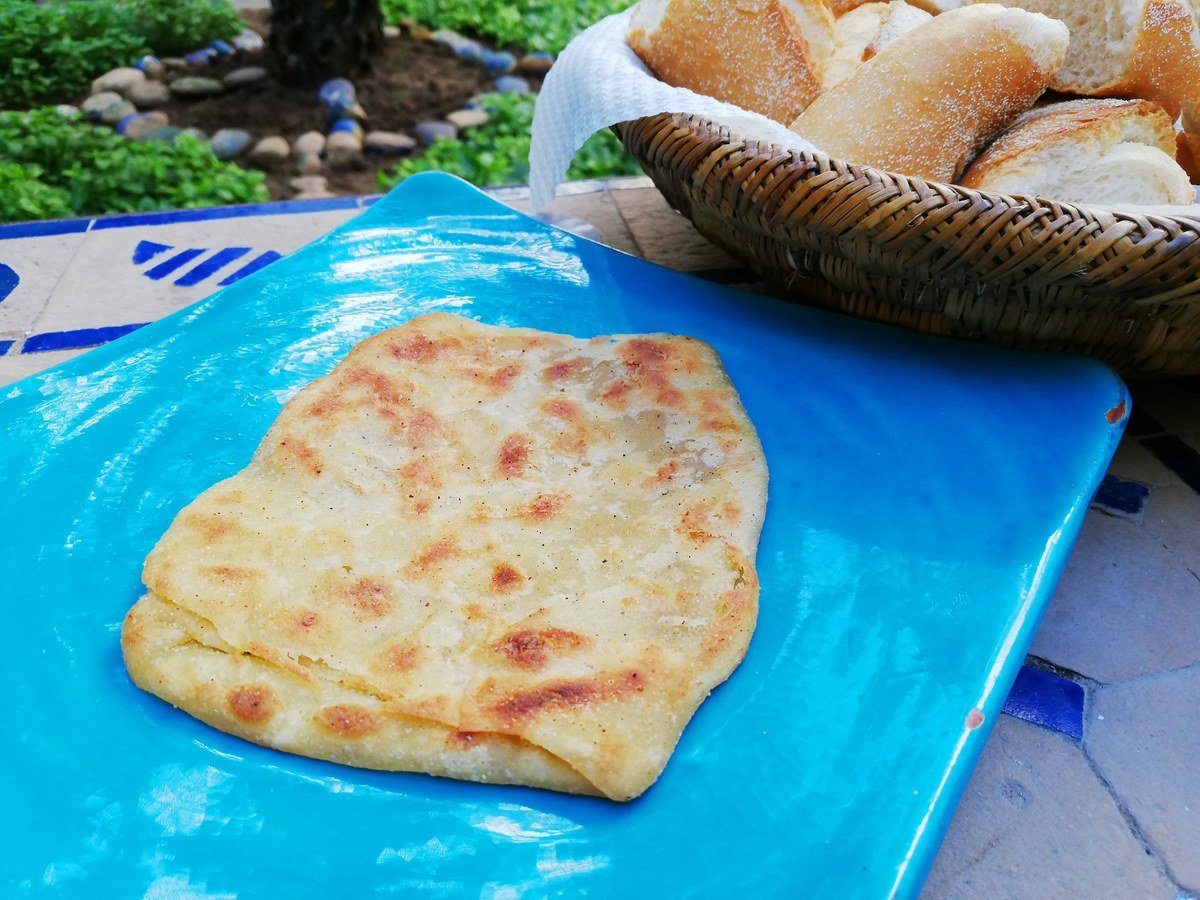
Msemen is the square, flaky flatbread you will see folded and griddled everywhere. The dough is stretched thin, folded into a square with oil, and cooked on a hot plate until the layers turn golden and crisp at the edges. It is served plain with honey or butter, or stuffed with a savory filling (onion, tomato, and minced meat is the classic). You eat it with your hands, usually standing at the counter or seated with a glass of mint tea.
Baghrir is msemen’s spongy cousin: a semolina pancake cooked on one side only, covered in thousands of tiny holes that soak up whatever you put on top. The standard topping is melted butter mixed with honey. It is a breakfast item, soft and light, and pairs naturally with tea or coffee.
Sfenj are the Moroccan doughnuts: rough rings of yeasted dough fried in big vats of oil until crisp outside and airy inside. Sfenj specialists often thread them onto loops of palm frond for easy carrying. They are best eaten hot, straight from the fryer, plain or dusted with sugar. Like msemen, sfenj belongs to the morning — look for the fryers in market streets and near mosque squares.
Maakouda are golden potato cakes, mashed potatoes mixed with cumin, turmeric, garlic, and onion, shaped into patties and fried. They are eaten plain as a snack or, very commonly, tucked into a piece of bread with a spoonful of harissa for a quick sandwich. Maakouda carts and fryers are a fixture in cities like Casablanca and Rabat, and they tend to sell out fast at lunchtime.
From the Grill: Brochettes, Kefta, and Merguez
Follow the smell of charcoal and you will find the grill stalls. This is the heart of Moroccan street food for most visitors, and the format is beautifully simple: meat, fire, bread.
Brochettes are skewers of marinated meat grilled over charcoal — chicken, beef, lamb, or kefta. They arrive with bread, a small dish of cumin mixed with salt, and often a spoonful of harissa on the side. The smoke is your quality signal: a grill with constant turnover and a queue of locals is doing everything right.
Kefta is spiced minced meat, usually beef or lamb, mixed with onion, parsley, cumin, and paprika. It is shaped onto skewers and grilled, or formed into small patties. You will find it as brochettes, in sandwiches, and as the filling for stuffed msemen.
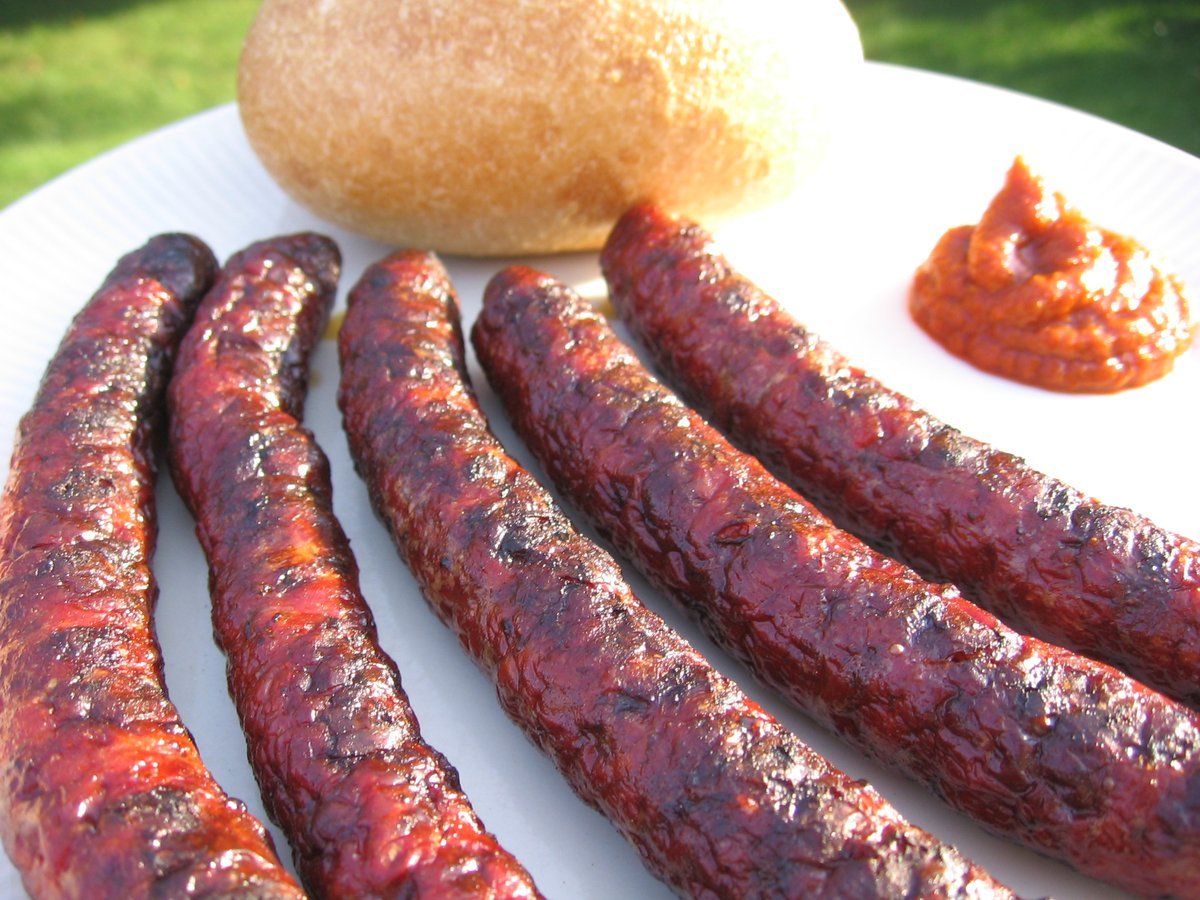
Merguez is the spicy sausage of the grill world: lamb or beef seasoned with harissa-like heat, grilled until the skin crisps. The classic street format is the merguez sandwich — sausage tucked into fresh bread with harissa. It is rich, fiery, and exactly what a long morning of sightseeing calls for.
Ordering at a grill stall needs no vocabulary. Point at the skewers or the sausage you want and hold up your fingers for the number. Most grill vendors will ask whether you want harissa — a nod or a shake of the head settles it. Bread is part of the deal, not an extra.
If you want the full evening version of this scene, the food stalls of Jemaa el-Fna in Marrakech are the most famous place in the country to eat grilled street food after dark.
Soups and Warm Bowls
Moroccan soups are street food in the truest sense: served from steaming pots at small counters, eaten with bread, and gone by the time the pot empties.
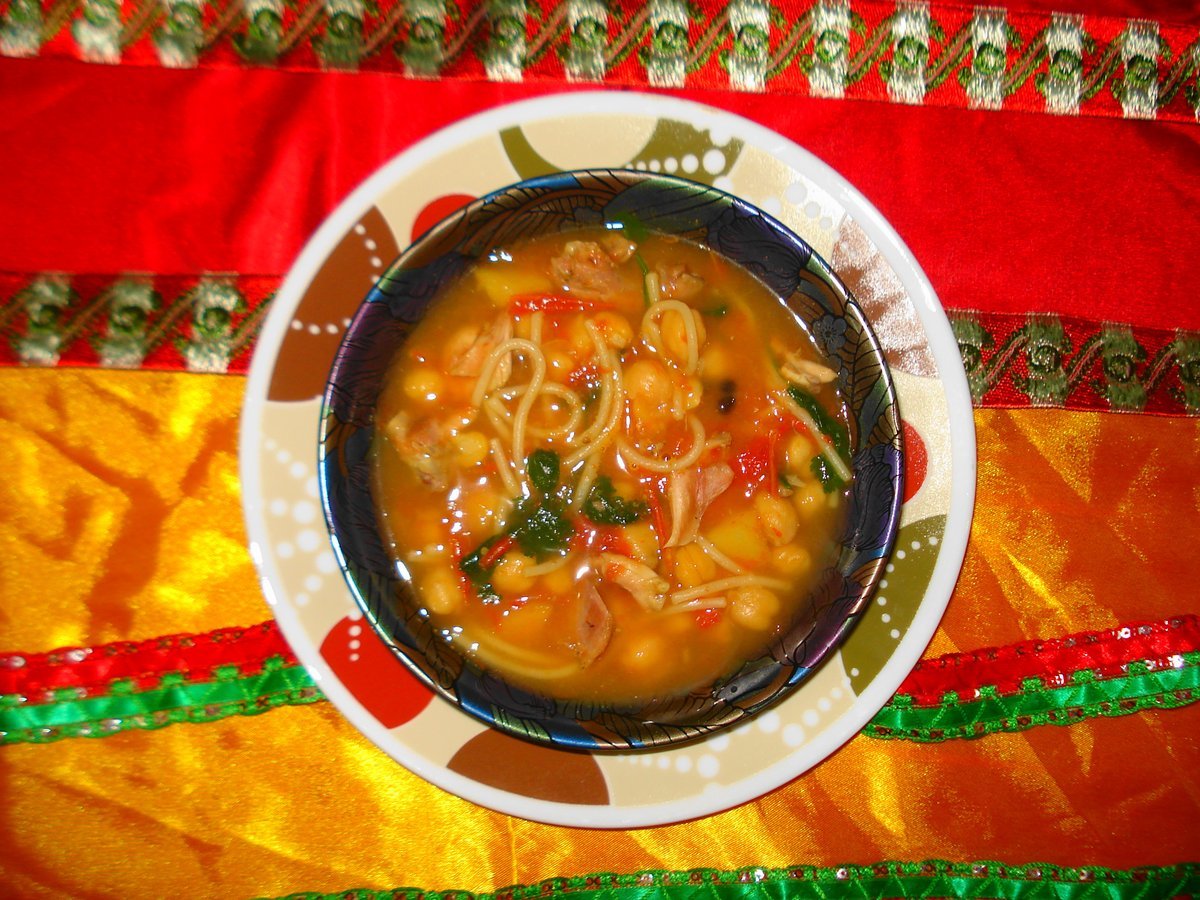
Harira is the tomato-based soup of chickpeas, lentils, and warming spices. It is the soup Moroccans eat to break the fast during Ramadan, often with dates or a piece of chebakia (a honey-soaked sesame pastry) on the side, but it is sold year-round too. You will find it at both ends of the day — a morning bowl at a soup counter, or a late-night bowl after the grills.
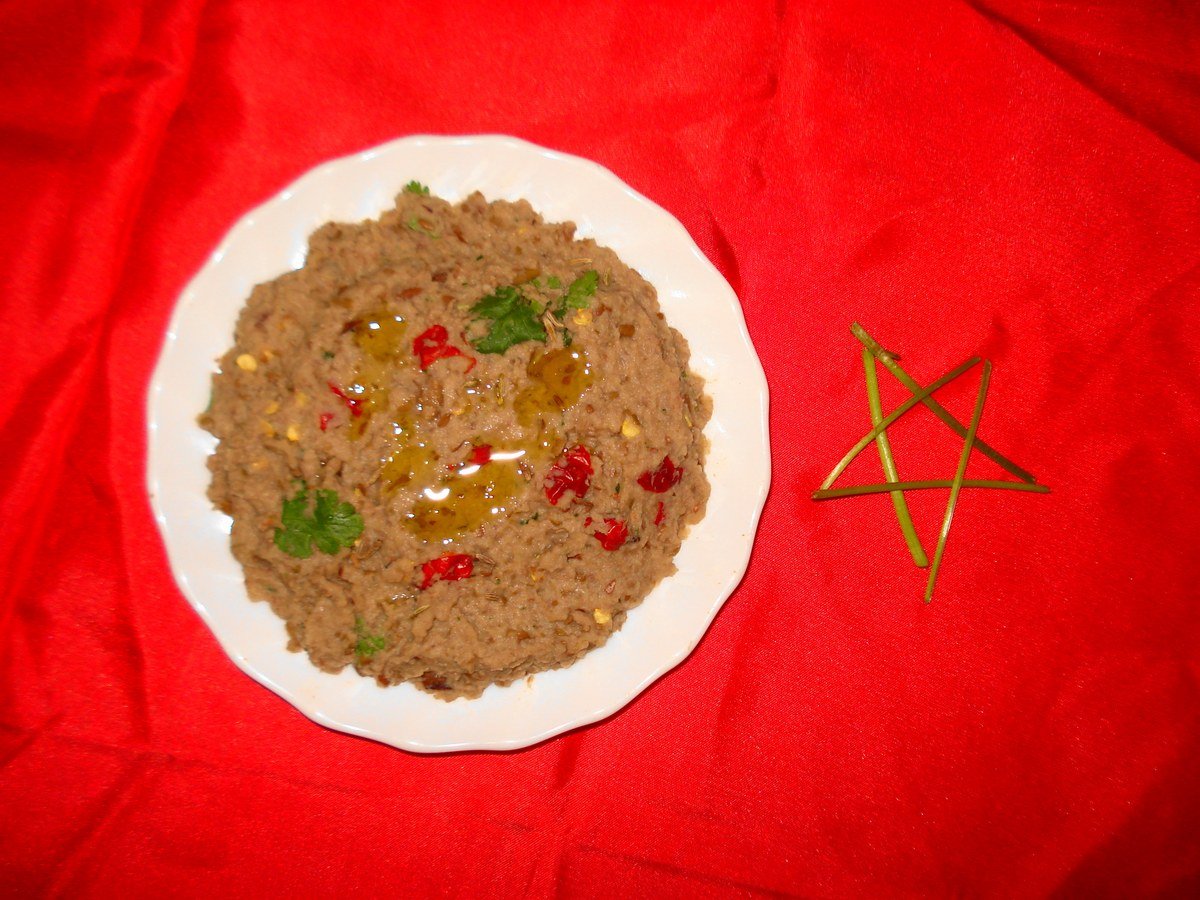
Bissara is a thick purée of dried fava beans (sometimes split peas), cooked down until creamy and finished with olive oil, cumin, and sometimes lemon or harissa. It is a breakfast and lunch soup, especially popular in the colder months, and it is eaten with bread and nothing else. The texture is closer to a dip than a thin soup, which is why you will also see it scooped rather than spooned.
Babbouche is the one for the adventurous: snails simmered for hours in a dark, fragrant broth of about fifteen spices — ginger, cinnamon, anise, thyme, and more. Vendors set up in the evening with steaming pots, and customers drink the peppery broth from small bowls and fish the snails out with a toothpick. It is considered a warming, comforting food for cold evenings, and in Morocco it has a long-standing reputation as a home remedy for colds.
Sweets and Drinks
The sweet side of the street is dominated by juice stalls. Morocco grows enormous quantities of citrus and fruit, and the stalls press and blend it to order.
Panaché is the showpiece: a tall glass layered with different fresh-fruit smoothies — typically combinations like avocado, banana, orange, and almond — built up in colorful strata and often topped with dried fruit or nuts. It is sweet, filling, and practically a dessert and a drink at once.
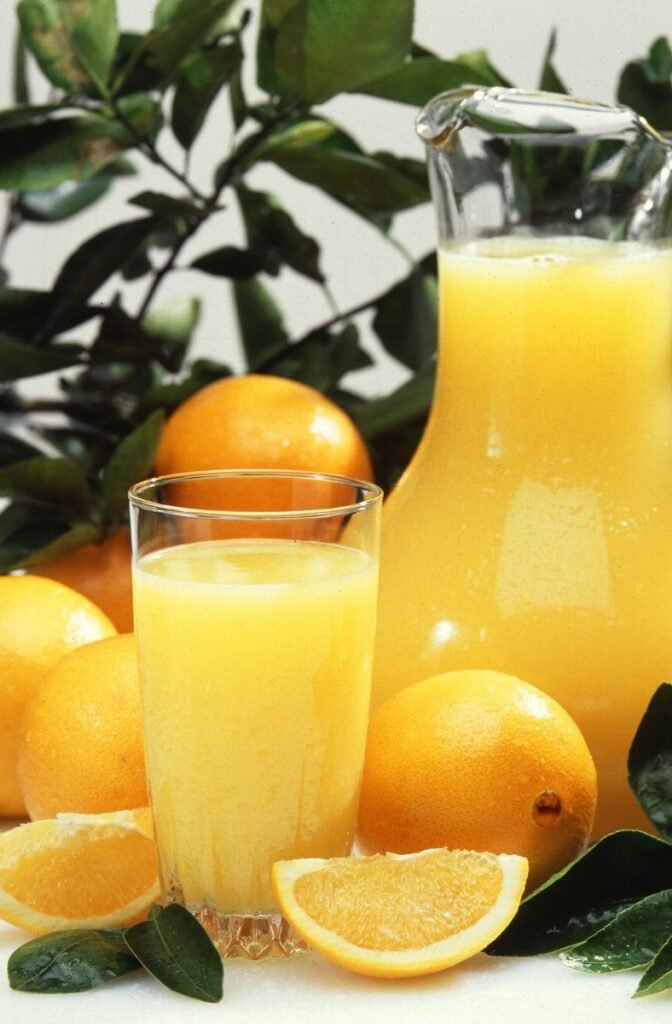
Fresh orange juice is everywhere, pressed in front of you at dedicated stalls with mountains of oranges on display. It is the default refreshment of the medina: cold, sweet-tart, and the right answer after an hour near the grills.
And through it all runs mint tea — gunpowder green tea brewed with fresh mint, poured from a height into small glasses. It is served all day, everywhere, and it is the drink that ties every street-food stop together.
How to Order Without Stress
A few practical habits will carry you through any stall in the country:
- Carry cash in small denominations. Street vendors deal in coins and small notes; paying for a two-item snack with a large bill slows everything down.
- Follow the queue. A stall with a line of locals has high turnover, which means fresh food and fair treatment. An empty stall at a busy hour is telling you something.
- Point and count on your fingers. You do not need Arabic or French to order msemen or brochettes. Point at what you want, hold up fingers for how many, and say shukran (thank you) when it arrives.
- Eat the way locals eat. Most street food is eaten standing at the counter or on a plastic stool pulled up to it. There is no ceremony — that is the point.
- Watch the cooking, not the decor. Food fried, grilled, or simmered in front of you at a busy stall is the safest bet in any street-food culture.
- Harissa is a question, not a default. Vendors will often ask if you want it. If you are unsure about heat, decline the first time and add it later.
If your trip takes you beyond the cities, note that the rhythm changes: on a day trip like Ouzoud Falls, the village terraces serve sit-down tagines rather than grab-and-go snacks, so eat your street food in town and save your appetite for the falls.
FAQ
Is Moroccan street food safe for first-time visitors? As a general rule, the busiest stalls are the safest: high turnover means food is cooked fresh and nothing sits around. Eat food that is cooked in front of you, served hot, and handled with utensils rather than bare hands. If you have a sensitive stomach, start with grilled and fried items and freshly pressed juice.
What time of day should I go out for street food? Morning is for breads and soups — msemen, baghrir, sfenj, harira, and bissara. Midday is for grills and sandwiches. Evening is when squares like Jemaa el-Fna turn into full open-air restaurants. Each time of day has its own menu, so it is worth going out more than once.
What are the best vegetarian street food options? Plenty: msemen, baghrir, and sfenj (plain or with honey), harira, bissara, plain maakouda, panaché, and fresh orange juice. Just confirm no meat stock went into the soup if that matters to you.
What does babbouche taste like? Mostly you taste the broth: peppery, gingery, and deeply spiced from the long simmer. The snails themselves are chewy and mild — they carry the flavor of the broth. It is more approachable than it looks.
Do I need to speak Arabic or French? French helps in cities, but it is not required at street stalls. Pointing, holding up fingers, and a smile will get you fed anywhere in Morocco.
Where is the best place to start if I feel overwhelmed? Pick one square in the evening and work your way across it: a soup to start, grilled skewers for the main event, and a panaché or fresh orange juice to finish. The night food scene at Jemaa el-Fna is the classic first-timer’s route for exactly this reason.
Msemen photo: Popo le Chien, CC0, via Wikimedia Commons. Merguez photo: Thogru, CC BY-SA 3.0, via Wikimedia Commons. Harira photo: Miansari66, CC0, via Wikimedia Commons. Bissara photo: Miansari66, CC0, via Wikimedia Commons. Orange juice photo: USDA photo by Scott Bauer, public domain, via Wikimedia Commons.