What Sfenj Actually Is
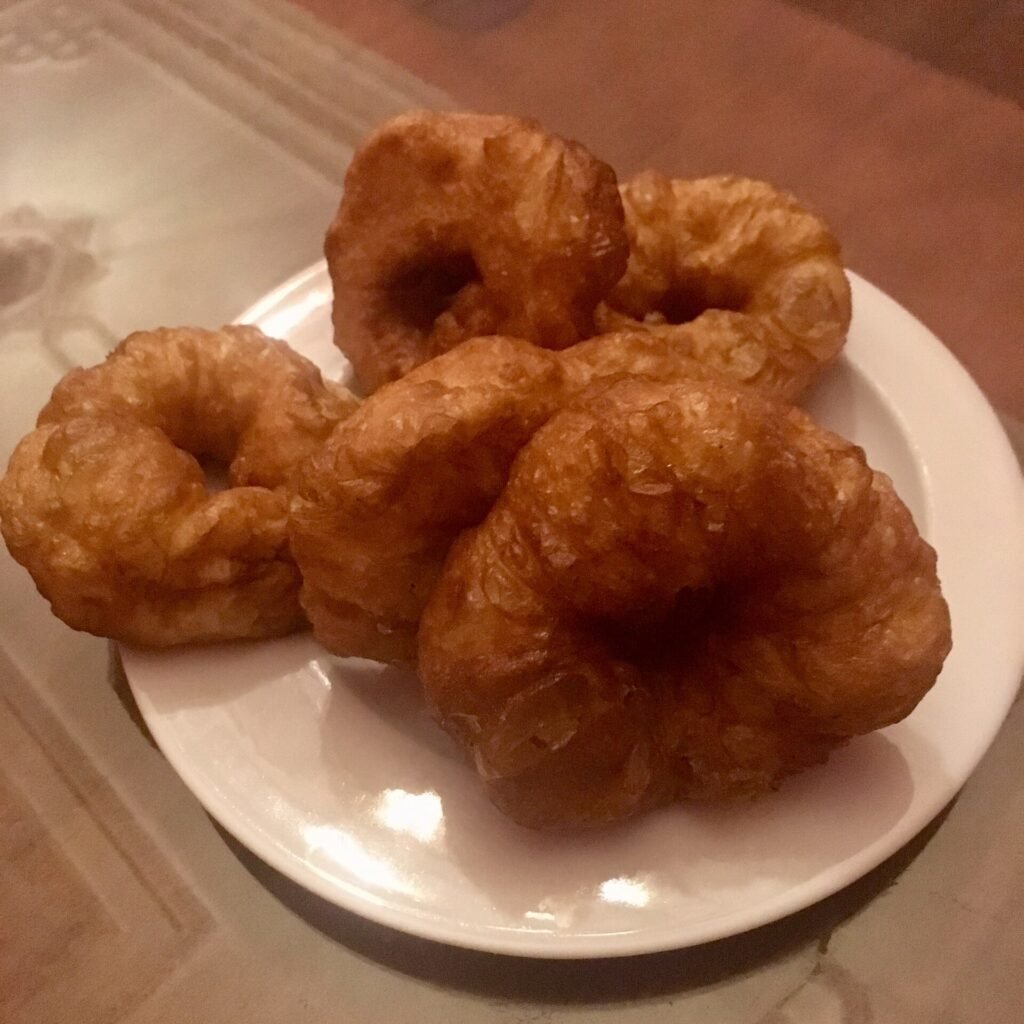
Walk past any neighborhood in Morocco before 9 in the morning and your nose will find it before your eyes do: the smell of hot oil and fermenting dough drifting out of a tiny shopfront. Inside, a man with wet hands pulls lumps of impossibly sticky dough from a basin, pokes a hole through each one with his thumb, and drops the ragged ring into a wide pan of bubbling oil. Two minutes later it comes out golden, puffed, and spongy — that is sfenj, and it has been Morocco’s favorite breakfast street food for centuries.
The name says it all. Sfenj comes from the Arabic isfanj, meaning “sponge” — crisp outside, airy and chewy inside, full of irregular bubbles. It looks like a donut, but it tastes like nothing sold in a Western donut shop.
📸 Personal shot idea: the vendor’s hands shaping the dough ring.
The Dough: Four Ingredients and a Lot of Patience
Sfenj dough is almost embarrassingly simple: flour, water, yeast, and salt. There are no eggs, no milk, no butter — which makes sfenj naturally vegan, a useful fact for plant-based travelers scanning Moroccan street food.
The dough is mixed very wet, much wetter than bread dough, and left to ferment until it doubles or triples in volume. That long fermentation builds the flavor — a faint sour tang — and the huge bubbles that make the crumb so light. A good sfenjaji (the sfenj maker; the classical term is sufnāj) knows by feel when the dough is ready.
Because the dough is so sticky, it cannot be handled with flour. The vendor keeps a bowl of water at his side and wets his hands constantly, pinching off a golf-ball-sized piece, piercing the center with his thumb, and stretching the hole wide in one practiced motion before the ring hits the oil.
Frying: Why the Oil Matters
Traditional sfenj is fried in a large, shallow pan that is sometimes tilted, so one side runs cooler than the other. The ring goes into the cooler oil first, puffs up without browning too fast, then gets pushed into the hotter zone for its golden crust — barely two minutes in total.
Street vendors typically fry in vegetable oil or peanut oil, neutral and affordable at scale. In home kitchens and some rural areas, olive oil is used instead — it gives the sfenj a faintly fruity note you will not find at a city stall. Neither is “more authentic”; the oil is a matter of place and budget.
📸 If you photograph the frying pan, this is the spot: sfenj at different stages of browning.
Sfenj vs. Western Donuts: Not the Same Thing
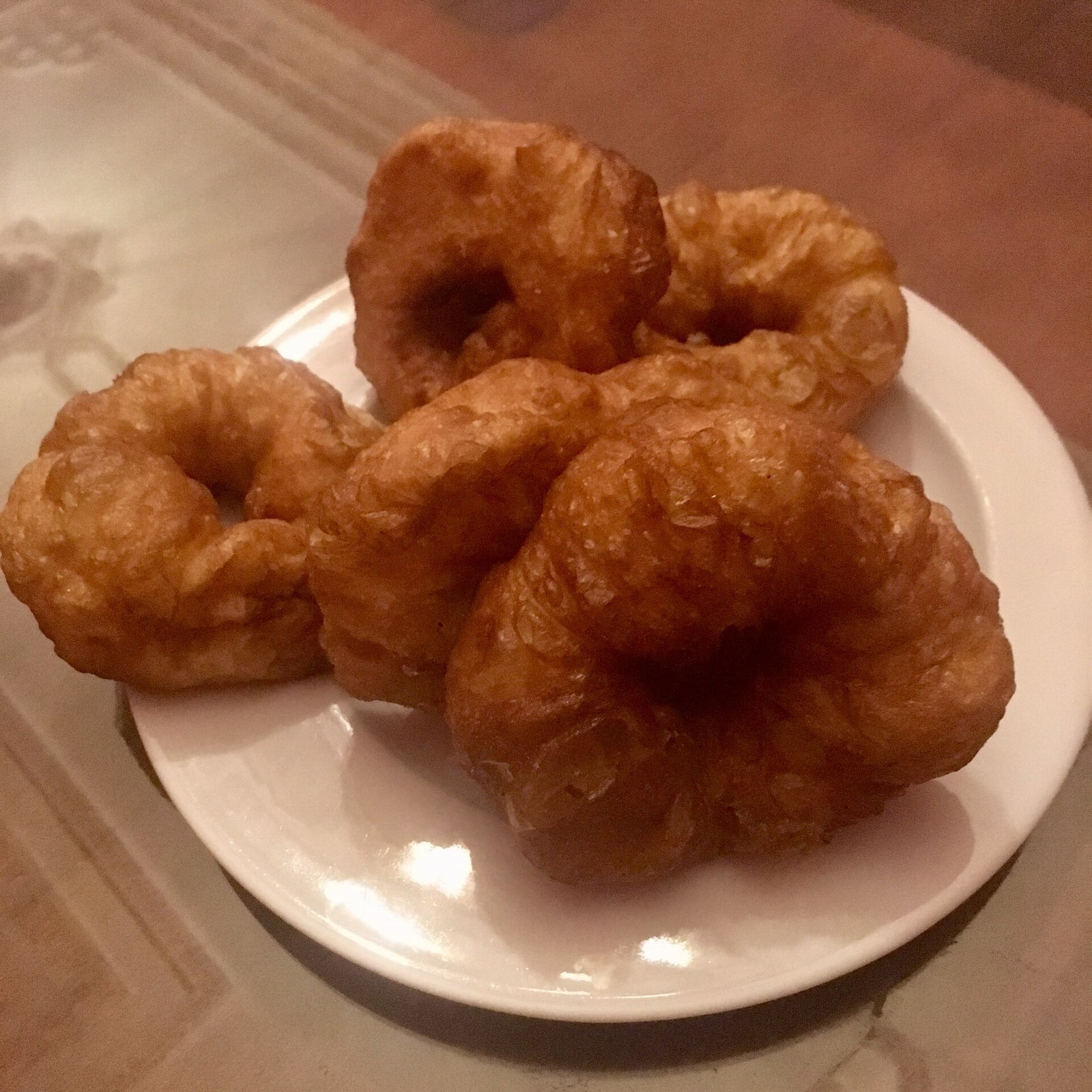
The ring shape makes tourists expect a donut. The differences start with the dough:
- No sugar in the dough. A Western donut is a sweet enriched dough; sfenj dough is essentially unsweetened bread dough. Any sweetness comes later — a dusting of granulated sugar, a drizzle of honey, or nothing at all.
- No eggs, no dairy. Western donuts are enriched with eggs and milk for tenderness. Sfenj gets its texture from fermentation and steam, not fat in the dough.
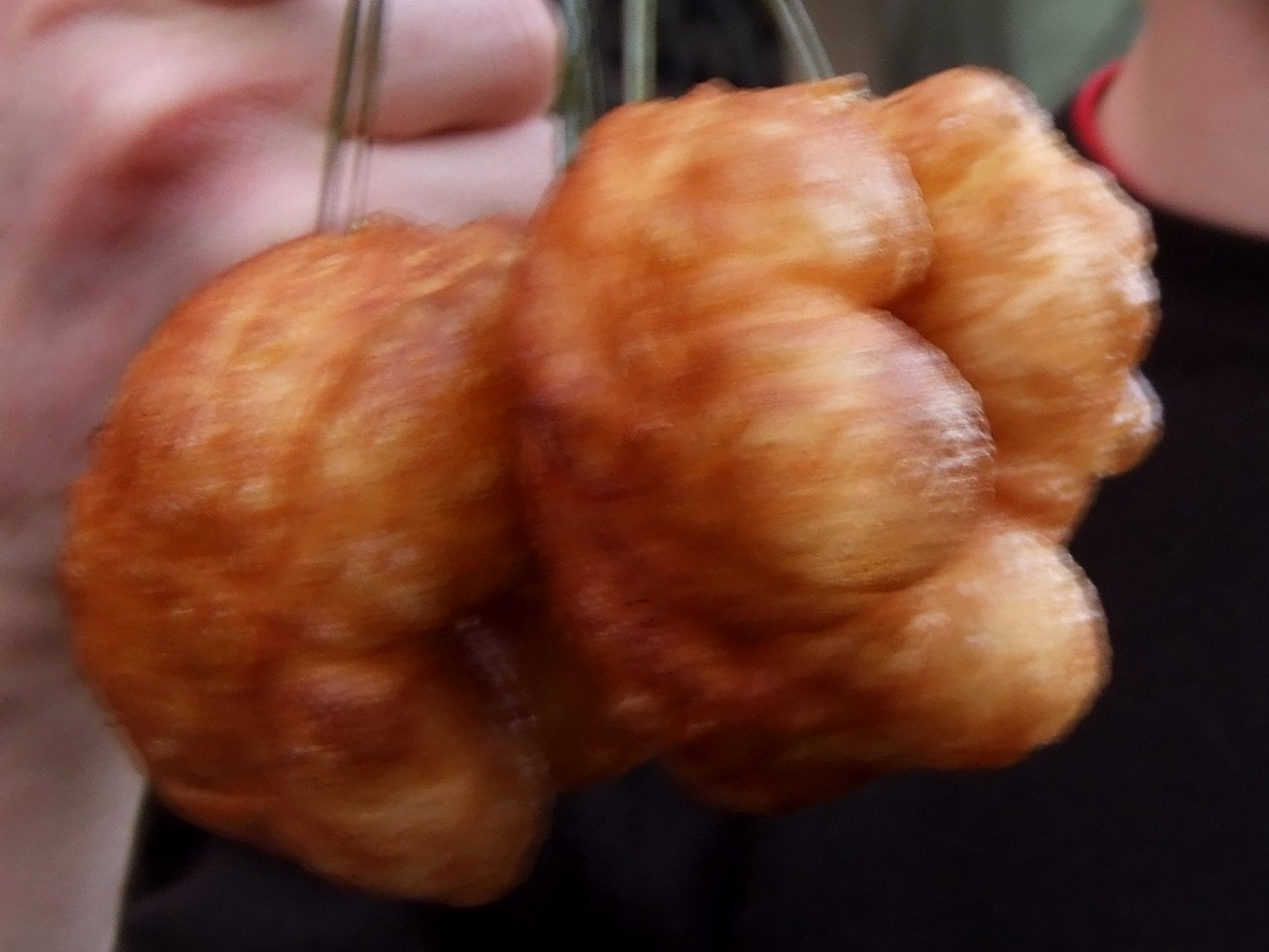
- Irregular by design. Machine-cut donuts are perfect rings. Sfenj is shaped by hand in seconds, so every ring is lopsided, bumpy, and slightly different — that is how you know it is real.
- Chewy, not cakey. A Western donut is soft and cake-like or pillowy from enrichment. Sfenj is springy and chewy, with a crisp shell and an open, bubbly crumb you can pull apart in strands.
Forget the donut comparison — hot, plain, with tea, it makes perfect sense.
Sfenj, Ftira, Khfaf, Bambalouni: The Name Game
Ask for “sfenj” anywhere in Morocco and you will be understood. Across the border, the same fritter answers to other names — which confuses travelers reading menus across the Maghreb:
- Morocco: sfenj (سفنج), sold by the sfenjaji at the corner hanout (neighborhood shop).
- Algeria: also called khfaf or ftira in some regions — this is where tourists get tripped up, because “ftira” in Morocco more often means a flat fried bread, not the ring donut.
- Libya: sfinz, often eaten for Friday breakfast, sometimes with a fried egg set in the center of the ring.
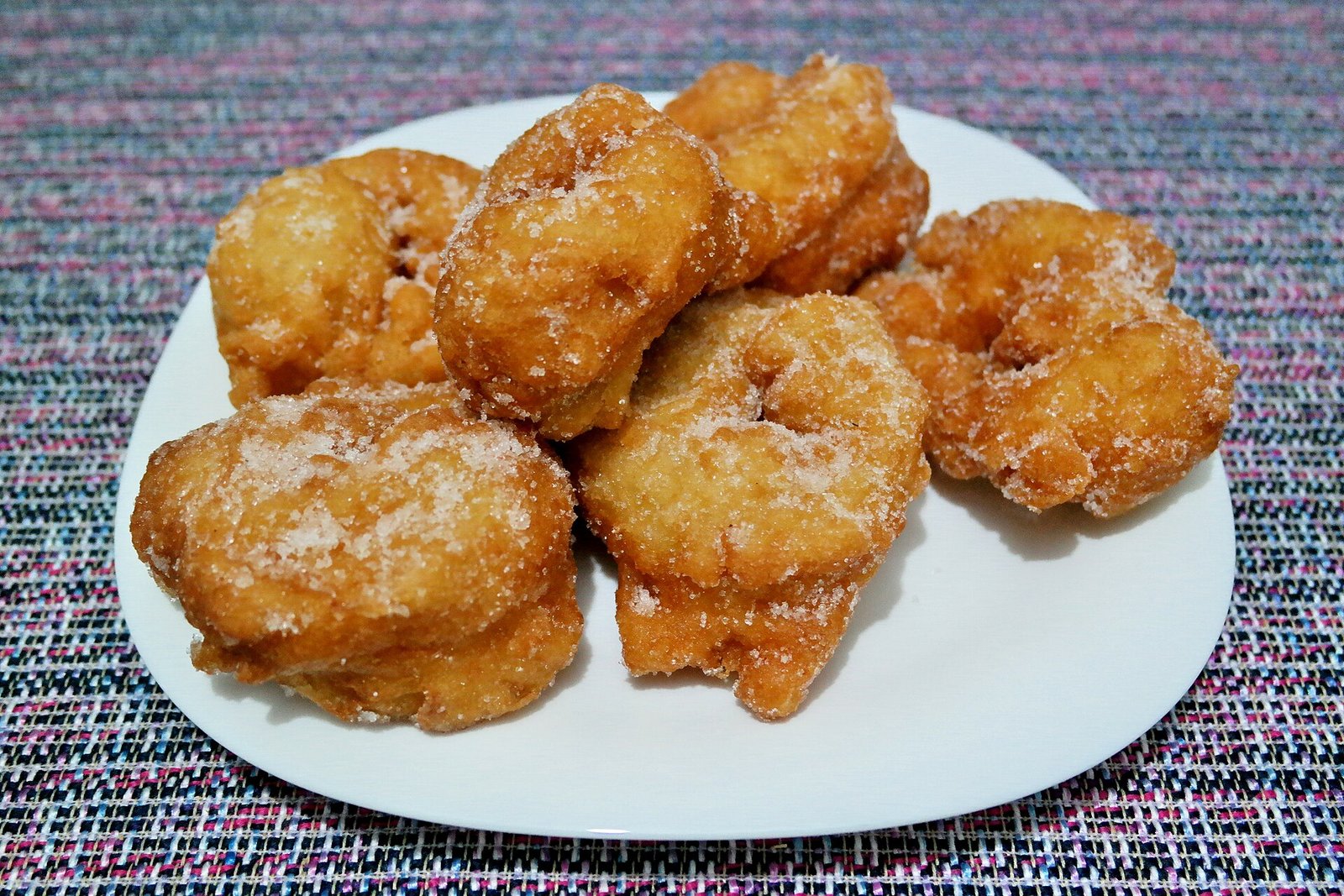
- Tunisia: bambalouni, the local cousin, usually dusted with sugar.
Same family, different households. The Moroccan version is the one you will meet on the street in Fez, Marrakech, Casablanca, or Essaouira — and it is the ring, fried to order, eaten within minutes.
Where and When to Find It
The vendors — many of whom have held the same corner for decades — fire up their pans at dawn and sell through the breakfast rush. Look for them near the gates of the medina, at the edges of souks, on street corners in residential neighborhoods, and anywhere workers gather before their shift. A good sign: a queue of locals and a vendor who barely looks up from the oil.
The second sfenj window is late afternoon, around tea time, when some shops fry a fresh batch for the after-work crowd. Between those windows you will mostly find leftovers — and sfenj does not wait: it is at its best in the first ten minutes out of the oil.
In the medina of Marrakech or Fez, ask at any neighborhood café: “fin kayn moul sfenj?” Everyone knows where the sfenj seller is. For a broader orientation on where Morocco’s street foods cluster, see our Moroccan street food guide.
📸 Your own photo of the sfenj shopfront — the elevated platform, the round fryer, the morning queue — belongs in this section.
How Moroccans Actually Eat It
There is a ritual, and it is simple:
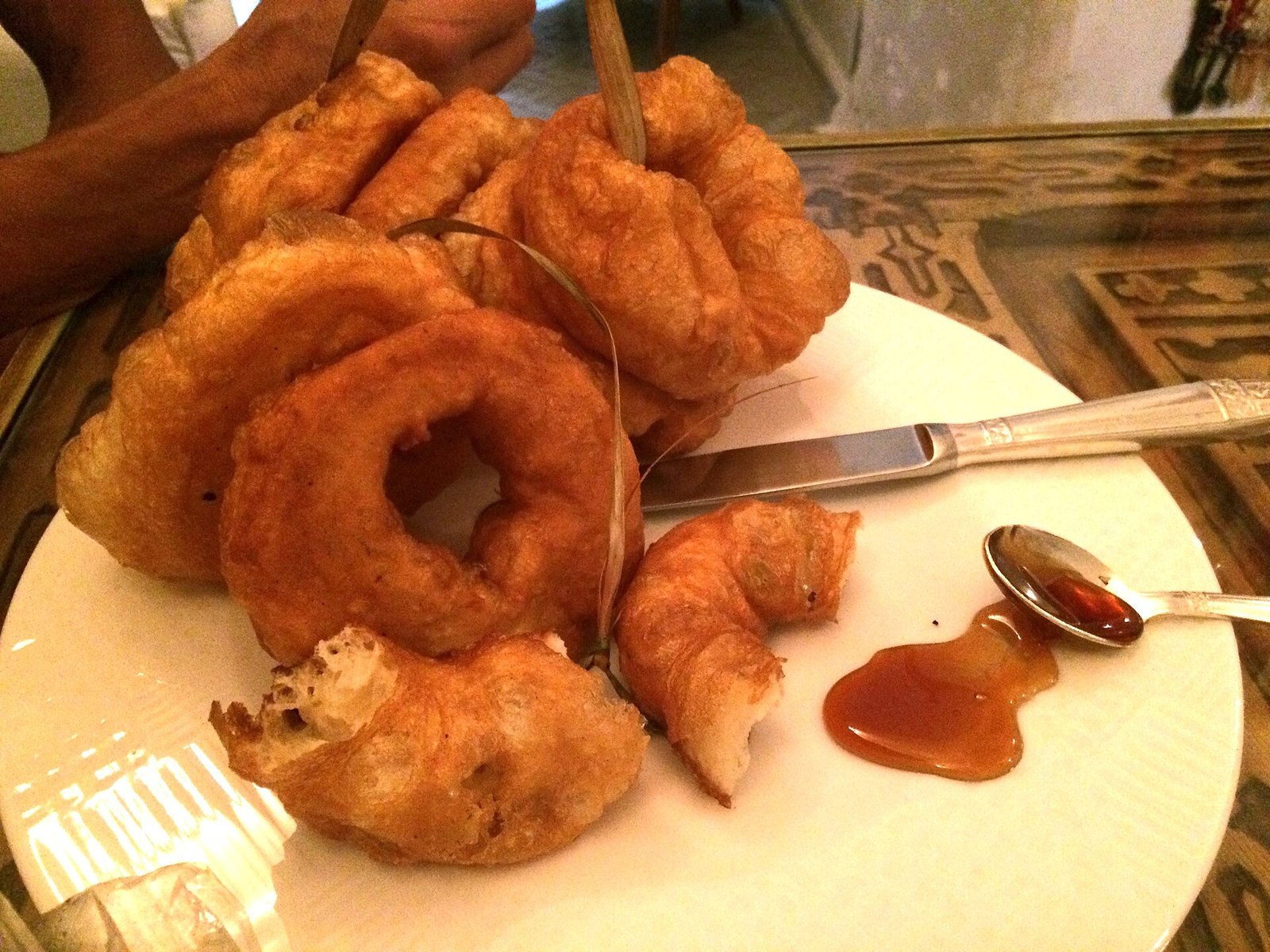
- Buy it hot. Sfenj is sold by the piece and costs very little — a few dirhams. Take it in a paper bag or threaded on a strip of palm frond (doum), the traditional way vendors string them together for easy carrying.
- Eat it immediately. Sfenj loses its magic as it cools — the crust softens and the chew turns tough.
- Plain, sugared, or with honey. Most Moroccans eat it plain, letting the faint sourness of the fermented dough speak. Sweet versions get a roll in granulated sugar or a dip in honey.
- With mint tea. This is the canonical pairing. The bitter-sweet punch of Moroccan mint tea (atay) cuts through the fried richness. Order the tea at the café next door and carry your sfenj over — half the café is doing the same.
For context on what “a few dirhams” buys across Morocco’s food scene, our food prices in Morocco guide keeps the numbers honest and current.

Two Sfenj Varieties Worth Knowing
Beyond the classic ring, two preparations show up often enough to know by name:
- Sfenj matifiyya (السفنج المطفية) — the ring is pounded flat and fried a second time until deeply crisp. Locals who like maximum crunch ask for this; it is the sfenj equivalent of “extra crispy.”
- Sfenj matifiyya bil-baydh — the flattened sfenj with an egg cracked into the center before its second fry. Rich, filling, and a full breakfast in one ring.
You will not find these on a printed menu — ask the vendor.
The Tourist Mistakes to Avoid
Mistake 1: Letting it cool. The number-one error. Buy sfenj, walk twenty minutes taking photos, and it turns chewy in the bad way. Eat it within minutes, while the crust still crackles.
Mistake 2: Expecting sweetness. Bite into a plain sfenj waiting for donut sweetness and the fermented tang will surprise you. It is bread’s cousin, not cake’s. Add sugar or honey for the sweet version — or embrace it plain, like the queue ahead of you.
Mistake 3: Overpaying in tourist zones. Sfenj is one of Morocco’s cheapest foods — a few dirhams a piece in a neighborhood. Prices creep up near major squares but never reach “meal” territory. If a price sounds like a restaurant dish, walk one street over.
Mistake 4: Skipping the tea. Sfenj without mint tea is like a croissant without coffee — technically fine, spiritually incomplete.
A Short History: From Al-Andalus to Your Breakfast
Sfenj is old — older than the country selling it. It originated in Al-Andalus, Moorish Spain, where legend says a baker accidentally dropped a ball of dough into hot oil and liked the result. An Andalusi poet of the era wrote that “the sfenj bakers are worth as much as kings.”
The recipe crossed into the Maghreb centuries ago — already well known under Morocco’s Marinid dynasty in the 1200s — and spread largely through Amazigh (Berber) bakers and merchants traveling the region. Sugar only entered the picture in the 1700s; before that, sfenj was sweetened with honey or eaten plain.
The sfenj even made its way into Moroccan Arabic idioms. “Give someone a sfenj and he’ll say it’s ugly” means don’t judge by appearances — a fair description of the lopsided ring itself. And the dedicated sfenj baker, the sufnāj, was once a central figure of neighborhood life, greeting half the street every morning from his elevated platform above the fryer. Traditional sufnaajeen are rarer now, pushed aside by industrial bakeries — which makes the surviving corner shops worth seeking out.
For more on where Morocco’s street food culture concentrates after dark, our Jemaa el-Fna night food guide picks up where the morning sfenj trail ends.
FAQ
Is sfenj vegan?
The classic recipe — flour, water, yeast, salt — contains no animal products, so plain sfenj is naturally vegan. Just confirm the frying oil: most vendors use vegetable or peanut oil, but it never hurts to ask.
What time of day is sfenj sold?
Early morning is prime time — vendors fry from dawn through the breakfast rush, with a second batch often in the late afternoon for tea time. Midday sfenj is usually leftover and not worth it.
What is the difference between sfenj and bambalouni?
Close cousins. Bambalouni is the Tunisian version, typically dusted with sugar. Sfenj is the Moroccan (and Algerian) name, more often eaten plain with mint tea. Same family, different habits.
Can I make sfenj at home?
You can — the ingredients are just flour, water, yeast, and salt — but the technique takes practice: very wet dough, wet hands, and the right frying temperature. Most Moroccans buy it from the corner sfenjaji, which says everything about the skill involved.
Photo credits: Sfenj frying in Marrakesh and sfenj on palm frond in Essaouira © Jc wik m001 (CC BY-SA 4.0); sfenj with sugar © Maor X (CC BY-SA 4.0); Moroccan donuts close-up © Caspian blue (CC BY-SA 2.0); Moroccan mint tea © Martadellalibera (CC BY-SA 4.0) — all via Wikimedia Commons.
What Sfenj Actually Is
Walk past any neighborhood in Morocco before 9 in the morning and your nose will find it before your eyes do: the smell of hot oil and fermenting dough drifting out of a tiny shopfront. Inside, a man with wet hands pulls lumps of impossibly sticky dough from a basin, pokes a hole through each one with his thumb, and drops the ragged ring into a wide pan of bubbling oil. Two minutes later it comes out golden, puffed, and spongy — that is sfenj, and it has been Morocco’s favorite breakfast street food for centuries.
Walk past any neighborhood in Morocco before 9 in the morning and your nose will find it before your eyes do: the smell of hot oil and fermenting dough drifting out of a tiny shopfront. Inside, a man with wet hands pulls lumps of impossibly sticky dough from a basin, pokes a hole through each one with his thumb, and drops the ragged ring into a wide pan of bubbling oil. Two minutes later it comes out golden, puffed, and spongy — that is sfenj, and it has been Morocco’s favorite breakfast street food for centuries.
The name says it all. Sfenj comes from the Arabic isfanj, meaning “sponge” — crisp outside, airy and chewy inside, full of irregular bubbles. It looks like a donut, but it tastes like nothing sold in a Western donut shop.
The name says it all. Sfenj comes from the Arabic isfanj, meaning “sponge” — crisp outside, airy and chewy inside, full of irregular bubbles. It looks like a donut, but it tastes like nothing sold in a Western donut shop.
📸 Personal shot idea: the vendor’s hands shaping the dough ring.
The Dough: Four Ingredients and a Lot of Patience
Sfenj dough is almost embarrassingly simple: flour, water, yeast, and salt. There are no eggs, no milk, no butter — which makes sfenj naturally vegan, a useful fact for plant-based travelers scanning Moroccan street food.
Sfenj dough is almost embarrassingly simple: flour, water, yeast, and salt. There are no eggs, no milk, no butter — which makes sfenj naturally vegan, a useful fact for plant-based travelers scanning Moroccan street food.
The dough is mixed very wet, much wetter than bread dough, and left to ferment until it doubles or triples in volume. That long fermentation builds the flavor — a faint sour tang — and the huge bubbles that make the crumb so light. A good sfenjaji (the sfenj maker; the classical term is sufnāj) knows by feel when the dough is ready.
The dough is mixed very wet, much wetter than bread dough, and left to ferment until it doubles or triples in volume. That long fermentation builds the flavor — a faint sour tang — and the huge bubbles that make the crumb so light. A good sfenjaji (the sfenj maker; the classical term is sufnāj) knows by feel when the dough is ready.
Because the dough is so sticky, it cannot be handled with flour. The vendor keeps a bowl of water at his side and wets his hands constantly, pinching off a golf-ball-sized piece, piercing the center with his thumb, and stretching the hole wide in one practiced motion before the ring hits the oil.
Because the dough is so sticky, it cannot be handled with flour. The vendor keeps a bowl of water at his side and wets his hands constantly, pinching off a golf-ball-sized piece, piercing the center with his thumb, and stretching the hole wide in one practiced motion before the ring hits the oil.
Frying: Why the Oil Matters
Traditional sfenj is fried in a large, shallow pan that is sometimes tilted, so one side runs cooler than the other. The ring goes into the cooler oil first, puffs up without browning too fast, then gets pushed into the hotter zone for its golden crust — barely two minutes in total.
Traditional sfenj is fried in a large, shallow pan that is sometimes tilted, so one side runs cooler than the other. The ring goes into the cooler oil first, puffs up without browning too fast, then gets pushed into the hotter zone for its golden crust — barely two minutes in total.
Street vendors typically fry in vegetable oil or peanut oil, neutral and affordable at scale. In home kitchens and some rural areas, olive oil is used instead — it gives the sfenj a faintly fruity note you will not find at a city stall. Neither is “more authentic”; the oil is a matter of place and budget.
Street vendors typically fry in vegetable oil or peanut oil, neutral and affordable at scale. In home kitchens and some rural areas, olive oil is used instead — it gives the sfenj a faintly fruity note you will not find at a city stall. Neither is “more authentic”; the oil is a matter of place and budget.
📸 If you photograph the frying pan, this is the spot: sfenj at different stages of browning.
Sfenj vs. Western Donuts: Not the Same Thing
The ring shape makes tourists expect a donut. The differences start with the dough:
- No sugar in the dough. A Western donut is a sweet enriched dough; sfenj dough is essentially unsweetened bread dough. Any sweetness comes later — a dusting of granulated sugar, a drizzle of honey, or nothing at all.
- No sugar in the dough. A Western donut is a sweet enriched dough; sfenj dough is essentially unsweetened bread dough. Any sweetness comes later — a dusting of granulated sugar, a drizzle of honey, or nothing at all.
- No eggs, no dairy. Western donuts are enriched with eggs and milk for tenderness. Sfenj gets its texture from fermentation and steam, not fat in the dough.
- No eggs, no dairy. Western donuts are enriched with eggs and milk for tenderness. Sfenj gets its texture from fermentation and steam, not fat in the dough.
- Irregular by design. Machine-cut donuts are perfect rings. Sfenj is shaped by hand in seconds, so every ring is lopsided, bumpy, and slightly different — that is how you know it is real.
- Irregular by design. Machine-cut donuts are perfect rings. Sfenj is shaped by hand in seconds, so every ring is lopsided, bumpy, and slightly different — that is how you know it is real.
- Chewy, not cakey. A Western donut is soft and cake-like or pillowy from enrichment. Sfenj is springy and chewy, with a crisp shell and an open, bubbly crumb you can pull apart in strands.
- Chewy, not cakey. A Western donut is soft and cake-like or pillowy from enrichment. Sfenj is springy and chewy, with a crisp shell and an open, bubbly crumb you can pull apart in strands.
Forget the donut comparison — hot, plain, with tea, it makes perfect sense.
Sfenj, Ftira, Khfaf, Bambalouni: The Name Game
Ask for “sfenj” anywhere in Morocco and you will be understood. Across the border, the same fritter answers to other names — which confuses travelers reading menus across the Maghreb:
Ask for “sfenj” anywhere in Morocco and you will be understood. Across the border, the same fritter answers to other names — which confuses travelers reading menus across the Maghreb:
- Morocco: sfenj (سفنج), sold by the sfenjaji at the corner hanout (neighborhood shop).
- Morocco: sfenj ( سفنج ), sold by the sfenjaji at the corner hanout (neighborhood shop).
- Algeria: also called khfaf or ftira in some regions — this is where tourists get tripped up, because “ftira” in Morocco more often means a flat fried bread, not the ring donut.
- Algeria: also called khfaf or ftira in some regions — this is where tourists get tripped up, because “ftira” in Morocco more often means a flat fried bread, not the ring donut.
- Libya: sfinz, often eaten for Friday breakfast, sometimes with a fried egg set in the center of the ring.
- Libya: sfinz, often eaten for Friday breakfast, sometimes with a fried egg set in the center of the ring.
- Tunisia: bambalouni, the local cousin, usually dusted with sugar.
Same family, different households. The Moroccan version is the one you will meet on the street in Fez, Marrakech, Casablanca, or Essaouira — and it is the ring, fried to order, eaten within minutes.
Same family, different households. The Moroccan version is the one you will meet on the street in Fez, Marrakech, Casablanca, or Essaouira — and it is the ring, fried to order, eaten within minutes.
Where and When to Find It
The vendors — many of whom have held the same corner for decades — fire up their pans at dawn and sell through the breakfast rush. Look for them near the gates of the medina, at the edges of souks, on street corners in residential neighborhoods, and anywhere workers gather before their shift. A good sign: a queue of locals and a vendor who barely looks up from the oil.
The vendors — many of whom have held the same corner for decades — fire up their pans at dawn and sell through the breakfast rush. Look for them near the gates of the medina, at the edges of souks, on street corners in residential neighborhoods, and anywhere workers gather before their shift. A good sign: a queue of locals and a vendor who barely looks up from the oil.
The second sfenj window is late afternoon, around tea time, when some shops fry a fresh batch for the after-work crowd. Between those windows you will mostly find leftovers — and sfenj does not wait: it is at its best in the first ten minutes out of the oil.
The second sfenj window is late afternoon, around tea time, when some shops fry a fresh batch for the after-work crowd. Between those windows you will mostly find leftovers — and sfenj does not wait: it is at its best in the first ten minutes out of the oil.
In the medina of Marrakech or Fez, ask at any neighborhood café: “fin kayn moul sfenj?” Everyone knows where the sfenj seller is. For a broader orientation on where Morocco’s street foods cluster, see our Moroccan street food guide.
In the medina of Marrakech or Fez, ask at any neighborhood café: “fin kayn moul sfenj?” Everyone knows where the sfenj seller is. For a broader orientation on where Morocco’s street foods cluster, see our Moroccan street food guide.
📸 Your own photo of the sfenj shopfront — the elevated platform, the round fryer, the morning queue — belongs in this section.
📸 Your own photo of the sfenj shopfront — the elevated platform, the round fryer, the morning queue — belongs in this section.
How Moroccans Actually Eat It
There is a ritual, and it is simple:
- Buy it hot. Sfenj is sold by the piece and costs very little — a few dirhams. Take it in a paper bag or threaded on a strip of palm frond (doum), the traditional way vendors string them together for easy carrying.
- Buy it hot. Sfenj is sold by the piece and costs very little — a few dirhams. Take it in a paper bag or threaded on a strip of palm frond (doum), the traditional way vendors string them together for easy carrying.
- Eat it immediately. Sfenj loses its magic as it cools — the crust softens and the chew turns tough.
- Eat it immediately. Sfenj loses its magic as it cools — the crust softens and the chew turns tough.
- Plain, sugared, or with honey. Most Moroccans eat it plain, letting the faint sourness of the fermented dough speak. Sweet versions get a roll in granulated sugar or a dip in honey.
- Plain, sugared, or with honey. Most Moroccans eat it plain, letting the faint sourness of the fermented dough speak. Sweet versions get a roll in granulated sugar or a dip in honey.
- With mint tea. This is the canonical pairing. The bitter-sweet punch of Moroccan mint tea (atay) cuts through the fried richness. Order the tea at the café next door and carry your sfenj over — half the café is doing the same.
- With mint tea. This is the canonical pairing. The bitter-sweet punch of Moroccan mint tea (atay) cuts through the fried richness. Order the tea at the café next door and carry your sfenj over — half the café is doing the same.
For context on what “a few dirhams” buys across Morocco’s food scene, our food prices in Morocco guide keeps the numbers honest and current.
For context on what “a few dirhams” buys across Morocco’s food scene, our food prices in Morocco guide keeps the numbers honest and current.
Two Sfenj Varieties Worth Knowing
Beyond the classic ring, two preparations show up often enough to know by name:
- Sfenj matifiyya (السفنج المطفية) — the ring is pounded flat and fried a second time until deeply crisp. Locals who like maximum crunch ask for this; it is the sfenj equivalent of “extra crispy.”
- Sfenj matifiyya ( السفنج المطفية ) — the ring is pounded flat and fried a second time until deeply crisp. Locals who like maximum crunch ask for this; it is the sfenj equivalent of “extra crispy.”
- Sfenj matifiyya bil-baydh — the flattened sfenj with an egg cracked into the center before its second fry. Rich, filling, and a full breakfast in one ring.
- Sfenj matifiyya bil-baydh — the flattened sfenj with an egg cracked into the center before its second fry. Rich, filling, and a full breakfast in one ring.
You will not find these on a printed menu — ask the vendor.
The Tourist Mistakes to Avoid
Mistake 1: Letting it cool. The number-one error. Buy sfenj, walk twenty minutes taking photos, and it turns chewy in the bad way. Eat it within minutes, while the crust still crackles.
Mistake 1: Letting it cool. The number-one error. Buy sfenj, walk twenty minutes taking photos, and it turns chewy in the bad way. Eat it within minutes, while the crust still crackles.
Mistake 2: Expecting sweetness. Bite into a plain sfenj waiting for donut sweetness and the fermented tang will surprise you. It is bread’s cousin, not cake’s. Add sugar or honey for the sweet version — or embrace it plain, like the queue ahead of you.
Mistake 2: Expecting sweetness. Bite into a plain sfenj waiting for donut sweetness and the fermented tang will surprise you. It is bread’s cousin, not cake’s. Add sugar or honey for the sweet version — or embrace it plain, like the queue ahead of you.
Mistake 3: Overpaying in tourist zones. Sfenj is one of Morocco’s cheapest foods — a few dirhams a piece in a neighborhood. Prices creep up near major squares but never reach “meal” territory. If a price sounds like a restaurant dish, walk one street over.
Mistake 3: Overpaying in tourist zones. Sfenj is one of Morocco’s cheapest foods — a few dirhams a piece in a neighborhood. Prices creep up near major squares but never reach “meal” territory. If a price sounds like a restaurant dish, walk one street over.
Mistake 4: Skipping the tea. Sfenj without mint tea is like a croissant without coffee — technically fine, spiritually incomplete.
Mistake 4: Skipping the tea. Sfenj without mint tea is like a croissant without coffee — technically fine, spiritually incomplete.
A Short History: From Al-Andalus to Your Breakfast
Sfenj is old — older than the country selling it. It originated in Al-Andalus, Moorish Spain, where legend says a baker accidentally dropped a ball of dough into hot oil and liked the result. An Andalusi poet of the era wrote that “the sfenj bakers are worth as much as kings.”
Sfenj is old — older than the country selling it. It originated in Al-Andalus, Moorish Spain, where legend says a baker accidentally dropped a ball of dough into hot oil and liked the result. An Andalusi poet of the era wrote that “the sfenj bakers are worth as much as kings.”
The recipe crossed into the Maghreb centuries ago — already well known under Morocco’s Marinid dynasty in the 1200s — and spread largely through Amazigh (Berber) bakers and merchants traveling the region. Sugar only entered the picture in the 1700s; before that, sfenj was sweetened with honey or eaten plain.
The recipe crossed into the Maghreb centuries ago — already well known under Morocco’s Marinid dynasty in the 1200s — and spread largely through Amazigh (Berber) bakers and merchants traveling the region. Sugar only entered the picture in the 1700s; before that, sfenj was sweetened with honey or eaten plain.
The sfenj even made its way into Moroccan Arabic idioms. “Give someone a sfenj and he’ll say it’s ugly” means don’t judge by appearances — a fair description of the lopsided ring itself. And the dedicated sfenj baker, the sufnāj, was once a central figure of neighborhood life, greeting half the street every morning from his elevated platform above the fryer. Traditional sufnaajeen are rarer now, pushed aside by industrial bakeries — which makes the surviving corner shops worth seeking out.
The sfenj even made its way into Moroccan Arabic idioms. “Give someone a sfenj and he’ll say it’s ugly” means don’t judge by appearances — a fair description of the lopsided ring itself. And the dedicated sfenj baker, the sufnāj, was once a central figure of neighborhood life, greeting half the street every morning from his elevated platform above the fryer. Traditional sufnaajeen are rarer now, pushed aside by industrial bakeries — which makes the surviving corner shops worth seeking out.
For more on where Morocco’s street food culture concentrates after dark, our Jemaa el-Fna night food guide picks up where the morning sfenj trail ends.
For more on where Morocco’s street food culture concentrates after dark, our Jemaa el-Fna night food guide picks up where the morning sfenj trail ends.
FAQ
Is sfenj vegan?
The classic recipe — flour, water, yeast, salt — contains no animal products, so plain sfenj is naturally vegan. Just confirm the frying oil: most vendors use vegetable or peanut oil, but it never hurts to ask.
The classic recipe — flour, water, yeast, salt — contains no animal products, so plain sfenj is naturally vegan. Just confirm the frying oil: most vendors use vegetable or peanut oil, but it never hurts to ask.
What time of day is sfenj sold?
Early morning is prime time — vendors fry from dawn through the breakfast rush, with a second batch often in the late afternoon for tea time. Midday sfenj is usually leftover and not worth it.
Early morning is prime time — vendors fry from dawn through the breakfast rush, with a second batch often in the late afternoon for tea time. Midday sfenj is usually leftover and not worth it.
What is the difference between sfenj and bambalouni?
Close cousins. Bambalouni is the Tunisian version, typically dusted with sugar. Sfenj is the Moroccan (and Algerian) name, more often eaten plain with mint tea. Same family, different habits.
Close cousins. Bambalouni is the Tunisian version, typically dusted with sugar. Sfenj is the Moroccan (and Algerian) name, more often eaten plain with mint tea. Same family, different habits.
Can I make sfenj at home?
You can — the ingredients are just flour, water, yeast, and salt — but the technique takes practice: very wet dough, wet hands, and the right frying temperature. Most Moroccans buy it from the corner sfenjaji, which says everything about the skill involved.
You can — the ingredients are just flour, water, yeast, and salt — but the technique takes practice: very wet dough, wet hands, and the right frying temperature. Most Moroccans buy it from the corner sfenjaji, which says everything about the skill involved.
Photo credits: Sfenj frying in Marrakesh and sfenj on palm frond in Essaouira © Jc wik m001 (CC BY-SA 4.0); sfenj with sugar © Maor X (CC BY-SA 4.0); Moroccan donuts close-up © Caspian blue (CC BY-SA 2.0); Moroccan mint tea © Martadellalibera (CC BY-SA 4.0) — all via Wikimedia Commons.
Photo credits: Sfenj frying in Marrakesh and sfenj on palm frond in Essaouira © Jc wik m001 (CC BY-SA 4.0); sfenj with sugar © Maor X (CC BY-SA 4.0); Moroccan donuts close-up © Caspian blue (CC BY-SA 2.0); Moroccan mint tea © Martadellalibera (CC BY-SA 4.0) — all via Wikimedia Commons.