Msemen & Baghrir: Morocco’s Beloved Flatbreads Explained
In a Moroccan neighborhood in the morning, you smell them before you see them: butter hitting a hot griddle, the sweet steam of fresh bread. Two flatbreads rule the morning — msemen and baghrir. Travelers often confuse them, and many guidebooks lump both together as “Moroccan pancakes.” They are not the same bread, they are not made the same way, and they do not take the same toppings. Here is how to tell them apart, how each is made, and where to try them at their best.
What Is Msemen?
Msemen (مسمن, also spelled msemmen) is Morocco’s square, flaky griddle bread — the closest thing the country has to a national breakfast. It is made from a simple dough of wheat flour, fine durum semolina, water, salt, a pinch of sugar, and a touch of yeast. What makes it special is not the dough itself but what happens next: each ball of dough is stretched paper-thin on an oiled surface, brushed with melted butter and dusted with dry semolina, then folded like an envelope — top and bottom in, then the sides — into a neat square with multiple internal layers. The square goes onto a hot griddle and cooks a few minutes on each side until the outside turns golden and crisp while the inside stays soft and chewy.
The name comes from the Arabic root for “fat” or “ghee” — a nod to the butter between its layers. You will also hear it called rghaif (رغايف): same bread, different name by region. Small versions of this flatbread have Berber origins, and today the square shape is what identifies it instantly at a stall.

Msemen takes sweet or savory: honey, soft cheese, caramelized onion and tomato, or khlea, dried cured meat. Street stalls sell it plain — learn to recognize that version first.
What Is Baghrir?
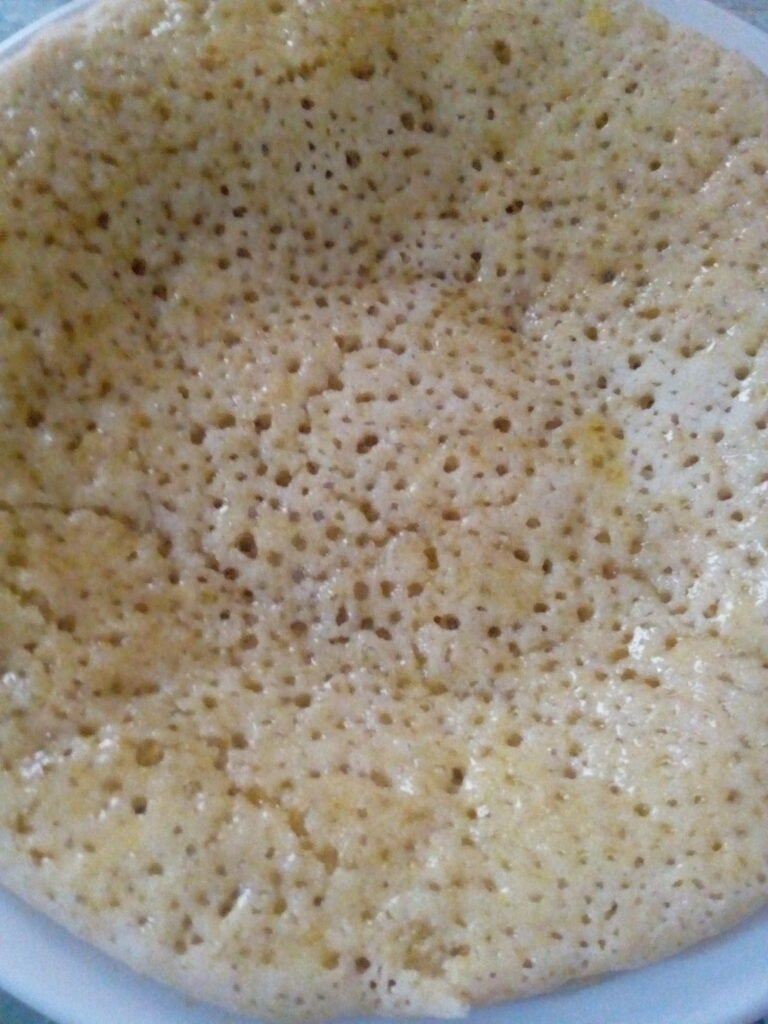
Baghrir (بغرير) is the “thousand-hole pancake,” and the holes are not decoration — they are the whole point. It starts as a thin batter of fine semolina, a little wheat flour, water, salt, and sugar, loosened with two leaveners: baker’s yeast and baking powder. The batter rests until it bubbles, then a ladleful is poured into a warm non-stick pan and cooked on one side only — you never flip a baghrir. As the bottom sets, steam escapes upward and bursts into hundreds of tiny holes: the sign of a properly made one.
Those holes act like a sponge. Baghrir is almost always served with melted butter and honey poured over the top, which the honeycomb surface drinks in. It also takes amlou — the almond, argan oil, and honey spread from the Souss region — soft cheese with olive oil, or jam. This Amazigh (Berber) specialty is soft and light: where msemen is crispy and layered, baghrir is spongy and mild, closer to a British crumpet than to any French crêpe.

📸 If you find a vendor pouring butter and honey over a fresh stack of baghrir, that is the shot to take — steam, holes, and honey in one frame.
Msemen vs Baghrir: Side by Side
Once you know the two signatures — square and layered versus round and full of holes — you will never mix them up again.
| Msemen | Baghrir | |
|---|---|---|
| Shape | Square, folded | Round pancake |
| Starts as | Stretchy dough | Pourable batter |
| Cooking | Griddle, both sides | Pan, one side only — never flipped |
| Texture | Crispy outside, chewy layered inside | Soft, spongy, full of holes |
| Classic topping | Honey, cheese, or savory fillings | Melted butter and honey |
| Best time | Breakfast and afternoon tea | Breakfast and afternoon tea |
Order “one of each” and do not expect them to taste alike: msemen is a laminated bread, baghrir a leavened pancake — different techniques, different textures, different eating experiences.
How They’re Made
Making msemen
Msemen is a technique more than a recipe, and watching it is half the fun. The dough is kneaded until smooth and elastic, divided into small balls, and rested under a cloth. Then each ball is flattened on an oiled surface and stretched — by hand, not a rolling pin — until nearly transparent. A practiced cook pulls it thin without tearing.
The sheet is brushed with melted butter, dusted with dry semolina, and folded into a square — top and bottom in, then the sides. The semolina grains keep the layers distinct instead of fusing into one thick pancake. After a short rest, the square cooks on a hot griddle a few minutes per side until golden with crisp, blistered spots.

Making baghrir
Baghrir is simpler to start but easier to ruin. Semolina, flour, yeast, baking powder, salt, sugar, and lukewarm water are blended smooth — a blender does this best — then the batter rests until bubbles rise to the surface. The pan should be non-stick, on gentle to medium heat, only lightly greased.
A ladle of batter goes in and the cook waits: within a minute or two, bubbles pock the surface and the top turns from wet to dry and matte. That is the signal — it comes off the pan without ever being flipped. Too much heat burns the bottom before the holes form; too little leaves the surface gummy. Vendors making hundreds a day judge this by sound and smell.

How to Order and Eat Them
At a stall, point at what you want and say “wahd msemen” or “wahd baghrir”; it will be reheated on the griddle if it has been sitting. Vendors ask how you want it — with honey (laâsel), cheese, or plain. The classic sweet order is butter and honey melted together and poured over the top. If they have amlou, order it: its nutty richness on a fresh baghrir is one of the best cheap breakfasts in the country.
Eat them the Moroccan way: tear pieces with your fingers and dip — no knife and fork. Msemen tears along its layers, which is part of the pleasure. Baghrir must be eaten warm; once it cools, the sponge firms up. Both belong to breakfast and goûter (afternoon tea), always with mint tea or coffee. Around them a full breakfast may add olives, eggs, and fresh orange juice, but the breads are the center of the plate.
📸 A breakfast table with torn msemen, honey, and a glass of mint tea tells the whole story of a Moroccan morning in one photo.
Where to Find Them
In the morning, msemen and baghrir find you. The best place to try them is a street stall with a griddle — look for stacks of square msemen and a cook folding fresh ones — usually open from early morning until the batch sells out, often before noon. Neighborhood hanouts (corner shops) and small bakeries sell baghrir in stacks for a few dirhams each; baghrir travels well, so it is the one made in bulk.
Medina markets are another good bet: look for breakfast stalls near the main squares, where workers stop before their day starts. Riad breakfast spreads almost always include both — they are the backbone of the traditional Moroccan breakfast alongside khobz. Our Moroccan street food guide maps the other morning specialties worth trying on the same walk.
Timing matters: these are morning and late-afternoon foods tied to the bakery rhythm, not all-day fast food. A stall sold out by 10 a.m. is a good sign — everything was made that morning. Expect street prices: a few dirhams per piece, among the cheapest hot breakfasts anywhere. To plan your food budget, see our Morocco food prices guide for 2026.
📸 A morning griddle stall with a cook mid-fold is one of the most photogenic street food scenes in Morocco — ask before photographing people.
Related Breads You Might Meet
Rghaif / rghayef. Not a different bread — just the other common name for msemen, used more in some regions. A menu listing rghaif means the square folded flatbread.
Meloui (mlawi). Msemen’s closest cousin: the same laminated, buttered dough, rolled into a coil instead of folded into a square, then flattened into a round. Flakier, more spiral-textured — often sold from the same griddle.
Ghrayef. Depending on the region, this name covers small pancakes close to baghrir — or is used interchangeably with msemen. Names shift from city to city, which is why learning the look (square versus holey) matters more than memorizing names.

Common Mistakes Travelers Make
- Calling both “pancakes.” It confuses vendors and sets the wrong expectation. Msemen is a folded, layered bread; baghrir is a spongy leavened pancake. Use the names.
- Expecting them all day, everywhere. The best stalls are morning operations tied to the bakery rhythm. Arrive before mid-morning for the freshest batches; a sold-out stall is a compliment to the cook, not a failure of planning.
- Asking for maple syrup. Morocco’s sweetener of choice is honey — often orange-blossom or thyme honey — melted with butter. It is not a substitute for maple; it is the point.
- Eating baghrir cold. A baghrir that has sat for an hour loses its softness. Ask for it reheated on the griddle or fresh from the pan.
- Skipping the savory versions. Tourists default to honey, but msemen stuffed with onion and tomato or khlea is a full meal and shows how versatile this bread really is.
Frequently Asked Questions
Are msemen and baghrir the same thing?
No. Msemen is a square, layered griddle bread from stretched, folded dough. Baghrir is a round, spongy semolina pancake cooked on one side only and covered in tiny holes. Different dough, different technique, different texture.
Is rghaif the same as msemen?
Yes — rghaif (rghayef) is another name for msemen, more common in certain regions. Order rghaif and you get the square folded flatbread.
What does baghrir taste like?
Mild, slightly wheaty, very soft — the flavor comes from what soaks into the holes: melted butter and honey, amlou, or olive oil and cheese. The topping defines the experience.
When do Moroccans eat msemen and baghrir?
At breakfast and at goûter, the late-afternoon tea: on family tables, at morning street stalls, and in riad breakfast spreads. Not typically dinner food.
Are they vegetarian? What about vegan?
Baghrir is usually vegan as made, though served with butter and honey — ask if it matters to you. Msemen traditionally uses butter in the folding, so it is vegetarian but not vegan unless the cook uses oil only, which some vendors do.
Photos: baghrir with honey and baghrir in the pan by Sabah HAANA, CC BY-SA 4.0; square msemen by Tililen84 (photo by Hadni S), CC BY-SA 4.0; hands stretching msemen dough by Mounir Neddi, CC BY-SA 4.0; msemen and ghrayef assortment by Indif, CC BY-SA 3.0 — all via Wikimedia Commons.