Rooftop Dining in Marrakech: What to Expect
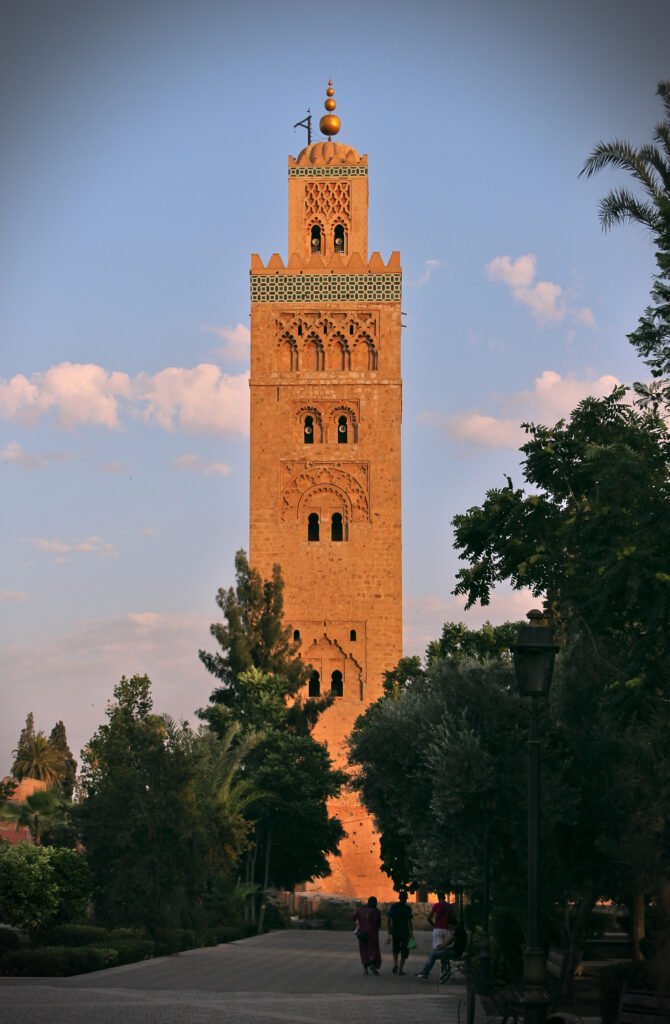
There is a specific minute, about forty minutes before the sun goes down, when the whole of Marrakech turns the color of apricots. From a rooftop terrace above the medina, you watch the light slide across the flat roofs, the Koutoubia minaret goes from pink to deep rose, and the call to prayer rolls out over the city while swallows cut black arcs through the sky. Dinner hasn’t even started, and it already feels like the main event.
Rooftop dining is one of the defining experiences of a food trip to Marrakech — but it works a little differently from a terrace dinner anywhere else. The stairs are steeper, the sun sets faster than you expect, and the menu reads shorter than the view suggests. Here’s what you actually need to know before you go up.
What rooftop dining in Marrakech is really like
Most rooftop restaurants sit on the third or fourth floor of a converted riad or townhouse in the medina, reached through the ground-floor dining room and up one or two flights of narrow, often uneven stairs. There is usually no elevator. The terrace mixes low tables with floor cushions and a few regular tables and chairs, strung with lanterns that get lit as the light fades.
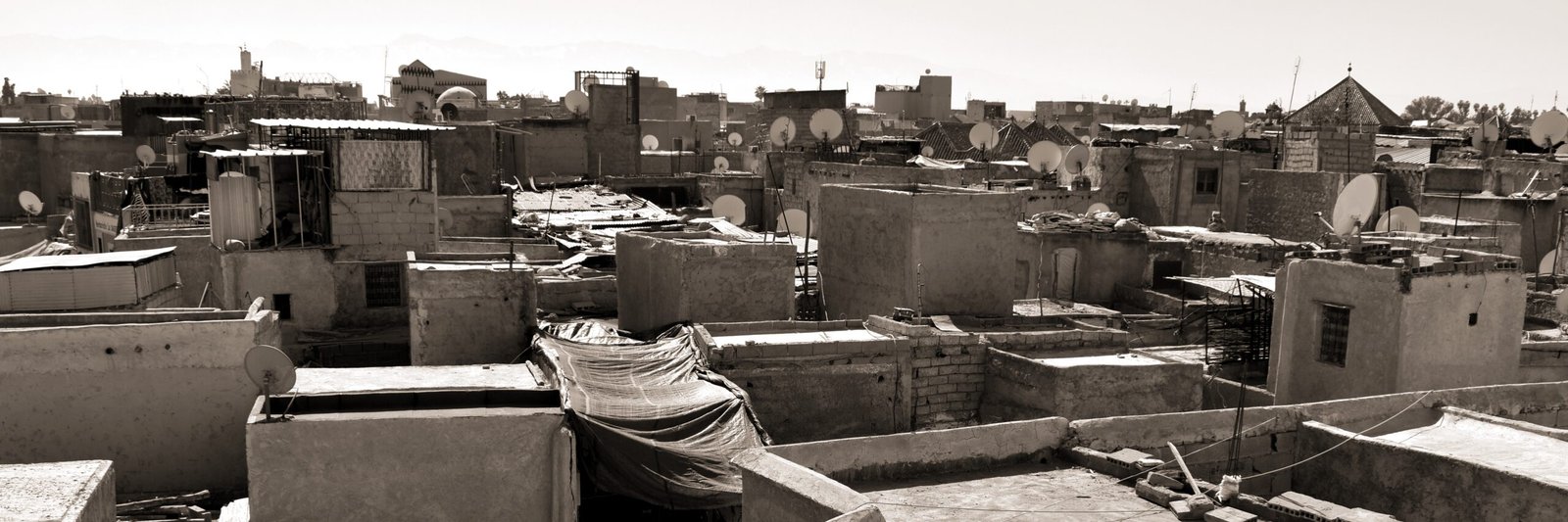
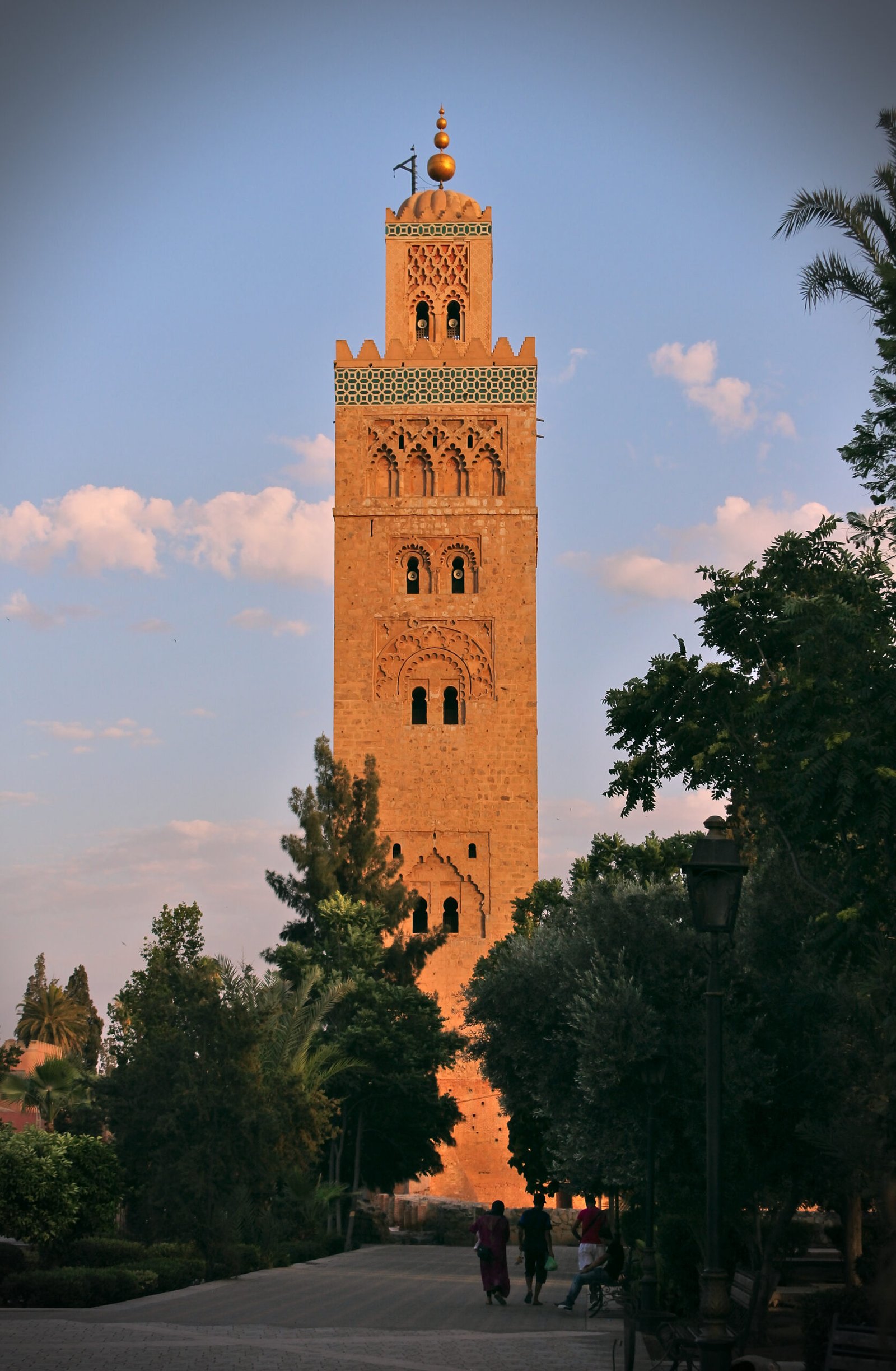
The view is the product. From a good terrace near the center of the medina you look out over a sea of flat rooftops toward the 77-meter minaret of the Koutoubia mosque; on a clear winter day you can also pick out the snow-dusted line of the Atlas Mountains. Terraces near Jemaa el-Fna add the sound of the square below — drummers, food-stall smoke, the evening crowd — drifting up with the cooking smells.
You’ll find two kinds of rooftop. The traditional Moroccan kind serves tagines, grills, and mint tea, usually no alcohol, with zellige tiles, carved wood, and Berber rugs. The newer lounge-style terraces — more common toward the Kasbah and the newer districts — serve cocktails and fusion-leaning menus with a DJ or a playlist. Both can be excellent; they just promise different evenings, so decide which one you want before you pick a table.
What you’ll actually eat up there
Rooftop menus are shorter and simpler than what you’d get at a big street-level restaurant, and that’s fine — the kitchen is usually tiny. Expect a greatest-hits lineup of Moroccan classics, done well if the place cooks to order rather than reheating.
Tagine
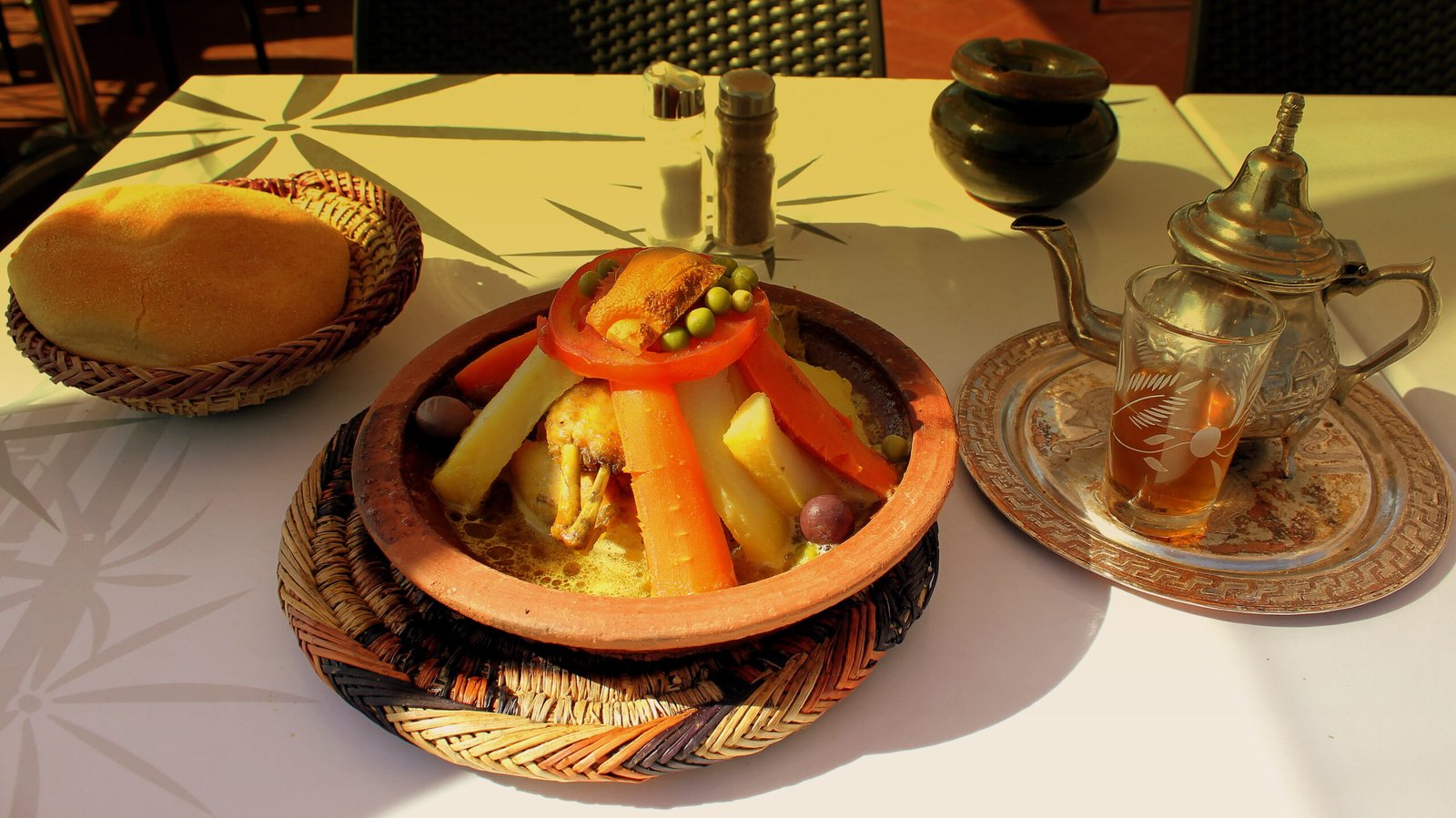
The tagine — the conical clay pot and the slow-cooked stew inside it — is the backbone of nearly every medina rooftop menu. It cooks over low heat for an hour or more until the meat turns tender and the sauce thickens into something you scoop up with bread instead of a fork. Common versions include chicken with preserved lemon and olives, beef with prunes and almonds, and kefta (spiced minced meat) with egg. A menu listing only two or three tagines is usually a good sign: the kitchen cooks what it can handle well.
Couscous
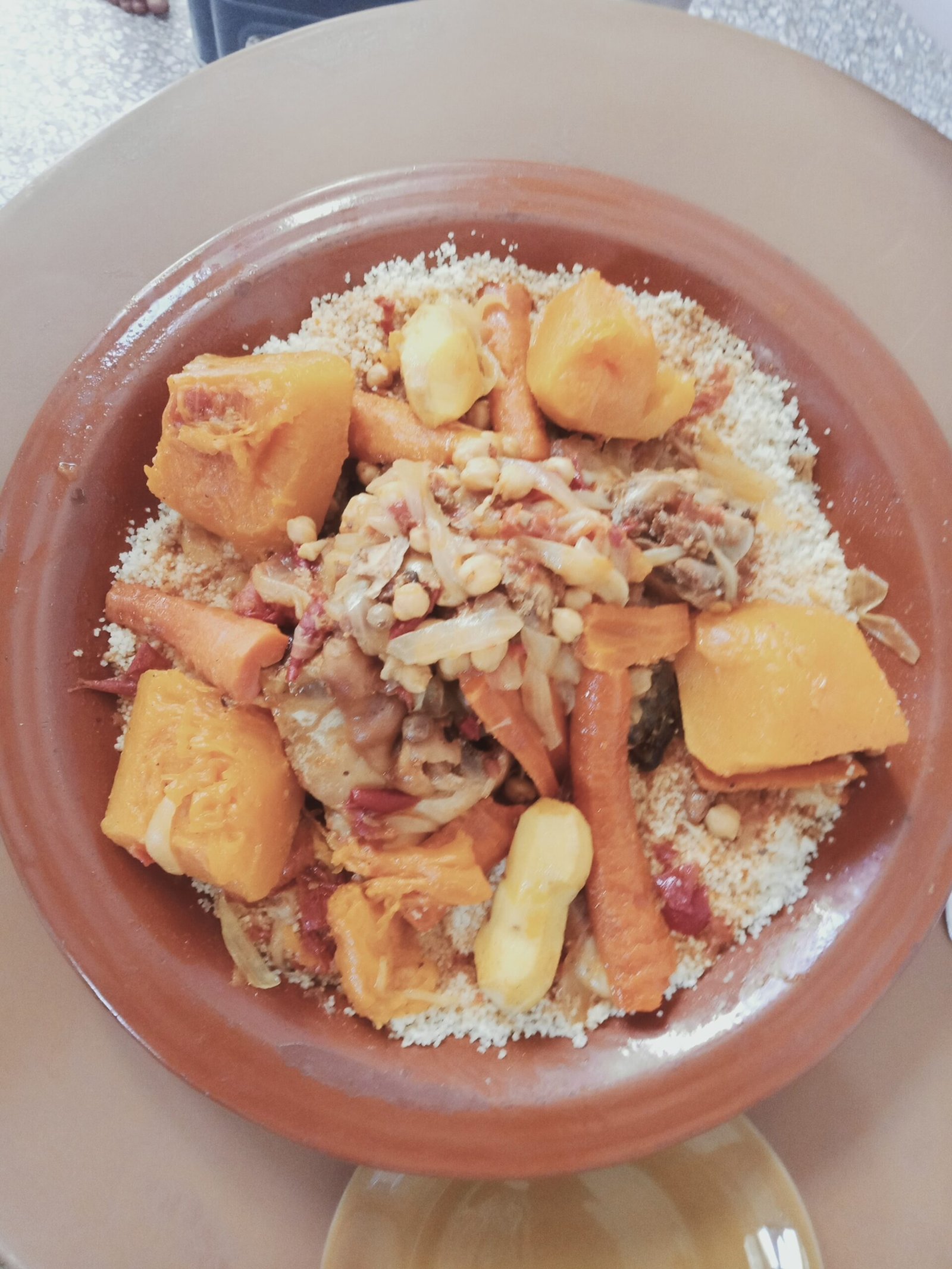
Couscous is Morocco’s Friday dish — families eat it at home after the midday prayer — but many rooftops serve it at dinner too, as a generous mound of steamed semolina topped with slow-cooked vegetables and chickpeas. The grains should be light and separate, never gummy. If you’re in Marrakech on a Friday, ordering couscous on a rooftop is one of the most local things you can do with your evening.
Mint tea
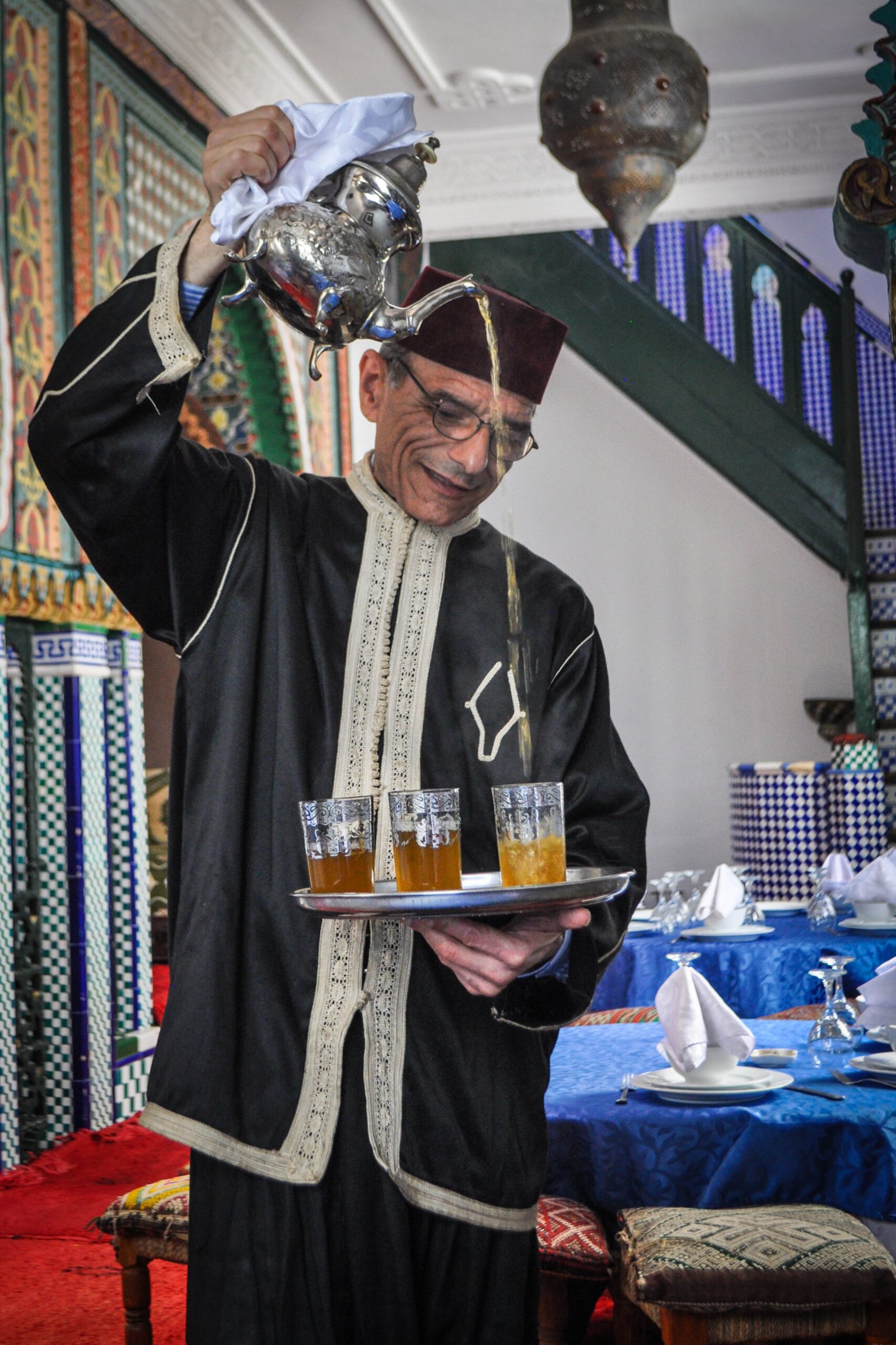
Moroccan mint tea — green tea brewed strong with fresh mint and a lot of sugar — is poured from a height into small glasses to build a little foam on top. It usually arrives at the end of the meal, and in many places the first glass is treated as hospitality rather than a line item. Drink it slowly; the terrace, the cooling air, and that sweet tea are the whole point of the evening winding down.
Around these anchors you’ll find grilled meats, small cooked salads, wood-oven flatbread, and simple soups to start. Desserts stay modest — fresh fruit, a few pastries — because the kitchen’s energy goes into the tagines.
📸 If you get a table facing the Koutoubia, that’s your photo — the minaret at sunset with your tea glass in the foreground is the shot every traveler wants from this city.
Sunset timing and when to book
The sun sets fast near the 31st parallel, and the best light lasts about half an hour. In winter the sun goes down around 6 pm; in summer it’s closer to 8 pm. Morocco shifts its clocks seasonally, so check the actual sunset time for your dates instead of guessing — arriving “around sunset” and discovering you missed it by twenty minutes is the most common disappointment of the evening.
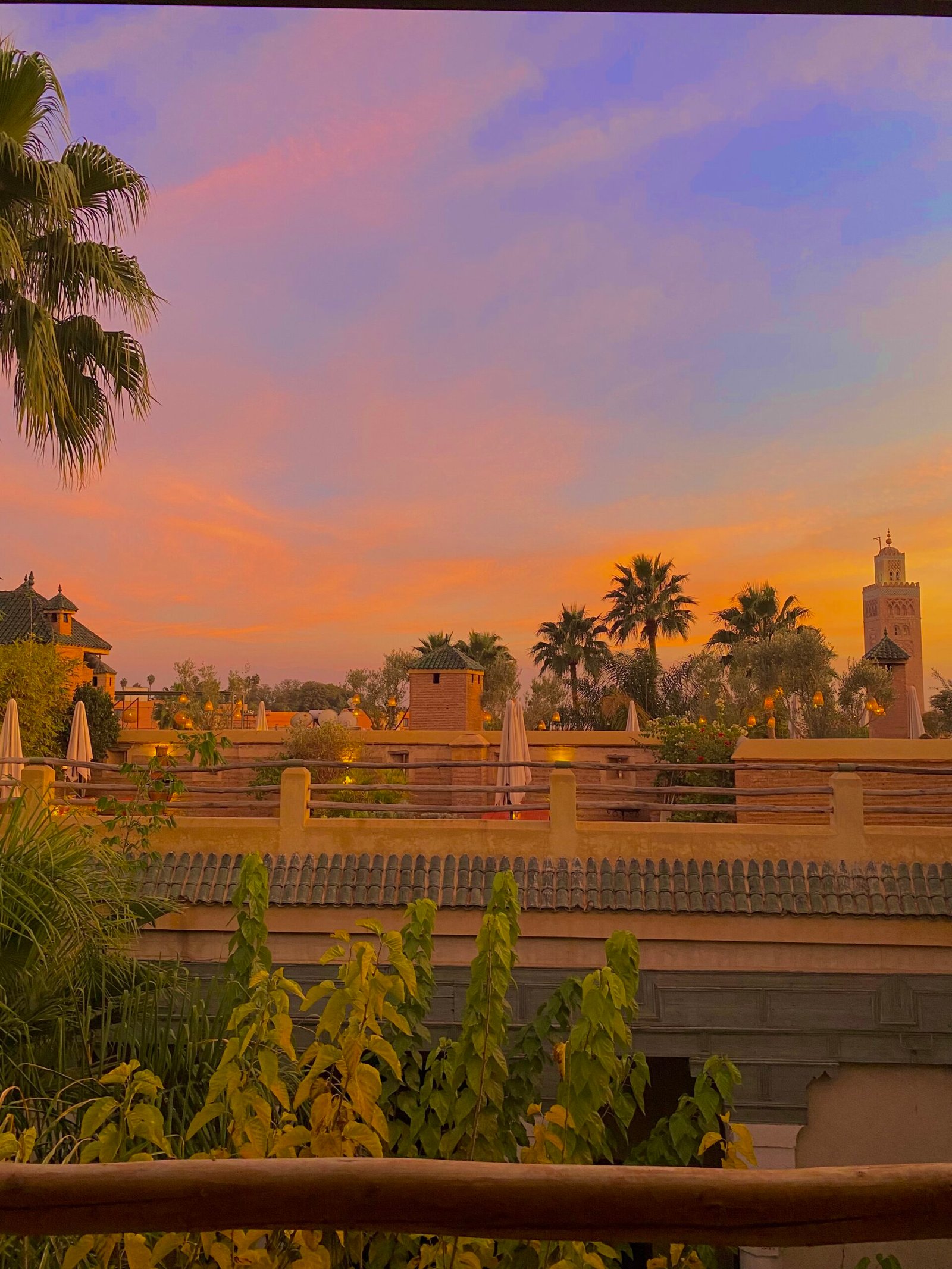
Aim to be seated 45 to 60 minutes before sunset: enough time to order, get your drinks, and watch the whole transition from gold light to pink sky behind the minaret. In spring and autumn — the busiest seasons — the well-known medina rooftops fill their sunset tables a day or two in advance, so message or call the day before. Lunch and late-afternoon slots are easy walk-ins, but then there’s no sunset, which is rather the point.
When you book, ask specifically for a table with the view, not just “a table.” Terraces have dead zones — seats facing a wall, tables next to the stairwell — and those go to walk-ins. It costs nothing to ask, and it’s the difference between watching the sunset and hearing about it from the next table.
What to expect on price
Let’s be direct: you pay for the view. A tagine and a mint tea on a medina rooftop will cost noticeably more than the same meal at a street-level café a few alleys away. That’s the deal across the city — the rent on a terrace with a Koutoubia view is not the rent of a ground-floor snack bar.
Think mid-range tourist-restaurant pricing: reasonable for a special evening, never a daily-lunch price. A shorter menu of a dozen items usually signals fairer prices than a laminated booklet of sixty dishes with photos. Some rooftops add a service charge, so glance at the bottom of the menu before ordering, not after. And bring cash — many terraces take cards, but the machine has a habit of “not working” at the wrong moment, and the nearest ATM is a walk back through the souks. For a broader sense of costs, see our Morocco food prices guide.
Practical tips for the evening
Dress code: smart-casual is the safe zone. No formal rules on medina rooftops, but swimwear and flip-flops look out of place once the lanterns are lit. Evenings cool fast after sunset — bring a layer even in summer.
Stairs: those narrow staircases are real, often worn smooth and uneven. If anyone in your group has mobility issues, ask when booking whether the terrace is accessible — many simply aren’t.
Winter: from December through February, nights drop into single digits and a rooftop is the coldest seat in the restaurant. Most established terraces keep blankets for guests — ask for one, everyone does. The upside: snow-capped Atlas, the clearest air of the year, the best sunsets.
Summer: in July and August the terrace is unpleasant before about 5 pm. Book late, drink water before the tea, and take a shaded table — stone floors radiate the day’s heat into the evening.
Alcohol: most traditional medina rooftops don’t serve it at all — know that before you sit down expecting wine with dinner. Licensed lounges exist, mostly newer spots, but never assume; confirm when you book if it matters.
📸 The walk up through the restaurant’s lower floors is often beautiful — tiled stairwells, carved doors, a glimpse of the kitchen. Photograph it on the way up, while the light is still good.
Common mistakes tourists make
Arriving at 8:30 and expecting a sunset table. The sun doesn’t wait for your taxi through the medina. Book for the right hour and arrive early — the alleys eat time.
Assuming the card machine works. Enough travelers have sprinted to an ATM mid-dessert that this deserves its own line: bring cash.
Ordering couscous on a Tuesday and judging it against Friday. Friday is couscous day in Morocco, when kitchens make it in volume and at their best. Want the definitive version? Time it right.
Taking the first table offered. The seat by the stairwell, facing the kitchen door, is always available for a reason. Ask to see the terrace — or reserve the view table in advance.
Treating the terrace like a nightclub. Sound carries straight down into the residential alleys. Keep it at conversation level and you’ll get warmer service for it.
Skipping the medina for the hotel rooftop. If you only do one rooftop dinner in Marrakech, do it in the medina — ideally within walking distance of Jemaa el-Fna’s night food stalls, so you can wander down afterward and keep the evening going.
Frequently asked questions
Do I need to book a rooftop restaurant in Marrakech?
For a sunset table in spring or autumn, yes — a day or two ahead. For lunch, late afternoon, or low season, walk-ins usually work. A quick call removes the gamble.
Are rooftop restaurants in Marrakech expensive?
More than street level, less than fine dining. Budget for a mid-range tourist dinner and you won’t be surprised.
Do medina rooftops serve alcohol?
Most traditional ones don’t. Licensed rooftop lounges exist but are the exception — confirm when booking if it matters.
What time should I arrive for sunset?
Be seated 45 to 60 minutes before local sunset: roughly 5 pm in winter, 7 pm in summer. Check the exact time for your date.
What should I wear?
Smart-casual, plus a layer for after dark. The temperature drop between sunset and 10 pm catches everyone out, in every season.
Are rooftops open in winter?
Yes — and winter brings the clearest skies and the best Atlas views of the year. Nights are cold, so take the blanket. If you’re choosing where to stay for evenings like this, our guide to where to eat in Marrakech covers the neighborhoods around the main rooftop areas.
Photos: Marrakech medina rooftops by Misa.stefanovic.07, CC BY-SA 4.0 (Wikimedia Commons); Marrakech medina at sunset by Inesgh13, CC BY-SA 4.0 (Wikimedia Commons); Koutoubia Mosque at sunset by M0tty, CC BY-SA 3.0 (Wikimedia Commons); chicken tagine with mint tea at Jemaa el-Fna by calflier001, CC BY-SA 2.0 (Wikimedia Commons); Moroccan couscous by Atikkk, CC BY-SA 4.0 (Wikimedia Commons); mint tea by katiebordner, CC BY 2.0 (Wikimedia Commons).