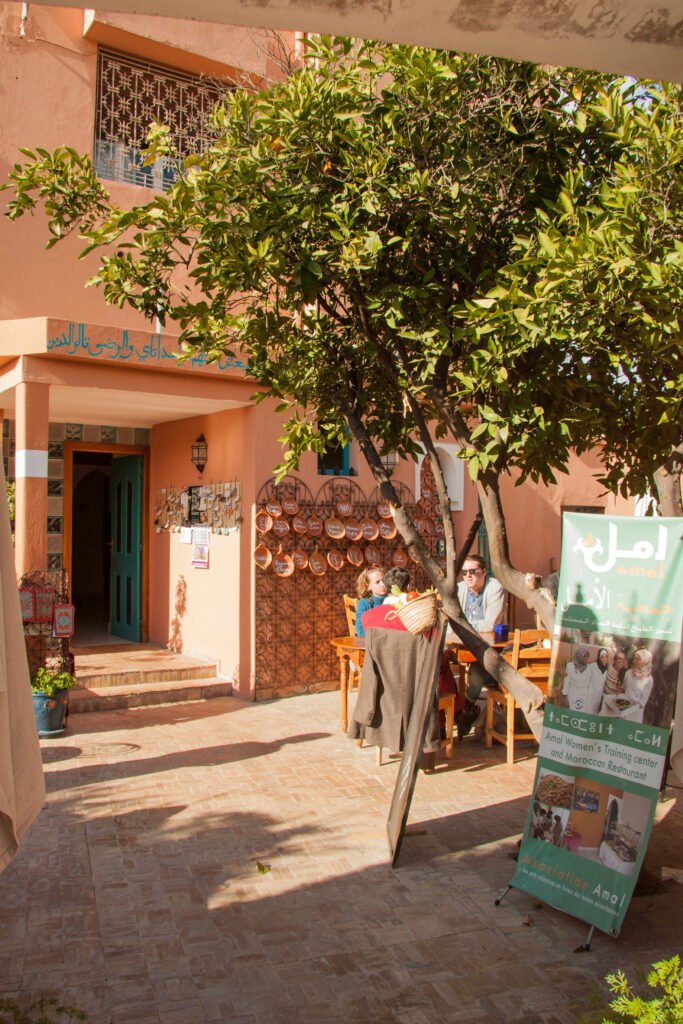
Your bill arrives at a Marrakech restaurant and the awkward question follows: how much do I leave? In Morocco the answer is simpler than the anxiety suggests — but not your answer from home. Tipping runs on its own logic: small amounts, always in cash, a sharp split between the sit-down restaurant and the corner café.
Moroccans call it a pourboire — “for a drink.” Nobody expects American-style 20%, but hospitality wages are low, so service workers genuinely count on the steady flow of small tips. A few dirhams, in local currency, goes a long way: roughly 10 dirhams equals one euro or one US dollar.
The short answer
One thing per situation:
| Situation | What to tip |
|---|---|
| Restaurant (sit-down) | ~10% of the bill when service was good; always check whether a service charge is already added |
| Café | Round up the bill or leave your small change (a few dirhams) |
| Street food stall / takeaway | Nothing expected; rounding up a few coins is fine |
| Hotel / riad staff | 10–20 MAD per bag for the porter; 20–50 MAD per day for housekeeping |
| Guides & drivers | 50–100 MAD for a half-day city guide; 100–200 MAD per day for a private driver |
Below: when the 10% rule bends, where no tip is owed, and the small details that separate a respectful tipper from an accidental show-off.
Restaurants: the 10% rule and its exceptions
The standard move in a sit-down restaurant is simple: leave about 10% of the bill when the service was good. At a genuinely upscale restaurant or a refined riad dinner, that is the floor — attentive service earns its ten percent and nobody thinks twice.
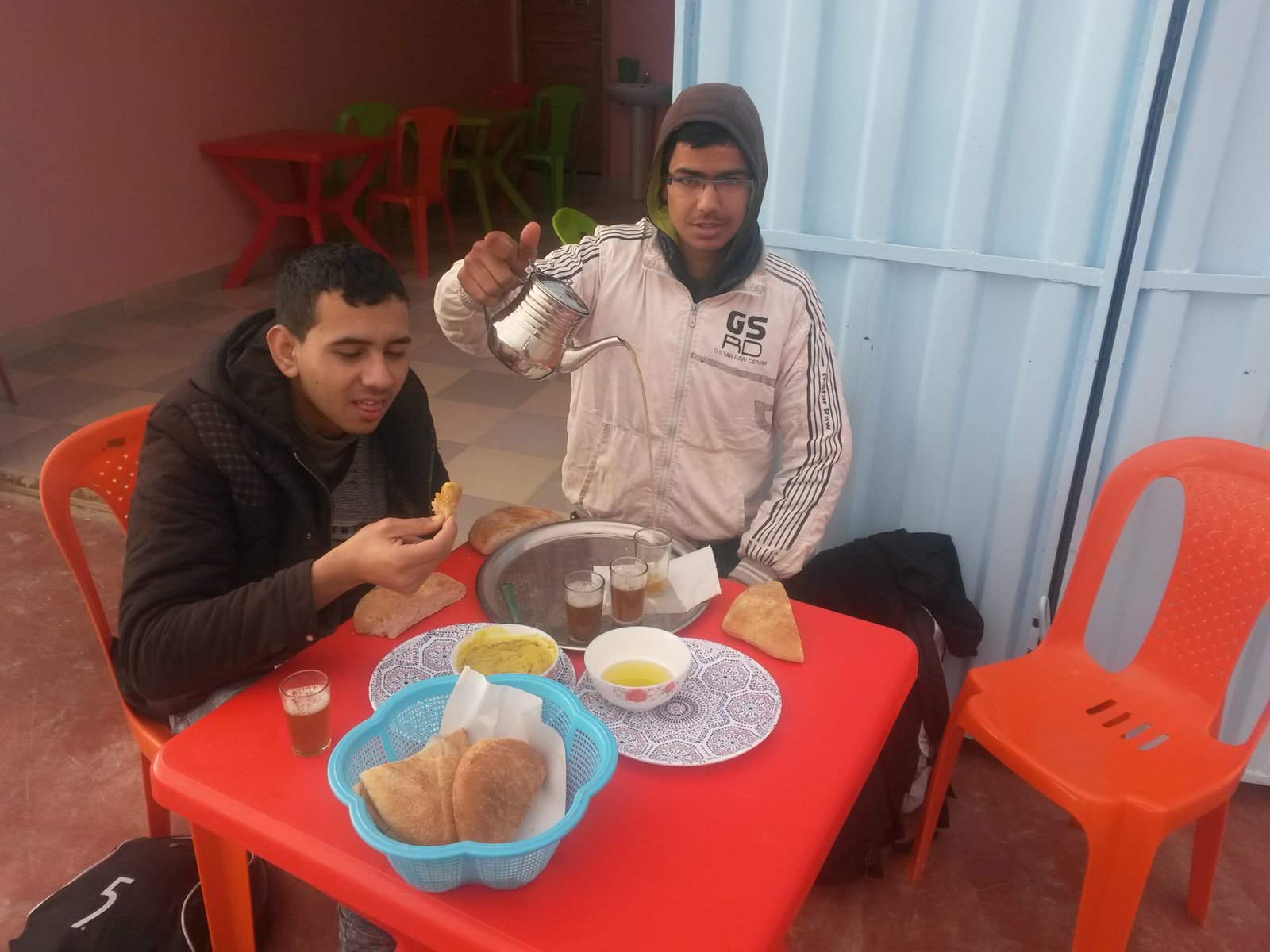
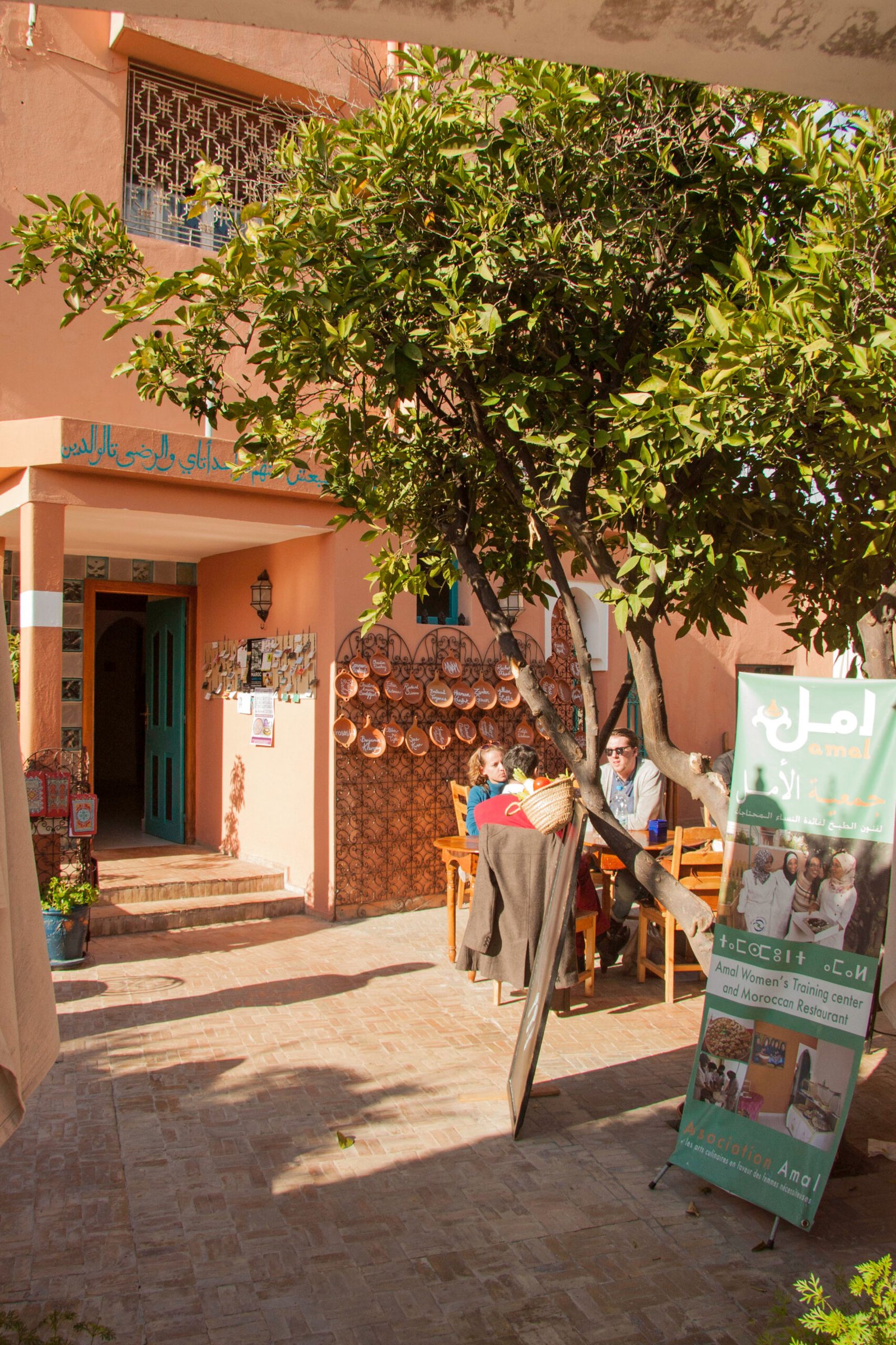
But Morocco is wider than its white-tablecloth end. In a casual neighborhood eatery — plastic tables, Arabic-and-French menu, a fraction of tourist-district prices — 10% computes to a handful of coins, so locals simply round up or leave a few dirhams. If you ate at a gargote, the worker’s canteen where Moroccan staff eat, do the same: round up, leave the small change, done.
One check matters every time: read the bill. Tourist-facing restaurants — especially in Marrakech, Fès, and Agadir — sometimes add a service charge (“service compris”) to the total. If it is there, you have already tipped; a few extra coins for warm service are a nice gesture, but a full 10% on top is double-tipping. Pay at the table: ask for l’addition, add the tip, settle up.
Judge the tip on attentiveness and warmth, not speed: Moroccan meals unspool slowly, and unhurried service is the local rhythm. For a broader sense of what meals actually cost, see our guide to food prices in Morocco.
Cafés: the “keep the change” culture
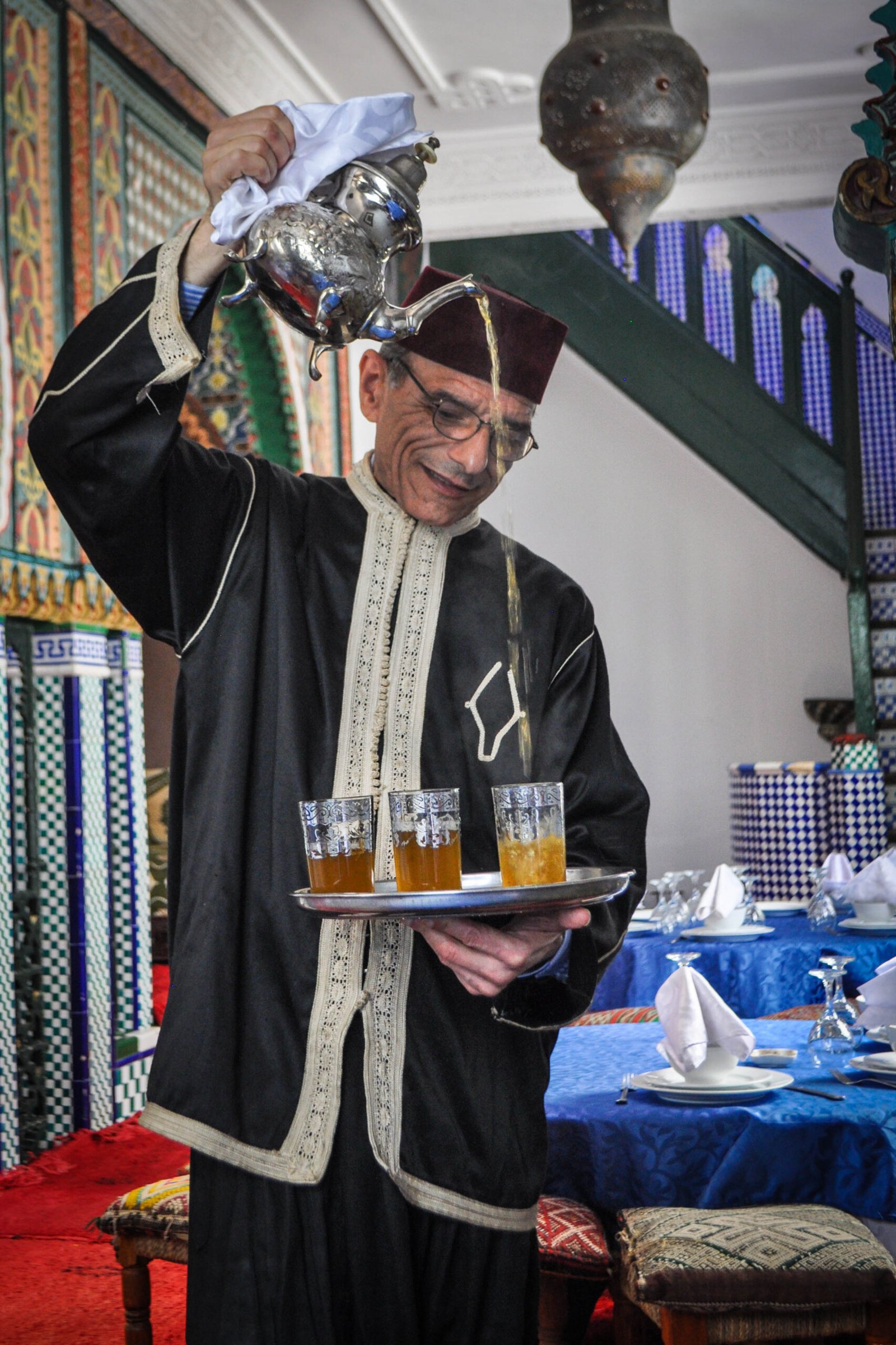
Cafés are a separate universe. Morocco runs on café culture — people spend hours over a single coffee or glass of mint tea, and the café doubles as a living room. Tipping is deliberately light: round up to the nearest 5 dirhams, or leave your small change. Nobody expects a percentage.
The sums are small: a coffee or thé à la menthe costs a few dirhams in a normal café — more on a tourist terrace, rarely more than a few euros. A percentage would produce meaningless amounts, so the convention is simpler: leave 1–2 dirhams, or round up and let the waiter keep the change. “Gardez la monnaie” is the whole transaction.
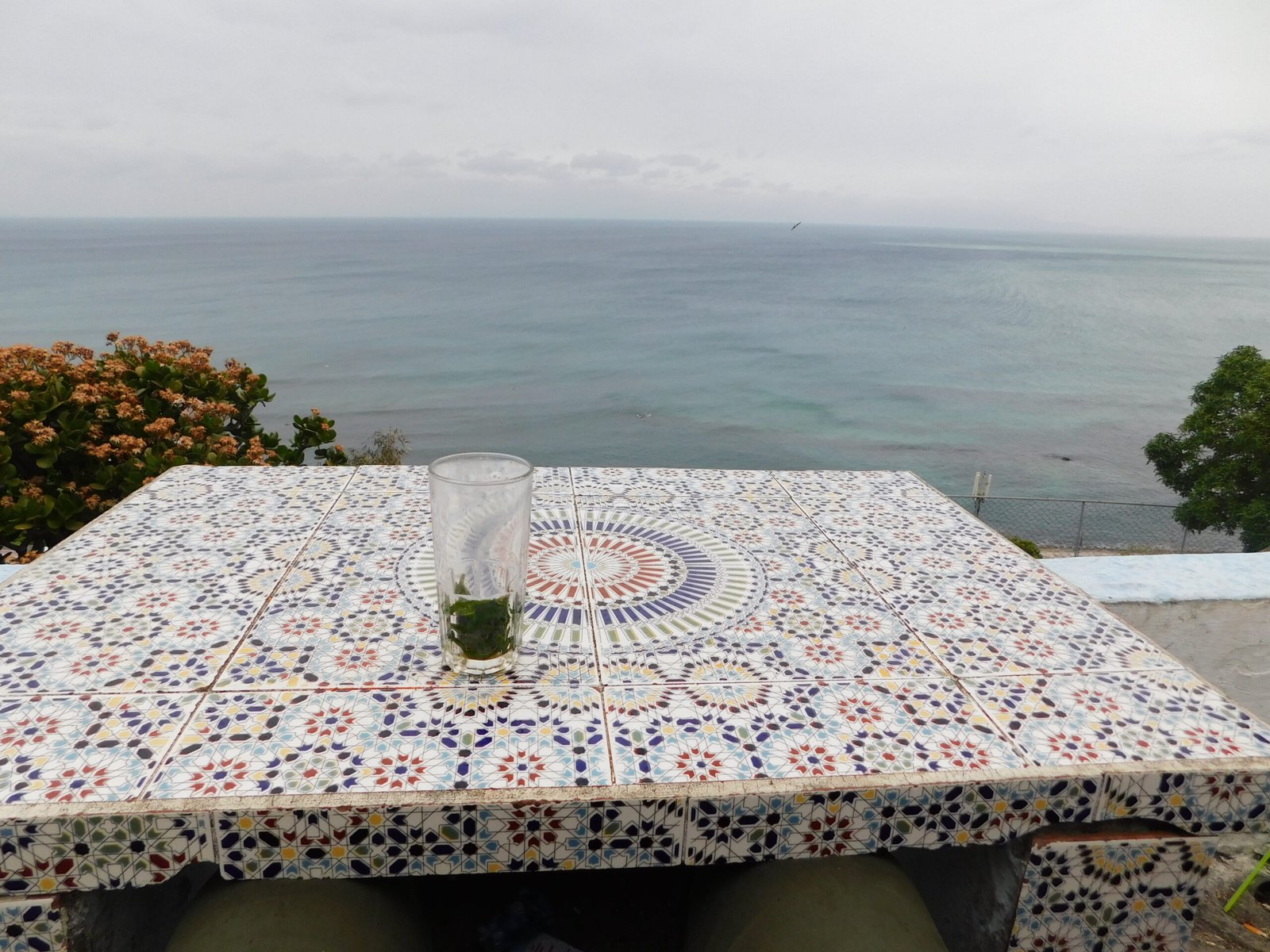
Where you sit changes the bill, not the logic. A terrace overlooking Jemaa el-Fna charges for the view — your tip still scales to the bill, not a percentage. What earns a slightly larger tip is service that went beyond: the waiter who remembered yesterday’s order, or let you linger four hours over one glass without a glance. Moroccan café culture runs on lingering — generosity here rewards hospitality, not speed.
Where tipping is NOT expected
This is the part most visitors get wrong. A whole layer of Moroccan food exists where nobody tips and nobody expects you to:
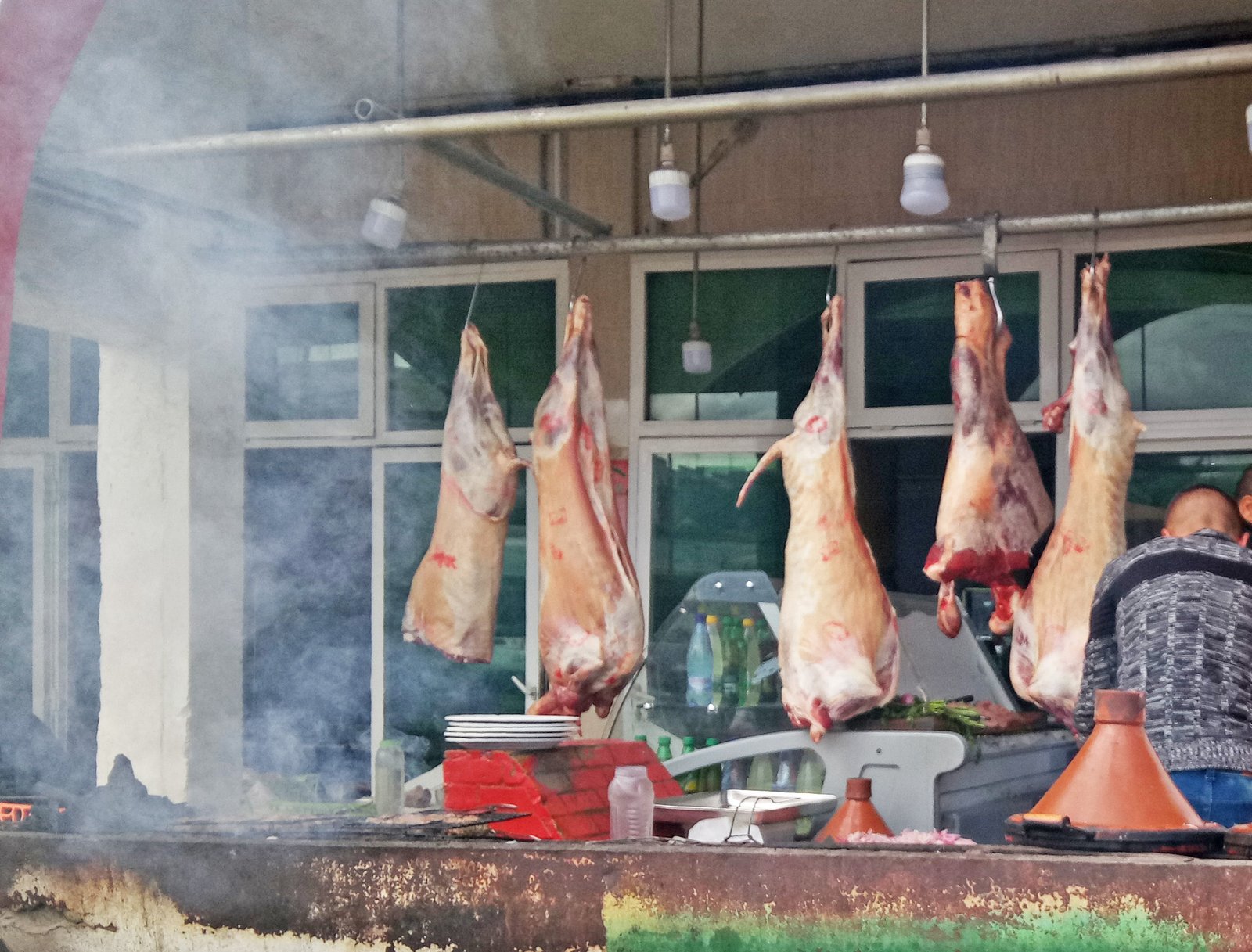
- Street food stalls and takeaway counters. The grill man turning brochettes over charcoal, the msemen vendor at the market, the orange-juice seller with his brass cups — these are pay-for-the-item transactions. Rounding up with a few coins is appreciated but never owed. For orientation, see our Moroccan street food guide.
- Markets and souk food sellers. Bargaining is the sport; tipping is not part of it. A small tip after a genuinely generous tasting sample is a courtesy, not a custom.
- Supermarkets and bakeries. No one tips at the bread counter. Pay the posted price.
As for the persistent “helpers” — someone who materializes to walk you to your riad, or the water seller who drapes his brass cup over your shoulder for a photo — these are negotiated payments, not service tips. Genuinely useful help (twenty minutes of medina wandering saved) is worth 5–10 dirhams with a smile. Unwanted help gets a firm, smiling la, choukran (no, thank you). And agree any photo price before the photo: posing with a snake charmer or musician means an expected 10–20 dirham tip, and the discussion is easier before the shutter clicks.
Hotels, riads, guides & drivers
Food and lodging overlap in Morocco — many travelers eat in their riad — so here is the lodging side of the pourboire system, briefly:
- Porters: 10–20 MAD per bag, more if they hauled luggage up several flights of a riad’s narrow medina stairs.
- Housekeeping: 20–50 MAD per day, left in the room daily rather than one lump sum at checkout — it is not always the same person cleaning each day. A short note avoids it being mistaken for forgotten cash.
- Concierge / standout staff: 20–50 MAD for a favor that went beyond — a hard restaurant reservation, a lost-item panic sorted, detailed local advice. No routine tip for a normal check-in.
- City guides: 50–100 MAD per person for a half-day private walking tour; around 100–200 MAD per person for a full day. On free walking tours, tip what it was worth — 50–100 MAD per person is the normal range.
- Private drivers: 100–200 MAD per day for the group on a multi-day trip, given at the end.
📸 Riads run on personal service — the same person may carry your bag, serve your breakfast, and book your taxi. Tip directly, with thanks.
Two lodging notes: some riads keep a common tip jar for sharing among staff — ask at check-in how tips are handled. And at luxury properties, check whether a service fee is already included before tipping on top.
How to tip well: the mechanics
The amount is only half of it. The how is what marks you as someone who understands the place:
- Always tip in Moroccan dirhams. Tipping in euros or dollars forces the recipient into an exchange-bureau errand. Dirhams — small notes and coins — are the currency of the pourboire.
- Keep small notes on hand. Break large bills at restaurants and shops whenever you can. Coins and 10- and 20-dirham notes are your daily carry — nothing kills a tipping moment like having only a 200-dirham note for a 3-dirham café tip.
- Hand it directly and discreetly. Pressing the tip into a hand with a quiet shukran is the classic move; leaving it on the table at a restaurant is equally fine. What you do not do is make a show of it.
- Tip after the service, not before. Hospitality tipping is retrospective — a thank-you, not an inducement. The one exception: agreeing a photo price with a street performer in advance, which is a negotiation, not a tip.
- Match the scale, not your home habits. A “small” tip in dollars can be generous in dirhams. Calibrate to local numbers, not to what counts as a tip back home.
Common mistakes tourists make
Overtipping at tourist traps. In the busiest squares, some touts have learned that startled visitors tip big to end an interaction. A 100-dirham tip for a two-minute forced detour resets the expected price for every traveler who follows, and teaches the tout that pressure works. Keep tips small and normal.
Tipping a percentage at a café. Leaving 10% on a 12-dirham tea marks you as someone following a guidebook formula rather than the local custom. Round up, leave the change — the waiter will recognize the gesture instantly.
Double-tipping on a service charge. If the bill says service is included, the house has already taken its cut. Check first, then decide.
Tipping in foreign currency. It looks generous and functions as homework — a two-euro coin is a nuisance nobody can easily spend.
Not tipping at all, on principle. “Tipping isn’t obligatory” is technically true — but in tourism-facing services it is expected by custom, and service wages assume it. Skipping it reads less as principled than as unaware.
Trusting the card terminal’s suggestion. Some machines now propose tip percentages calibrated for other countries. If the suggested 15–20% does not match the local custom, ignore it and leave cash instead.
Frequently asked questions
Is tipping mandatory in Morocco?
No — it is customary, not compulsory. But in restaurants, cafés, hotels, and guiding, custom expects it, and the amounts are small.
How much should I tip in a Moroccan restaurant?
About 10% of the bill when service was good; less at casual local spots, where rounding up is the norm. Check whether a service charge is already included first.
Do I tip at cafés in Morocco?
Yes, lightly: round up the bill or leave your small change — 1–5 dirhams on a normal café bill. Nobody expects a percentage.
Should I tip street food vendors?
No tip is expected at stalls and takeaway counters. If a vendor was especially generous — an extra skewer, directions — rounding up a few coins is a fine courtesy.
Cash or card?
Cash in dirhams, always, when you can. Card tips do not reliably reach the staff member who served you, and many smaller places are cash-only anyway.
What is the biggest tipping mistake tourists make?
Overtipping under pressure — large tips for tiny forced “services” in busy tourist areas. It rewards the tactic and inflates what the next traveler pays.
Photos: Café Hafa, Tangier by Ideophagous, CC BY-SA 4.0 (Wikimedia Commons); two people drinking tea in a café by Mohamed&amehry, CC BY-SA 4.0 (Wikimedia Commons); Moroccan waiter serving mint tea in Tangier by katiebordner, CC BY 2.0 (Wikimedia Commons); restaurant terrace by Rystheguy, CC BY-SA 4.0 (Wikimedia Commons); street food stall with tajines by Bikerhiker75, CC BY-SA 4.0 (Wikimedia Commons)