Tangia: Marrakech’s Slow-Cooked Treasure
In Marrakech — and nowhere else in Morocco — there is a dish that takes a whole night to cook and a whole neighborhood to make. It arrives inside a clay urn, sealed with paper and string; when the seal cracks open, the beef is so tender it barely holds onto the bone. This is tanjia — sometimes spelled tangia — the dish Marrakchis consider their own.
Every other Moroccan city has its tagines. Tanjia belongs to Marrakech the way the Koutoubia does: inseparable from the place. And what makes it special is not just the recipe — beef, garlic, cumin, preserved lemon — but the cooking: buried in the warm ashes of the furnace that heats a neighborhood hammam, tended overnight by the fire keeper known as the fernatchi.
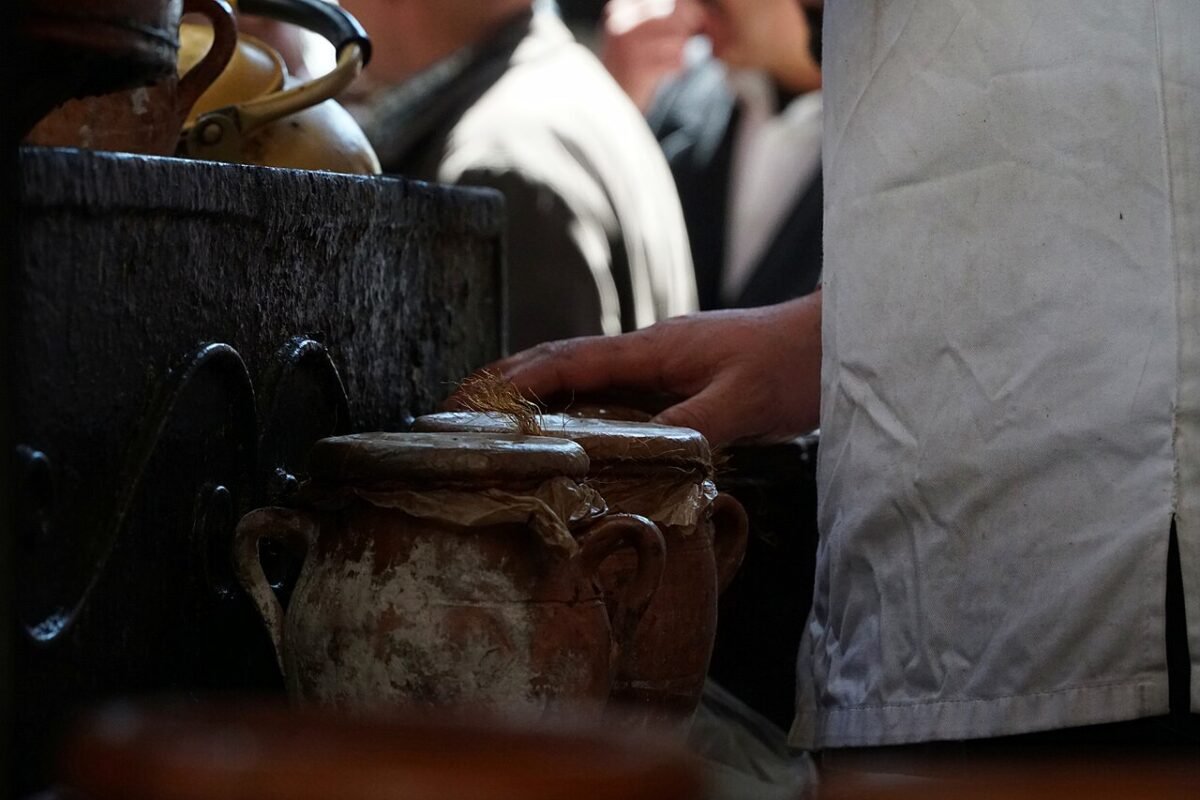
📸 [Owner’s photo spot: sealed tanjia urns at a medina furnace.]
Tanjia vs. tagine: they share clay, and almost nothing else
Both names describe the pot as much as the dish — but once you know the differences, you will never confuse them again.
- The pot: a tagine is a wide, shallow dish with a tall conical lid, used all over Morocco. A tanjia is a tall, narrow clay urn with a small mouth — shaped like an amphora — with two small handles.
- The cooking: a tagine braises over a flame and arrives in about half an hour. A tanjia is buried in embers for hours — often overnight — until the meat turns into something closer to a confit than a stew.
- The contents: a tagine usually carries vegetables and a generous broth. Tanjia is meat and nothing else — traditionally beef, sometimes lamb — with a handful of seasonings.
- The geography: you can eat tagine anywhere from Tangier to Dakhla. Real tanjia is a Marrakech dish — order it in another city and it was almost certainly not cooked the traditional way.
Still unsure about tagines? Our guide to Moroccan tagine sorts out the main varieties.
The urn: why the shape matters
The urn is unglazed clay, rough and porous. The narrow mouth is the whole point: once the beef, spices and fat are packed inside, the opening is covered with brown paper tied down with string — in older times, sealed with dough. Steam and fat have nowhere to go, so the meat bastes itself for hours in a closed, humid chamber.
After months of service an old urn develops its own seasoning — Marrakchis swear it cooks better than a new one. Butchers in the medina sell the urns, or lend you one: buy the beef, and the butcher will often pack the pot, add the seasoning and hand you a sealed, ready-to-cook urn.
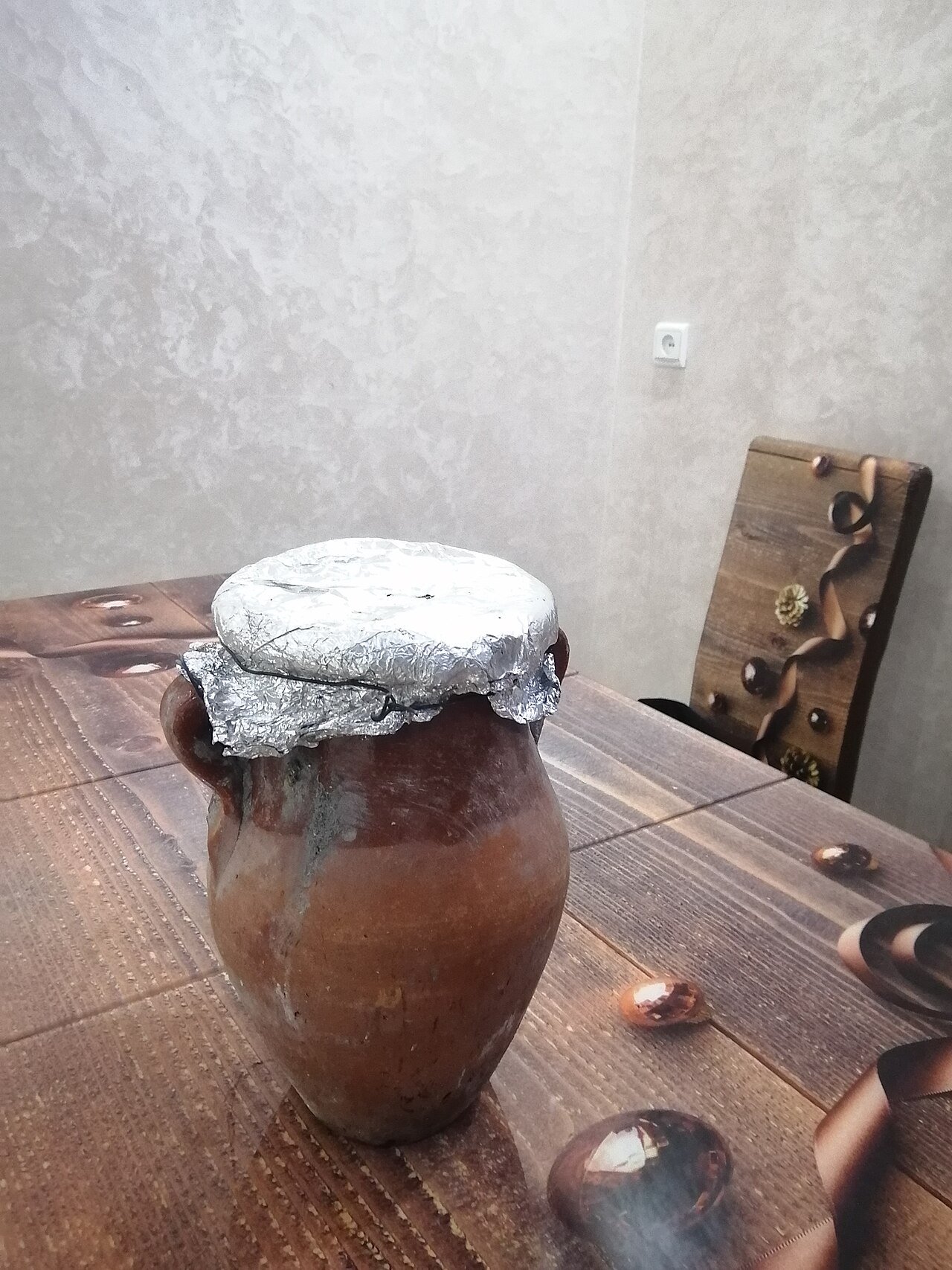
The urn, sealed and ready — the pot that gives the dish its name.
Cooked in bathhouse ashes: how real tanjia gets made
Before every home had plumbing, the hammam — the neighborhood bathhouse — was where the city washed, and its wood-fired furnace burned most of the day. All that residual heat had to go somewhere. Tanjia was the answer.
The ritual still works the same way in the old quarters of Marrakech:
- The beef. Traditionally beef shank — jarret de bœuf — the cut whose connective tissue melts into gelatin over hours of slow heat. Lamb is a respected alternative.
- The seasoning. A whole head of crushed garlic, two generous spoonfuls of cumin, a quarter of preserved lemon (rind only), a pinch of saffron, a spoonful of smen, a little olive oil. No broth — the meat releases its own liquid.
- The seal. The urn’s mouth is covered with paper and tied with string, so nothing escapes.
- The ashes. The sealed urn goes to the fernatchi, the keeper of the hammam’s furnace, who buries it in warm ashes for the night. A small payment covers hours of slow cooking.
- The wait. The fernatchi knows when to move the urn to cooler ashes so it holds warm until its owner collects it — often the next morning, ready for lunch.
That chain — butcher, spice seller, potter, fernatchi — is what makes tanjia a dish cooked by a neighborhood, not by a kitchen.
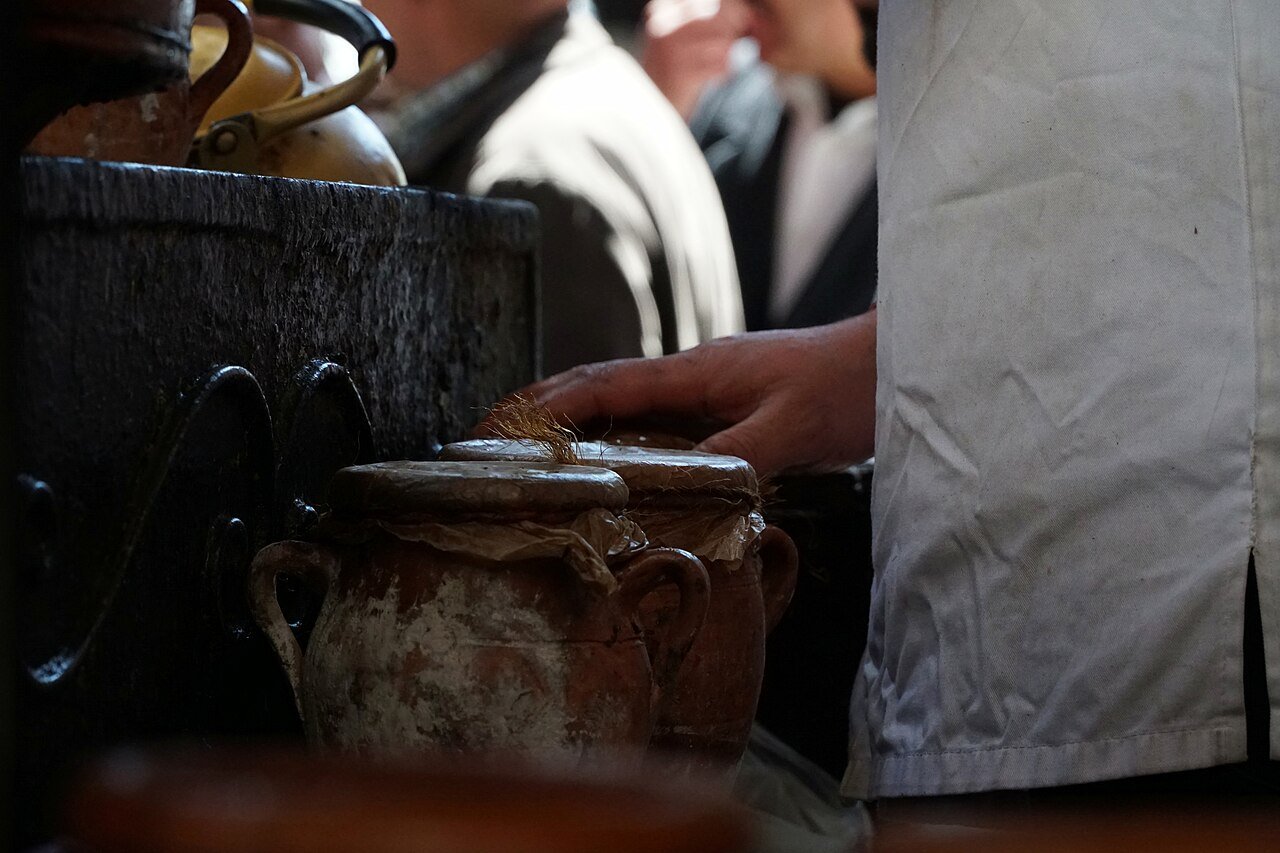
Sealed urns at the furnace — each one belongs to someone who will come back for it at lunch.
What’s inside: beef, garlic, cumin — and patience
Tanjia has one of the shortest ingredient lists in Moroccan cooking — six ingredients, meat, and time. There is nowhere to hide.
- Beef shank — the classic, cut into large bone-in pieces. Long, gentle heat dissolves the connective tissue until the meat is spoon-tender.
- Garlic — a full head, crushed, not minced. It melts into the sauce completely.
- Cumin — the signature. Tanjia tastes of cumin the way tagine tastes of ginger and turmeric; without it, it is not tanjia.
- Preserved lemon — the rind of a well-aged lemon, not the flesh. The older the lemon, the deeper the flavor.
- Saffron — a pinch, for color and perfume.
- Smen — fermented butter, a spoonful, for the dish’s deep, savory background note.
No vegetables, no olives, no dried fruit. What you get is dark, glossy meat in a thick, reduced sauce that coats bread beautifully — closer to a confit than to any tagine.
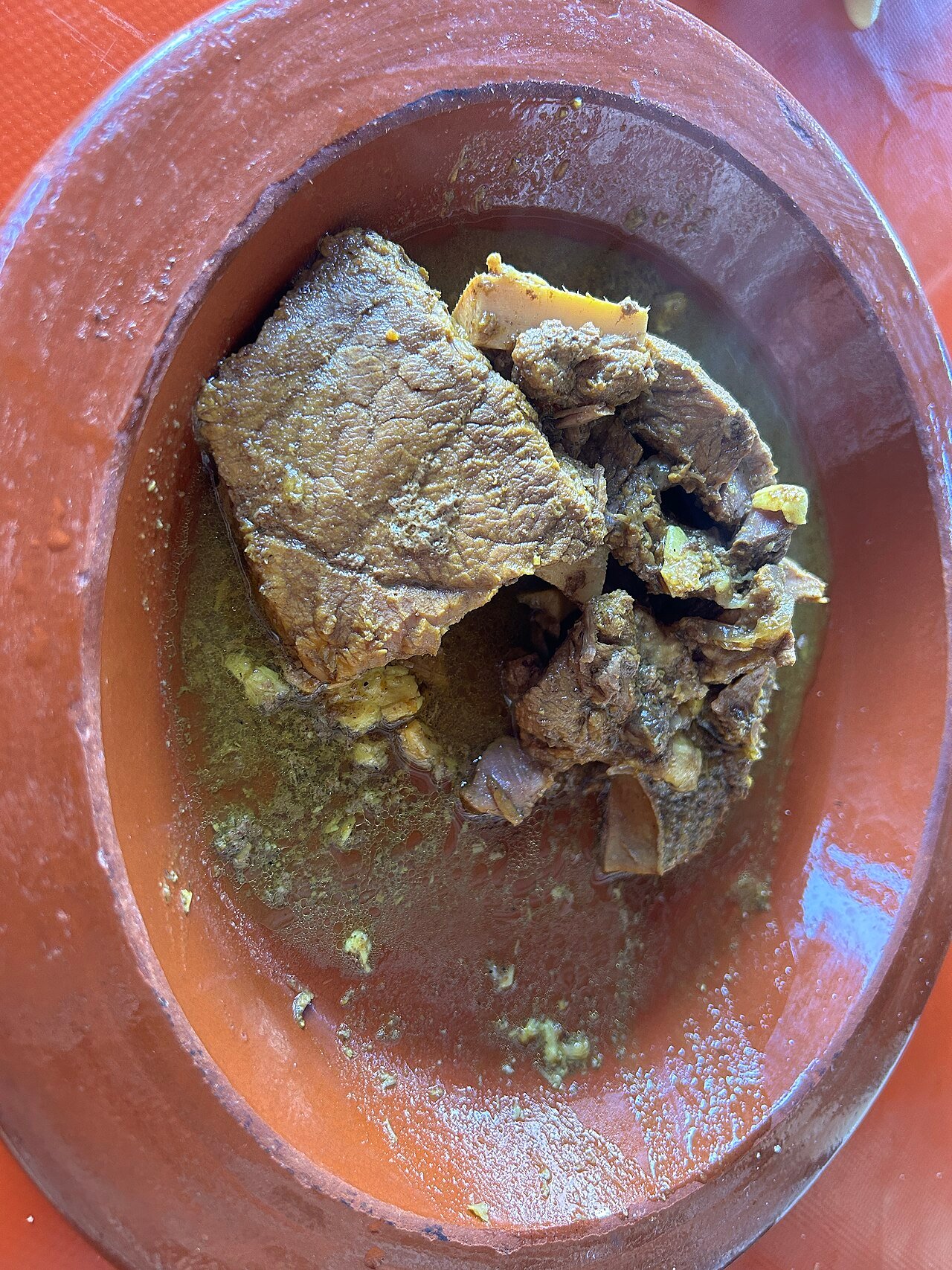
Inside the urn: beef cooked overnight until it barely holds together.
A men’s dish with its own social calendar
Tanjia has always been a men’s dish — un plat d’hommes. Men bought the meat, sealed the urn and carried it to the fernatchi; medina craftsmen pooled their money, sent one urn to the ashes and ate together at lunch.
That rhythm survives. Friday is tanjia day. After the Friday prayer, shops close and urns that went into the ashes the night before get cracked open for lunch. On match days, supporters eat tanjia together — a monthly, sometimes weekly ritual of preparing, collecting and sharing the urn in a garden or on a rooftop.
One old story says men prepared tanjia on Thursday nights, away from their wives, for outings the next day — food made by a group, for a group, outside the family kitchen.
📸 [Owner’s photo spot: a Friday table with an opened tanjia and bread ready.]
How to spot the real thing: six checks before you order
Tanjia’s fame means imitations. Here is how to tell the real one:
- It arrives in an urn. Real tanjia is presented in the clay pot it cooked in. In a tagine dish, it was not cooked as tanjia.
- Meat only. No carrots, no peas, no prunes. Beef or lamb, sauce, bread.
- The texture. The meat should shred with a fork or fall off the bone with your fingers. Chewy tanjia was rushed.
- The color and smell. Deep brown and glossy, with a clear cumin-and-garlic aroma. Pale, watery sauce is a bad sign.
- The timing. Tanjia is a lunch dish. Serious spots serve it around midday and often sell out by afternoon — it cannot be made to order.
- The bread. It is eaten with bread, often straight from the urn. No fork required, though nobody will mind if you ask for one.
How to eat tanjia as a tourist
You will not find real tanjia in a hotel restaurant’s evening menu. Head to the grill restaurants of the medina, especially the alley famous for méchoui — whole roasted lamb — not far from Jemaa el-Fna, where sealed urns stand next to the grills. Come at lunch, ideally on a Friday, where the locals eat.
Ordering is simple: ask for a portion. A whole urn is generous and meant for sharing — alone, a portion is plenty. Check the price on the menu or board before sitting down, as prices differ between the grill alleys and sit-down restaurants. Eat it the local way: tear the khobz, pull the meat apart, and let the bread do the work. Mint tea afterwards is the traditional finish.
Eat it the local way: tear the khobz, pull the meat apart, and let the bread do the work. A glass of mint tea afterwards is the traditional finish. See our guide to where to eat in Marrakech and tips on ordering like a local.
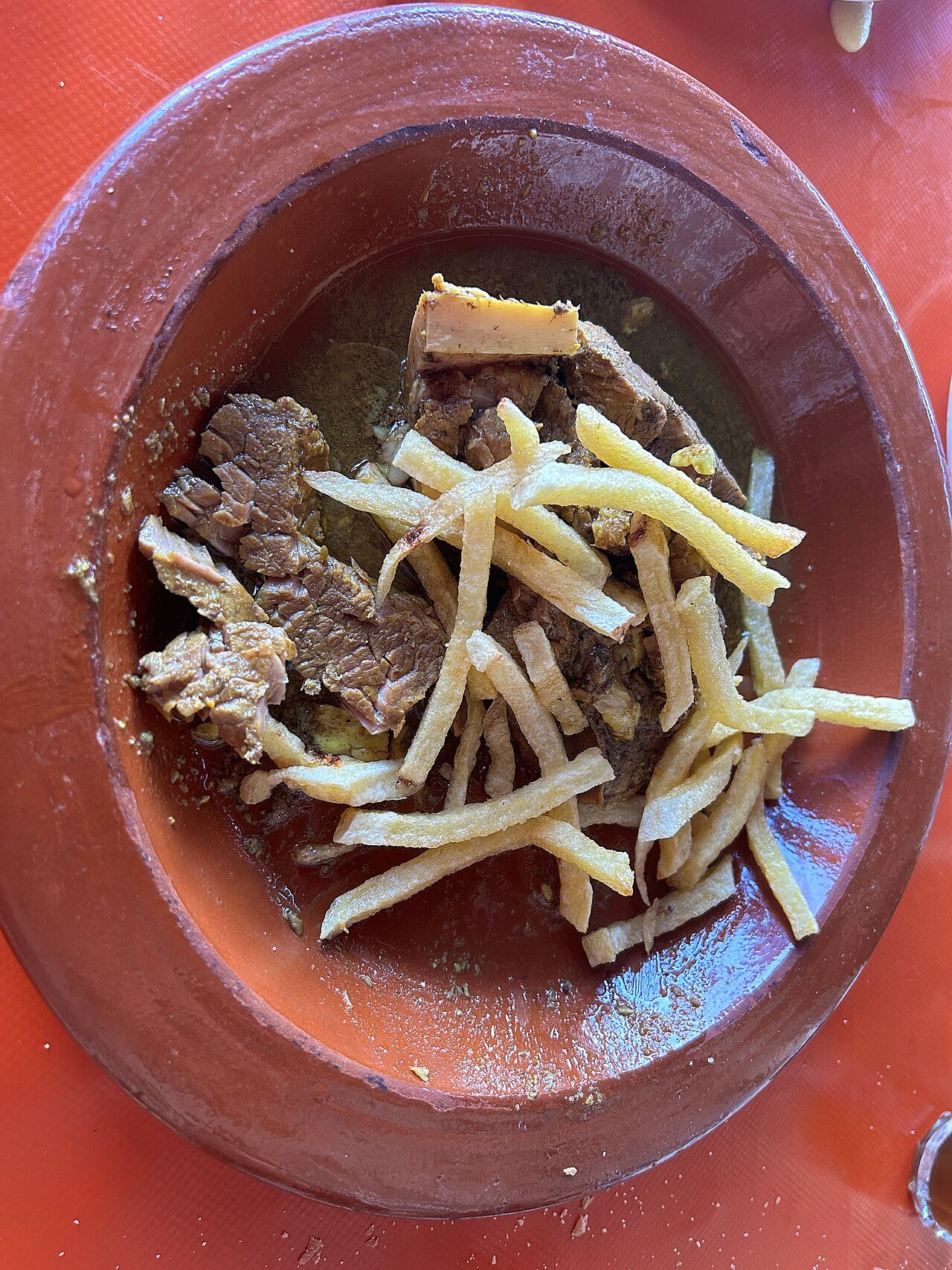
Tanjia, served — some places add fries; the classic needs nothing but bread.
Five mistakes first-timers make
- Calling it “tagine” when ordering. Ask for tanjia — the urn dish. Ask for tagine and you will get a different meal.
- Showing up at dinner time. Tanjia is lunch, cooked overnight. By evening, the good urns are gone.
- Expecting a light meal. This is rich, fatty, deeply savory meat. Come hungry.
- Ordering a whole urn for one. Unless very hungry or very generous, share it.
- Skipping the bread. The reduced sauce at the bottom of the urn is half the dish. Bread is not a side — it is the utensil.
Traveling beyond Marrakech? The Moroccan street food guide covers what to eat in every city, and our Jemaa el-Fna night food guide takes over after dark, when the square’s grills light up.
FAQ: tanjia in Marrakech
What is tanjia made of?
Beef shank, garlic, cumin, preserved lemon rind, saffron and smen (fermented butter) — sealed in a clay urn and slow-cooked for hours in the warm ashes of a hammam furnace.
What is the difference between tanjia and tagine?
A tagine is braised in a wide, cone-lidded dish over a flame and eaten all over Morocco; a tanjia is a tall clay urn, sealed and buried in ashes for hours, specific to Marrakech. Tagine is a braise; tanjia is closer to a confit.
Why is tanjia cooked in a hammam?
The bathhouse furnace burns wood most of the day to heat bath water. The residual heat in the ashes was the perfect slow oven, and the fernatchi — the fire keeper — became the city’s unofficial tanjia chef.
Is tanjia really only for men?
Traditionally, yes — the dish of working men and bachelors, prepared and eaten in groups. Today everyone eats it.
Beef or lamb?
Beef is the classic, though lamb versions are common and excellent. Either way it is one cut, slow-cooked whole in the urn.
How long does real tanjia take to cook?
Hours — traditionally overnight in the hammam ashes. If a restaurant brings you “tanjia” minutes after you ordered, it was not cooked in the urn.
Photos: “Sealed tanjia urns at a Marrakech furnace” by Adam Harangozó, CC BY-SA 4.0 (Wikimedia Commons); “Clay tanjia urn sealed with foil” by Marokistorique, CC0 (Wikimedia Commons); “Slow-cooked beef inside an opened tanjia urn” by Anass Sedrati, CC BY-SA 4.0 (Wikimedia Commons); “Tanjia served with fries” by Anass Sedrati, CC BY-SA 4.0 (Wikimedia Commons).