The glass counters of a Moroccan pâtisserie marocaine are a travel attraction in their own right. Rows of honey-glazed spirals, crescent cookies dusted with almonds, and pyramid-shaped bites in paper cups sit under the lights like jewelry. If you walk past one of these shops in the medina — and you will, they are everywhere — go in. This guide covers the five Moroccan sweets worth knowing by name, what they are made of, when Moroccans actually eat them, and how to buy them like a local.

Chebakia: the honey flower of Ramadan
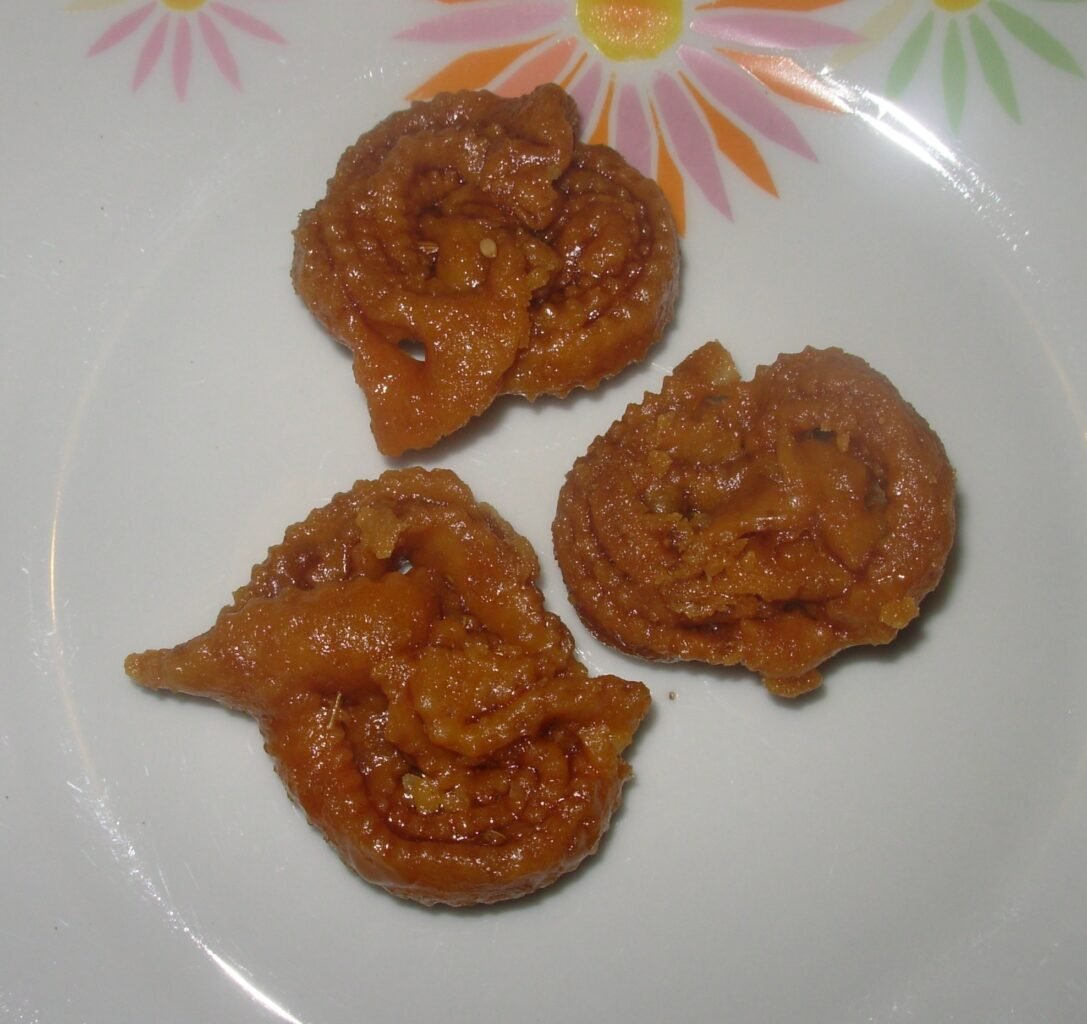
Chebakia (شباكية), also called mkharqua in some regions, is the single most iconic Moroccan sweet — and the hardest to make. A spiced dough of flour, ground toasted sesame, ground almonds, cinnamon, anise, orange blossom water, olive oil and butter is rolled thin, cut into strips, and folded into rosette or flower shapes. The flowers are fried until deep gold, then plunged into hot honey perfumed with orange blossom water and sprinkled with sesame seeds.
The result is sticky, crunchy and fragrant: caramelized honey outside, anise and cinnamon inside. Eat it over the plate — three pieces and your fingers will need washing.
When it is eaten: chebakia is the queen of Ramadan. During the fasting month, pâtisseries stack it in pyramids and it appears on every ftour (breaking-fast) table, traditionally next to harira soup. Outside Ramadan it is sold year-round and eaten at tea time, but Ramadan is when Moroccans buy it by the kilo.
How to buy it: chebakia is sold by weight. Ask for a quarter or half kilo to start — a kilo is a lot of chebakia. In the weeks before Ramadan you will see street vendors selling it in the souks too, but the pâtisserie versions tend to be cleaner and more consistent.

Kaab el ghazal: the “gazelle’s horn”
Kaab el ghazal (كعب غزال) — literally “gazelle’s ankle,” known in French as cornes de gazelle — is Morocco’s most refined cookie. A smooth paste of blanched almonds, sugar, cinnamon and a little orange blossom water is wrapped in a paper-thin sheet of dough and curved into a crescent. The good ones are pale gold, fragile, and almost entirely almond.
This is an ingredient-driven sweet: almonds are expensive in Morocco, and a corne de gazelle is mostly almond by weight — dense and buttery, with cinnamon keeping the sweetness in check. It is the sweet of weddings and Eid tables.
How to judge quality in the shop window: look for crescents that are evenly curved and not cracked open (cracks mean the dough dried out or the oven was too hot). The color should be ivory to pale gold — deep brown means overbaking, and the delicate almond flavor suffers. In good pâtisseries they are sold loose and you pick them one by one; a mixed box of cornes de gazelle with a few other almond sweets makes the classic gift to bring back.
Price note: because they are mostly almond, cornes de gazelle are among the priciest sweets per kilo — noticeably more than flour-and-honey cookies like chebakia. That price gap is normal everywhere in Morocco and a useful quality signal: suspiciously cheap “almond” pastries are usually stretched with flour.

Fekkas: the twice-baked traveler
Fekkas (فقاص) are Morocco’s answer to biscotti: a dough enriched with almonds, sesame and aniseed is baked as a loaf, sliced thin, and baked again until completely dry and crisp. The double baking gives them a shelf life of weeks, which is why they were traditionally the sweet of travelers and long journeys.
The aniseed is the signature flavor — warm and slightly licorice-like. Plain-looking next to the glazed pastries, fekkas is the sweet Moroccans actually dunk in their tea and coffee every morning.
How to eat them: like biscotti — dip one end in hot mint tea for a few seconds and eat it before it collapses. Fekkas also travel better than any other Moroccan sweet: they do not melt, they do not stick, and a bag of them survives a suitcase. If you want one edible souvenir that will still be perfect when you land home, this is it.

Ghriba: the cracked cookie
Ghriba (غريبة) is a family of shortbread-style cookies whose calling card is a cracked, snowball-like top. The almond version — ghriba aux amandes, the one in the photo — is a dome of ground almonds, sugar and egg white, finished with a single almond pressed into the center. The coconut version swaps almonds for desiccated coconut and is lighter and chewier.
The almond version is closer to a macaroon in spirit — no butter-heavy dough, and the cracked surface comes from the meringue-like exterior setting in the oven. Like most Moroccan cookies, ghriba is calibrated to be eaten with very sweet tea, not alone.
Where you find them: ghriba is a tea-time and everyday sweet rather than a celebration one, so it is in every pâtisserie and most neighborhood bakeries. The coconut version is cheaper than the almond version — again, the almond content sets the price.

Sellou: the energy sweet
Sellou (سلو) looks like nothing else in the display case: a mound of toasted brown powder, rich with roasted almonds, sesame seeds, cinnamon, and sometimes aniseed and mastic, bound with butter and honey. It is not baked. It is eaten by the spoonful, dry and crumbly, and it tastes like toasted nuts and warm spice.
Sellou is traditionally prepared for women after childbirth and eaten during Ramadan as a concentrated source of energy — the Moroccan answer to the energy bar, made of almonds, sesame and honey.
What to know before buying: sellou is dense and rich — a small cup is genuinely filling. In pâtisseries it is sold by weight in small tubs, and a little goes a long way. Because it is unbaked and butter-based, buy it from a shop with good turnover and eat it within a couple of weeks. The top of a good sellou glistens slightly with butter and smells of toasted sesame; if it smells of old oil, skip it.
How to buy at a Moroccan pâtisserie
The system is simple once you know it, and no French or Arabic is required — though a smile helps everywhere.
- Everything is sold by weight (au poids). Point at what you want and say “un quart” (a quarter kilo) or “demi-kilo” (half a kilo). The seller weighs each variety separately and packs them in one box.
- Build a mixed box (assortiment). Most shops will happily assemble a mixed selection — a few cornes de gazelle, some chebakia, ghriba, fekkas. It is the best way to taste widely, and it is what Moroccan families buy for guests.
- Ask to taste. In serious pâtisseries, tasting a piece before buying a kilo is normal, especially for the almond sweets. If the shop refuses, buy a small quantity first.
- Almond content sets the price. Flour-and-honey sweets (chebakia, fekkas) cost much less per kilo than almond sweets (cornes de gazelle, ghriba aux amandes). Prices also rise in the weeks before Ramadan and Eid, when demand peaks.
- Freshness matters more than the shop’s fame. These sweets are best within days of baking (fekkas excepted — it lasts weeks). A busy neighborhood pâtisserie with high turnover beats a famous one with a dusty display case.
- For gifts: ask for a presentation box (boîte cadeau). Pâtisseries wrap mixed boxes elegantly, and a kilo of cornes de gazelle is a classic Moroccan host gift.
Sweets and mint tea: the pairing
Moroccan sweets and Moroccan mint tea are designed for each other. The tea — gunpowder green tea brewed strong with fresh mint and a generous amount of sugar — is intensely sweet on its own, so the sweets are deliberately less sweet than their European equivalents. The pairing works by contrast: bitter-hot tea against honey-sticky chebakia, astringent tea cutting through the richness of sellou, mint freshness lifting the dense almond of a corne de gazelle.
The practical tip: if you find the tea too sweet, that is the moment to eat the sweets with it. And if a shop or a family offers you tea with a plate of pastries, accept — refusing is the one real faux pas here. For more on how tea structures a Moroccan day, see our guide to Moroccan café culture.
📸 Own photo spot: if you photograph your mixed box from the pâtisserie — the open gift box with the shop’s paper, or your tea glass next to the sweets — it can replace one of the stock images above.
FAQ
What is the most famous Moroccan sweet?
Chebakia — the honey-and-sesame flower — is the most famous, especially during Ramadan when it is eaten with harira soup at the breaking of the fast. Kaab el ghazal (cornes de gazelle) is the most prestigious, served at weddings and Eid.
Are Moroccan sweets very sweet?
Less than they look. They are calibrated to be eaten with very sweet mint tea, so the sweets themselves are moderate — the honey-glazed chebakia is the sweetest of the five here, and even it is balanced by sesame, anise and cinnamon.
How much do Moroccan pastries cost?
Prices vary by city, shop, and ingredient: almond-based sweets cost noticeably more per kilo than flour-and-honey ones, and prices climb before Ramadan and Eid. Buy a small mixed box first to calibrate before committing to a kilo. For general food budgeting, see our Morocco food prices guide.
Which Moroccan sweets travel well as souvenirs?
Fekkas — the twice-baked rusks — are the best travelers: dry, sturdy, and good for weeks. Cornes de gazelle travel well in a rigid gift box. Chebakia and sellou are more fragile and perishable; buy those for eating in Morocco. For restaurant etiquette around ordering and tipping, our order-like-a-local guide covers the basics.
Where is the best place to buy — pâtisserie or souk?
Pâtisseries for consistency and hygiene, especially for almond sweets. Souks are fine for chebakia and fekkas from high-turnover stalls, and they are often cheaper — but check freshness and buy where you see locals queuing.
Photo credits: Chebakia — Indif, CC BY-SA 3.0, via Wikimedia Commons (File:Chebakia.jpg). Cornes de gazelle — Rui Ornelas, CC BY 2.0, via Wikimedia Commons (File:Cornes_de_gazelles.jpg). Fekkas — محمد بوعلام عصامي, public domain, via Wikimedia Commons (File:Fekkass الفقاص.jpg). Ghriba aux amandes — Fatima zahra Charif Khalifi, CC BY-SA 4.0, via Wikimedia Commons (File:Ghoriyba aux amandes.jpg). Sellou — Lucyin, CC BY-SA 3.0, via Wikimedia Commons (File:Sellou.JPG).