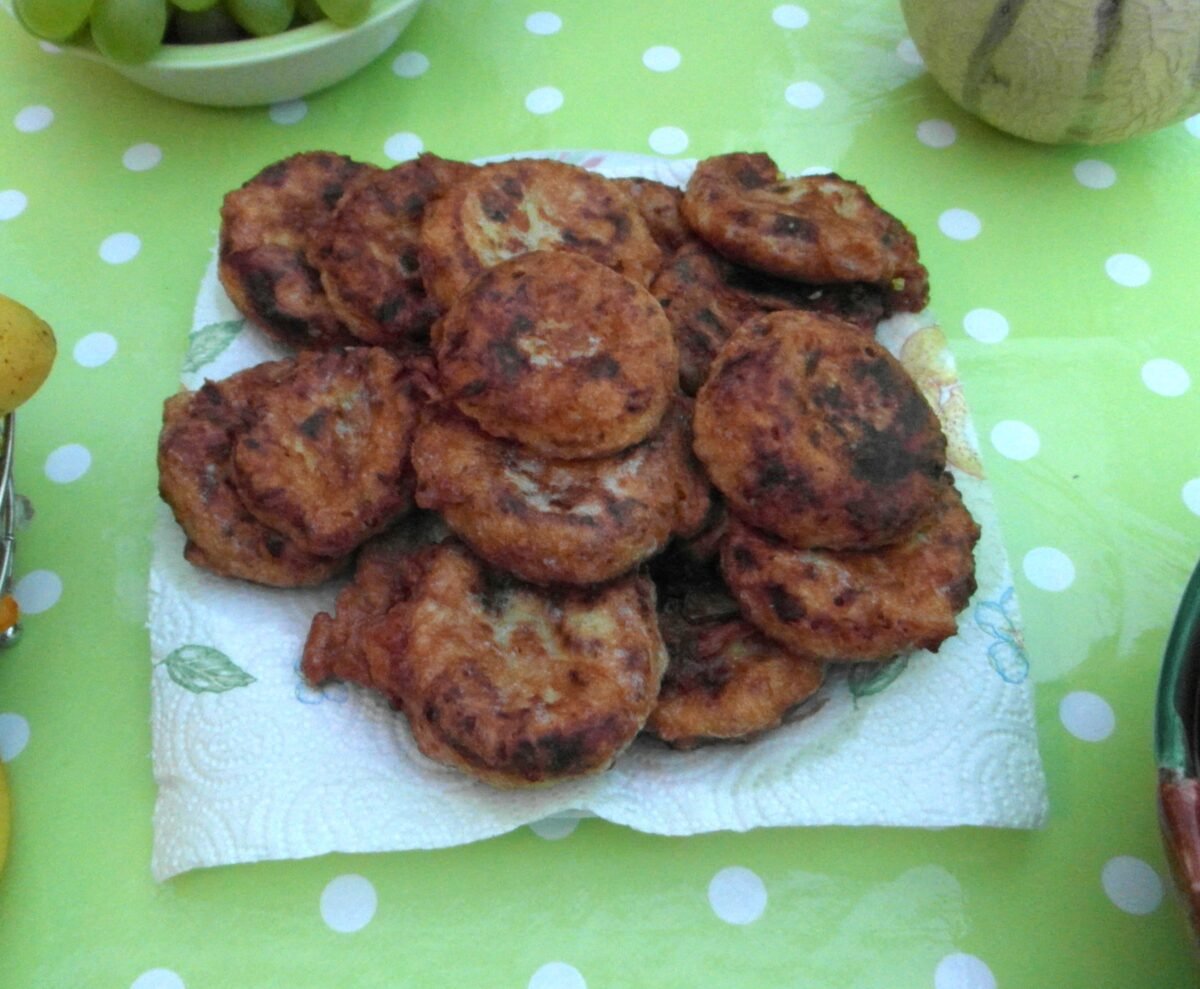
The Fritter You Smell Before You See
Walk through the Fes medina around lunchtime and you will smell it before you find it: hot oil, toasted cumin, garlic. Follow your nose to a cart or a narrow shopfront with a fryer going full blast, and you will see them — round, golden patties lined up on a tray, crisp at the edges, steaming when one gets pulled apart. That is maakouda, Morocco’s potato fritter, and it is one of the most honest snacks in the country.
Honest because there is nothing to hide behind. Maakouda is mashed potato, egg, flour, garlic, cumin, turmeric, and chopped herbs, fried in oil. No meat, no sauce tricks, no garnish to distract you. In Fes, where maakouda is practically a civic institution, locals call it aklat at-talaba wa awlad ach-chaab — the food of students and working people. A Moroccan news report from 2019 put it plainly: it is the cheap, filling meal of students and people of modest means in Fes, sold at street stalls all over the city. That reputation is the point, not a flaw. When a dish survives on students’ budgets, it has to be good, fast, and cheap — and maakouda is all three.

What Maakouda Actually Is
The name comes from the Arabic ma’qouda (معقودة), meaning “knotted” — a nod to the way the seasoned potato mixture is bound together before frying. The base is always potato, boiled in its skin, peeled, and mashed while still warm. Into the mash go the non-negotiables: egg to bind, a spoonful or two of flour, crushed garlic, ground cumin, turmeric for the golden color, salt, black pepper, and a handful of finely chopped flat-leaf parsley or coriander. Some cooks add a pinch of hot pepper; a few stir in grated cheese. The mixture is shaped into patties or small balls, dusted lightly with flour, and deep-fried until the outside turns crisp and deep gold while the inside stays soft and fluffy.
The texture is the whole argument for maakouda. A good one shatters slightly at the first bite, then gives way to a hot, seasoned interior that tastes of cumin and garlic more than it tastes of potato. A bad one — fried in tired oil, or left sitting too long — is greasy and heavy. This is why you buy maakouda where the fryer is busy and the patties are moving. Our Moroccan street food guide covers the general rules; for maakouda specifically, the rule is simple: if the tray is full and nobody is buying, keep walking.
Vegetarians take note: plain maakouda is naturally meat-free, and it is one of the most reliable vegetarian street snacks in the country. Just confirm nothing else shares the fryer if cross-contact matters to you.
Where You Actually Meet It
Maakouda lives in three places, and you will probably encounter all of them on one trip.
The street cart. The classic scene: a vendor with a gas burner, a wide pan of oil, and trays of patties going in and coming out in a steady rhythm. These carts are a fixture in Casablanca and Rabat, and they tend to sell out fast at lunchtime — office workers and students buy them by the bag. Eat them plain, hot from the oil, standing at the cart. This is maakouda at its best.

The sandwich. The most common way Moroccans actually eat maakouda: tucked inside khobz, the round Moroccan bread. The vendor splits a warm khobz, slides in two or three patties, and asks about harissa. Say yes if you handle heat — the chili paste cuts through the richness of the fried potato and the combination is the reason the sandwich exists. Some snack shops add tuna, a hard-boiled egg, or olives to the same sandwich, turning a snack into a full lunch. Ordering needs no language: point at the patties, hold up fingers, nod at the harissa question.
The Ramadan table. During Ramadan, maakouda moves from the street into the home. It is a standard part of the evening spread that breaks the fast — small fried things alongside harira soup, dates, and chebakia. If you are in Morocco during Ramadan and get invited to an iftar, expect to meet maakouda on a crowded table rather than at a cart.
📸 Your photo goes here: your own maakouda sandwich, split open to show the patties inside the khobz — the shot that makes readers hungry.
The Bread Matters: Khobz, the Delivery Vehicle
The sandwich only works because Moroccan bread is built for the job. Khobz is a round, crusty loaf with a dense crumb that soaks up oil and harissa without falling apart in your hands. Bakeries turn it out by the thousand every morning, and every snack shop in the country keeps a stack of it next to the fryer.

A practical note: not all khobz is equal for sandwich duty. The best sandwich khobz is baked the same day, still slightly warm, with a crust that crackles. Stale bread makes a sad sandwich no matter how good the fritters are. If the vendor’s bread stack looks like it has been sitting since morning, eat your maakouda plain instead.
The Harissa Question
Harissa is the chili paste of the Maghreb — dried red chilies pounded with garlic, coriander, caraway, and olive oil into a thick, brick-red paste. With maakouda it is not a garnish; it is the other half of the dish. The fritter is rich and starchy; the harissa is sharp, hot, and acidic. Together they balance.

Vendors treat harissa as a question, not a default: they will ask, or hold up the spoon and look at you. If you are unsure about your heat tolerance, the honest move is a thin smear on the first sandwich, not a refusal — you can always add more, and skipping it entirely means missing the intended flavor. Tunisian-style harissa (the kind in the jar above) is the reference version; Moroccan street harissa runs milder but varies stall to stall.
Don’t Confuse It: The Algerian Cousin
Maakouda is a Maghrebi dish, not just a Moroccan one, and the Algerian version has its own habits worth knowing so you order correctly if you ever cross the border. In northern Algeria, maakouda is sold as a sandwich in fast-food shops, almost always with harissa. In eastern Algeria it goes by the name khbizat ma’dnos — “little parsley breads” — and in the west it is sometimes stuffed with cheese or ground meat and eaten alongside harira soup. The fritter itself is the same family; the serving culture around it shifts. In Algeria the same potato-and-egg mixture is also baked in a dish, quiche-style — still called maakouda. In Morocco, think street cart and khobz. The photo below shows the Tlemcen style — recognizably the same golden patties.

Make It Yourself: Maakouda Recipe
Maakouda is one of the easiest Moroccan street foods to recreate at home — it is also a good use for leftover mashed potato. This makes about 12 patties.
Ingredients
- 1 kg potatoes (about 4 large), boiled in their skins until tender
- 1 large egg, lightly beaten
- 3 tablespoons all-purpose flour, plus extra for dusting
- 3 garlic cloves, crushed to a paste
- 1 teaspoon ground cumin
- 1/2 teaspoon ground turmeric
- 1/2 teaspoon black pepper
- 1 1/2 teaspoons salt (taste and adjust)
- A large handful of flat-leaf parsley or coriander, finely chopped
- Pinch of cayenne or hot paprika (optional, traditional in many Fes recipes)
- Neutral oil for deep frying (sunflower or vegetable)
Steps
- Peel the warm potatoes and mash them until smooth — no lumps, but don’t overwork them into glue. The mash must be as dry as possible: if it looks wet, return it to the hot pan for a minute to steam off the moisture. Let it cool to lukewarm so it doesn’t cook the egg.
- Mix in the beaten eggs, flour, garlic, cumin, turmeric, pepper, salt, herbs, and cayenne if using. The mixture should hold together when squeezed; if it is slack, add flour a tablespoon at a time.
- With damp hands, shape into patties about 7 cm across and 1.5 cm thick. Dust each lightly with flour and rest them 10 minutes — this helps the crust set.
- Heat oil to 170–180°C in a deep, heavy pan. Test with a scrap: it should sizzle steadily and turn golden in about 2 minutes.
- Fry in batches without crowding, 3–4 minutes per side, until deep golden and crisp. Lift out with a slotted spoon and drain on a rack or paper towels. Salt lightly while hot.
- Serve immediately, plain or in warm khobz with harissa. Maakouda waits for no one — the crisp crust softens as it cools.
Three mistakes that ruin maakouda
Wet potatoes. Boil in skins and mash while warm; waterlogged mash makes patties that fall apart in the oil. If your mash looks wet, the flour can’t save it — start drier.
Oil too cool. Below 160°C the patties absorb oil instead of crisping. No thermometer? The scrap test above is what street vendors use, and it works.
Skimping on salt and cumin. Potato is bland by nature. The seasoning in the recipe above looks like a lot on paper; in the fritter it is exactly right. Under-seasoned maakouda is the most common home failure.
FAQ
Is maakouda vegetarian? The classic street version is: potato, egg, flour, spices, herbs. Confirm with the vendor if you avoid egg. Some snack-shop sandwiches add tuna, so specify plain patties if that matters.
How much does maakouda cost in Morocco? It is among the cheapest street foods in the country. A September 2026 price survey puts street maakouda at roughly 5–8 dirhams; a modern snack bar in Rabat lists its loaded maakouda sandwich (khobz, tuna, olives, tomato sauce) at 25 dirhams on its August 2026 menu. Prices move with the city and the year, so treat any number as a rough guide, not a menu.
What is the difference between maakouda and a hash brown? Both are fried potato, but maakouda is mashed-potato based, bound with egg and flour, and seasoned with cumin, turmeric, and garlic — closer to a spiced croquette than to shredded-potato hash browns.
Can I eat maakouda cold? You can, but you shouldn’t judge it that way. The crisp crust is the point, and it fades within 20 minutes. Buy it where the fryer is active and eat it within minutes.
Is street food like maakouda safe for tourists? Fried-to-order food at a busy stall is among the safest street food you can eat — extreme heat, immediate serving, fast turnover. Read our honest guide to street food safety in Morocco for the full picture.
Photos: Maakouda plate in Fes © إيان (CC BY-SA 4.0) · Maakouda fritters © Jeouit (CC BY-SA 3.0) · Marrakech food stall © Tomkeene (public domain) · Harissa © Jules (CC BY 3.0) · Moroccan breads © Val de Marnaise (CC BY 2.0) — all via Wikimedia Commons.