Moroccan Menu Decoder: French & Arabic Food Words
You sit down in a Marrakech restaurant, the waiter hands you the menu, and half of it looks familiar — entrées, grillades, desserts — while the other half is a mystery: طنجية، بسطيلة، زعلوك. Moroccan menus mix French course words with Arabic and Darija dish names, sometimes in the same line (“Tajine kefta مشوي”). The same twenty-odd words repeat on nearly every menu in the country — learn them once and you can order anywhere, from a white-tablecloth restaurant in Casablanca to a grill counter in Fez.
📸 Photograph a real menu and decode it at your table with the tables below.
First: How a Moroccan Menu Is Organized
Moroccan menus follow the French layout, so the skeleton is predictable even when the dishes aren’t: Entrées (starters), Soupes / Potages, Plats (mains), Grillades, Couscous, Desserts, Boissons. The tricky part is the word menu itself: in French, le menu is not the card — it’s a fixed-price set meal, usually starter + main + dessert. La carte is the card, and ordering à la carte means picking individual dishes. A formule (formule du midi) is a lunch deal, and plat du jour is the dish of the day, cooked in quantity that morning and often the best value on the board.
Two words for the end: l’addition is the bill — ask for it, since waiters rarely bring it unprompted — and service compris means service is included. Bread (pain / خبز) arrives with most meals and isn’t a separate charge.
The French Words on Every Menu
From Tangier to Dakhla: learn these once and the left half of any menu opens up.
| Word | What it means | What to do with it |
|---|---|---|
| Entrée | Starter. In Morocco this usually means the spread of small cooked salads, not a single plated appetizer. | Often shareable — confirm before ordering two. |
| Salade marocaine | The classic trio: chopped tomato, cucumber, onion with olive oil and lemon. | Fresh and safe — a good default starter. |
| Menu / Formule | Fixed-price set meal. | Compare against à la carte prices before choosing; good when you’re hungry, less so for a light eater. |
| À la carte | Individual dishes, each priced separately. | Best when you only want a main and a drink. |
| Grillades | Grilled meats section: brochettes, kefta, chicken, sometimes fish. | The fastest food on the menu — straight off the charcoal. |
| Brochettes | Skewers — usually chicken, beef, or kefta (spiced minced meat). | Served with bread and cumin-salt, rarely with rice. |
| Méchoui | Whole lamb slow-roasted in a pit oven until the meat falls off the bone. | Weekend dish; generous portions — share it. |
| Couscous royal | Couscous topped with several meats at once (chicken, lamb, merguez). | Feast portion; couscous aux légumes is the everyday version. |
| Salade composée | Mixed salad, contents vary by kitchen. | Ask what’s in it if you have allergies. |
| Jus | Fresh juice — often thick, closer to a smoothie. | Jus d’avocat (avocado) and panaché (layered multi-fruit) are meal-sized. |
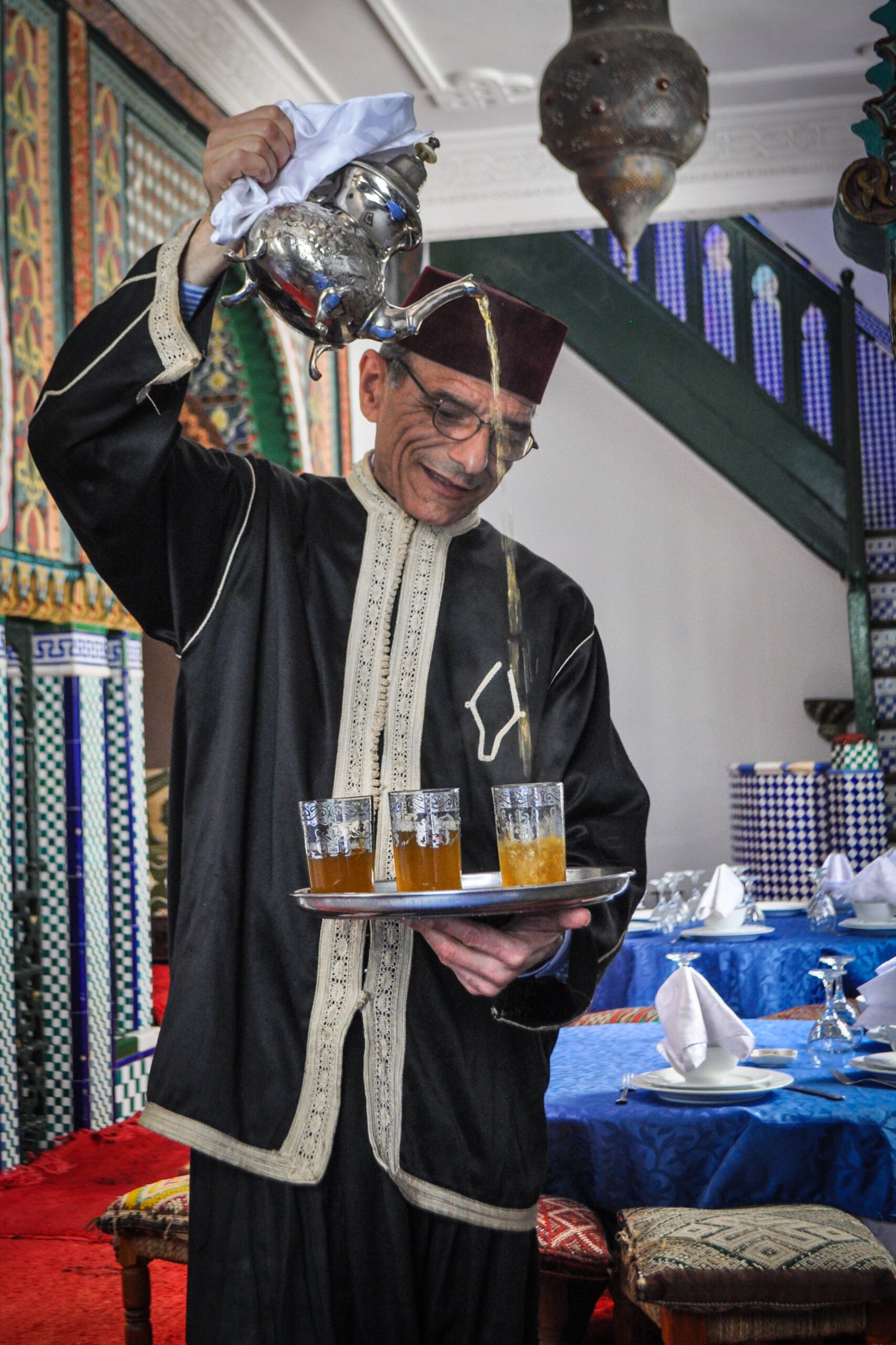
| Thé à la menthe | Mint tea, brewed with green tea, fresh mint, and sugar. | Arrives sweet by default; say sans sucre when ordering if you want it plain. |
| Café nous-nous | Half coffee, half hot milk — Morocco’s signature café order. | If you want a straight espresso, ask for un express. |
| L’addition | The bill. | Say “l’addition, s’il vous plaît” — it won’t come on its own. |
See our complete tagine guide and the overview of Moroccan restaurant types — the setting explains half the menu before you read it
The Arabic and Darija Words, by Course
The right half of the menu is where tourists freeze — here are the words you’ll actually see, each dish explained in one line.
Soups and starters
| As written | Pronounced | What it is |
|---|---|---|
| حريرة | harira | Tomato, lentil, and chickpea soup — what Moroccans break the Ramadan fast with, served year-round. |
| بيسارة | bissara | Thick fava-bean purée with olive oil and cumin — a working-class breakfast and winter staple. |
| زعلوك | zaalouk | Smoky mashed eggplant and tomato with garlic, cumin, paprika — eaten with bread. |
| تكتوتة / تكتوكة | taktouka | Roasted green peppers and tomatoes mashed with olive oil and spices — zaalouk’s peppery cousin. |
| لوبيا | loubia | White beans in spiced tomato sauce; cheap, filling, standard in workers’ eateries. |
| عدس | adas (lentils) | Brown lentils stewed with garlic, cumin, paprika — loubia’s sister dish in workers’ eateries. |
| بريوات | briouat (plural briouates) | Crisp fried triangles of thin pastry filled with minced meat, cheese, or chicken. |
Mains
| As written | Pronounced | What it is |
|---|---|---|
| طنجية | tanjia | Marrakech’s signature: beef or lamb in a clay urn with garlic, preserved lemon, and cumin, slow-cooked hours in hot ashes. No vegetables — just meat and spice. |
| بسطيلة | bastilla (pastilla) | Sweet-savory pie: shredded chicken or pigeon with almonds and egg in flaky pastry, dusted with cinnamon-sugar. Celebration food. |
| كفتة | kefta | Hand-minced beef or lamb with onion, parsley, and spices — grilled as skewers or baked in a tagine, often with egg on top. |
| دجاج محمر | djaj mohammar | Whole chicken roasted golden with a spice rub, served with fries or in a tagine with preserved lemon. |
| مشوي | mechoui / grilled | As an adjective it means grilled — دجاج مشوي is grilled chicken, not the whole-lamb méchoui feast. |
| شكشوكة | chakchouka | Eggs poached in a simmering tomato-and-pepper sauce, scooped up with bread. |
| سفة | seffa | Steamed broken vermicelli tossed with butter, cinnamon, and powdered sugar — a sweet main or side. |
| رفيسة | rfissa | Shredded flatbread soaked in spiced chicken-lentil broth with fenugreek — hearty, not a light lunch. |
Bread, drink, and sweets
| As written | Pronounced | What it is |
|---|---|---|
| خبز | khobz | Round flatbread baked daily — your fork, spoon, and napkin for tagines and salads. |
| أتاي | atay | Mint tea — the Darija word you’ll hear called across every café terrace. |
| رايب | raib | Thick set yogurt served plain in a bowl, sometimes with sugar on the side. |
| محنشة | mhencha (“snake cake”) | Almond paste coiled inside thin pastry like a snake, baked and soaked in honey. |
| شباكية | chebakia | Fried sesame-flower cookies drenched in honey — Ramadan’s signature sweet, sold year-round. |
| مرقة | marqa / merqa | Stew sauce or broth — if a menu says marqa, expect something to mop up with khobz. |
More on the sweet-savory pie in our pastilla guide, and on the terrace ritual in the Moroccan café culture guide.
Ordering Without Stress: Phrases That Actually Work
Staff in tourist areas usually speak French and some English; Darija one-liners earn smiles in local spots.
- “Je voudrais le tajine kefta, s’il vous plaît.” — Point at the menu while saying je voudrais and it works everywhere.
- “Qu’est-ce que vous me recommandez ?” — In a good restaurant this gets you the dish the kitchen is proudest of.
- “C’est combien ?” — Ask before ordering fish or anything marked prix du marché (market price).
- “Sans piment, s’il vous plaît.” — Moroccan food is spiced, not hot — but harissa on the side can surprise you.
- “Je suis végétarien / végétarienne.” — Add “sans viande, sans poulet”: chicken and fish are sometimes not counted as “meat.”
- “L’addition, s’il vous plaît.” — The bill, please.
- “شحال؟” (shhal?) — How much? The single most useful Darija word in any market or gargote.
- “بغيت…” (bghit…) — I want… Bghit hadi (I want this), said while pointing, is understood anywhere.
To rehearse a real order, read how to order like a local — and check current food prices in Morocco so the numbers on the menu make sense before you sit down.
Five Menu Traps Tourists Fall Into
1. The “menu touristique” vs. à la carte. Restaurants near the sights offer a fixed menu touristique — starter, tagine or couscous, dessert, sometimes mint tea. But do the arithmetic: a main plus tea à la carte is usually cheaper than the set price. The set menu wins when you’re genuinely hungry for three courses.
2. Bread and olives arrive before you order — relax, they’re free. In Moroccan-run restaurants the basket of khobz and the dish of olives that land on your table unasked are hospitality, not a cover charge. (Unlike some Mediterranean countries where bread is billed.) Eat them.
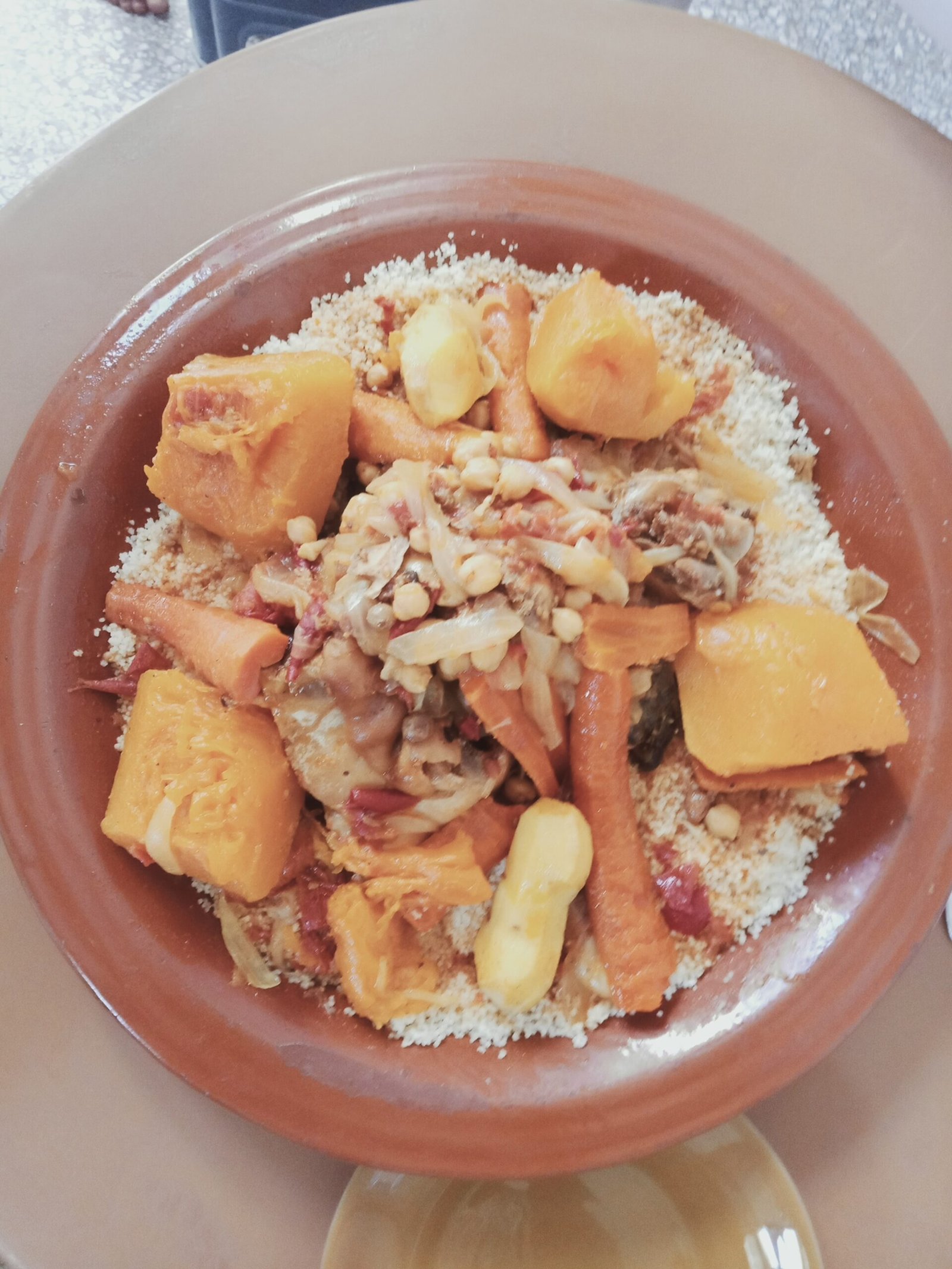
3. Couscous has a day: Friday. Couscous is the traditional Friday midday meal; many restaurants only serve their serious couscous on Fridays — the Friday couscous tradition is worth planning around. Tourist spots serve it daily, but Friday’s is cooked for family, not for show.
4. “Tanjia” on a Marrakech menu isn’t always tanjia. Real tanjia cooks six hours or more buried in communal-oven ashes — no kitchen makes it to order at 8 p.m. unless it started that morning. If everything on the menu is instantly available, the “tanjia” is likely a tagine with tanjia spices. Ask “c’est fait maison ?” and watch the answer.
5. Mint tea arrives sweet unless you say otherwise. Atay is brewed sweet by default; request sans sucre when ordering, not after it arrives. Same for jus d’avocat and raib — sweetness is the factory setting.
Frequently Asked Questions
Do Moroccan menus have English translations?
In the medinas of Marrakech, Fez, Chefchaouen, and Essaouira, most restaurants print French with English underneath. Elsewhere, expect French only, sometimes with Arabic.
I can’t read Arabic script. How do I match a dish to the table?
Use the transliterations: tanjia, zaalouk, kefta. Menus in tourist areas usually print the French or transliterated name next to the Arabic. When in doubt, point and ask “c’est quoi, ça ?”
Is the set menu a rip-off?
Not automatically. A menu touristique with three real courses at a fair price is fine value; it becomes a trap only when the à la carte dishes you actually want cost less. Glance at both before deciding.
How much should I tip?
Not obligatory, but rounding up or ~5–10% for good service is customary. Check whether service compris is printed on the menu first.
What if I’m vegetarian?
Harira, bissara, loubia, adas, zaalouk, taktouka, vegetable tagines and couscous are naturally meat-free — but say sans viande, sans poulet explicitly; chicken stock sneaks into soups.
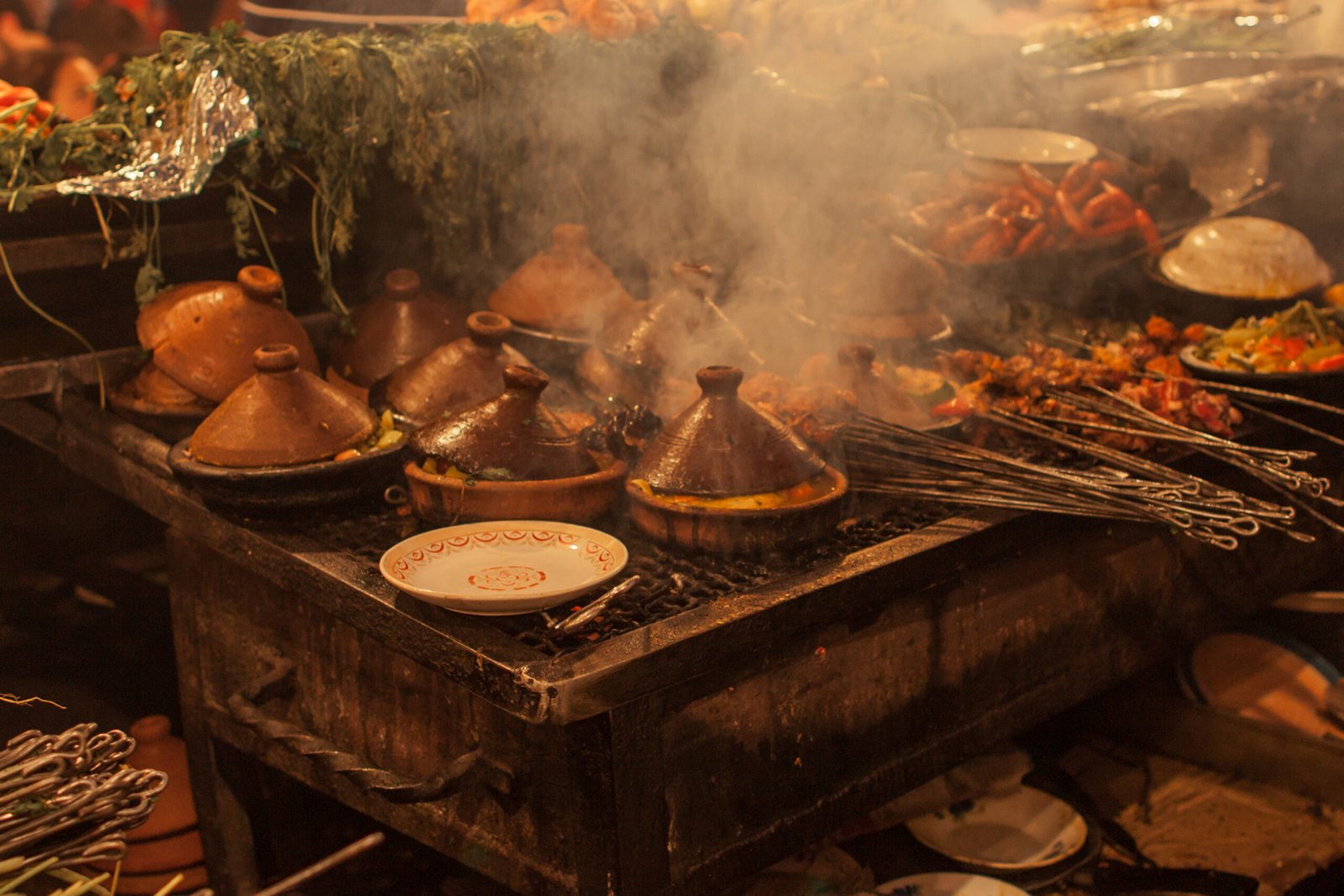
Images: Tagine photo by EslamSalah99 (CC BY-SA 4.0, via Wikimedia Commons); mint tea photo by katiebordner (CC BY 2.0, via Wikimedia Commons); couscous photo by Atikkk (CC BY-SA 4.0, via Wikimedia Commons); Jemaa el-Fna restaurant photo by Grand Parc – Bordeaux, France (CC BY 2.0, via Wikimedia Commons).