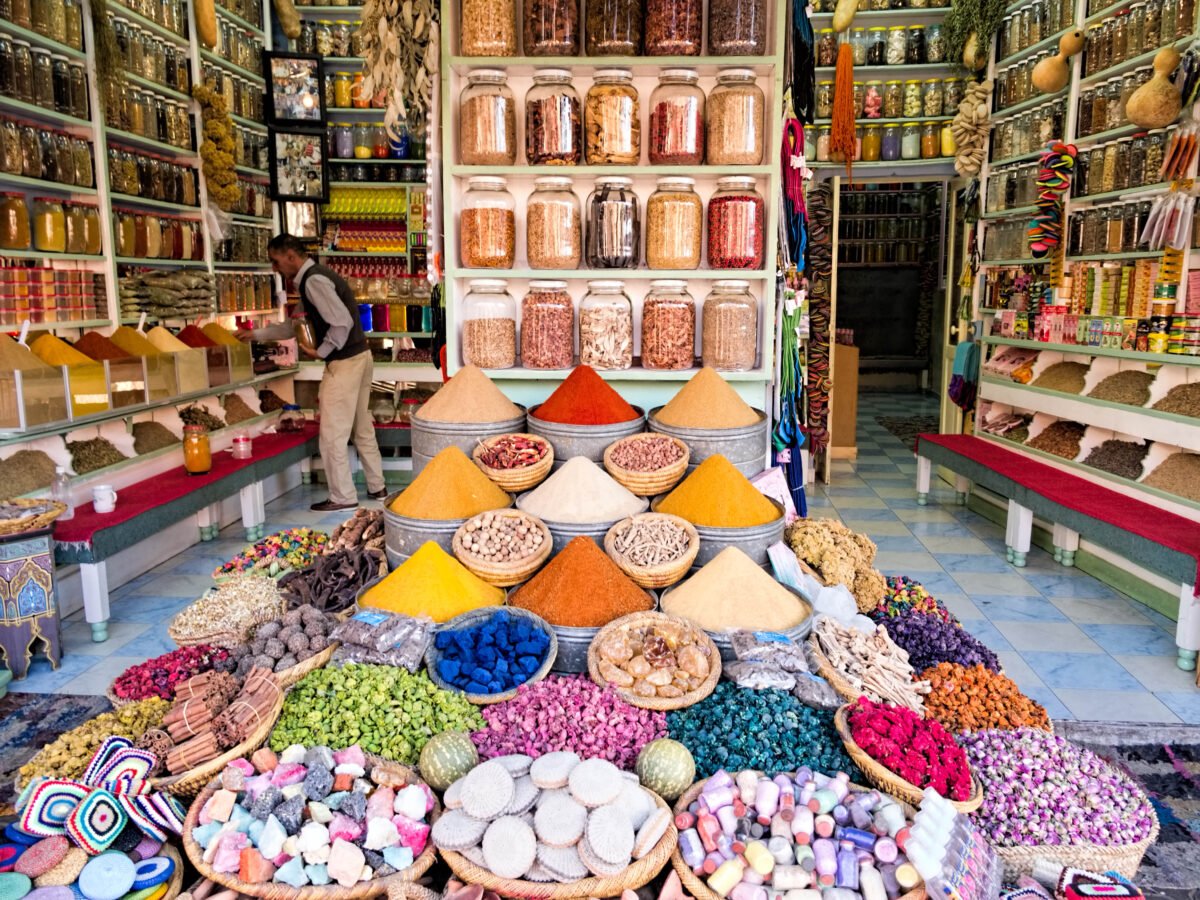
You smell a Moroccan spice square before you see it. Warm cumin, sweet cinnamon, something sharp and peppery you can’t name — the air does the advertising. Somewhere in that cloud sits the single most useful souvenir a food-loving tourist can buy: ras el hanout, the blend whose name literally means “head of the shop.” It is the merchant’s signature mix, assembled from the best spices he has. And the first thing to understand: there is no single recipe. Every spice merchant guards his own.
This guide explains what ras el hanout actually contains, which other Moroccan spices deserve space in your suitcase, and how to buy at the souk without paying premium prices for colored dust.
What ras el hanout actually is
Ras el hanout (رأس الحانوت) is Arabic for “head of the shop” — the top-shelf blend a merchant assembles from his finest stock. The mix exists across Tunisia, Algeria, and Morocco, but Morocco made it famous, and no two versions are identical. Each shop, each family has its own formula, typically built from a dozen or more spices in proportions the merchant decides himself.
So asking “what’s the real recipe?” misses the point. A good ras el hanout tastes warm and layered — sweet notes of cinnamon and nutmeg first, then earthy cumin and ginger, then a slow peppery warmth at the back. If a blend tastes flat, it isn’t worth your dirhams. It makes a great gift: you’re bringing home the festive flavor of Moroccan cooking, not a generic curry powder.
What’s inside a typical blend
Formulas vary, but the same core shows up again and again: cardamom, cumin, clove, cinnamon, nutmeg, mace, allspice, dried ginger, chili, coriander seed, black peppercorn, sweet and hot paprika, fenugreek, and turmeric, often lightly toasted before grinding. Some merchants add regional extras like dried rosebuds, grains of paradise, or long pepper.
Two things merchants usually do not put in it, despite what souvenir shops claim: saffron and garlic. Saffron is too precious to hide inside a blend; garlic goes into the dish fresh. If someone sells you “ras el hanout with saffron,” you’re mostly buying the story.
Learn the Darija names — they help enormously at the stall:
- Ras el hanout (راس الحانوت) — the blend itself
- Kamoun (كمون) — cumin
- Kharkoum (خرقوم) — turmeric
- Skinjbir (سكينجبير) — ginger
- Qerfa (قرفة) — cinnamon
- Zaafaran (زعفران) — saffron
- Felfla soudania (فلفلة سودانية) — small hot chili, the Moroccan cayenne
- El bzar (البزار) — black pepper
Three spices worth knowing by sight
You don’t need to memorize twenty spices. Recognize these three and you’ll shop with confidence.
Ras el hanout — the blend
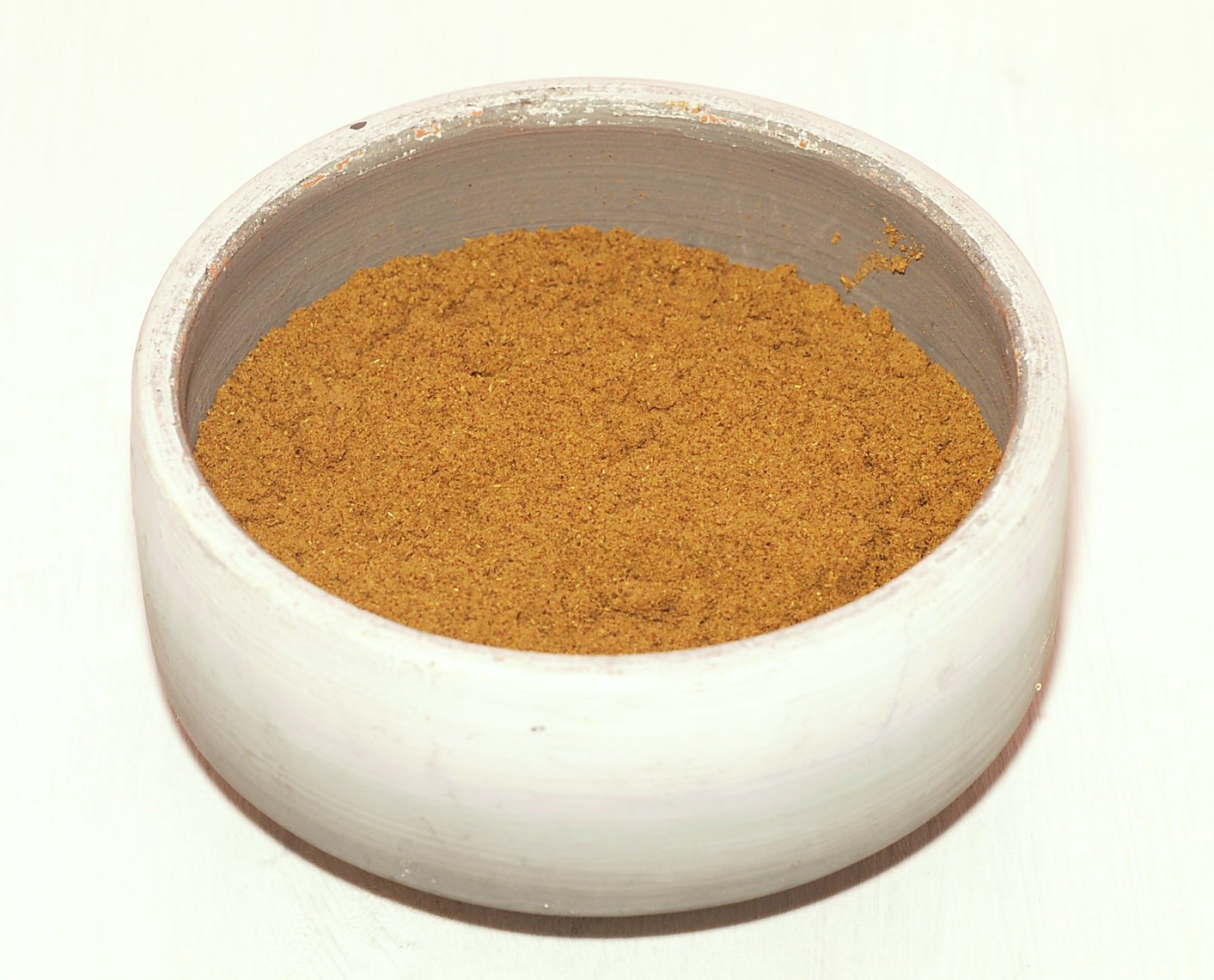
A good blend smells complex before you taste it: sweet, warm, faintly floral. Ask to smell it from the bag — a serious seller will insist. The powder should be a rich brown, not a suspicious neon red (paprika-heavy tourist blends are often mostly coloring). Buy about 100 grams first; a little goes a long way, and ground blends lose their punch after roughly six months.
Saffron — zaafaran from Taliouine
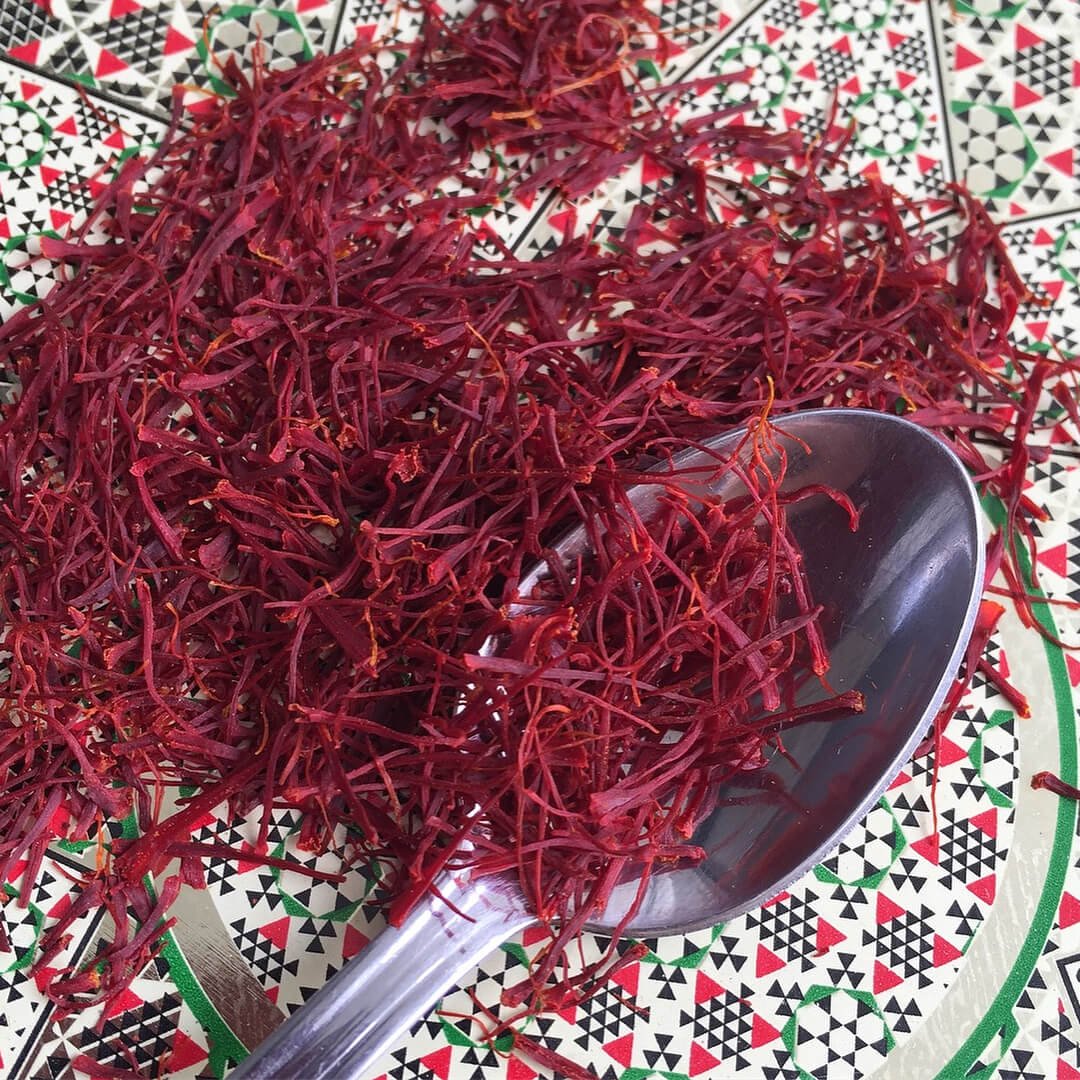
Moroccan saffron comes from the Taliouine region, south of Marrakech, and the best of it carries a protected designation of origin (PDO) — a label guaranteeing it was tested for moisture, color, and aroma. Real threads are thin, trumpet-shaped, deep crimson with a paler orange end. The fluffy bright-orange heaps sold cheaply in the souk are safflower — a different plant that tastes of nothing.
Price tells you everything. In 2024, AFP reported PDO-certified Moroccan saffron at about €3 per gram; recent travel guides put the real thing at roughly 35–55 dirhams per gram. Anything at 10 dirhams a gram is not saffron. Counterfeit saffron — dyed plant remains and chemical coloring — is a documented problem in Morocco’s informal markets, so treat an absurdly low price as a warning, not a bargain.
Cumin — kamoun, the everyday workhorse
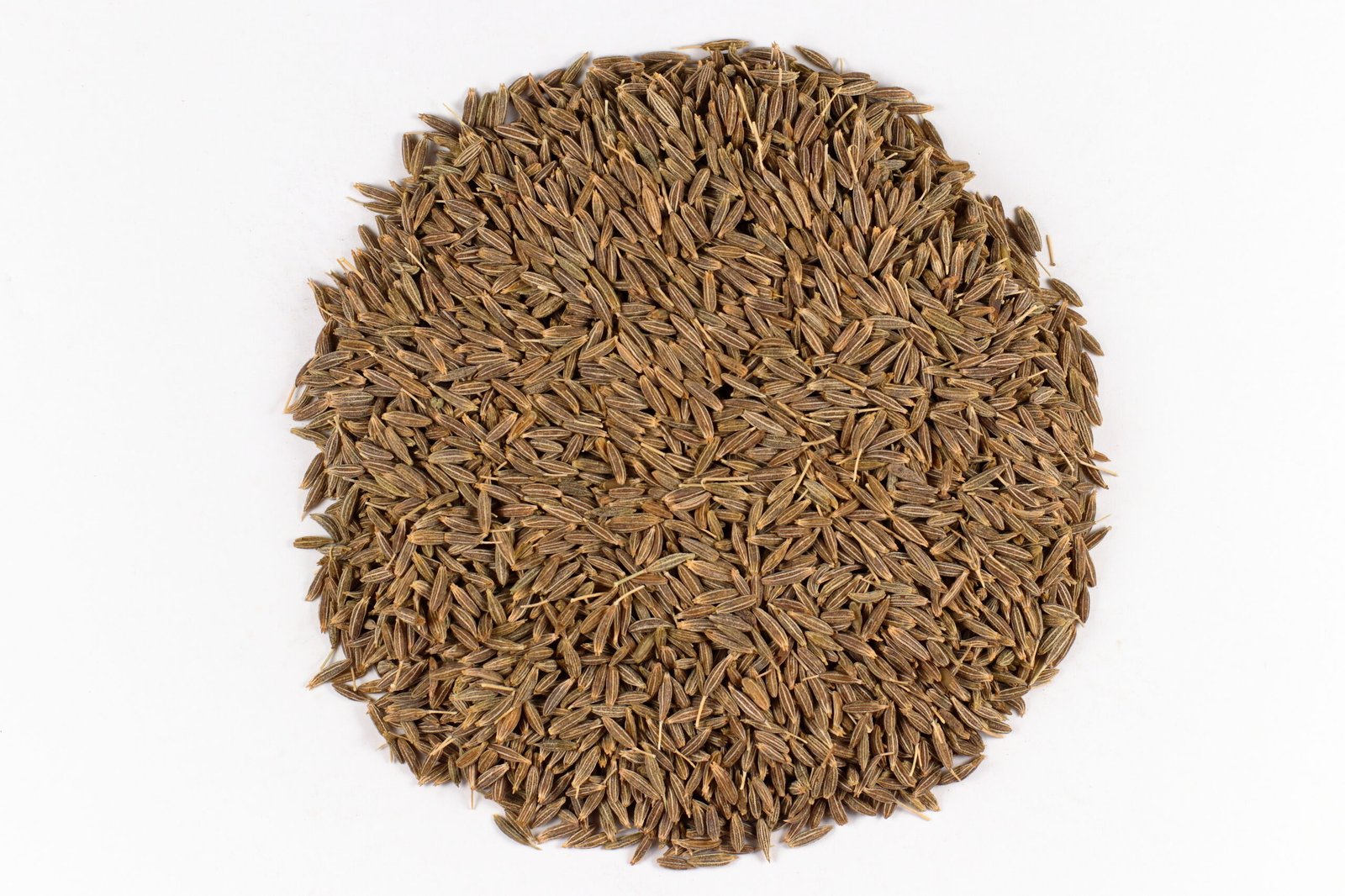
If ras el hanout is the festive blend, cumin is the daily one. Those small boat-shaped seeds (~5 mm) flavor half of Moroccan street food — you’ll find cumin in the shaker at every brochette and kefta stand. Whole seeds keep their aroma far longer than ground powder, and a handful toasted in a dry pan smells unmistakably warm and nutty. If a stall’s cumin smells of nothing, walk on — it’s been sitting in the sun since last season.
How to buy at the souk without getting tourist-grade dust
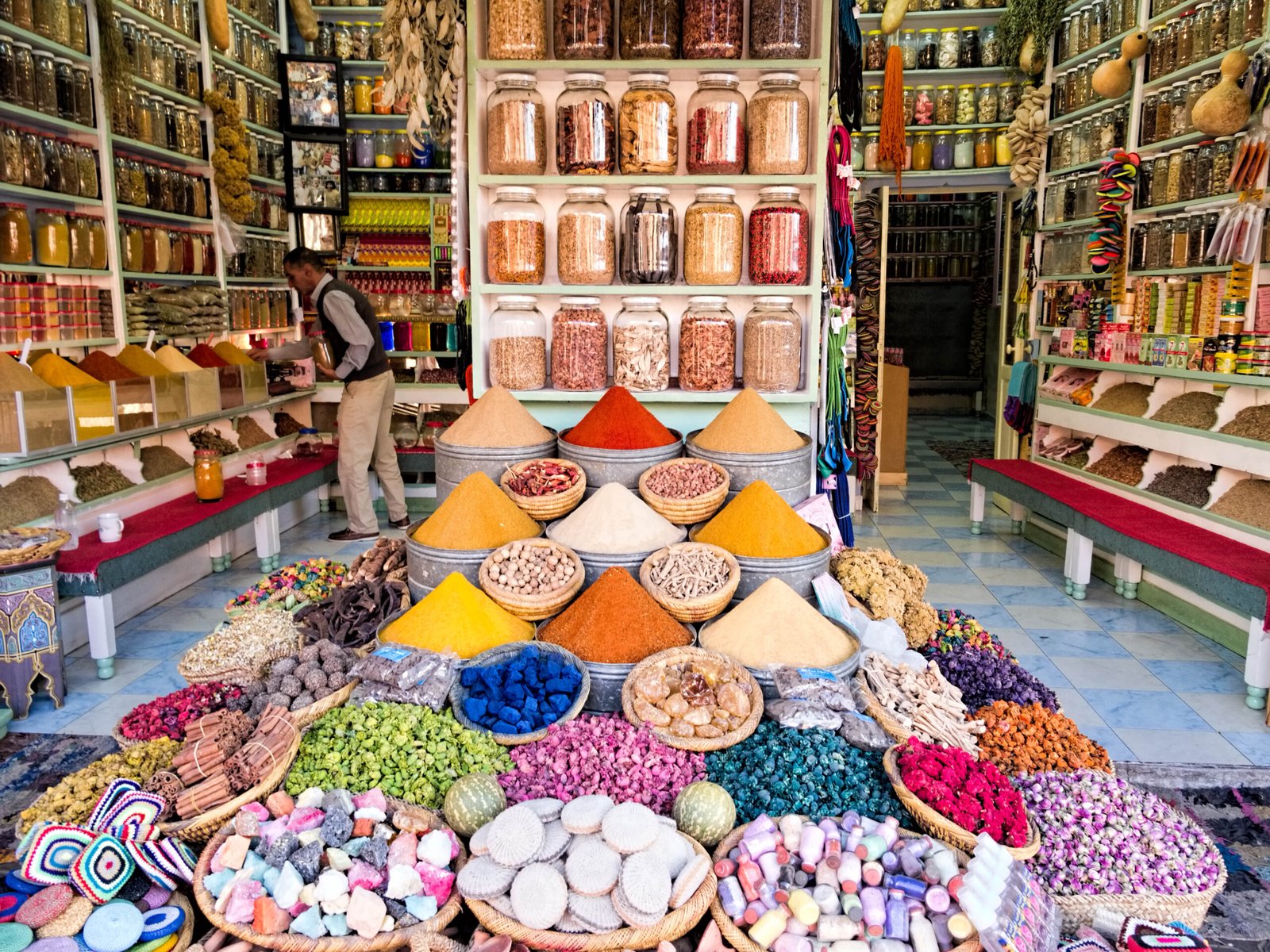
📸 The famous spice pyramids are half theater, half storage. The bag the merchant fills for you may come from a sack underneath the display — fine, as long as what’s in the sack is fresh. These rules keep you safe:
- The smell test is everything. Real, fresh spices hit your nose from centimeters away. Travelers regularly report buying souk paprika that turned out damp, claggy, and scentless — the classic sign of old or cut stock. No smell, no sale.
- Whole beats ground. Whole seeds, pods, and quills keep for a year or more; ground spices fade within months. Buy whole cumin, cinnamon quills, and dried ginger, and have the merchant grind your ras el hanout in front of you from the batch you just smelled.
- Watch the scoop. Ask the merchant to fill your bag from the big sack in front of you, not from a pre-sealed packet of unknown age.
- Follow the locals. Stalls crowded with Moroccan shoppers turn stock over fast — that turnover is worth more than any sales pitch. The prettiest pyramid on the street is aimed at cameras, not cooks.
- Haggle, but keep it friendly. Bargaining is expected. Start well below the first price, smile, be ready to walk away — the real price often appears at the door. For small spice bags the difference is a few dirhams either way; save your energy for bigger purchases (see our Morocco food prices guide).
- Where to go: every medina has its spice corner. In Marrakech, the square called Rahba Kedima (Place des Épices) is the historic spice square — but the same rules apply there. Avoid the men who approach you on the street offering to lead you to “the real spice market”; legitimate shops don’t need touts.
The two scams every tourist should know
1. Fake saffron
This is the big one. Saffron is the world’s priciest spice by weight, and Morocco’s informal markets are full of convincing fakes: safflower petals, dyed corn silk, even chemically colored plant scraps. Dar Azaafaran — the organization working with two dozen saffron cooperatives around Taliouine — has warned that counterfeit saffron sells in informal markets for less than a euro a gram. Morocco’s food safety office advises buying only saffron that is labeled and packaged by approved sellers, never loose powder from a street tray.
Tests you can do on the spot:
- Look: real threads are trumpet-shaped with a pale end; fakes are uniform, fluffy, or powdery.
- Rub: squeeze threads between damp fingers — real saffron stains the skin a slow golden yellow.
- Water: a few threads in warm water turn it golden over minutes; fakes bleed red instantly.
- Price: a few dozen dirhams per gram is plausible; 10 dirhams a gram is safflower.
2. Colored and cut powders
Paprika, turmeric, and chili powder are sometimes bulked out with flour or industrial dyes. Giveaways: a neon shade, a damp or dusty texture, and — again — no smell. Turmeric (kharkoum) should stain your fingers a warm yellow-orange; paprika should smell sweet and peppery, never musty.
Getting your spices home in good shape
- Pack airtight. Double-bag everything — spices absorb every smell in your suitcase.
- Keep them dark and cool. Light and heat kill aroma; a zip-lock in the middle of your checked bag travels best.
- Buy small quantities. 100–200 grams of ras el hanout plus a few small bags of whole spices is plenty; ground blends fade after about six months.
- Keep the receipt for saffron. Certified, labeled saffron with proof of purchase avoids awkward questions.
- Check your country’s customs rules for dried spices before flying — most allow small personal quantities of sealed dried spices, but verify the rules yourself.
Cooking with ras el hanout once you’re home
Start small — half a teaspoon per person is plenty in a tagine. The classics: lamb or chicken tagine, Friday couscous, roasted vegetables. Toast the ground spices briefly in oil to wake them up, but don’t let them burn — burnt spices turn bitter with no rescue. Half a teaspoon stirred into plain rice with olive oil smells like a Marrakech evening.
FAQ
How much does ras el hanout cost in Morocco?
A small bag (about 100 grams) from a souk stall costs a few dirhams — one of the cheapest souvenirs in the country. Only saffron is sold by the gram. If a merchant quotes a restaurant-bill price for mixed spices, that’s the tourist rate: smile and negotiate.
Souk or supermarket — where should I buy?
Both have their place. Supermarket spices are sealed, labeled, and consistent — a safe fallback, especially for saffron. Souk spices, bought with the smell test at a busy stall, are often fresher and far cheaper. Many travelers do both: the atmospheric purchase at the souk, the certified saffron at a proper shop.
Can I bring Moroccan spices through customs?
Dried, sealed spices for personal use are generally permitted by most countries, but rules differ between the US, EU, UK, and others. Check your destination’s official customs guidance before flying and keep everything in sealed packaging.
How long do they keep?
Whole spices stay potent for a year or more in a dark, airtight jar. Ground blends like ras el hanout fade faster — use them within about six months.
What’s the difference between ras el hanout and curry powder?
They overlap but aren’t the same. Ras el hanout leans warm and sweet — cinnamon, nutmeg, cardamom — with gentler heat, built for slow-cooked tagines. Curry powders vary, but typically foreground turmeric and fenugreek. One substitutes for the other in a pinch, but the dish won’t taste Moroccan.
Image credits: Spice souk in Marrakech — photo by Dan Lundberg, CC BY-SA 2.0, via Wikimedia Commons · Ras el hanout — photo by Sarefo, CC BY-SA 4.0, via Wikimedia Commons · Saffron threads — photo by Umarsami, CC BY-SA 4.0, via Wikimedia Commons · Cumin seeds — photo by Sanjay Acharya, CC BY-SA 4.0, via Wikimedia Commons.