Gargotes: Eating Where Moroccan Workers Eat
Walk past any medina at noon and you will hear it before you see it: the clatter of spoons, the hiss of a grill, a waiter shouting an order across a crowded room. Inside, taxi drivers, shopkeepers, masons and students are bent over steaming bowls at plastic tables. This is a gargote — Morocco’s workers’ canteen, and the cheapest real meal in the country.
The word comes from French slang for a cheap eating house. A gargote is a small room — sometimes half open to the street — with a counter or open kitchen at the back, rows of big pots on the stove, and simple tables where strangers share lunch. For the price of a coffee on a tourist terrace, you eat what Moroccan workers eat every day.
What a gargote actually is
A gargote sits between a street stall and a restaurant. It has a roof, tables and chairs (usually plastic), and a fixed kitchen — but it runs like a canteen. The owner cooks a set number of dishes each morning, in quantity, and sells them until the pots are empty. When a dish runs out, it runs out: regulars arrive early for a reason.
Look for the signs. Tiled walls, a fluorescent tube, a hand-written board with three or four dishes — or no board at all, because the menu is the row of pots visible from the door. Bread arrives automatically. The clientele tells you everything: if the tables are full of workmen in dusty boots at 12:30, you are in the right place.
📸 Owner photo idea: the interior of a gargote at lunch rush — pots on the stove, simple tables, the handwritten menu board.
How ordering works
Forget the menu ritual. In most gargotes you walk to the counter, look at what is simmering, and point. The owner or waiter names the dishes in Darija — harira, tagine kefta, loubia — and you nod. A basic « c’est quoi, ça ? » gets you an explanation; pointing gets you lunch. Few gargotes have English, and none need it.
Lunch is the main event, roughly noon to 2 pm, and it moves fast. Many gargotes turn tables continuously: you eat, you pay, you leave, and a worker takes your chair. At peak hour tables are shared without anyone asking — sitting next to a stranger is normal, not rude. There is usually a plat du jour: soup plus a main dish with bread. Friday is couscous day in most gargotes, as in Moroccan homes — arrive before 1 pm or miss it.
What’s on the menu: the dishes by name
The menu is short and barely changes. These are the dishes you will actually find.
Harira
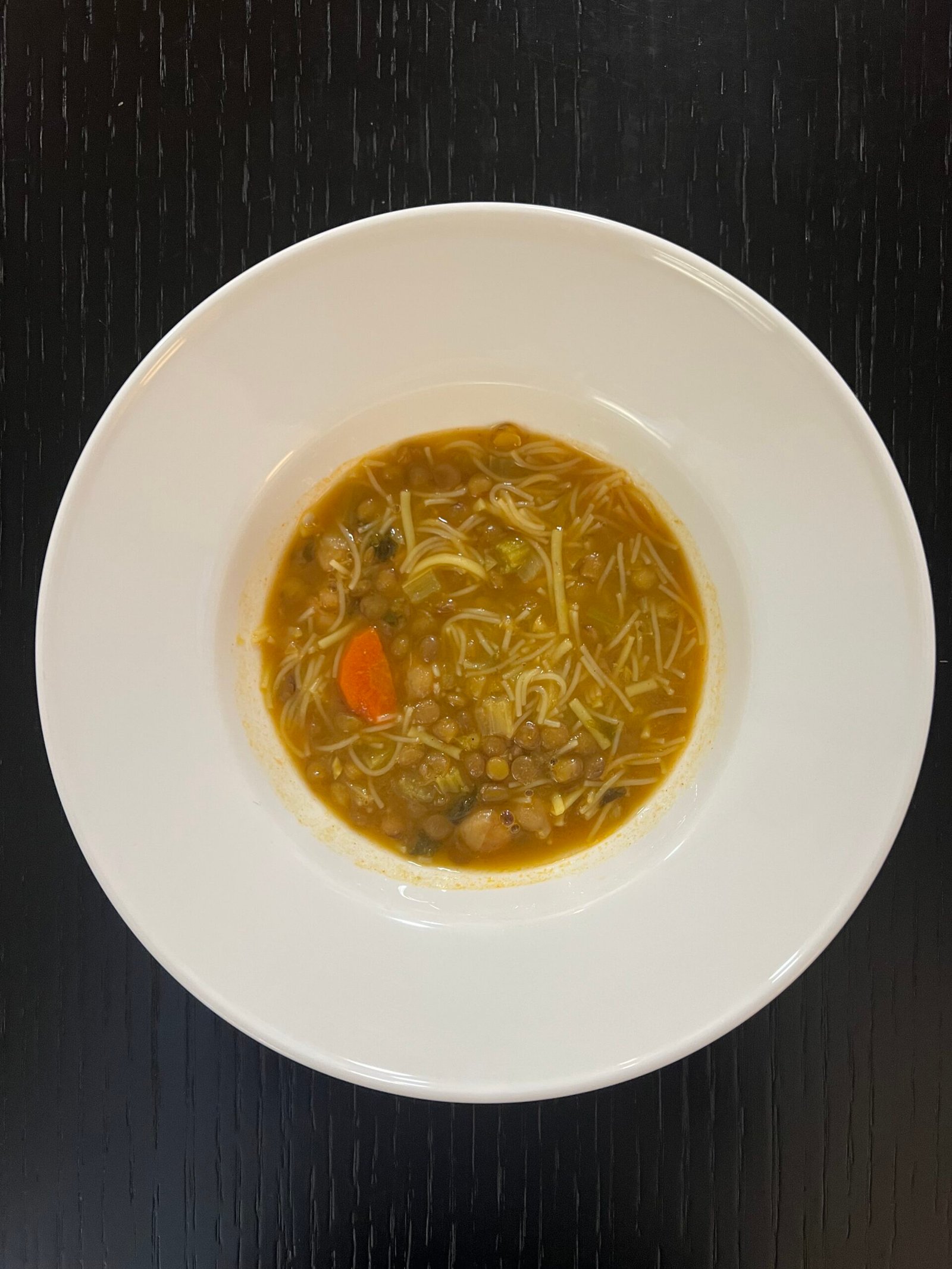
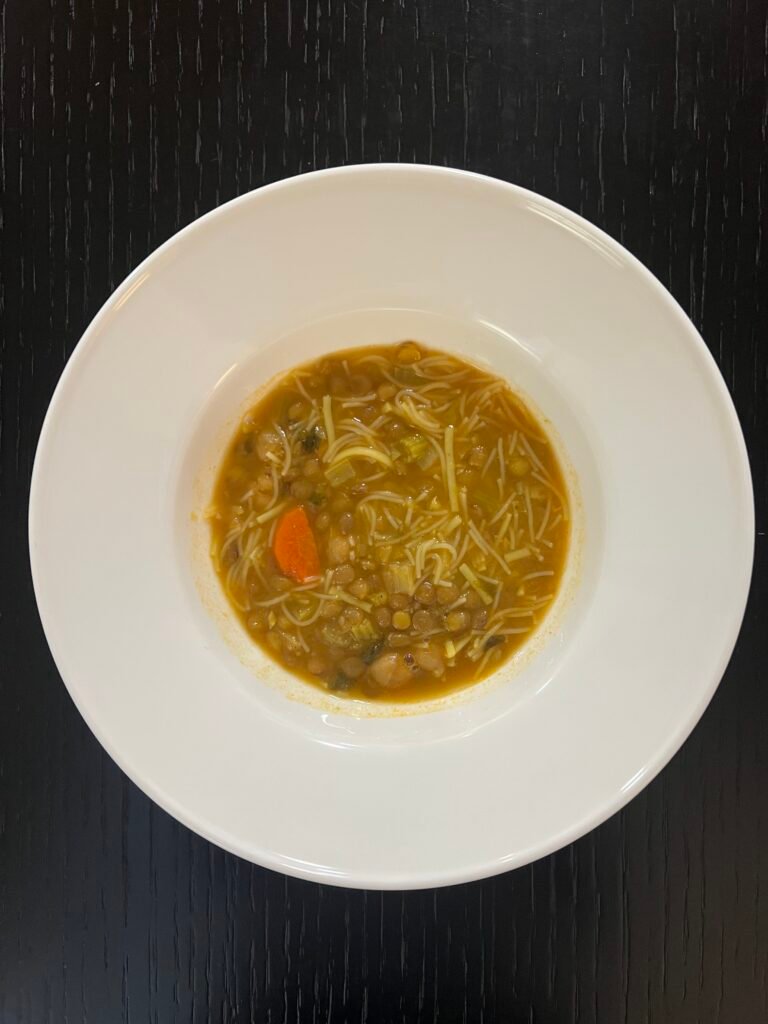
Harira is the soup that opens almost every gargote lunch. A tomato broth thickened with tedouira (flour and water), loaded with chickpeas, lentils, thin vermicelli, celery, parsley and coriander, seasoned with ginger and turmeric. Filling enough to be a meal on its own, it usually comes first, with bread, before the main dish. The same soup Moroccans break their Ramadan fast with is served here at noon, every day.
Tagine of the day
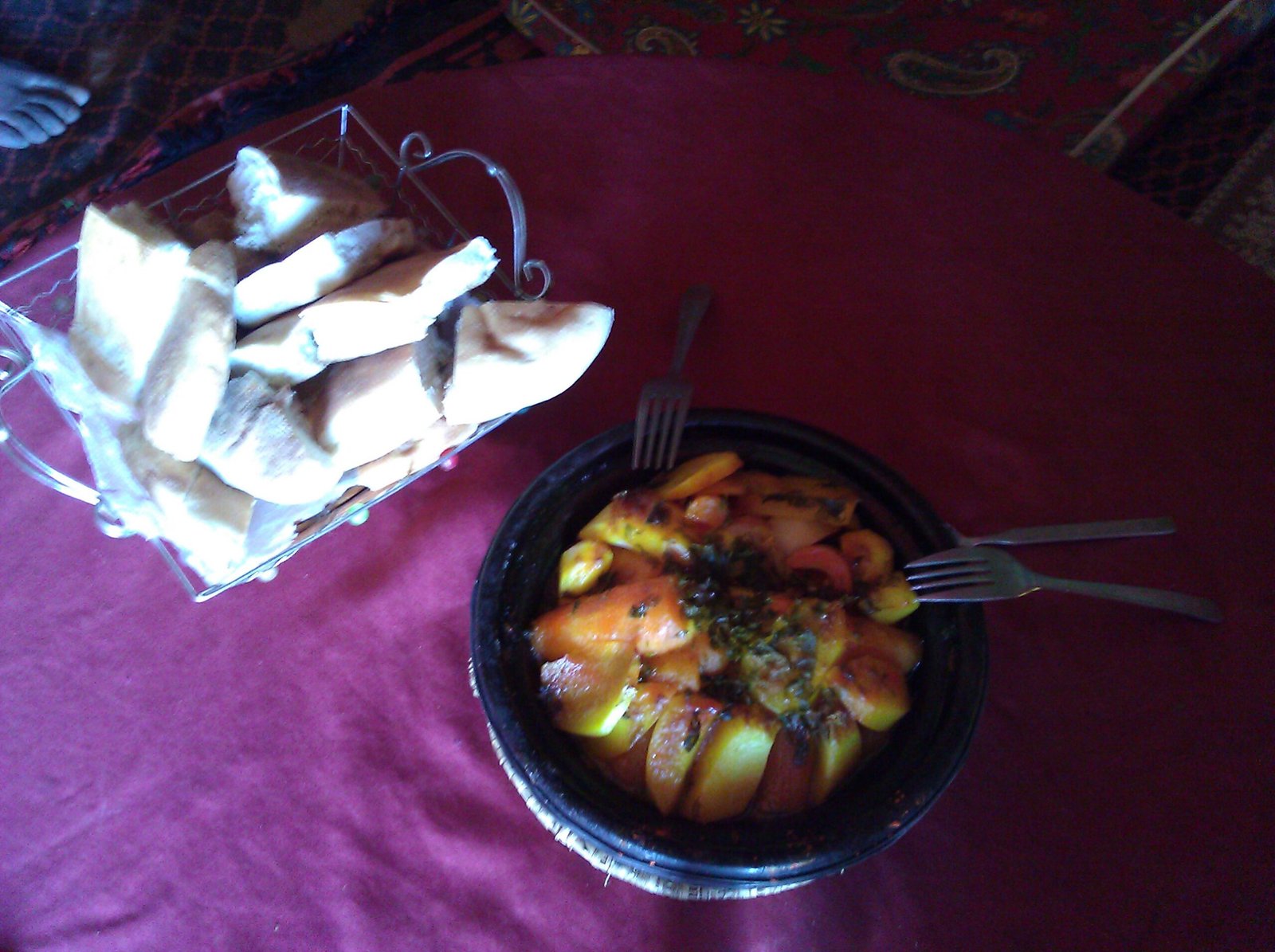
There is always one tagine, sometimes two, and it changes with the market: kefta tagine (spiced minced beef with tomato and egg), chicken with preserved lemon and olives, beef with prunes and almonds, or vegetable on lean days. It arrives in the earthenware dish it cooked in, the conical lid lifted at your table. Same slow-cooked dish as in mid-range restaurants — the difference is the setting, not the recipe. Our tagine guide explains the main varieties.
Brochettes, kefta and merguez
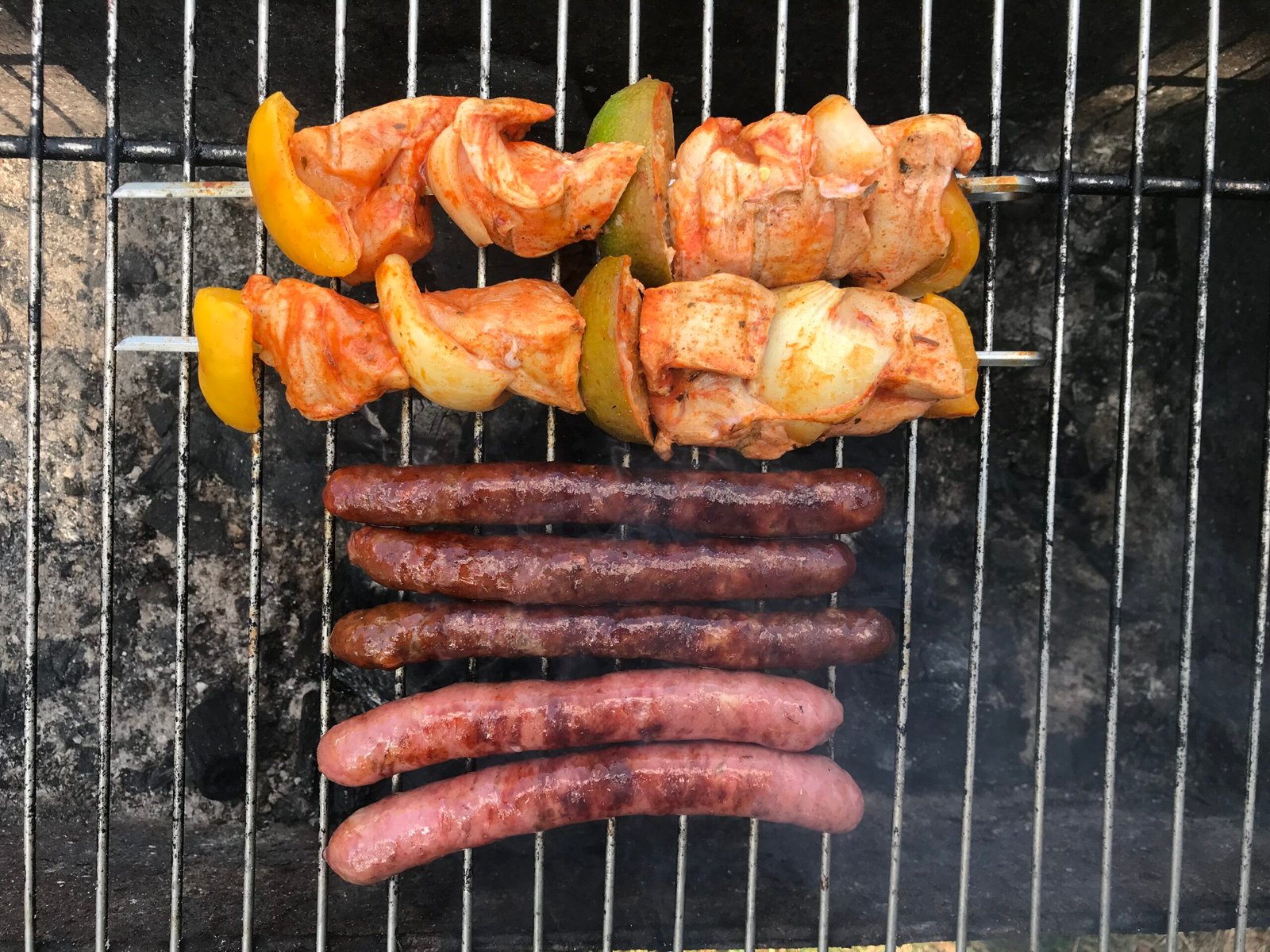
Where there is a grill, there are brochettes: skewers of marinated chicken, beef or liver (kebda) cooked over charcoal to order. Kefta — hand-pressed minced beef with cumin, paprika, onion and parsley — comes as skewers too. Merguez, the spicy North African sausage, is the third pillar of the grill. Grilled meat is the priciest item on a gargote menu and still a fraction of restaurant prices. It arrives with bread, cumin and salt — no fries, no garnish.
Bissara
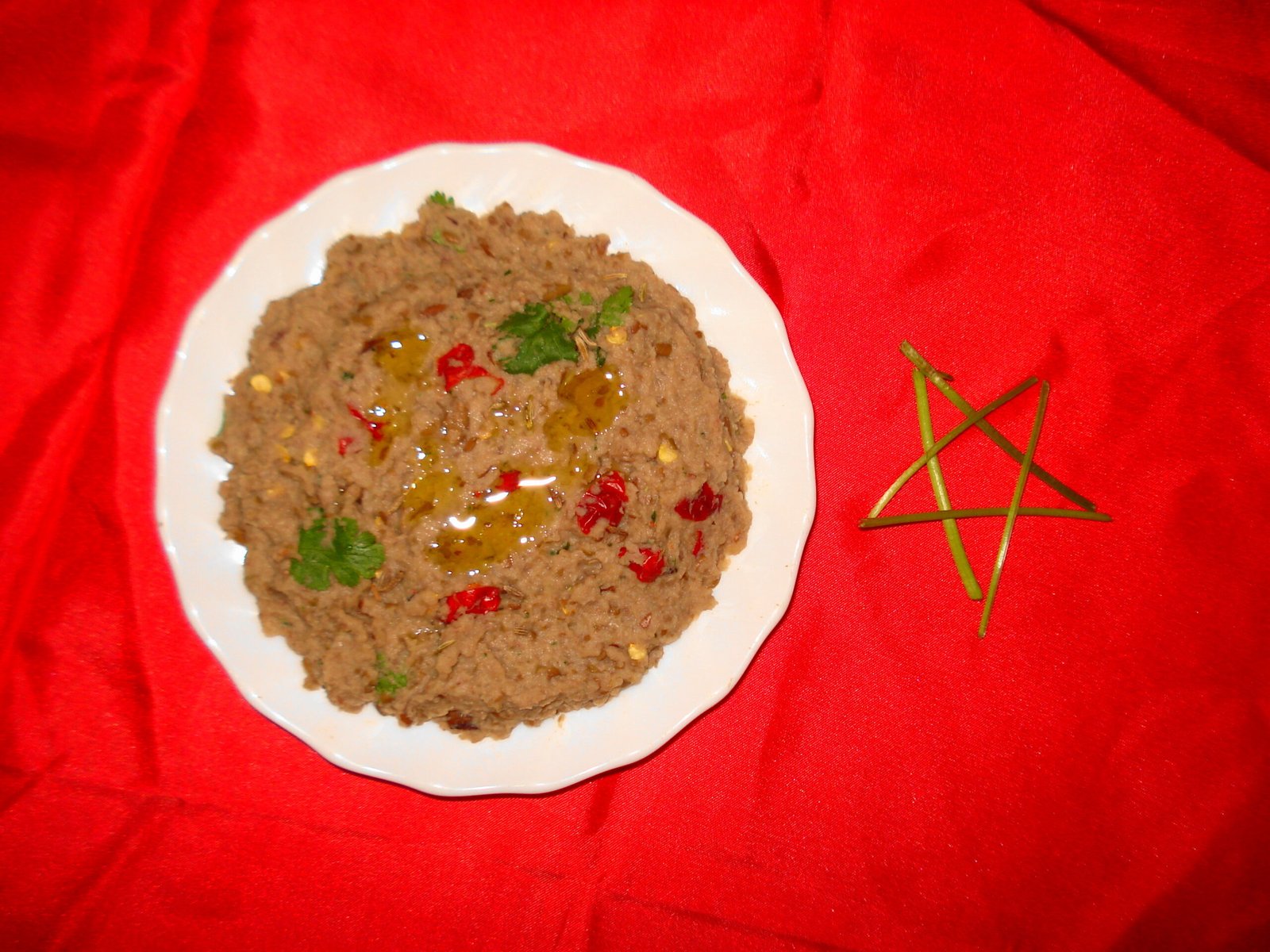
Bissara is dried fava beans cooked to a thick purée, served hot with olive oil, ground cumin and sometimes harissa. The classic humble breakfast of northern Morocco; gargotes near markets serve it in the morning before the lunch crowd. Scoop it with bread. Vegan without trying, nearly free, and it keeps a worker full until evening.
Loubia
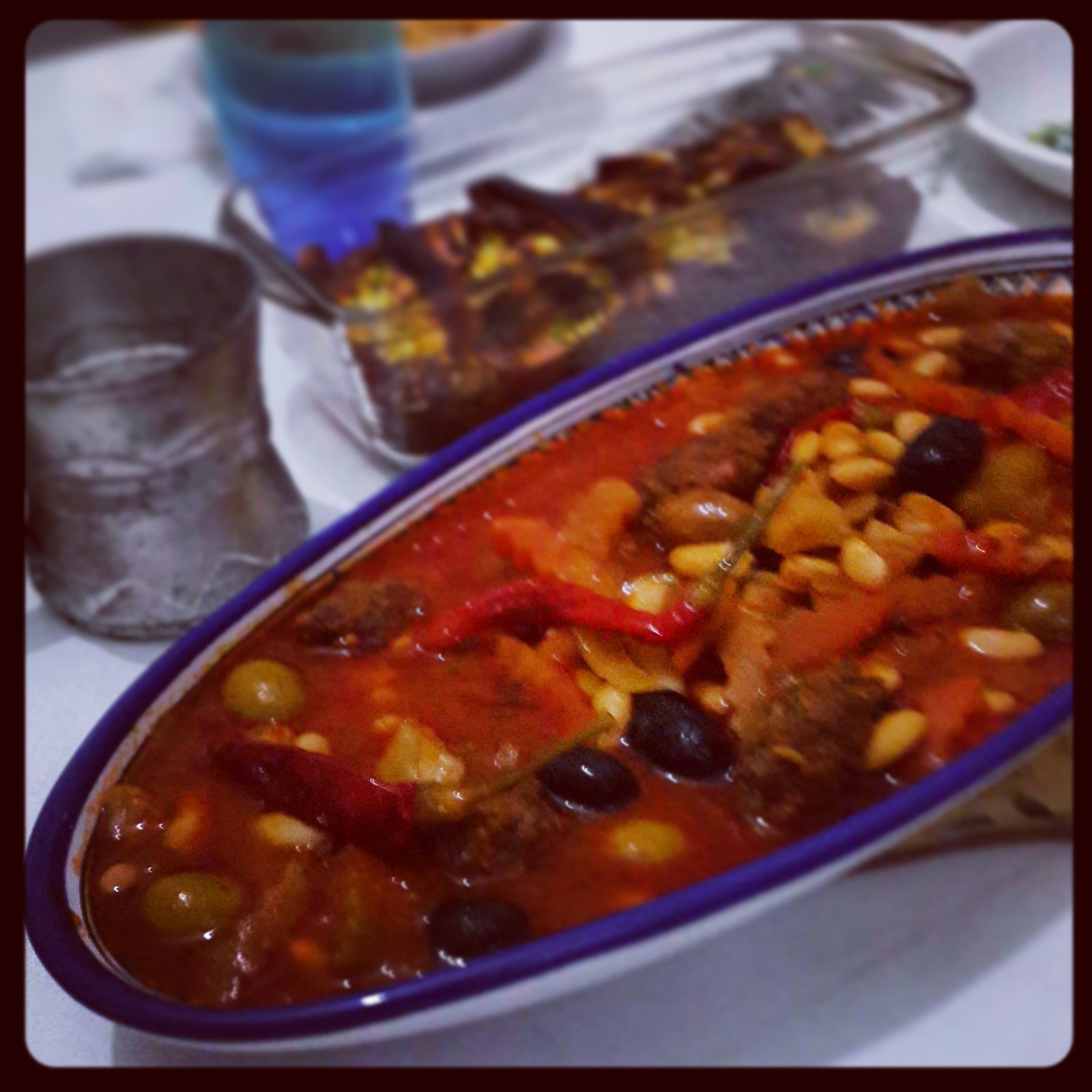
Loubia — white beans simmered in tomato sauce with garlic, cumin and paprika, often with black olives — is the workhorse stew of the gargote. It holds well in the pot and stretches a little meat a long way (some versions include beef, some don’t). Order it when you want the most filling bowl for the least money.
Grilled fish
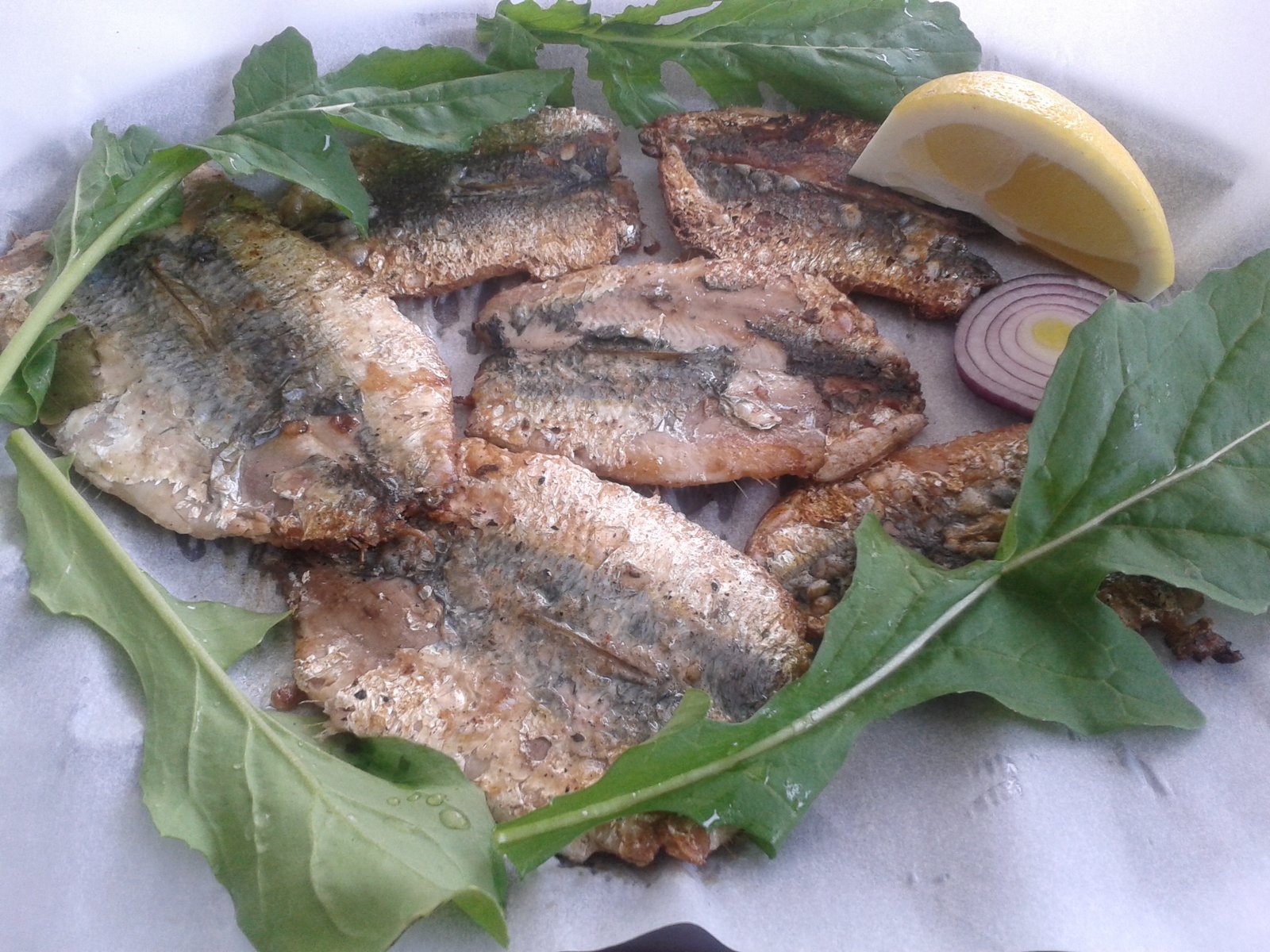
In coastal cities and port neighborhoods — Casablanca, Essaouira, Agadir, Tangier — gargotes near the fish market grill the morning catch. Sardines are the classic: cheap, oily, perfect over charcoal, marinated in chermoula (garlic, cumin, paprika, coriander, lemon). A plate of grilled sardines with bread and tomato-onion salad is one of Morocco’s great cheap lunches. Inland gargotes rarely serve fish; at the coast it is the default.
The bread deserves a mention: the round khobz loaf, often baked in a communal wood-fired oven (ferrane), arrives with everything. It is your spoon, fork and napkin. Tear, scoop, eat.
Prices: the cheapest real meal in Morocco
No invented price lists — prices move with the market and the city. The honest version: a bowl of harira or bissara costs a few dirhams. A full lunch — soup, tagine or grill, bread, sometimes mint tea — costs a few dirhams more, still less than a single coffee on a tourist terrace. That is why workers eat here daily. For the broader picture, see our Morocco food prices guide.
One rule explains it: everything is cooked in bulk, once a day, with market ingredients. No à la carte waste, nothing imported, no margin for atmosphere. You pay for food, not for the room.
Gargote etiquette: the unwritten rules
- Cash only. Bring small dirham notes and coins. Cards are not a thing here.
- No alcohol. Not served, not expected, not welcome. Order soda, water or mint tea.
- Bread is the utensil. Spoons come with soup; for tagines and stews, tear the bread and scoop.
- Eat at workers’ pace. Turnover is the business model. An hour-long lunch is for restaurants; here you eat, pay and free the table.
- Wash your hands. There is usually a sink near the entrance. Everyone uses it, before and after.
- Mint tea comes after. Many gargotes don’t make tea; regulars order it from the café next door. Watch and copy.
- Small change as a tip is appreciated, not obligatory. Rounding up the bill is the local gesture.
📸 Owner photo idea: your own gargote table mid-lunch — the pots, the bread basket, the shared table, no faces needed.
How to spot a good gargote
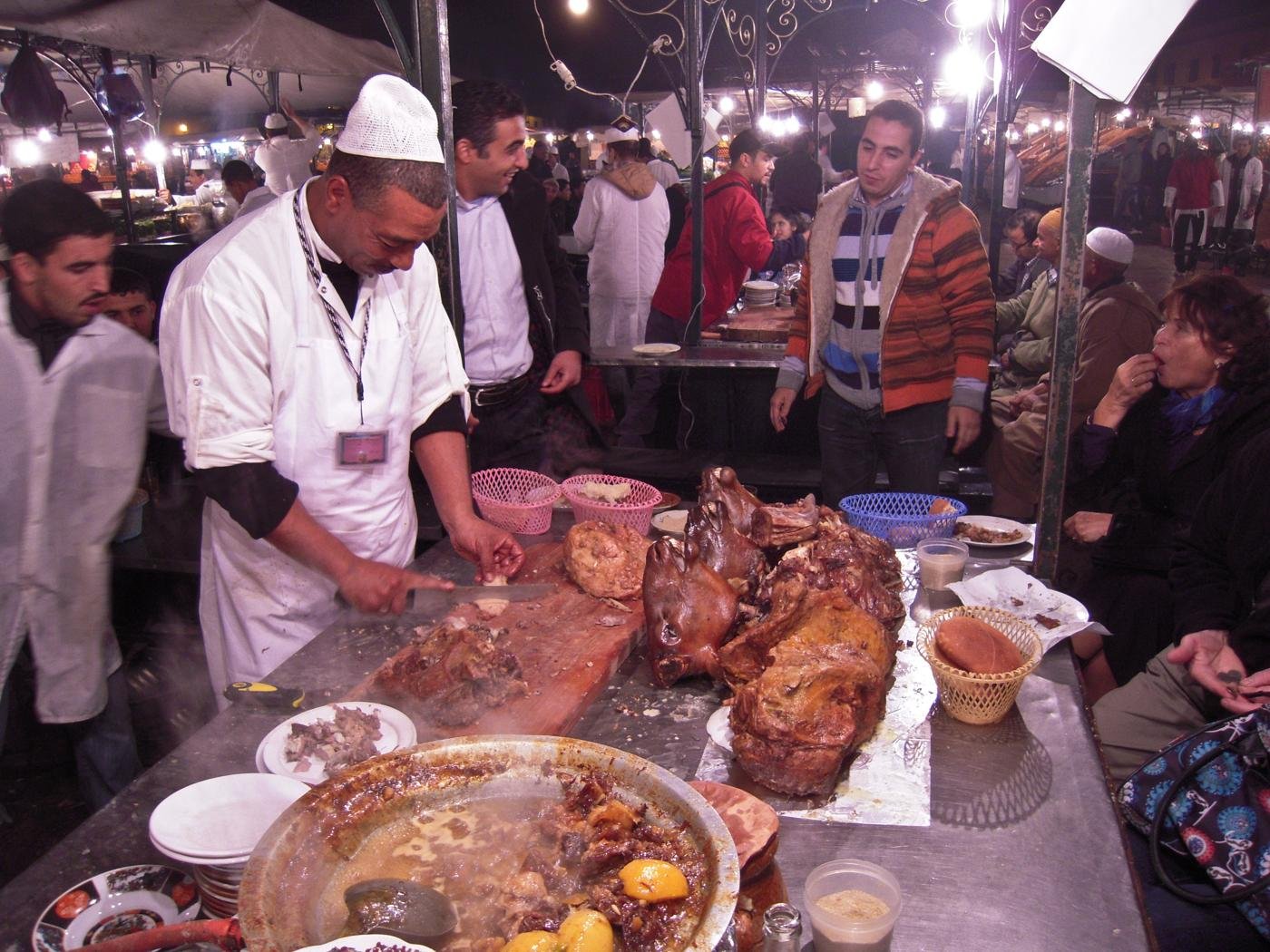
Gargotes have no reviews, no stars, no Instagram. The review system is the crowd.
- Full of workers at noon. Taxi drivers, delivery riders, shop staff — people who eat here daily and wouldn’t return to a bad one.
- Visible pots and steam. You should see the food before ordering. A gargote that hides its kitchen is hiding something.
- Fast turnover. Full tables at 12:30 and 1:30, with different people. High turnover means fresh pots.
- Near the action. The best cluster around souks, wholesale markets, bus stations and taxi ranks.
- No one calling you in. A good gargote doesn’t tout. If someone pulls tourists off the street, keep walking.
Gargote vs. restaurant vs. street stall
- Street stall: one dish, no real seating, eaten standing or walking. Our street food guide covers that world.
- Gargote: a roof, tables, a daily set menu of stews, soups and grills. Lunch-focused, cash, workers’ prices.
- Mid-range restaurant: printed menu, table service, longer hours, tourist-friendly. Two to four times the price for similar tagines — our guide to ordering like a local helps navigate these.
The food often overlaps — a kefta tagine is a kefta tagine. What changes is everything around it: price, pace, company.
Frequently asked questions
Is it safe to eat at a gargote?
The crowd is your safety data. A gargote serving hundreds of workers daily, with high-turnover pots cooked that morning, is as safe as eating gets — regulars would abandon it otherwise. Pick busy places, eat what is steaming, and read our street food safety guide for the general rules.
Do they speak English or French?
French basics, usually. Darija always. English rarely. It doesn’t matter: the menu is visible in the pots, and pointing is universal. Learn the dish names in this article and you’ll manage fine.
Are gargotes open in the evening?
Most are lunch operations — pots cooked in the morning, sold until empty, often by mid-afternoon. In big cities some stay open for dinner, especially grill places. For the full choice, go at noon.
Can vegetarians eat at a gargote?
Easily, with one caution. Bissara, loubia and vegetable tagine are naturally meat-free, and harira is often vegetarian — but not always: some cooks use beef stock. Ask « sans viande ? » or stick to the bean dishes.
Do gargotes serve alcohol?
No. Never expect it, never ask for it. Soft drinks, bottled water, raib (yogurt drink) and mint tea are what’s on offer.
Photos: Harira by HaJunkiyada (CC BY-SA 4.0) · Tagine in Zagora by YoTuT (CC BY 2.0) · Brochettes and merguez on the grill by Benoît Prieur (CC0) · Bissara by Miansari66 (CC0) · Loubia by Kaouther Bedoui (CC BY-SA 4.0) · Grilled sardines by E4024 (CC BY-SA 4.0) · Jemaa el-Fna food stall by Michal Osmenda (CC BY-SA 2.0), all via Wikimedia Commons.