Vegetarian in Morocco: What to Eat & How to Order
Morocco runs on meat: Friday couscous crowned with lamb, tagine menus leaning toward kefta and chicken, Marrakech’s famous tangia — beef sealed in a clay urn for hours. The word “vegetarian” barely exists in restaurant Darija. Say it in French and most waiters will understand you, but few menus label anything as such.
And yet Moroccan home cooking is built on vegetables, beans, lentils, and olive oil — the seven-vegetable tagine, the smoky eggplant zaalouk, the fava-bean bessara that workers eat for breakfast. Eating vegetarian in Morocco is a translation problem: know the exact dish names, ask one precise question, and you will eat extremely well. This guide solves both.
The Dishes You Can Count On
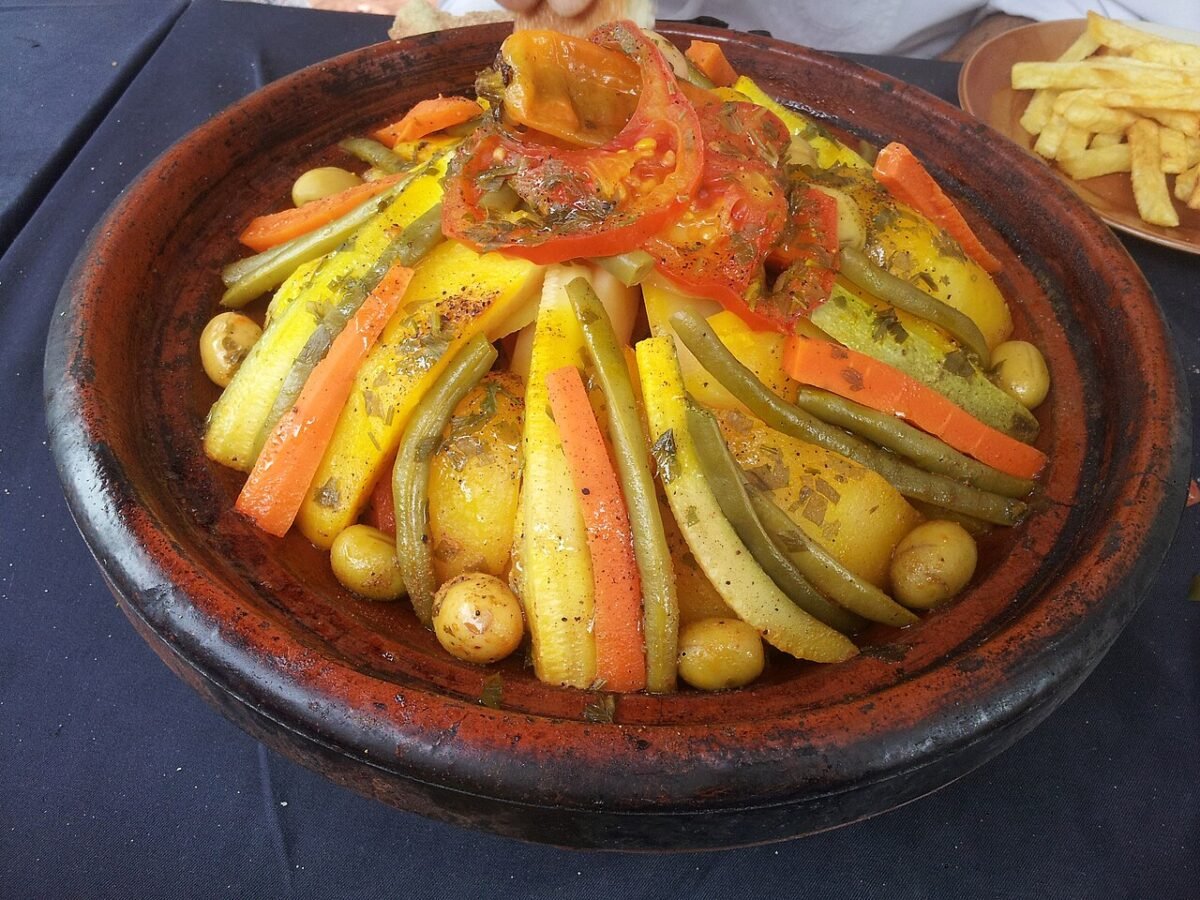
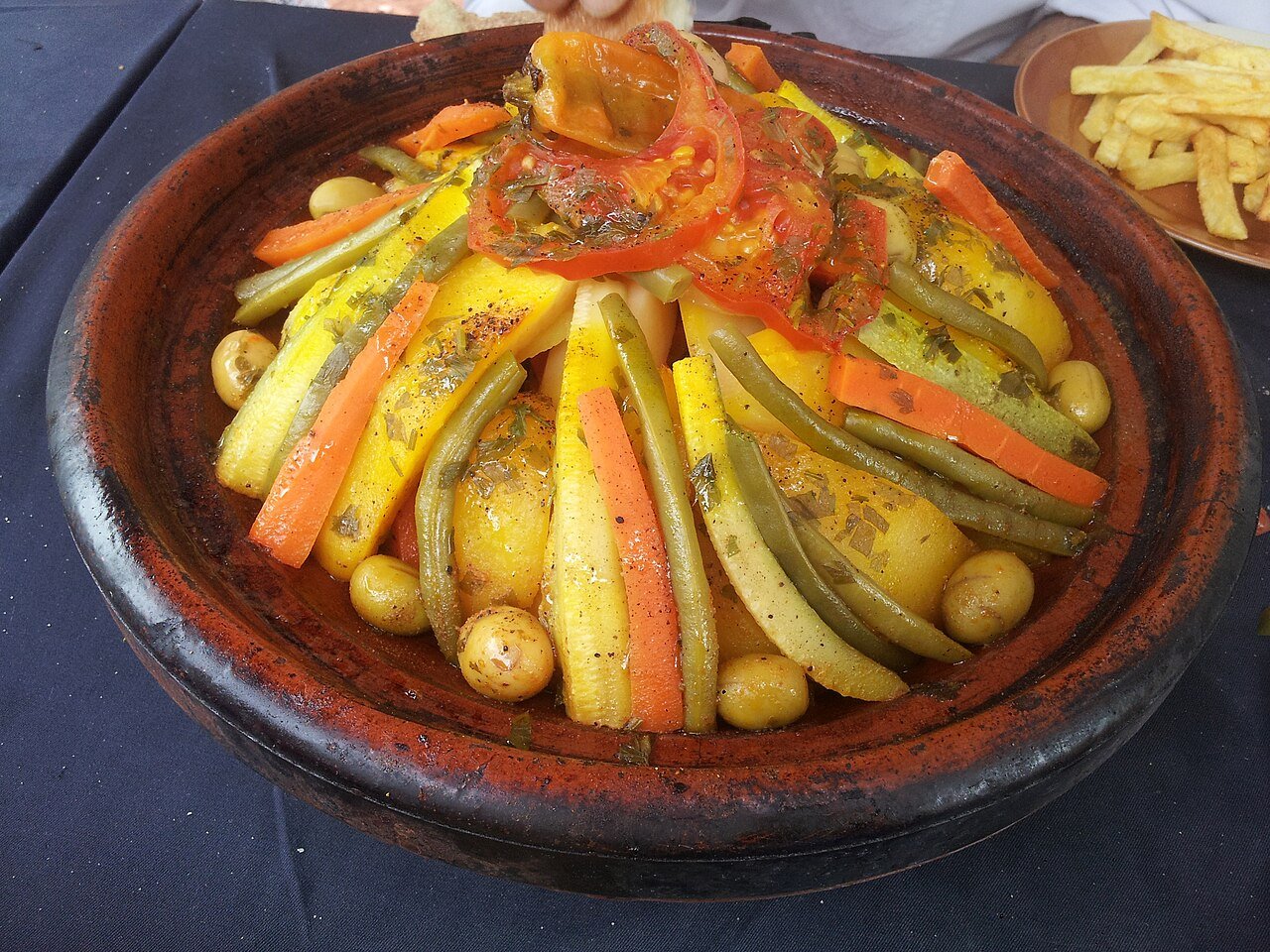
Tagine bil khodra — the seven-vegetable tagine
Khodra means vegetables, and tagine bil khodra is exactly what it promises: carrots, zucchini, potatoes, tomatoes, and peas slow-cooked in the clay pot, sometimes with artichoke hearts in spring or pumpkin in autumn. Ginger, turmeric, cumin, garlic, and olive oil do the seasoning — warm rather than hot — and it arrives with a basket of khobz for scooping.
Any restaurant that serves tagine can make this one, even when it is not on the menu. Ask for it by name — “tagine bil khodra, bla lham” (vegetable tagine, no meat) — and the kitchen will know exactly what you mean. Our complete tagine guide covers how it differs from the meat versions.
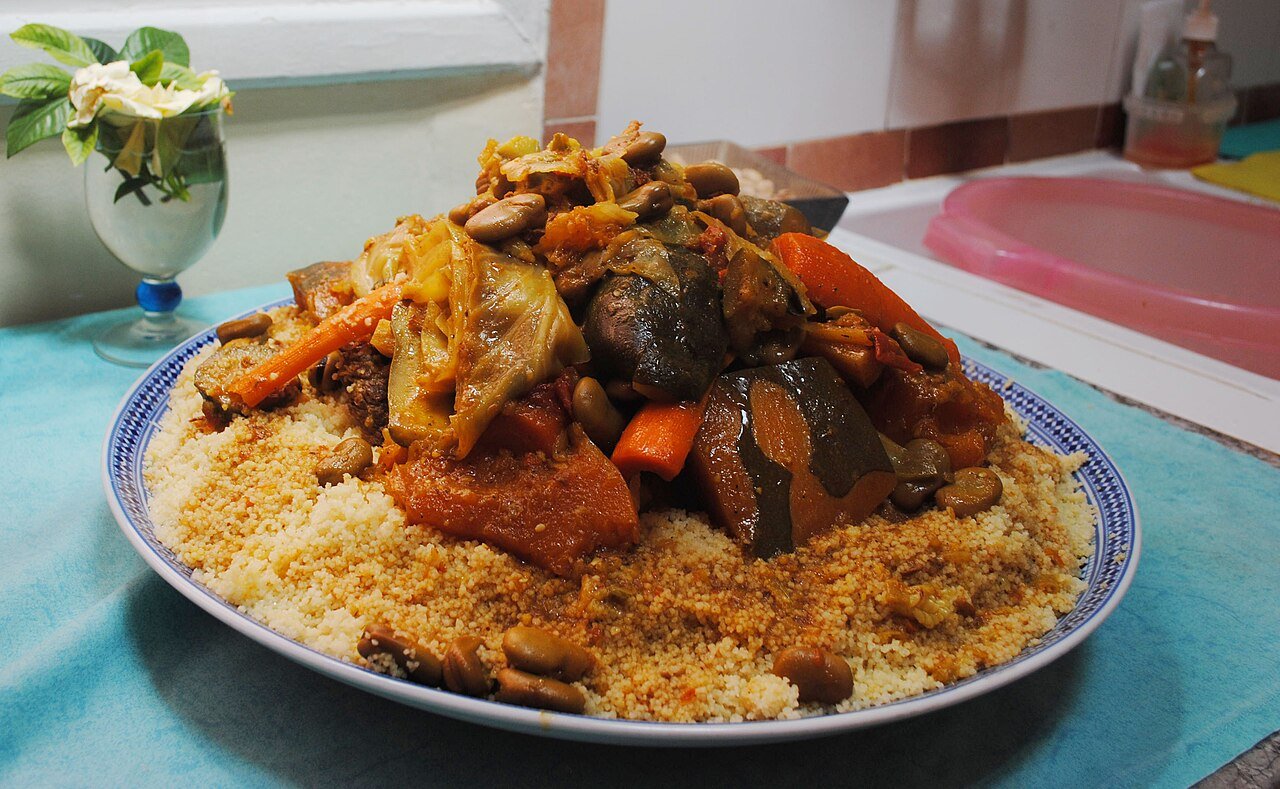
Friday couscous with seven vegetables
Friday is couscous day across Morocco — the one day the steamed semolina appears in homes, gargotes, and restaurants alike. The vegetarian version mounds the fluffy grains with carrots, pumpkin, zucchini, cabbage, turnips, and chickpeas, spooned over from the same pot of spiced broth. Ask for “couscous bil khodra” — and aim for Friday, when most places make it.
The catch: that broth is usually cooked with meat or bones, even when no lamb sits on top. This is the dish where the meat-stock question matters most — ask before you assume. Our guide to Friday couscous explains the tradition and what to check. 📸
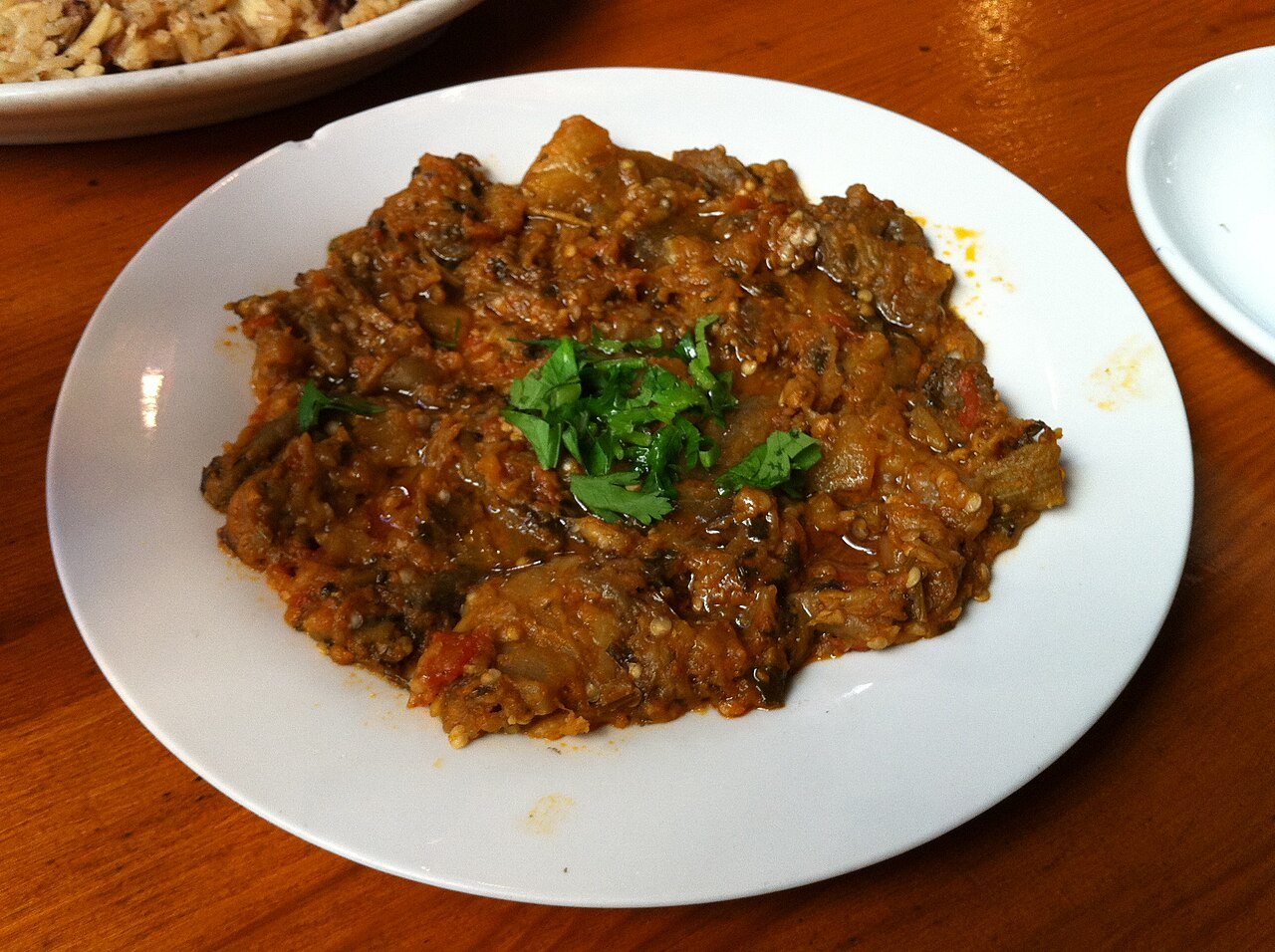
Zaalouk — the smoky eggplant salad
Zaalouk is the single best vegetarian dish in Morocco and the one travelers remember. Eggplants are charred until the skin blackens, then peeled, mashed, and cooked down with tomatoes, garlic, cumin, paprika, and a generous pour of olive oil. Smoky, silky, scooped up with bread — it opens most traditional meals as part of the salad course, served at room temperature. When the round of small salads arrives before your main dish, zaalouk is usually the dark, glossy one, always worth ordering on its own too.
Taktouka — roasted pepper and tomato salad
Zaalouk’s constant companion. Green peppers roasted until blistered, peeled, and chopped with tomatoes over the same garlic-cumin-paprika base, finished with olive oil and parsley. Brighter and fresher than zaalouk, with gentle sweetness from the peppers. The two salads side by side with warm khobz make a complete light lunch — ask for “zaalouk ou taktouka” and most places bring both.
Bessara — the fava-bean soup
Dried fava beans simmered until they collapse, then blended into a pale, creamy soup, served in shallow bowls with a swirl of olive oil, cumin, and paprika. A northern staple and a working breakfast: gargotes ladle it out in the morning for a few dirhams, with bread for dipping and sometimes olives on the side. Filling, cheap, entirely plant-based — one of the safest vegetarian orders in the country.
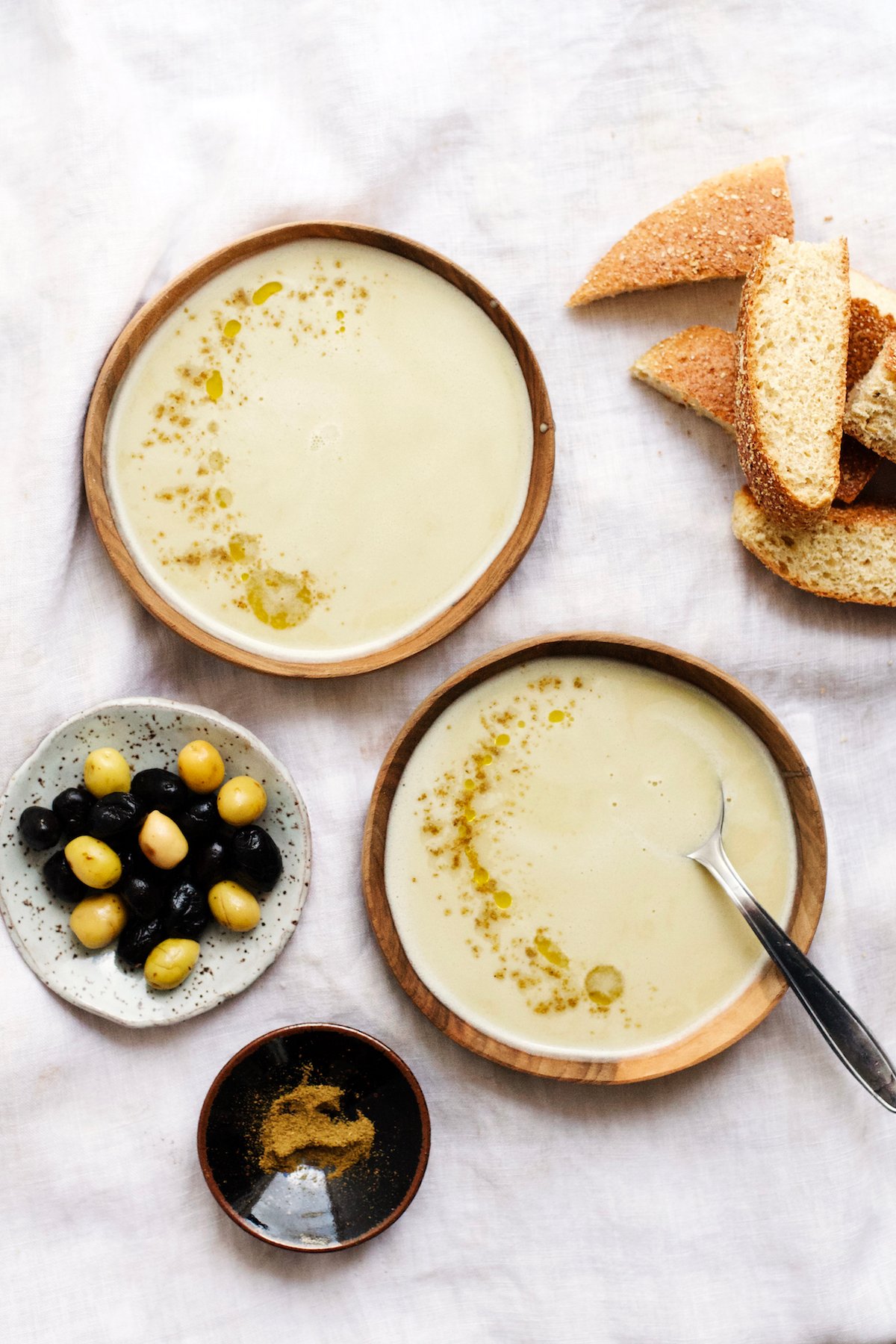
Loubia — white beans in tomato sauce
White beans stewed in thick tomato sauce with garlic, cumin, and paprika, served bubbling with bread. Gargotes make it in enormous pots daily — hearty, inexpensive, nearly always meat-free, since beans are the point. Still worth the stock question in fancier restaurants; in a neighborhood gargote it is as safe as it gets.
Harira — ask before you order
Harira is Morocco’s most famous soup: tomatoes, lentils, chickpeas, and herbs, thickened with tadouira, a flour-and-water liaison stirred in at the end. The soup of Ramadan, served at sunset to break the fast. But the traditional recipe includes small pieces of beef or chicken and a lamb-based stock — the meat is part of the flavor base, not a garnish you can pick out. Never assume. Ask explicitly; if the answer is yes to meat, order bessara instead.
The Meat-Stock Trap
This is the one thing that ruins vegetarian meals in Morocco: dishes with no visible meat, cooked in meat broth. Harira, couscous broth, and sometimes loubia or lentil stews fall into this category. The cook is not trying to trick you — in Moroccan kitchens, meat stock is simply how a broth gets its flavor. The concept of a separate vegetable stock exists in modern restaurants, not traditional ones.
So the question is not “is there meat in it?” but “was it cooked with meat?” In French: “C’est cuisiné avec du bouillon de viande ?” In Darija: “Tayyeb b merqa dyal lham?” Ask it about every soup and stew, every time. Cooks answer honestly — they just need the precise question.
How to Order in French: The Phrases That Work
French is the working language of Moroccan restaurants — these five sentences cover nearly every situation:
- “Je suis végétarien / végétarienne.” — I am vegetarian. Say it first; it frames everything after.
- “Sans viande, s’il vous plaît.” — Without meat, please. The single most useful phrase in the country.
- “Un tajine aux légumes, s’il vous plaît.” — A vegetable tagine, please. Works everywhere tagine is served.
- “C’est cuisiné avec du bouillon de viande ?” — Is it cooked with meat stock? The trap-avoider for harira, couscous, and bean stews.
- “Juste des légumes et du pain, ça me va.” — Just vegetables and bread is fine. Bread, olives, and salads make a real meal when options are thin.
How to Order in Darija: Five Phrases
In small gargotes and markets, a few words of Darija change the interaction — the cook hears that you know the food:
- “Ana nabati / nabatiya.” — I am vegetarian (nabati for a man, nabatiya for a woman).
- “Bla lham, afak.” — Without meat, please. Bla = without, lham = meat, afak = please.
- “Ghir lkhodra.” — Only vegetables. Short, clear, impossible to misunderstand.
- “Wesh fih lham?” — Is there meat in it? Wesh makes it a yes-or-no question.
- “Tayyeb b merqa dyal lham?” — Was it cooked with meat broth? The precise question for soups and stews.
Pronunciation note: the kh in khodra is a throaty sound, like clearing your throat gently. Nobody minds an imperfect version — the effort earns you the honest answer. For more, see our guide to ordering like a local in a Moroccan restaurant.
Breakfast Is Naturally Vegetarian
Moroccan breakfast is the easiest vegetarian meal of the day — meat never appears at the morning table. The standard spread: msemen (flaky square flatbread), baghrir (spongy thousand-hole pancake), and harcha (semolina cakes), with honey, amlou (almond-argan-oil spread), or soft cheese — plus olives, boiled eggs, and mint tea. Street vendors and cafés sell the flatbreads for a few dirhams each, warm off the griddle. Our msemen and baghrir guide explains each bread and where to find the best ones. 📸
Where Vegetarian Eating Is Easiest
Head for the gargotes — the small, no-frills, home-style eateries where workers eat lunch. A gargote’s daily pots are exactly the vegetarian dishes in this guide: bessara in the morning, loubia and lentils at noon, tagine bil khodra whenever, and the round of cooked salads with every meal. Home-style cooking, the lowest prices in the city, and cooks who tell you straight what went into the pot. Our guide to Moroccan restaurant types explains how to spot a good one.
Street soup stalls work the same way: a bowl of harira or bessara from a cart, eaten standing with bread, costs a few dirhams. Tourist-oriented restaurants with laminated multilingual menus are the hardest — their kitchens center on grilled meats, and the vegetable tagine, if it exists, is an afterthought. When in doubt, follow the workers at noon.
Order This, Skip That
Safe to order: tagine bil khodra, zaalouk, taktouka, bessara, loubia, cooked salads, lentils (adass), msemen, baghrir, harcha, olives, couscous bil khodra after asking about the broth.
Skip: tagine kefta (meatballs), tagine lham (meat tagine), tangia (slow-cooked beef), mechoui (roast lamb), rfissa (chicken with lentils and fenugreek), pastilla (pigeon or chicken pie). Meat dishes by definition — no modification makes them vegetarian.
Frequently Asked Questions
Is it hard to be vegetarian in Morocco?
No — it is a communication task, not an availability problem. Vegetable dishes, bean stews, lentils, salads, and flatbreads are everyday staples. Learn the dish names, ask the meat-stock question, and you will eat well in every city. Strict vegans walk a slightly narrower path — eggs and dairy appear often — but the same dishes and questions apply.
Is harira vegetarian?
Usually not: the traditional recipe uses beef or chicken pieces and a meat-based stock, though the visible ingredients are tomato, lentils, and chickpeas. Some modern cafés make it with vegetable stock — ask “tayyeb b merqa dyal lham?” and believe the answer. When in doubt, bessara is the reliably meat-free soup.
What do vegetarians eat for breakfast in Morocco?
The standard Moroccan breakfast is already vegetarian: msemen, baghrir, and harcha with honey or amlou, olives, boiled eggs, and mint tea. Add a bowl of bessara from a gargote and it becomes a feast. Meat never appears at the Moroccan breakfast table.
How do I explain that I am vegetarian in a restaurant?
Start with “Je suis végétarien(ne), sans viande s’il vous plaît” — or “Ana nabati, bla lham afak” in Darija. Then name a dish, “tagine bil khodra”, rather than asking the waiter to invent something. Naming the dish feeds you faster and more accurately than explaining the concept.
Are there vegetarian restaurants in Morocco?
A handful exist in Marrakech, Essaouira, and Casablanca, but you do not need them: ordinary gargotes serve this guide’s dishes daily, usually better and cheaper than any specialty spot. The exception is tourist zones with meat-heavy menus — there, a vegetarian-labeled restaurant saves the negotiation.
Photos: Zaalouk — Tamorlan (CC BY-SA 3.0); vegetable tagine — Khammal92 (CC BY-SA 4.0); bessara — Ruby Josephine Smith (CC BY-SA 4.0); couscous — AnouarNACH (CC BY-SA 4.0). All via Wikimedia Commons.