Brochettes & Kefta: Grilled Meats Moroccan Street Style
Every Moroccan city has a street you can find with your eyes closed. Late in the afternoon the air fills with wood smoke and sizzling fat: the grill men are setting up their long charcoal troughs for the evening. No neon sign, no printed menu — just the smell, the hiss, and skewers turning over orange coals. If Moroccan street food has a beating heart, it is here, and the whole scene runs on four or five orders you can learn in a single evening.
A Moroccan street grill is a study in speed and smoke: flat metal skewers over a narrow bed of charcoal, a vendor fanning the coals with a piece of cardboard, the meat turned every minute or two. Charred outside, juicy inside, eaten with your hands and a piece of bread. This guide covers what to order, how it is made, how to eat it, and where to find the best grill streets — including the famous rows of Jemaa el-Fna in Marrakech.
The orders worth knowing
Walk up to any grill and the choice is simpler than it looks. Most stalls rotate the same short list, and each one has its own texture and temperament. Learn these five and you can eat confidently anywhere from Tangier to Agadir.
Kefta: the spiced minced-meat skewer
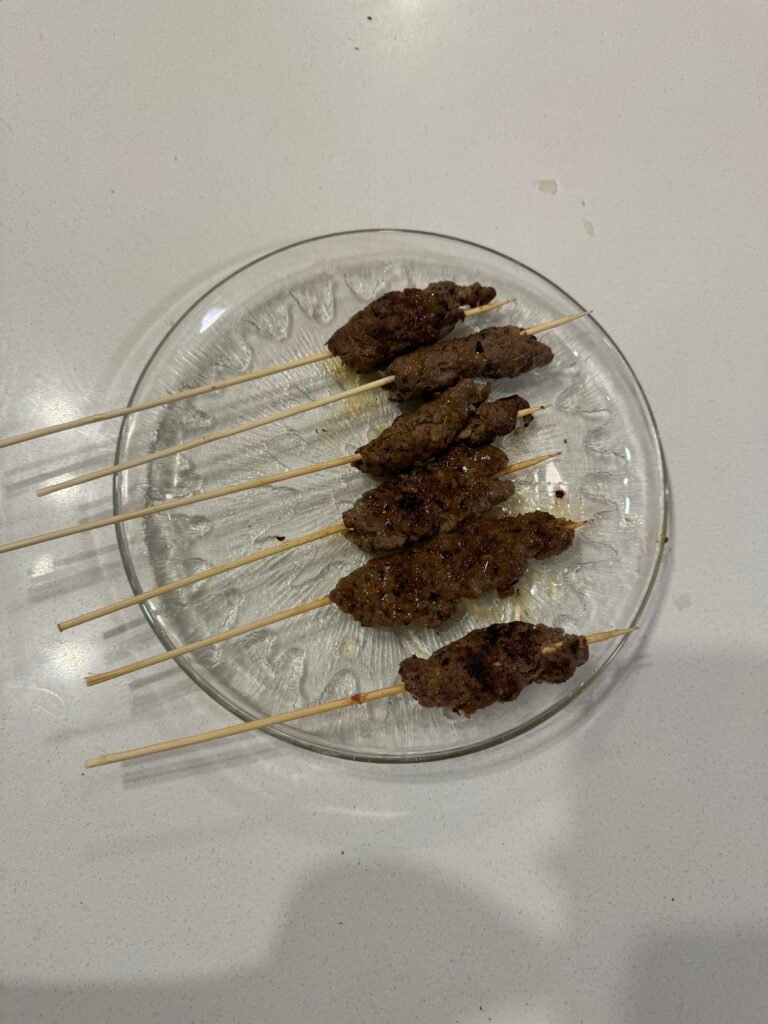
Kefta is the undisputed king of the Moroccan grill. Minced beef — lamb in some regions — kneaded by hand with finely chopped onion, flat-leaf parsley, fresh coriander, cumin, sweet paprika, a little ginger, and a pinch of chili. The mixing is the whole craft: worked long enough, the meat turns smooth and sticky so it clings to the skewer instead of crumbling over the coals.
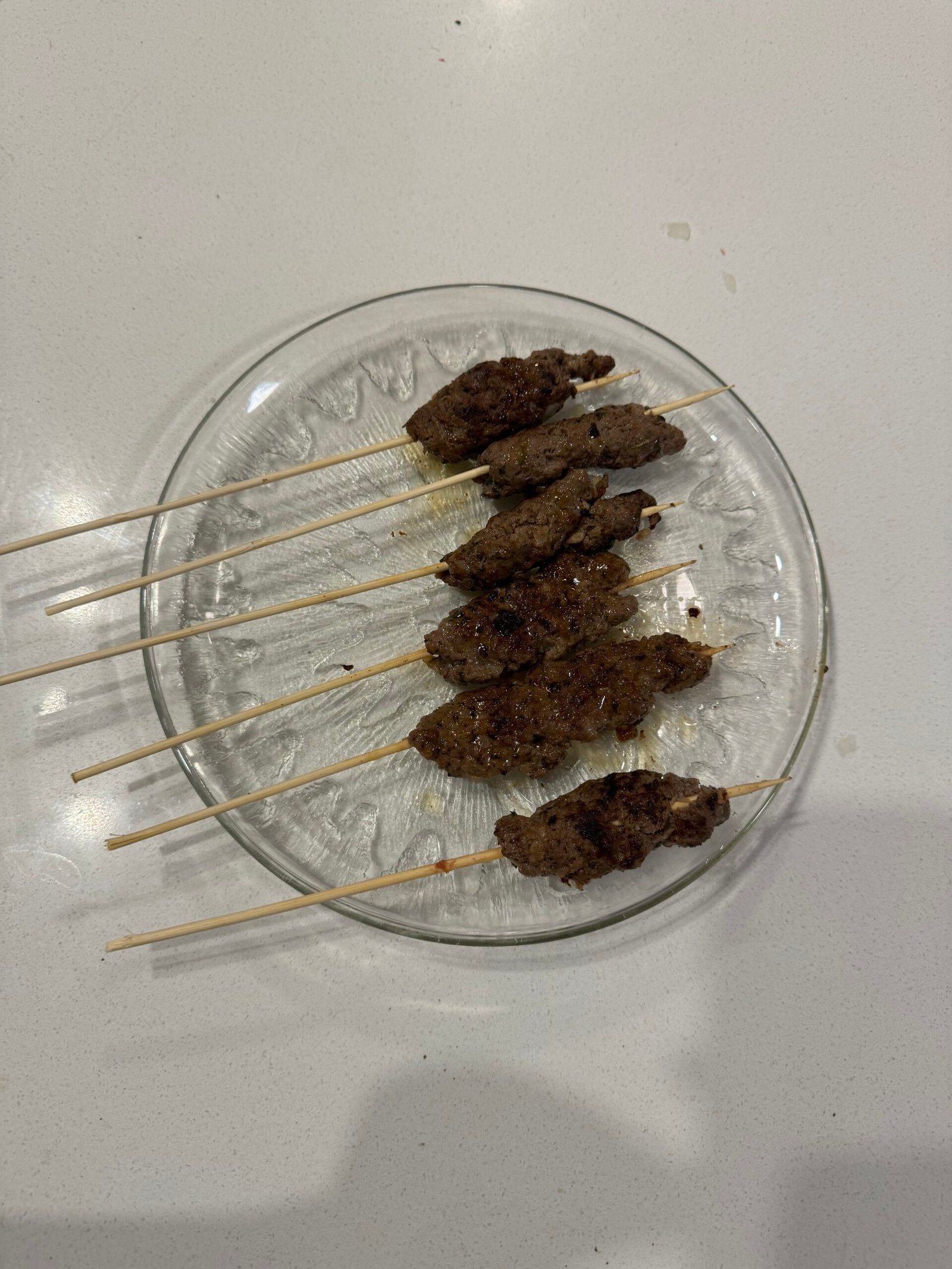
The vendor shapes the mixture into fat cylinders around flat metal skewers — flat, so the meat cannot spin when turned — and lays them over the hottest part of the grill. Two or three minutes a side until the outside is deeply browned. Kefta arrives on a plate or straight onto khobz with grilled onion and tomato, plus the two little dishes that matter most: ground cumin mixed with salt. At sit-down grill spots it often comes with French fries.
📸 A good kefta close-up — the skewers still on the grill, smoke rising — would work well here.
Chicken and lamb brochettes
Where kefta is ground, brochettes are cubed: chunks of chicken — thigh meat at the good stalls, because it stays moist — or lamb, threaded onto skewers with the occasional piece of fat tucked between the cubes. That fat is not decoration; as it renders, it bastes the meat from the inside, which is why lamb brochettes from a street grill taste richer than anything that comes out of an oven.
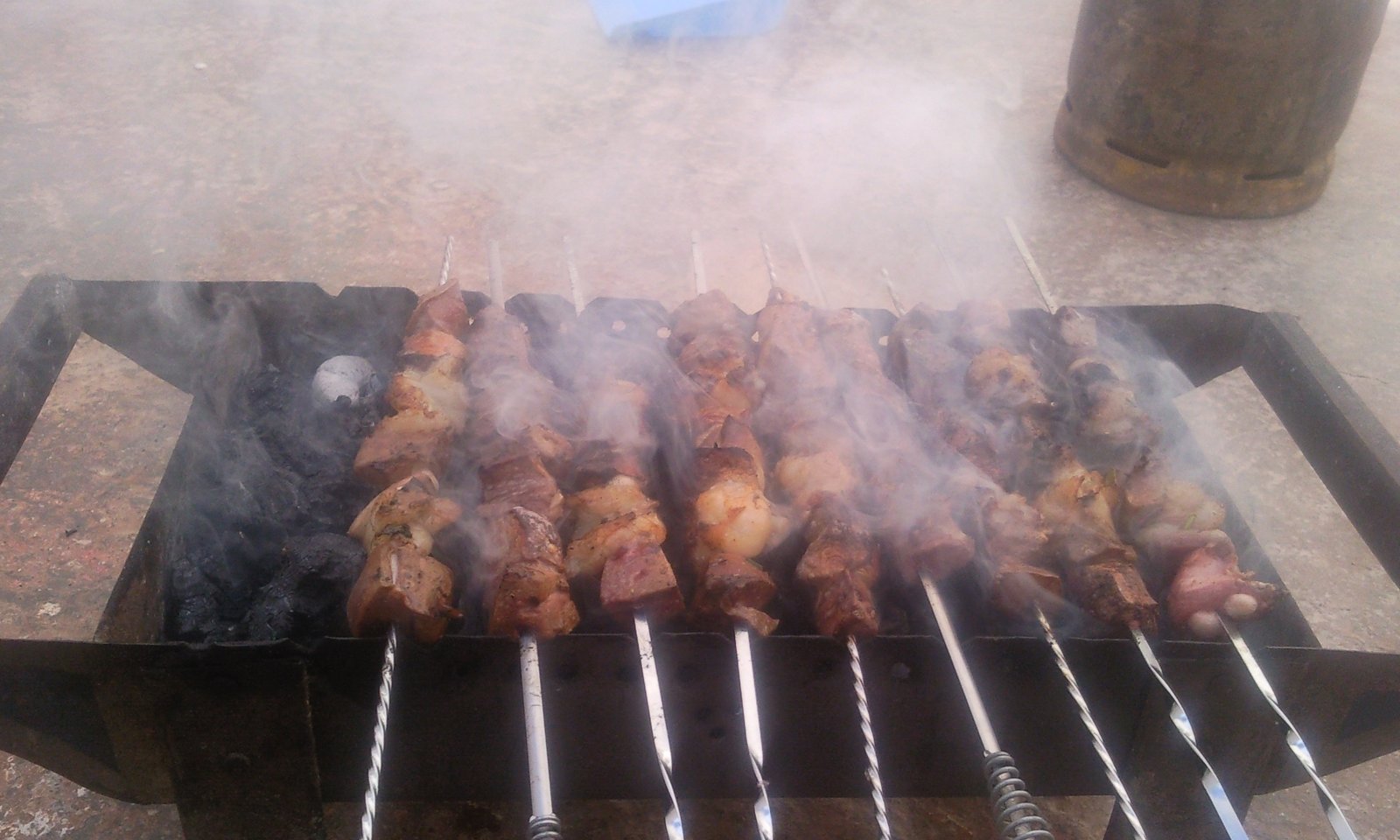
Chicken brochettes are the gentlest entry point on the grill and usually the cheapest order on the board: simple seasoning — salt, pepper, cumin — with the charcoal doing the rest. Lamb brochettes are firmer and more intensely flavored, cut small so they cook through fast. Both are eaten the same way: pinched off the skewer with bread, dipped in the cumin-salt, gone in four bites.
Liver, kidneys and boulfaf
The grill has a wilder side, and regulars love it. Brochettes de foie — liver skewers — are cubes of liver grilled fast and hot so they stay tender inside, with a crisp, almost caramelized edge. They are richer and more mineral than any other skewer on the grill, and the cumin-salt dip was practically invented for them.
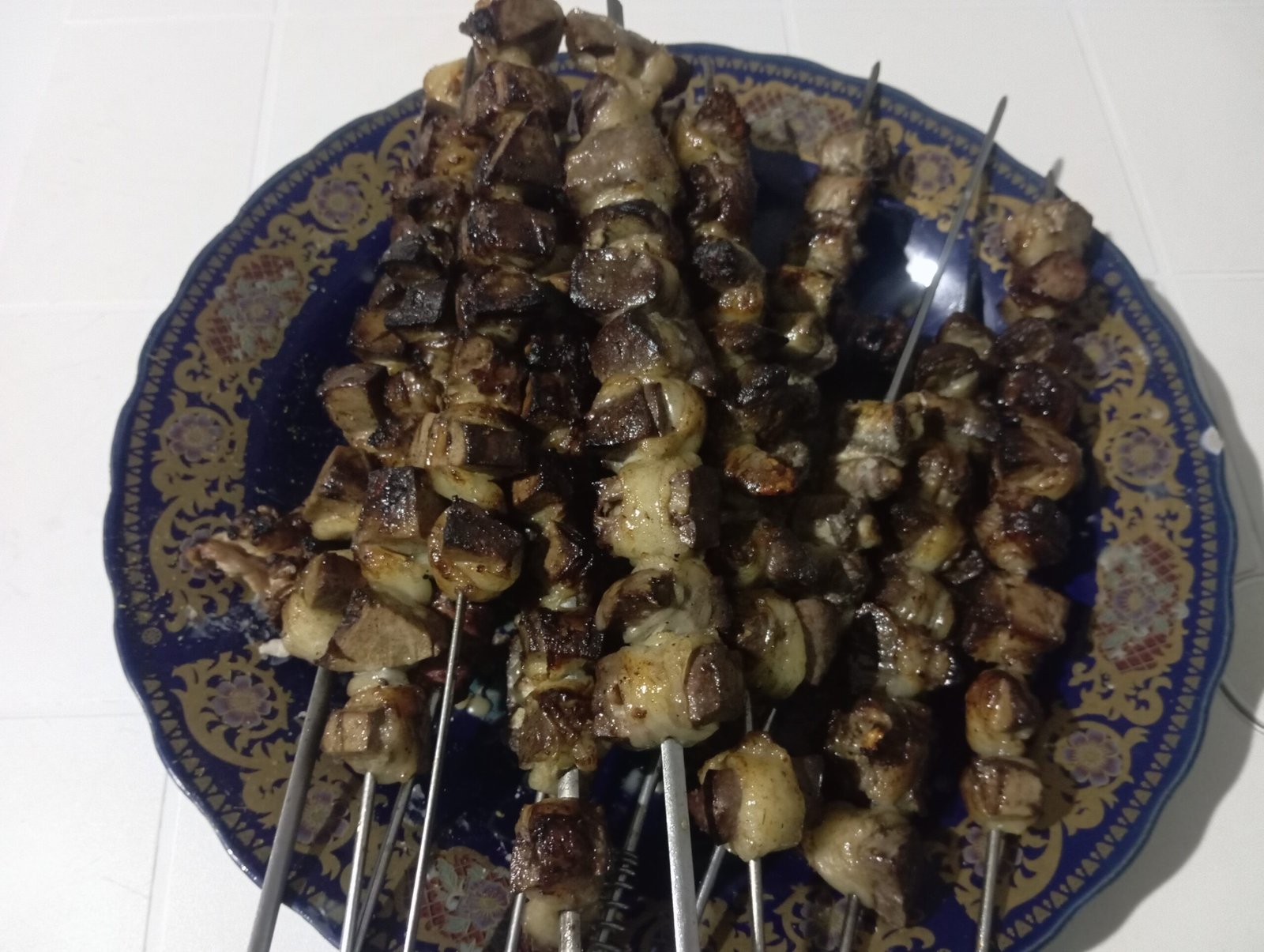
Then there is boulfaf, the connoisseur’s order: pieces of liver wrapped in caul fat — the lacy membrane of fat from around the animal’s organs — and grilled until the wrapping turns golden and crackling. Boulfaf is best known as an Eid al-Adha specialty, when families grill it at home after the sacrifice, but grill stalls in working-class neighborhoods sell it year-round. If you see skewers that look like they are wearing a net of crisped fat, that is boulfaf, and you should order it before the tray empties.
The mixte: one plate, the whole grill
Cannot decide? Order mixte — also called panaché — and the decision is made for you. A mixte platter puts one of each on a single plate: a kefta skewer, a chicken brochette, a lamb brochette, sometimes a liver skewer, arranged over bread with grilled tomato, onion, and peppers. A merguez sausage occasionally joins the lineup at stalls that keep one on the grill.
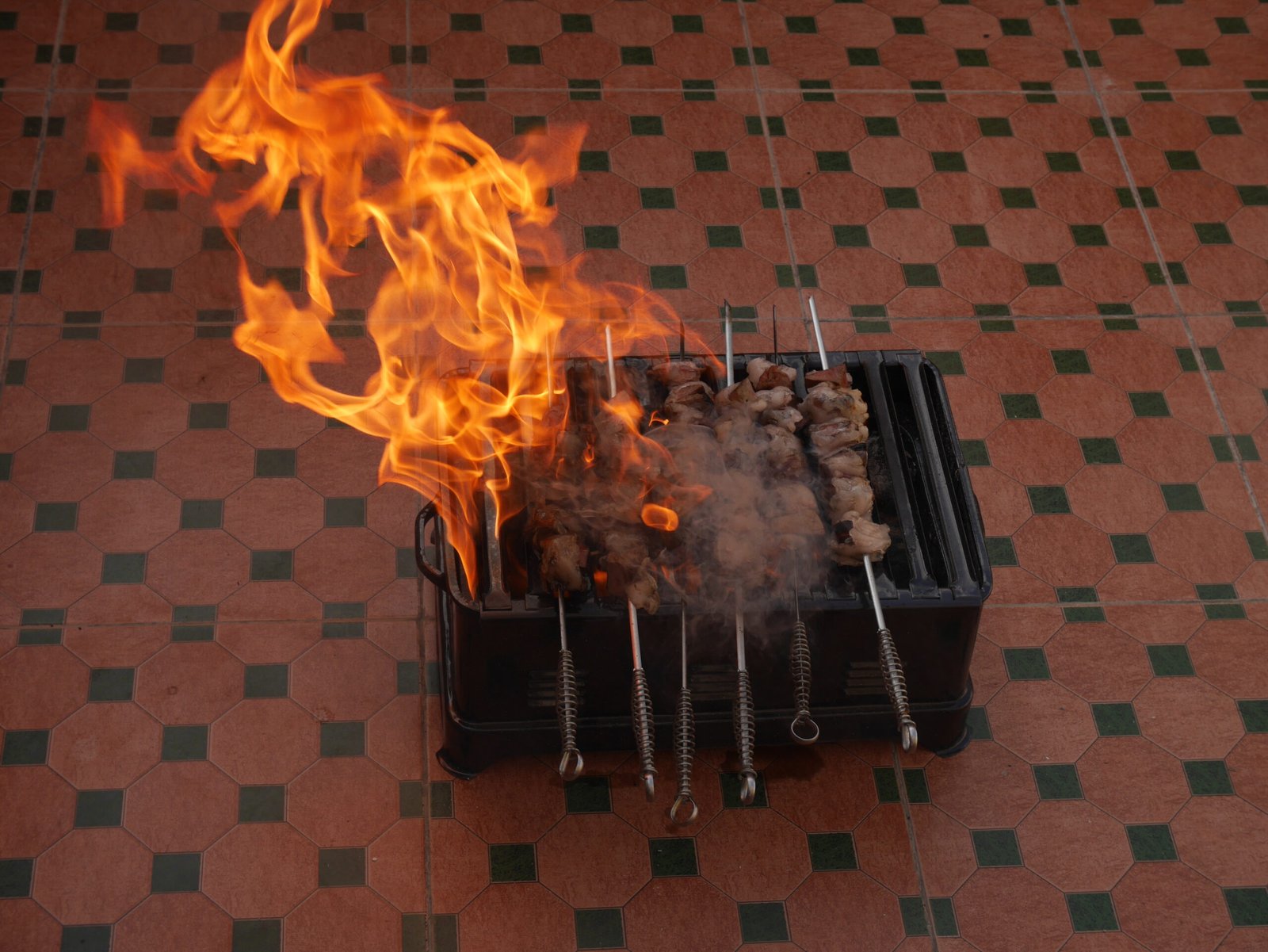
The mixte is the smartest first order for a newcomer. Five different meats on one plate means five chances to judge the seasoning, the charcoal, and the cook’s timing. If the kefta is juicy and the liver is not overcooked, you have found your grill for the trip.
How a Moroccan street grill actually works
The equipment is beautifully simple: a long, narrow metal trough filled with charcoal, skewers laid across the top a hand’s width above the coals. The vendor fans the fire with a hand fan or scrap of cardboard to keep the heat fierce and even, turning each skewer every minute or two. Fat drips, flames lick up, the vendor shifts the skewers aside for three seconds and carries on.
At the busiest stalls the prep never stops. Meat is minced or cubed through the evening, skewers are shaped to order, and a full grill empties and refills in waves. That turnover is your quality guarantee: high heat plus constant demand means nothing sits around. A tray of pre-cooked skewers resting under a heat lamp is the opposite signal — keep walking.
📸 A shot of a grill vendor fanning the coals at dusk would capture this section perfectly.
How to order and eat it like you mean it
Ordering is gloriously low-tech. Point at the grill and say what you want: une brochette kefta, deux poulet, une mixte. Numbers and gestures carry the whole transaction, though a s’il vous plaît and a shukran (thank you) will earn you a smile. For more on getting the ritual right, see our guide to ordering like a local in a Moroccan restaurant.
Bread is your utensil. Tear off a piece of khobz, use it to pinch the meat off the skewer — never bite straight off the metal, it is fresh off the coals — and dip each bite into the cumin-salt. Harissa, the fiery red chili paste, is often available if you ask; a thin smear inside the bread before the meat goes in is how the regulars do it. Grilled onion and tomato halves usually come with the plate at sit-down spots; eat them, they are not garnish.
Cutlery is optional everywhere. Street stalls assume fingers and bread; sit-down grill restaurants will bring a fork if you ask. Grab napkins early — kefta is gloriously juicy, and your hands will prove it.
Where to find the best grill streets
Every medina has its grill quarter, usually along the busy streets at the medina’s edge or in working-class neighborhoods where the dinner crowd is local. The grills fire up around six in the evening, the smoke starts drifting by seven, and by eight the busiest vendors have a queue. Follow the locals, not the touts — a stall with Moroccan families waiting is worth more than any recommendation.
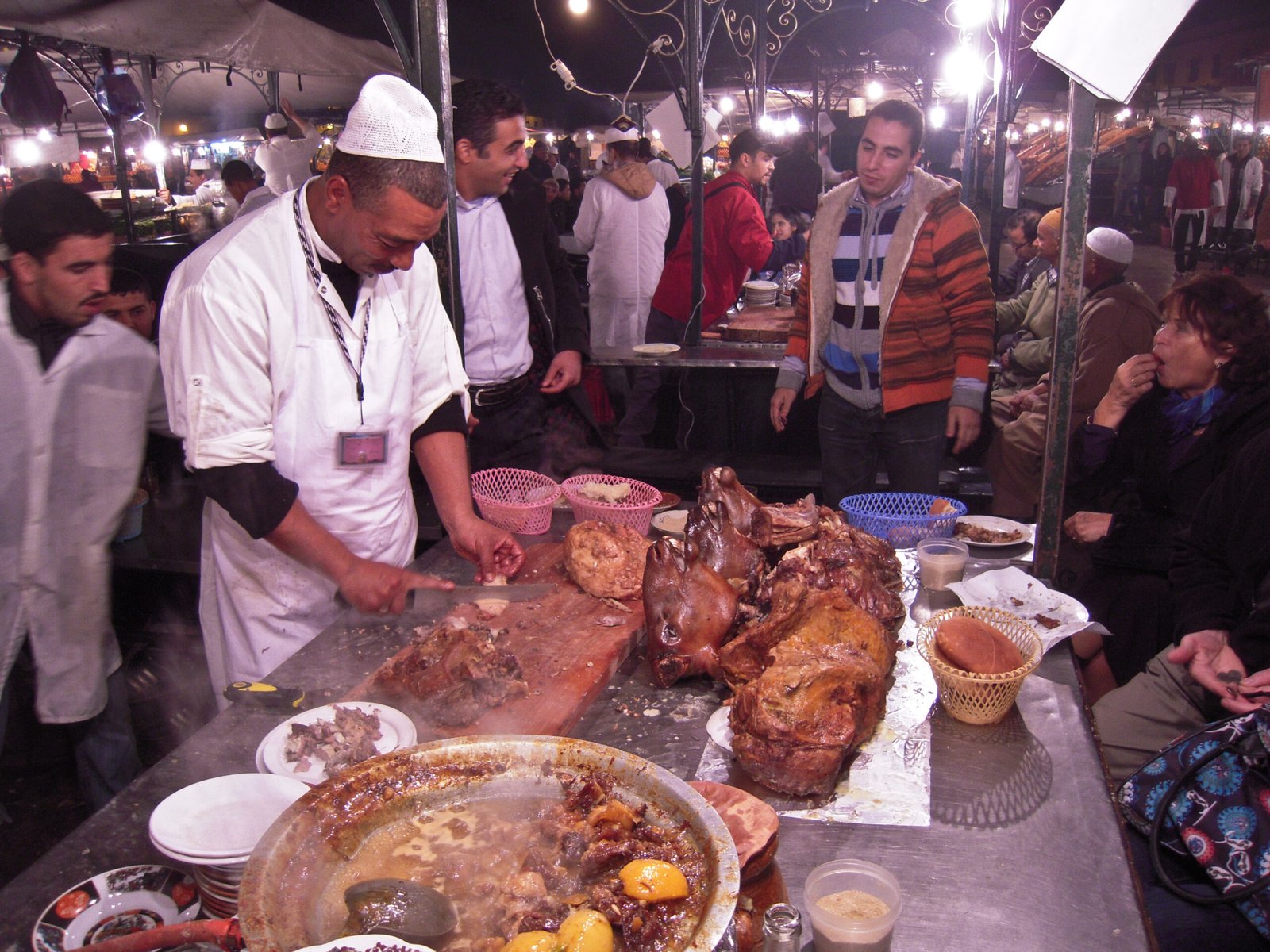
The most famous grill rows in the country are the numbered stalls of Jemaa el-Fna in Marrakech, where a hundred-odd food stalls rise every evening in the square. Stall-hawkers will compete loudly for your attention — that is theater, not information. The practical rules: check the menu board and confirm prices before you sit down, order less than you think you want (a single brochette order often means several skewers, and bread, olives, and salads keep arriving), and pick a stall where the grill is visibly working hard. Read our full Moroccan street food guide before your first night in the square.
Freshness cues travel well to any city. Look for coals that glow rather than smolder, skewers shaped or threaded within sight, a vendor who never stops turning, and a steady turnover of customers. For a deeper look at what to watch for, our guide on street food safety in Morocco covers the practical checks that matter.
Three mistakes travelers make
Expecting rare or medium-rare. Moroccan grills cook meat through — fully, every time. A pink center does not happen on a street grill, and asking for saignant will earn you a puzzled look. The fierce charcoal heat sears the outside fast, so even fully cooked meat stays juicy.
Over-ordering at the big squares. At Jemaa el-Fna and similar night markets, one line on the menu can mean a whole spread: a “chicken brochette” order often arrives as half a dozen skewers, and bread, olives, harira, and salads appear as a matter of course. Order one round, see what lands, then order more.
Skipping the cumin. The little dish of ground cumin mixed with salt looks like an afterthought. It is not — the grill master seasons lightly precisely because he expects you to finish the job at the table. Dip every bite. Then dip it again.
Frequently asked questions
What is kefta made of?
Minced beef — sometimes lamb, depending on the region and the stall — kneaded with finely chopped onion, flat-leaf parsley, fresh coriander, ground cumin, sweet paprika, ginger, and a pinch of chili, then shaped around flat metal skewers and grilled over charcoal.
Is the meat cooked through?
Yes. Moroccan street grills cook everything well done; rare or medium-rare is not part of the tradition. The intense charcoal heat keeps the meat juicy despite the full cooking.
What does “mixte” mean on a grill menu?
A mixed grill platter: typically one kefta skewer, one chicken brochette, and one lamb brochette on a single plate, sometimes with a liver skewer or merguez added, served over bread with grilled vegetables.
Do I need to speak French or Arabic to order?
No. Pointing at the grill and holding up fingers works everywhere. That said, learning une brochette kefta, s’il vous plaît takes ten seconds and visibly improves the vendor’s mood.
Can I pay by card at a street grill?
Assume cash. Most street stalls and small grill restaurants take cash only, so carry small dirham notes and coins — breaking a large bill at a busy stall slows everyone down, including you.
Photos: Grilled kefta skewers by Strawberrypotato (CC BY 4.0); meat brochettes over charcoal by Ahchmi77 (CC BY-SA 4.0); boulfaf liver skewers by مصطفى ملو (CC BY-SA 4.0); brochettes over open flames by Azizfadil (CC BY-SA 4.0); Jemaa el-Fna night grill stall by Michal Osmenda (CC BY-SA 2.0) — all via Wikimedia Commons.