The Honest Answer: Yes — With a Little Common Sense
Here is the answer most travelers actually want: yes, street food in Morocco is generally safe to eat, and skipping it would mean missing one of the best parts of the trip. The sizzling brochettes on Jemaa el-Fna square, the harira ladled from a bubbling pot in the Fes medina, the msemen folded hot off the griddle at breakfast — this is the food Moroccans eat every single day, by the millions.
That said, no food environment on earth is risk-free. What keeps most visitors perfectly fine is not luck but a handful of simple, practical rules. Learn them once, and you can eat your way across the country with confidence.
Moroccan street food has a built-in safety advantage: most of it is cooked fresh, to order, in front of you, at stalls with ferocious customer turnover. A grill cook in a busy medina alley might serve two hundred skewers between noon and two — food that moves that fast never has time to go bad.
How Moroccan Street Food Actually Works
The first thing to understand is that Moroccan street vendors specialize. One stall does brochettes and nothing else. The next does harira and chebakia. A narrow menu is a good sign: the cook has made the same dishes thousands of times, ingredients are bought fresh each morning, and nothing sits around waiting for an order.
This is why the golden rule of Moroccan street food is so simple: eat what the stall is famous for. If everyone around you is eating the same skewers, order the skewers. Pointing at what your neighbors are eating is not rude here — it is the most reliable ordering strategy in the country.
The Seven Rules That Keep You Safe
1. Follow the crowd
Choose busy stalls with fast turnover. A stall surrounded by locals at lunchtime is the strongest safety signal there is — if the food were bad, the regulars would know first. Be cautious of an empty stall at peak hours; there is usually a reason it is empty.
2. Eat it hot — straight off the fire
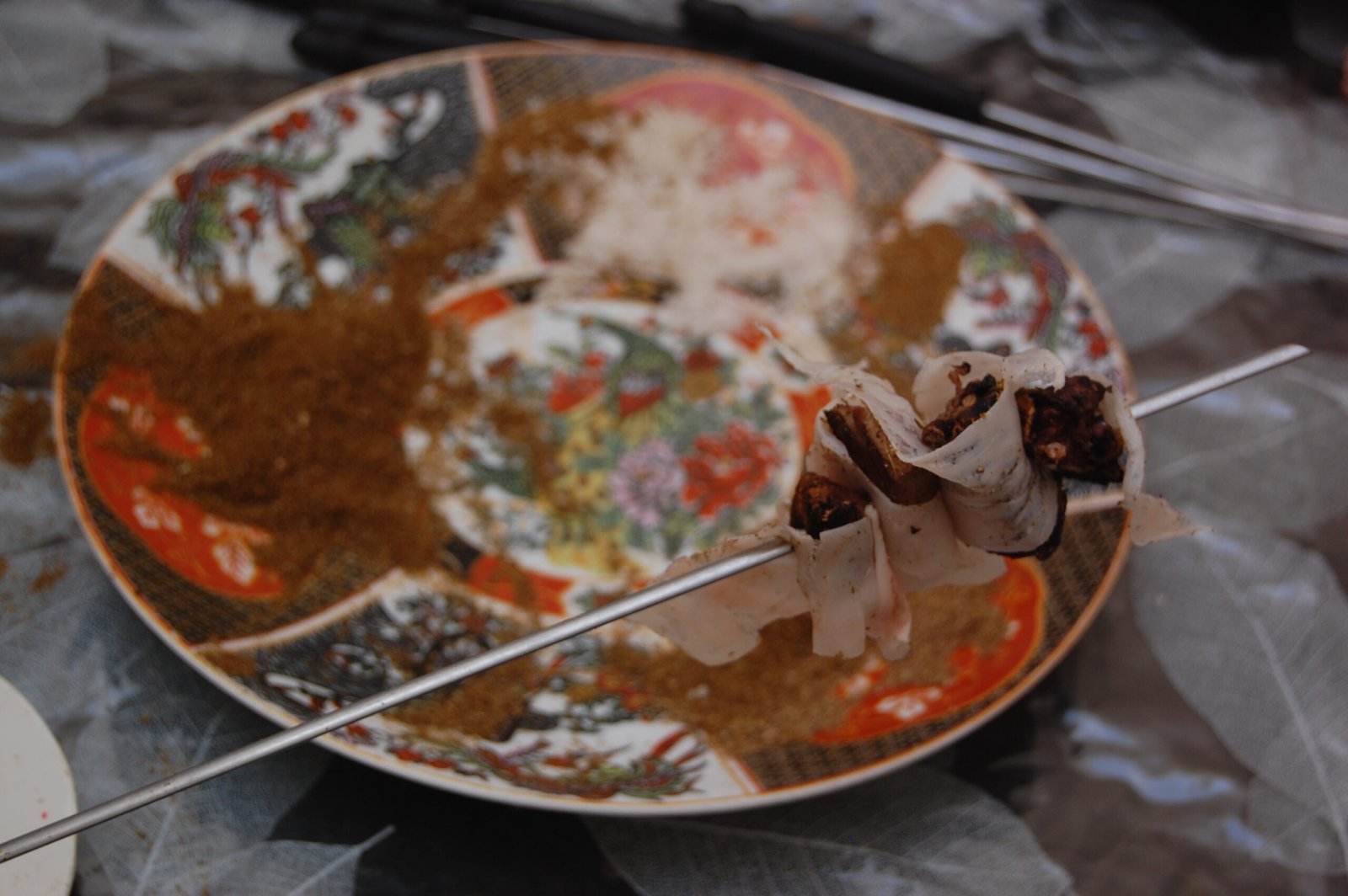
Heat is the great equalizer. Food that goes from grill, fryer, griddle, or bubbling pot directly to your plate is the safest you will find in Morocco. Brochettes hissing over charcoal, harira steaming from the cauldron: cooked at temperatures that leave bacteria no chance.
The thing to skip is lukewarm food that has been sitting out. A tray of cooked meat resting at room temperature for hours at a quiet stall is a far bigger risk than a blazing grill at a busy one. When in doubt, ask for it fresh — most vendors will happily throw your skewers back on the coals.
3. Know the risk ladder
Not all street food carries the same risk. Think of it as a ladder, from safest to most cautious:
- Grillades and fritures (safest): brochettes, kefta, merguez, grilled chicken, maakouda (potato fritters), fried fish in coastal cities. Cooked at extreme heat, served immediately. This is your comfort zone.
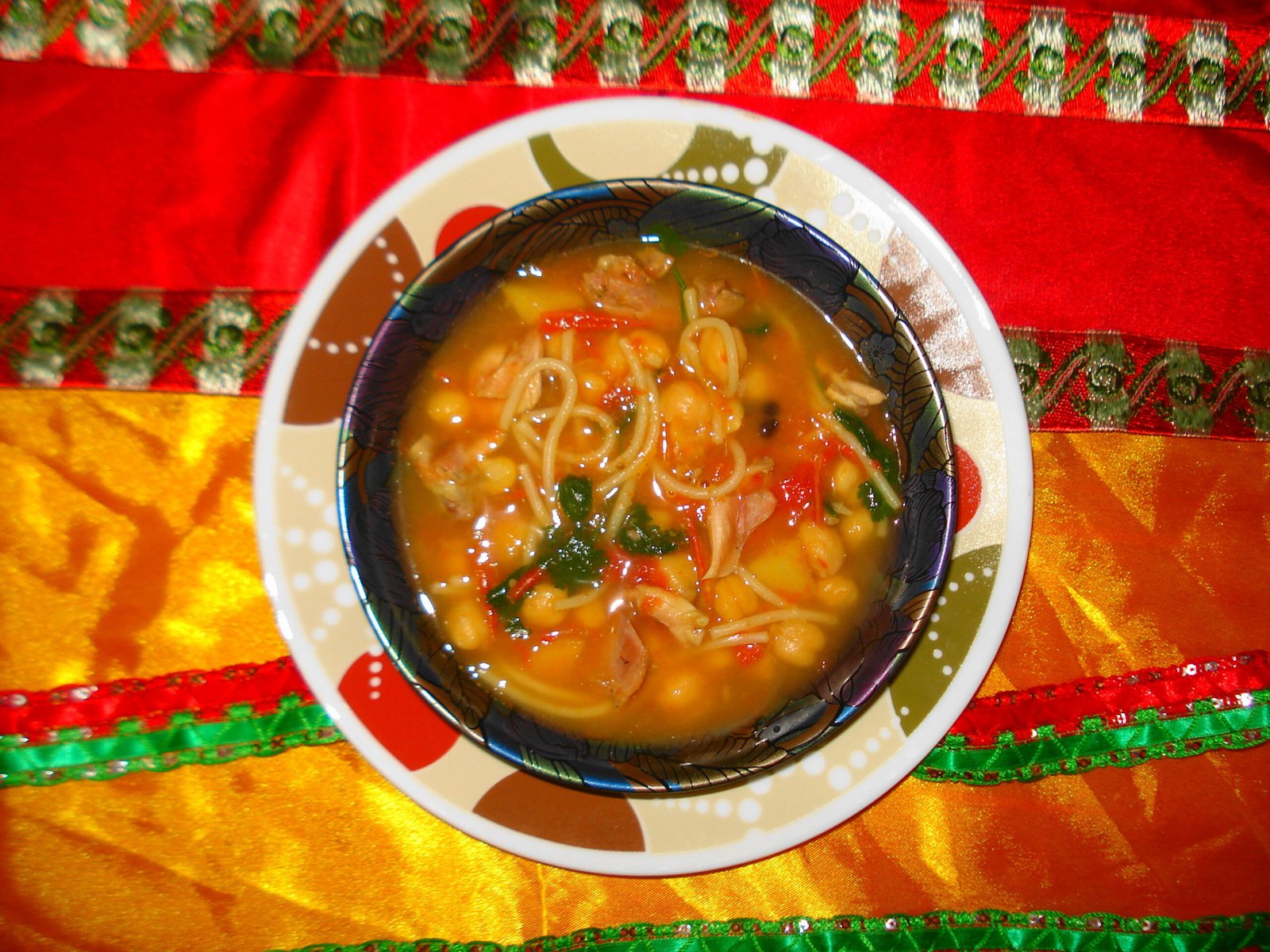
- Slow-cooked dishes (very safe): harira soup, tagines, tanjia, babbouche (snail soup) — simmered for hours at busy soup stalls. Long cooking plus high turnover is an excellent combination.
- Breads and griddle cakes (very safe): msemen, baghrir, harsha, fresh khobz. Cooked on a screaming-hot griddle or in a wood oven, usually minutes before you eat them.
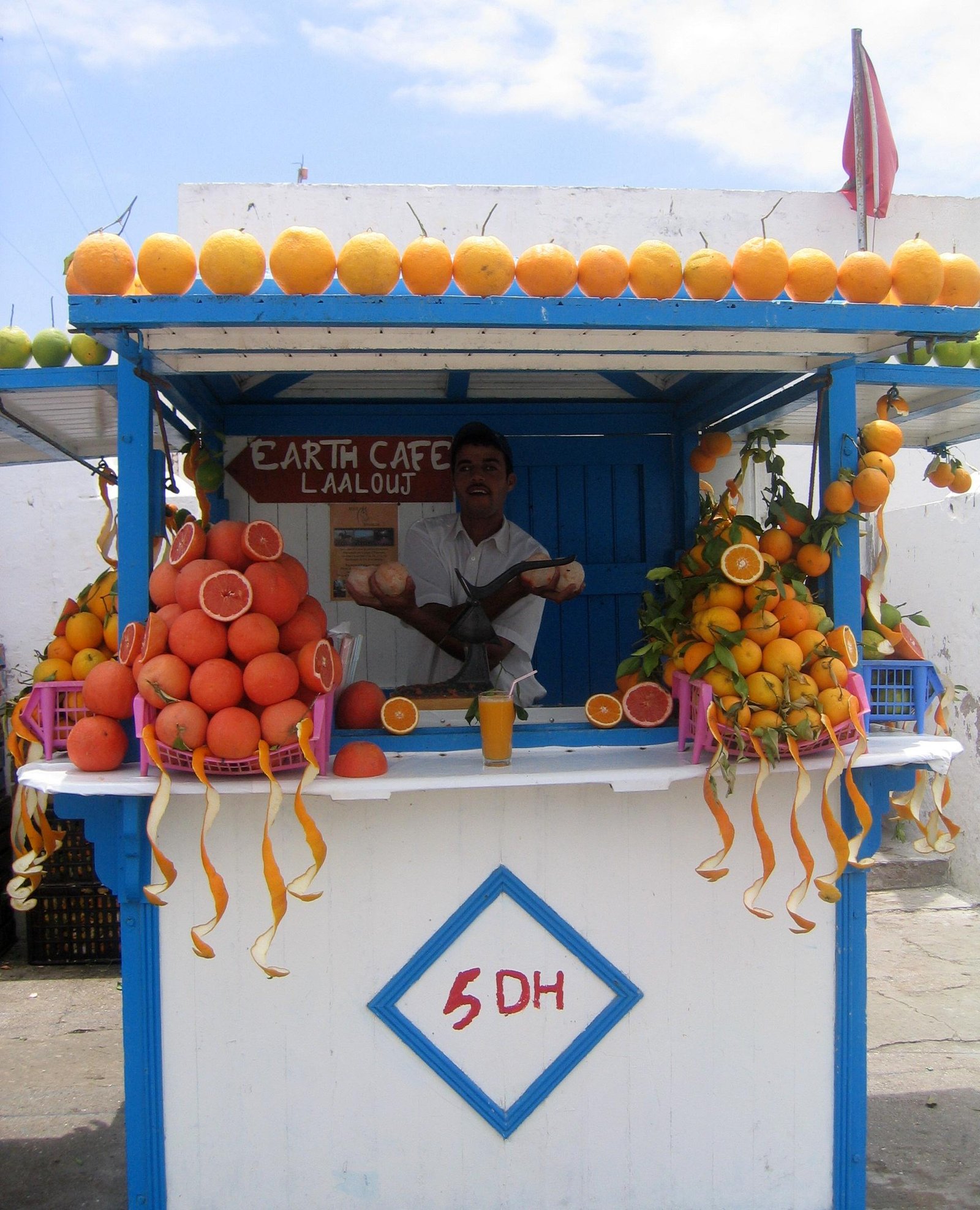
- Fresh juices (usually fine, check the stand): orange juice squeezed in front of you at a busy cart is one of Morocco’s great pleasures. The rule: the fruit should be juiced to order, the press should look clean, and the juice should not be sitting pre-poured in the sun.
- Raw salads and unpeeled fruit (use judgment): this is the one category where a sensitive stomach should pause. Cooked vegetable salads and fruits you peel yourself — oranges, bananas, avocados — are the safest picks. Raw mixed salads at a clean, busy sit-down stall are generally fine, but if your digestion is delicate, save the raw salads for established restaurants.
For a full tour of what to order at each level, see our Moroccan street food guide.
4. Drink bottled water — always
Tap water in Moroccan cities is treated, but it is not recommended for tourists. Sealed bottled water is sold everywhere — corner shops, stalls, cafés — for a few dirhams. Check that the seal is intact when you buy it.
Skip ice cubes from unknown sources. In established cafés the ice is generally fine, but at a street stall, when in doubt, order your drink without ice. This single habit prevents more stomach trouble than any other.
5. Wash your hands — street food is finger food
This one matters more than people think. You will eat brochettes with your fingers and tear khobz with your hands. Before any of that, wash your hands with soap or use hand sanitizer — carry a small bottle in your daypack, you will use it ten times a day.
6. Mind the timing
Eat at rush hours, when turnover is at its peak: lunch between noon and 2 p.m., and the evening from around 7 p.m. This is when food is freshest and grills are hottest. Be more cautious with food sitting out at quiet stalls in the mid-afternoon lull.
Ramadan evenings are a special case: the hour after sunset brings the most spectacular street food scene of the year, with entire streets given over to harira, chebakia, and grills — everything cooked fresh for the fast-breaking crowd.
7. Read the stall
Your eyes are a good inspector. Look for a clean preparation surface, fresh-looking ingredients, and frying oil that is clear rather than black and ancient. Notice whether the vendor handles money and food with separate hands. Good street cooks take visible pride in their workspace; it shows.
What the Locals Actually Do
Here is the perspective that should reassure you most: Moroccans eat street food constantly — office workers grabbing brochettes at lunch, families buying msemen for breakfast. They apply the same rules instinctively: the busy place, the hot plate, the stall their cousin recommended.
Do what they do. Ask your riad host where they eat lunch — not where tourists eat, where they eat. You will usually get a name and an alley. Some of the best meals of your trip will cost less than a coffee back home; our Morocco food prices guide gives you the real numbers so you know what to expect.
Myths vs. Reality
Myth: \”Street food will destroy your stomach.\”
Reality: most travelers who get an upset stomach trace it to tap water, ice from a dubious source, or a tired hotel buffet — not to a busy grill. A blazing-hot skewer eaten at a packed stall is statistically one of the safer meals you can have.
Myth: \”The spices kill the bacteria.\”
Reality: cumin and paprika are delicious, but they are not disinfectants. What kills bacteria is heat — the grill, the fryer, the long simmer. Order food that is thoroughly cooked and served hot.
Myth: \”Only eat in restaurants to be safe.\”
Reality: you would miss the best food in the country. At a street stall, you watch your food being cooked; in many restaurant kitchens, you see nothing at all. Transparency is a safety feature.
Myth: \”Avoid anything raw, always.\”
Reality: more nuanced. Peeled fruit, cooked salads, and olives from the market barrels are everyday foods for millions of Moroccans. The cautious move is not to avoid all raw food forever — it is to start with cooked food and juices for the first day or two, then expand as your stomach settles in.
If Something Goes Wrong
Even careful travelers occasionally get an upset stomach — new cuisines, new water, new routines. This is not medical advice, just common sense: rest, drink plenty of bottled water, and give your stomach a break with simple, plain food like khobz bread or harira for a day.
Moroccan pharmacies are everywhere and pharmacists deal with travelers’ stomach issues daily — they can point you to the right over-the-counter remedy. If you feel seriously unwell, see a doctor; private clinics in the major cities offer good care.
Where to Start If You’re Nervous
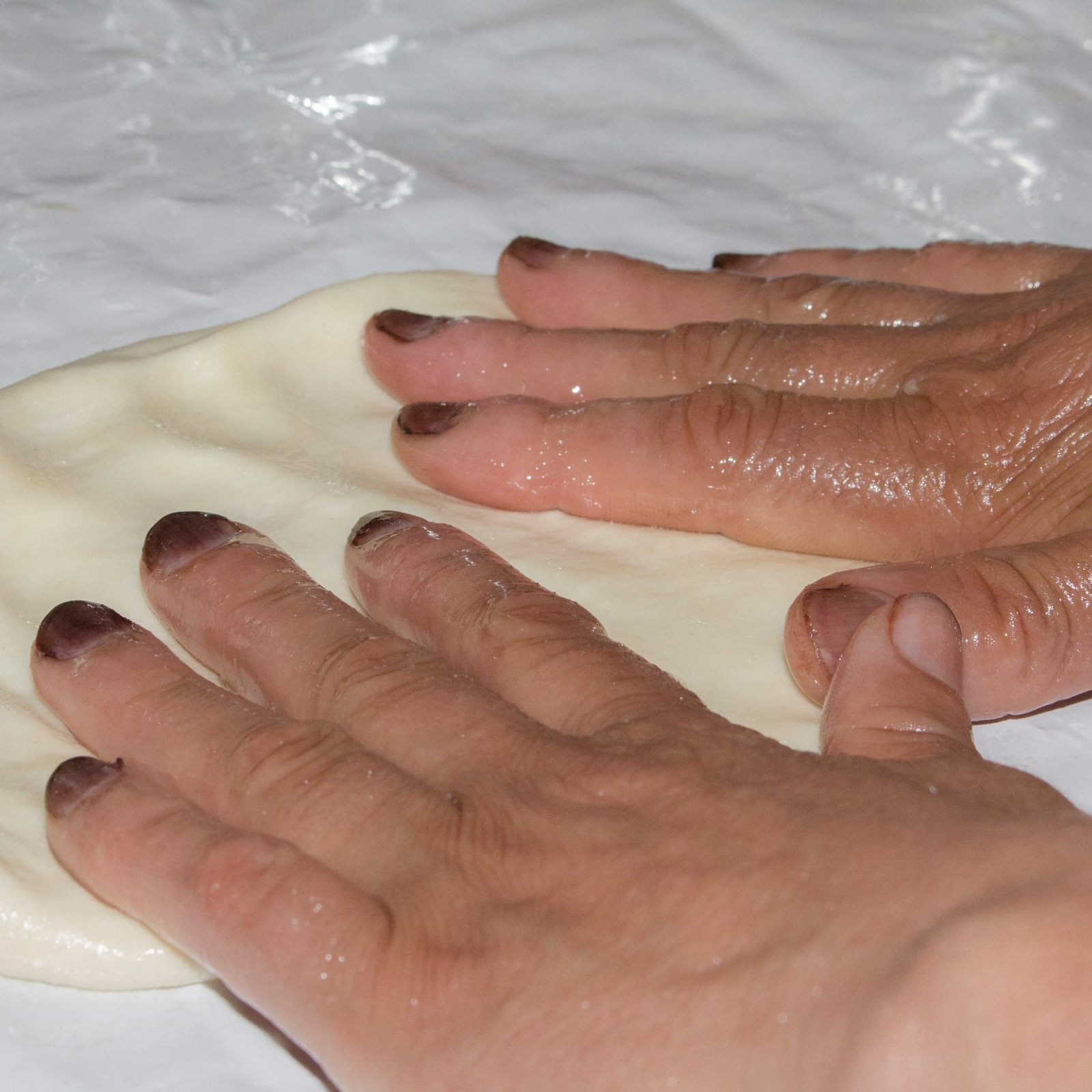
If this is your first day and you want training wheels, here is a gentle progression: breakfast of msemen with honey and mint tea, lunch of harira with dates and chebakia, and dinner of brochettes at a packed grill stall. By day three, you will be ordering like a local.
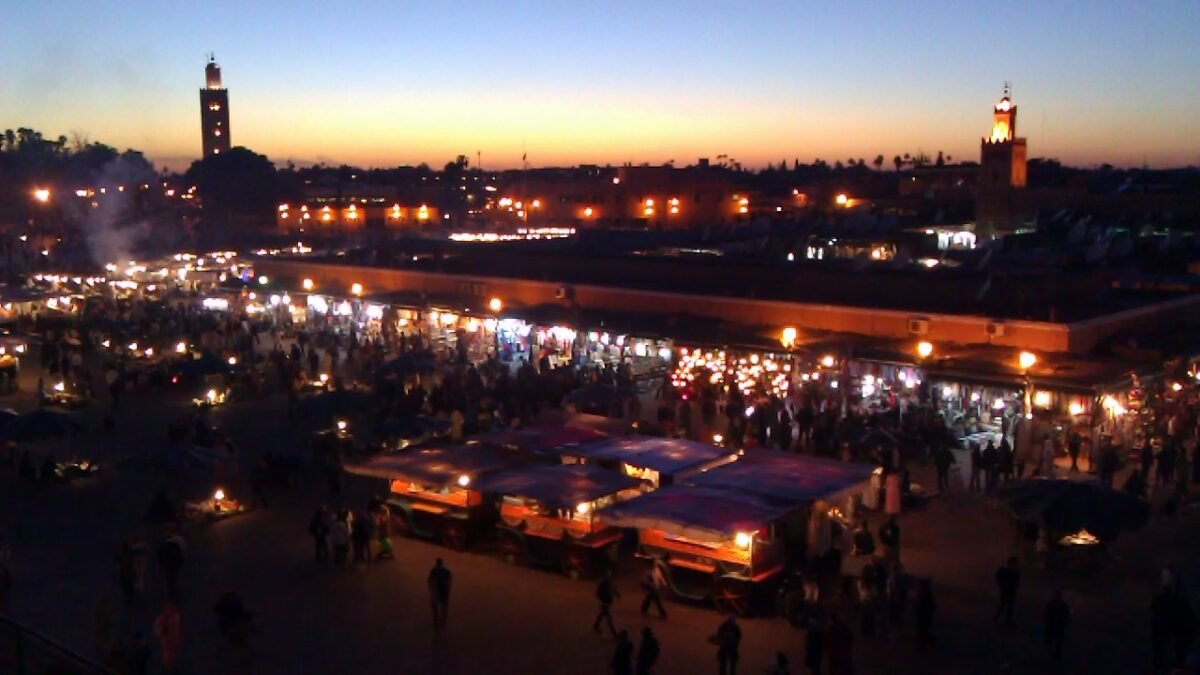
The single best classroom is Jemaa el-Fna at night: dozens of grill stalls, hundreds of diners, smoke in the air, and prices agreed before you sit down. Go hungry, follow the crowd, eat it hot.
📸 End with your own photo here: your table at a night-market grill stall, plates of brochettes and bread — the memory shot every reader wants to have.
Frequently Asked Questions
Can I drink the tap water in Morocco?
Tap water is treated in the cities, but tourists are advised to stick to sealed bottled water, which is cheap and sold everywhere.
Are the food stalls at Jemaa el-Fna safe?
The famous grill stalls on the square cook over open flames for hundreds of customers every night — high heat plus extreme turnover. Pick a stall that is full, agree on prices before sitting down, and eat what comes straight off the grill. Read our full Jemaa el-Fna night food guide before you go.
Is fresh orange juice from street carts safe?
Generally yes — Morocco’s oranges are superb and the juice is squeezed to order at busy carts. Make sure the fruit is juiced in front of you, the press looks clean, and the juice is not sitting pre-poured in the sun. Skip the cart if it looks neglected.
Should I avoid salads completely?
Not necessarily. Cooked Moroccan salads and fruits you peel yourself are perfectly fine. Raw mixed salads are usually fine at clean, busy places — but if your stomach is sensitive, start with cooked food for the first couple of days.
Photo credits (Wikimedia Commons): Jemaa el-Fna food stalls at night — YoTuT, CC BY 2.0; brochettes on the grill — Lucyin, CC BY-SA 4.0; orange juice cart in Essaouira — Anderson sady, CC BY-SA 3.0; msemen preparation — Mounir Neddi, CC BY-SA 4.0; harira soup — Miansari66, CC0.