The gargote: Morocco’s beloved workers’ canteen
The gargote is the most Moroccan of all restaurant types: a tiny, no-frills canteen feeding workers, taxi drivers and students. Expect plastic tables, a handwritten or memorized menu, and some of the best cooking in the country.
What to expect: a short menu of tagines, tagine varieties, couscous on Fridays, grilled meats, and harira. Everything is cooked in quantity and served fast. Ordering is simple — point at what looks good or ask what’s ready. Prices are the lowest of any sit-down option (see the 2026 price guide).
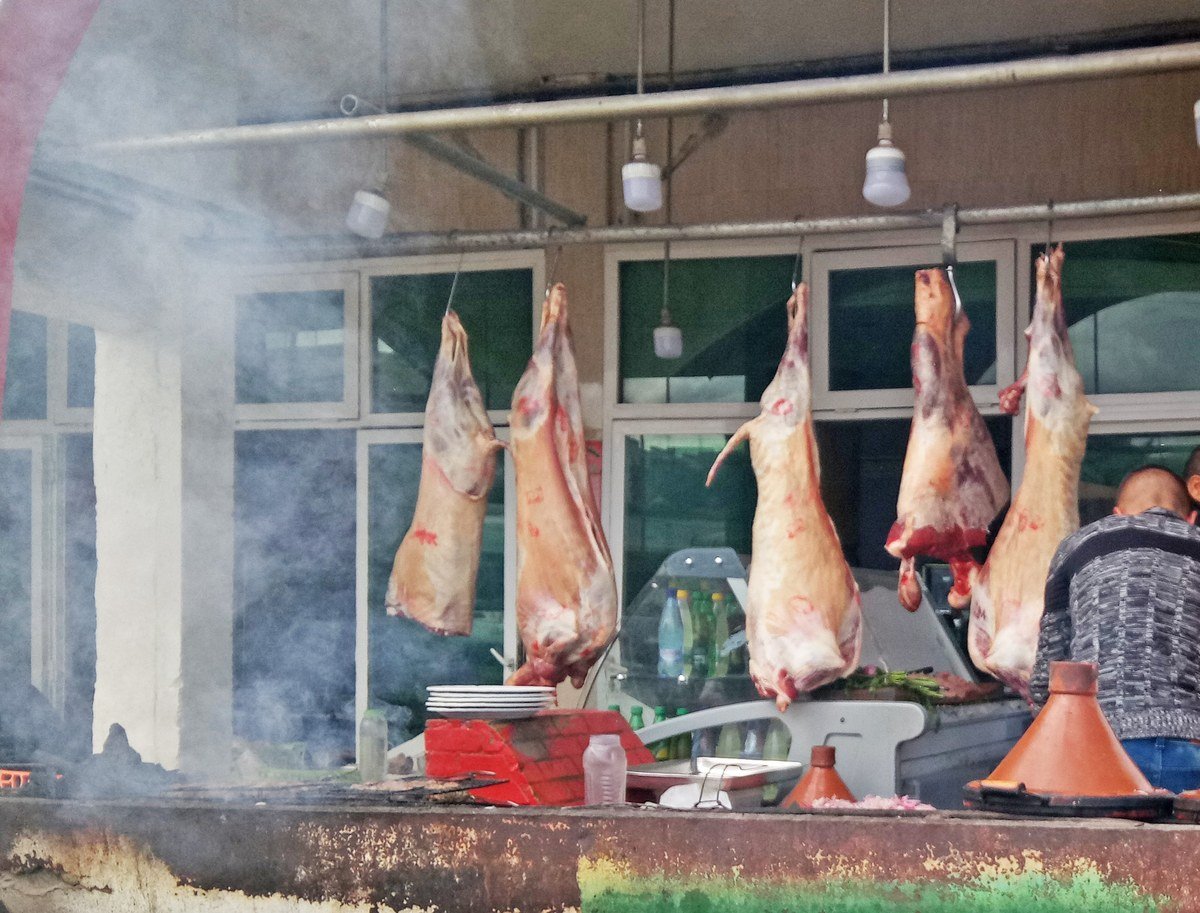
How to spot a good one: full of locals at lunchtime, a visible grill or steaming tagines, and a turnover that keeps everything fresh. If the taxi drivers eat there, you’re in the right place.
The grill restaurant: smoke and skewers
Dedicated grill restaurants sit somewhere between the street stall and the full restaurant. The setup centers on a charcoal grill, and the menu is short: brochettes, kefta, merguez, chicken, and the salads and bread that come with them.
These places shine at night. The formula is the street food grill experience with tables, cutlery and someone bringing you mint tea. Ordering works the same way — point, count on fingers, say yes to harissa if you’re brave.
The classic Moroccan restaurant: tagines and couscous
This is the sit-down restaurant most visitors picture: table service, a printed menu, and the full repertoire — tagines, couscous, pastilla, tanjia, harira to start. Decor ranges from simple tiled rooms to ornate riad courtyards.
What to order: one tagine per person is plenty, or share a couscous on Friday (the traditional day). Starters of Moroccan salads are generous — a couple shared plates is enough for the table. This is the right setting for a long, relaxed dinner.
The rooftop: dinner with a view
Rooftop restaurants are Marrakech’s signature dining experience and increasingly common in Fes and Essaouira too. The food is usually the classic repertoire; the premium is for the terrace, the sunset and the view over the medina.
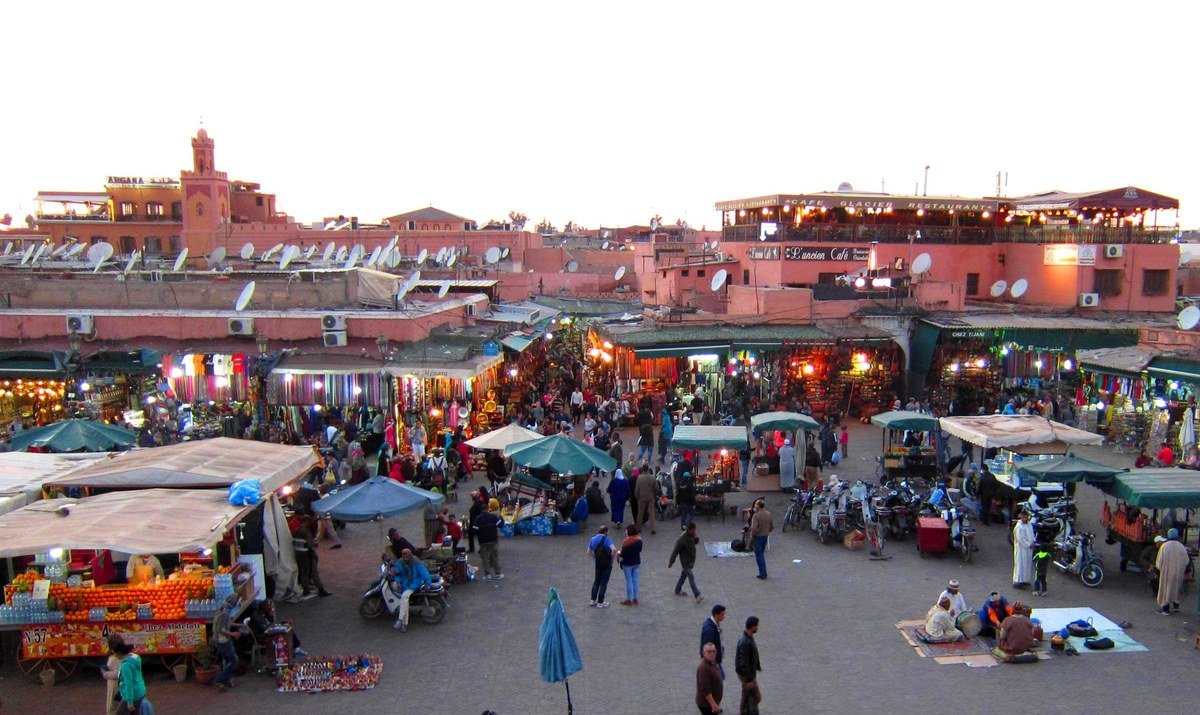
Worth it for: one special evening, sunset timing, and the panorama. Book ahead in high season — the best tables go first. For everyday eating, the gargote downstairs probably cooks better.
The café: coffee, tea, and people-watching
The Moroccan café is a social institution, not just a place for coffee. Men (traditionally) spend hours over a single nouss-nouss; visitors are welcome to do the same. The menu is short: espresso, nouss-nouss, mint tea, fresh juices, and often breakfast msemen.

The café is your daytime base: a place to rest, plan, and watch the street. Nobody will rush you, and the mint tea keeps coming.
The patisserie: Morocco’s sweet tooth
Moroccan patisseries are dazzling — trays of honey-soaked chebakia, almond gazelles, coconut mounds, and French-influenced cakes. Most sell by weight, and a mixed box makes the perfect gift or riad-room snack.
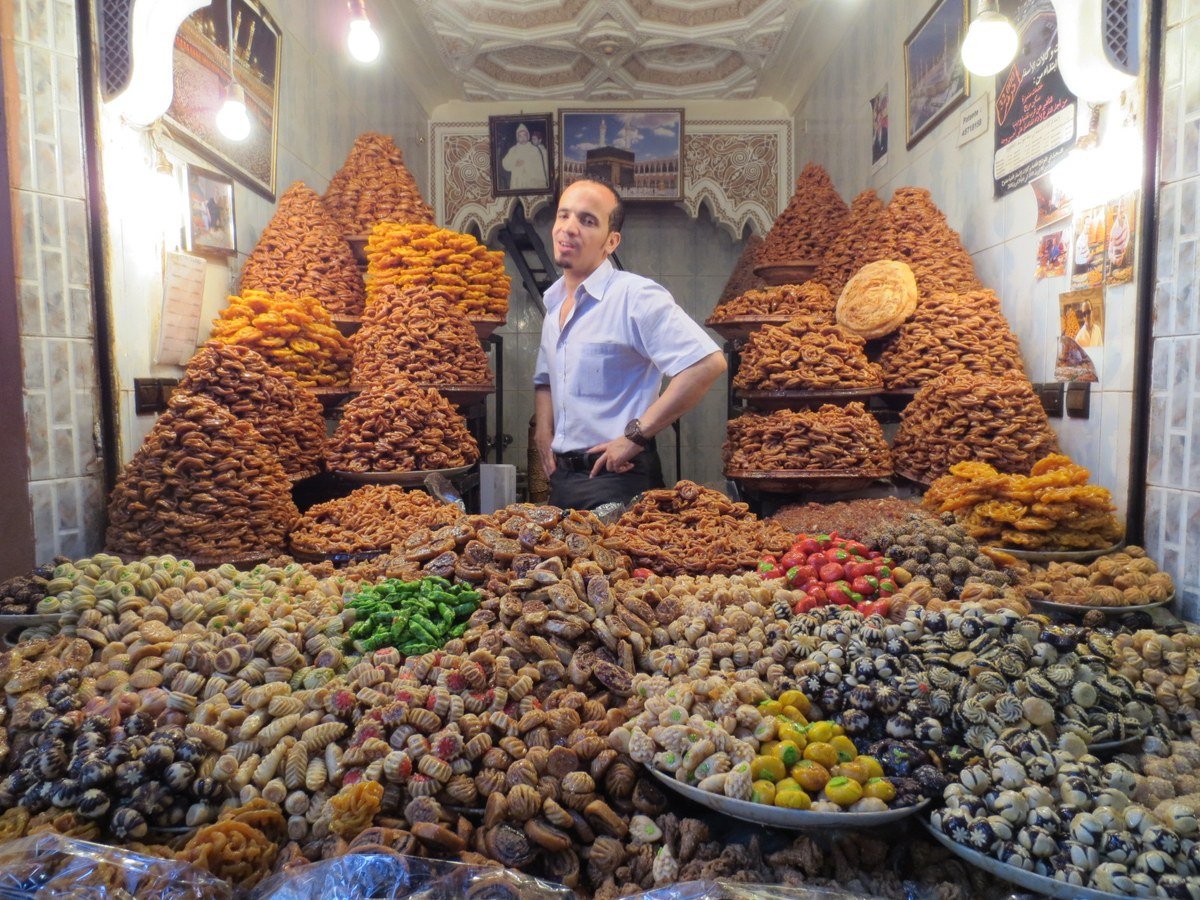
Many patisseries have a small salon de thé attached — order pastries and mint tea and settle in. This is afternoon culture at its best.
The juice stand: fresh-squeezed everything
Morocco’s juice stands deserve their own category. Dedicated stalls press oranges to order; others blend panachés — layered smoothies of avocado, banana, almond and seasonal fruit. They’re everywhere in the medinas and near every market.
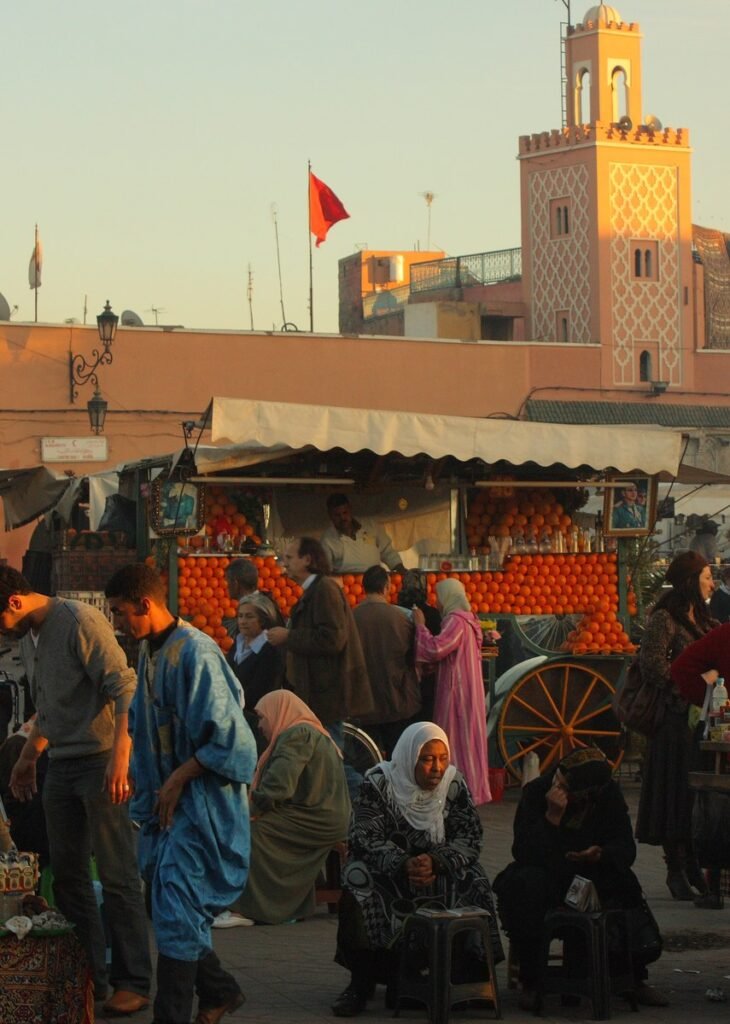
A fresh orange juice costs a few dirhams and cures every ailment the medina inflicts. The panaché is a meal in a glass.
How to choose: a quick decision guide
- Cheapest great meal: gargote.
- Best smoke and skewers with tables: grill restaurant.
- Classic sit-down dinner: Moroccan restaurant.
- One special sunset evening: rooftop.
- Rest, plan, people-watch: café.
- Sweet cravings and gifts: patisserie.
- Thirst: juice stand.
Mix them across your trip and you’ll eat the way Moroccans do — gargote for lunch, café for the afternoon, rooftop for one sunset, and juice whenever the opportunity appears.
FAQ
What is a gargote? A tiny Moroccan workers’ canteen serving tagines, couscous and grilled meats at the lowest sit-down prices. Plastic tables, fast service, excellent food.
Do I need reservations at Moroccan restaurants? Not at gargotes, grill places or cafés. Book ahead for popular rooftops and upscale riad restaurants in high season.
Is Friday special for restaurants? Yes — Friday is couscous day across Morocco. Many restaurants serve couscous only on Fridays, and it’s the traditional family meal.
Can I drink alcohol at restaurants? Only at licensed establishments, which are a minority. Most Moroccan restaurants and all gargotes are alcohol-free. Expect to pay a premium where alcohol is served.
What’s the difference between a café and a salon de thé? Cafés are the social institution (coffee, tea, people-watching, traditionally male). Salons de thé, often attached to patisseries, are sweeter and more family-oriented — pastries with tea.
Photo grill: courtesy of the photographer, CC0, via Wikimedia Commons. Photo rooftop: courtesy of the photographer, CC0, via Wikimedia Commons. Photo mint tea: courtesy of the photographer, CC0, via Wikimedia Commons. Photo patisserie: courtesy of the photographer, CC0, via Wikimedia Commons. Photo juice stalls: courtesy of the photographer, CC0, via Wikimedia Commons.