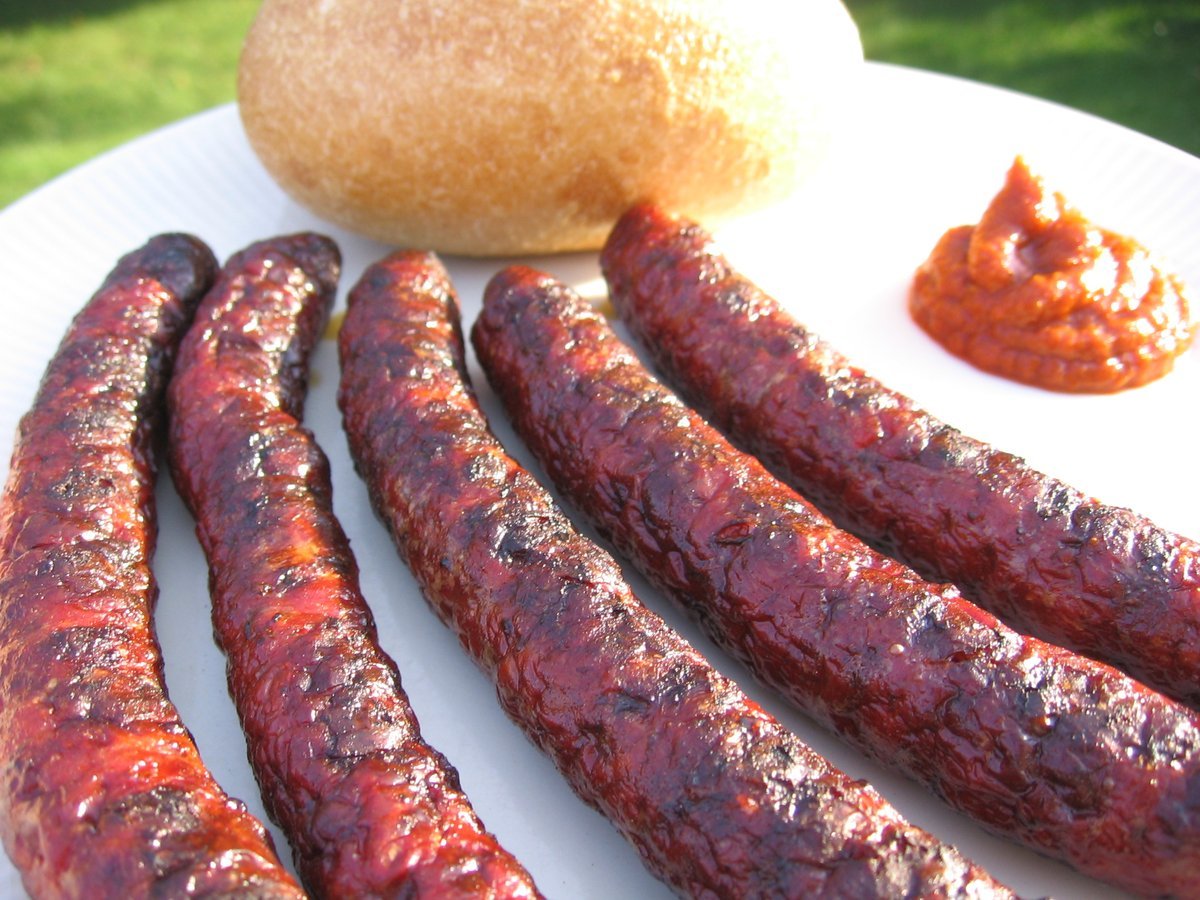

You will smell the merguez sandwich before you see it. On any busy Moroccan street after dark, the smoke from a charcoal grill carries a very specific signal: cumin, hot fat, and chili. Follow it and you will find a narrow counter, a man turning thin red sausages with tongs, and a stack of baguettes waiting. That is the whole scene. This is one of the cheapest hot meals in Morocco, and one of the most direct: spiced sausage, grilled in front of you, stuffed into bread with fries.
What merguez actually is
Merguez is a fresh, uncooked sausage made from lamb, beef, or a mixture of the two, stuffed into a lamb-intestine casing. The meat is heavily seasoned with cumin and chili pepper — or with harissa paste, the North African chili condiment — which is what gives the sausage its deep red color. Other seasonings show up depending on the butcher: fennel, sumac, garlic, coriander. The signature flavor, though, is always cumin plus heat.
The sausage is thin, usually around 20 centimeters long, and it is almost always grilled. Frying works, but on Moroccan streets it goes straight onto the charcoal, where the fat renders out and the outside chars while the inside stays juicy. Because it is a fresh sausage with a natural casing, it snaps when you bite it — that snap is how you can tell a real merguez from an industrial copy.
The origins are Maghrebi and old: the name is attested as far back as the 12th century, in forms like mirkās. In Morocco today, merguez is a butcher’s product as much as a street food. Many neighborhood butchers make their own, each with a slightly different spice blend, and the grilled-meat stalls — the grillades — buy from the butcher they trust. If a stall’s merguez tastes different from the one two streets over, that is why.
The anatomy of a Moroccan merguez sandwich
The Moroccan merguez sandwich is not a delicate construction. It is built fast, at a counter, usually while the sausages are still sizzling. Here is what goes into the standard version at a snack (the Moroccan word for these small sandwich shops):
- The bread. Either a section of baguette or a round of khobz, the Moroccan flatbread with a pocket. Baguettes are the default at most snacks; khobz shows up more at traditional grill stalls. Both work. Khobz soaks up the juices better.
- The harissa spread. The bread gets a smear of harissa before anything else goes in. This is the step where you should speak up: harissa ranges from warm to genuinely punishing. Ask for a light hand if you are unsure.
- The sausages. Two or three merguez, laid in whole or split lengthwise. They go in straight off the grill.
- The fries. Yes, inside the sandwich. Hot fries are piled directly on top of the sausages. This is the classic Moroccan snack-bar move, and it is non-negotiable in the standard build — though you can ask them to leave the fries out.
- The fresh layer. Sliced tomato, shredded lettuce or cabbage, raw onion rings. Some stalls add a spoonful of chopped black olives, which is worth accepting: the salt and acidity cut through the sausage fat.
- The sauce. Harissa mayonnaise is the common finish. Some places offer Algerian sauce or plain mayonnaise.
📸 A good spot for your own photo: the sandwich in cross-section, showing the layers of sausage, fries, and salad inside the bread.
The result is eaten hot, fast, and usually standing up or at a plastic table. The fries steam inside the bread, the harissa bleeds into everything, and the cumin from the sausage perfumes the whole thing. It is messy. That is correct.
Where tourists actually encounter it
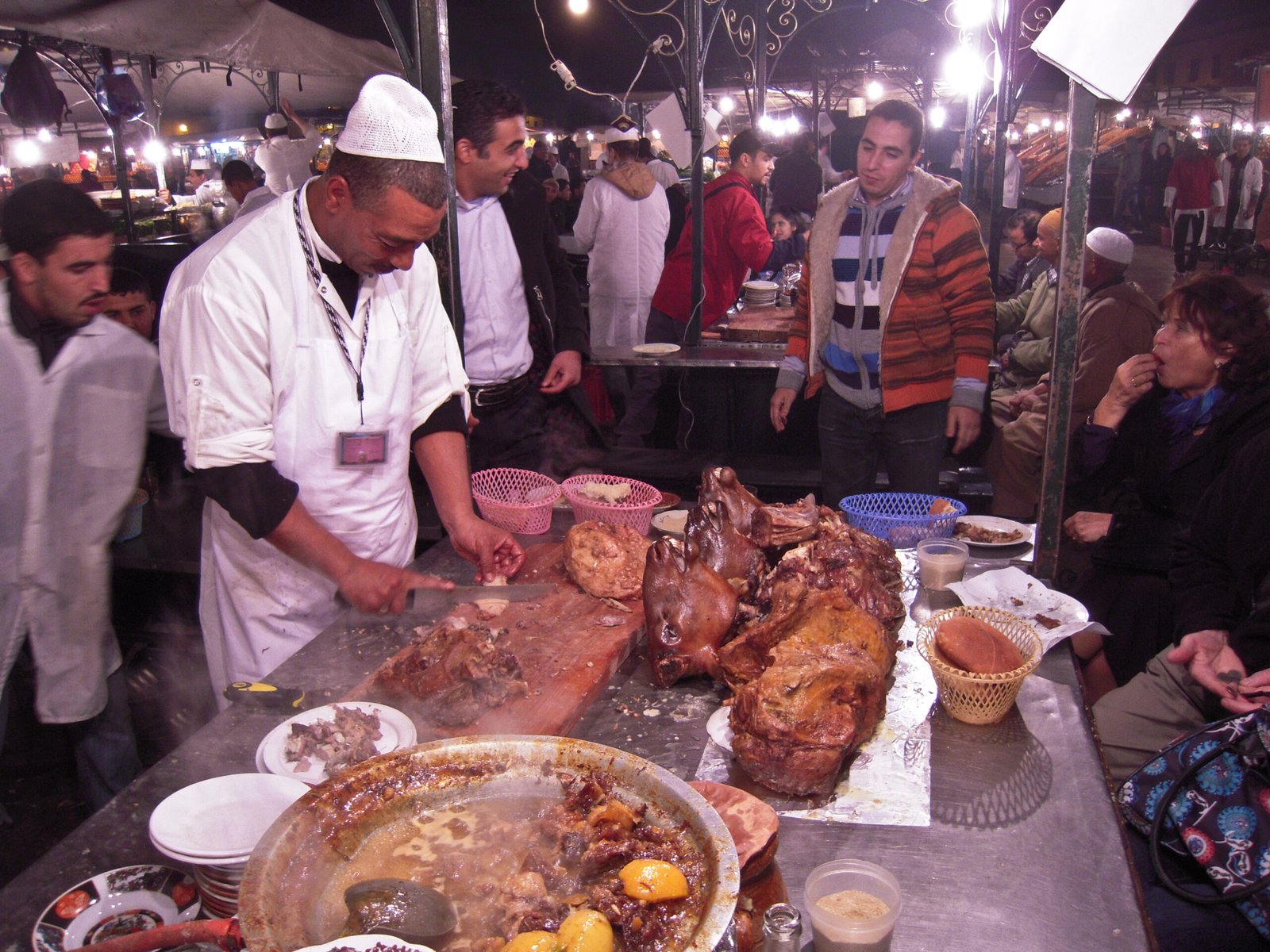
The merguez sandwich is not restaurant food. You will not find it on the menu of a riad dining room. It belongs to four specific places:
- Snack bars. The small sandwich shops on main avenues and near taxi stations. They have a grill, a fryer, a fridge of sodas, and a menu board where sandwich merguez sits between the chicken and the kefta. Most stay open late.
- Medina grill streets. In the old towns, certain alleys concentrate the charcoal grills — skewers, chops, and merguez side by side, smoke rolling down the lane. Walk toward the smoke.
- Night squares. The famous grill stalls of Jemaa el-Fna in Marrakech serve merguez alongside brochettes and grilled fish. The same pattern repeats in smaller form in Fes, Meknes, and Tangier.
- Late-night counters. After midnight, the merguez grill is often the only hot food still going near bus stations and nightlife streets. It is the Moroccan equivalent of the post-midnight kebab run.
One timing note: this is lunch, dinner, and late-night food — not breakfast. A grill firing up merguez at 8 a.m. would be unusual. From midday onward, you are safe.
How to order without confusion
Ordering is simple, but two details matter. Walk up to the grill and say “sandwich merguez” — pointing at the sausages works just as well. Then handle the two decisions:
- The heat level. The sausage itself is already spicy. The harissa spread on the bread is a second, separate layer of heat. If you want the full experience, say nothing. If you want it milder, ask for “sans harissa” (no harissa) or “un peu de harissa” (a little). The griller will not be offended; locals calibrate this constantly.
- The bread. If you have a choice between baguette and khobz, khobz holds the juices better and is the more Moroccan option. If there is no choice, take what is offered.
Pay in cash — a few dirhams, one of the cheapest hot meals you will eat in Morocco. Watch the sausages go on the grill if they are not already cooking; the whole sandwich takes only a few minutes. Eat it immediately. A merguez sandwich that sits for twenty minutes is a different, sadder food.
📸 A good spot for your own photo: the griller at work — the tongs, the smoke, the sausages lined up on the charcoal.
Merguez vs. kefta vs. brochettes: do not mix them up
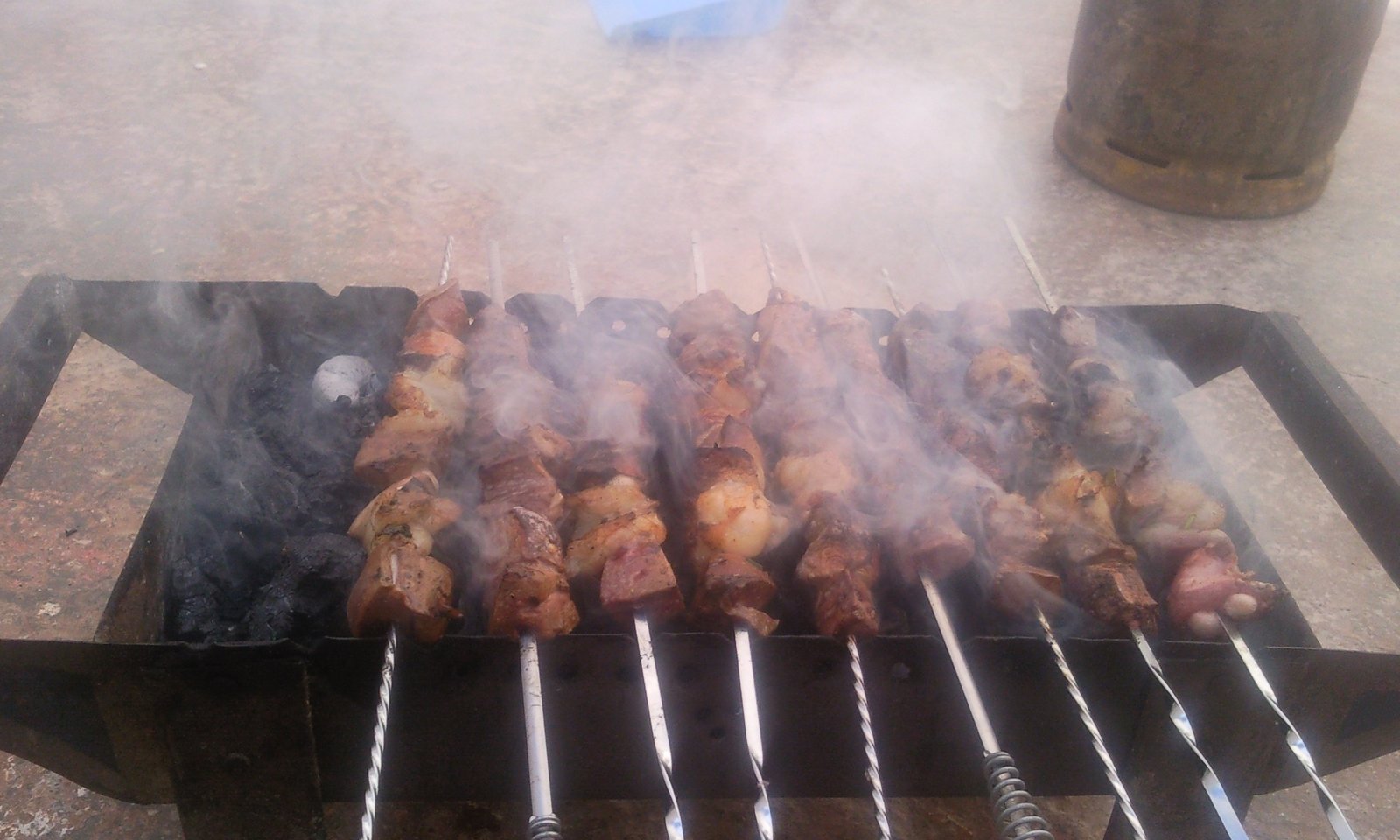
Tourists often blur these three together because they all come off the same grill. They are distinct:
- Merguez is the thin, red, spicy sausage. Cumin-forward, chili heat, natural casing with a snap. The spiciest of the three.
- Kefta is ground meat (beef or lamb) mixed with parsley, onion, and mild spices, shaped onto flat skewers. Softer, juicier, barely spicy. Read the full breakdown in our brochettes and kefta street guide.
- Brochettes are cubes of marinated meat — chicken, beef, or lamb — on skewers. The marinade is usually onion, parsley, and olive oil: savory, not hot.
The practical difference: if the sausage on the grill is thin and red, it is merguez, and it will be hot. If it is a thick, pale minced-meat skewer, it is kefta, and it will be mild. Order accordingly.
Mistakes tourists make
- Underestimating the heat. “Spicy” in a Moroccan snack bar means chili pepper, not black pepper. The merguez is hot and the harissa is hotter. Your first one should be ordered with a light hand on the harissa — you can always add more.
- Expecting the French version. France has its own merguez-frites tradition — baguette, fries, often with Dijon mustard — brought over by North African immigration. The Moroccan street version is its own thing: khobz or baguette, fries inside the sandwich, olives, harissa mayo. Do not ask for Dijon.
- Looking for it in restaurants. Sit-down restaurants rarely serve a merguez sandwich. If you want one, go to a snack bar or a grill stall, not a dining room. For the broader picture of what to eat where, see our Moroccan street food guide.
- Refusing the olives. The chopped black olives look like an afterthought. They are not — their salt and acidity balance the fat of the sausage. Accept them at least once.
- Worrying about hygiene at the wrong moment. The grill is the safest cooking method on the street: extreme heat, cooked to order, in front of you. If you want the full reasoning, read is street food safe in Morocco.
Frequently asked questions
Is merguez very spicy?
Yes, by most visitors’ standards. The sausage is seasoned with chili pepper or harissa paste, and the sandwich usually gets an additional harissa spread. The heat is a warm chili burn, not a sharp one. Order “un peu de harissa” if you want to start cautiously.
Is it lamb or beef?
Either, or a mix. Lamb is the more traditional base, but many Moroccan butchers use beef or a blend. You cannot tell by looking. If it matters to you, ask the griller — “agneau ou bœuf ?”
Is merguez halal?
In Morocco, effectively yes. Meat sold by Moroccan butchers and served at local grill stalls is halal by default; pork is essentially absent from this street-food circuit.
How much does a merguez sandwich cost?
A few dirhams — it is among the cheapest hot meals in the country. Prices move with the neighborhood and the city, so treat any specific number you read online as stale; on the street, it is firmly budget food.
Can I get it without fries or without harissa?
Yes to both. “Sans frites” and “sans harissa” are completely normal requests. Nobody will blink.
Is there a vegetarian version?
Not really — the sandwich is defined by the sausage. If you do not eat meat, the same stalls usually make a fried-egg or cheese sandwich in the same bread, which is the local vegetarian fallback.
Photo credits: grilled merguez by Thogru (CC BY-SA 3.0); street grill by Ahchmi77 (CC BY-SA 4.0); night food stall by Michal Osmenda (CC BY-SA 2.0) — all via Wikimedia Commons.