Moroccan Café Culture: Ordering Coffee Like a Local
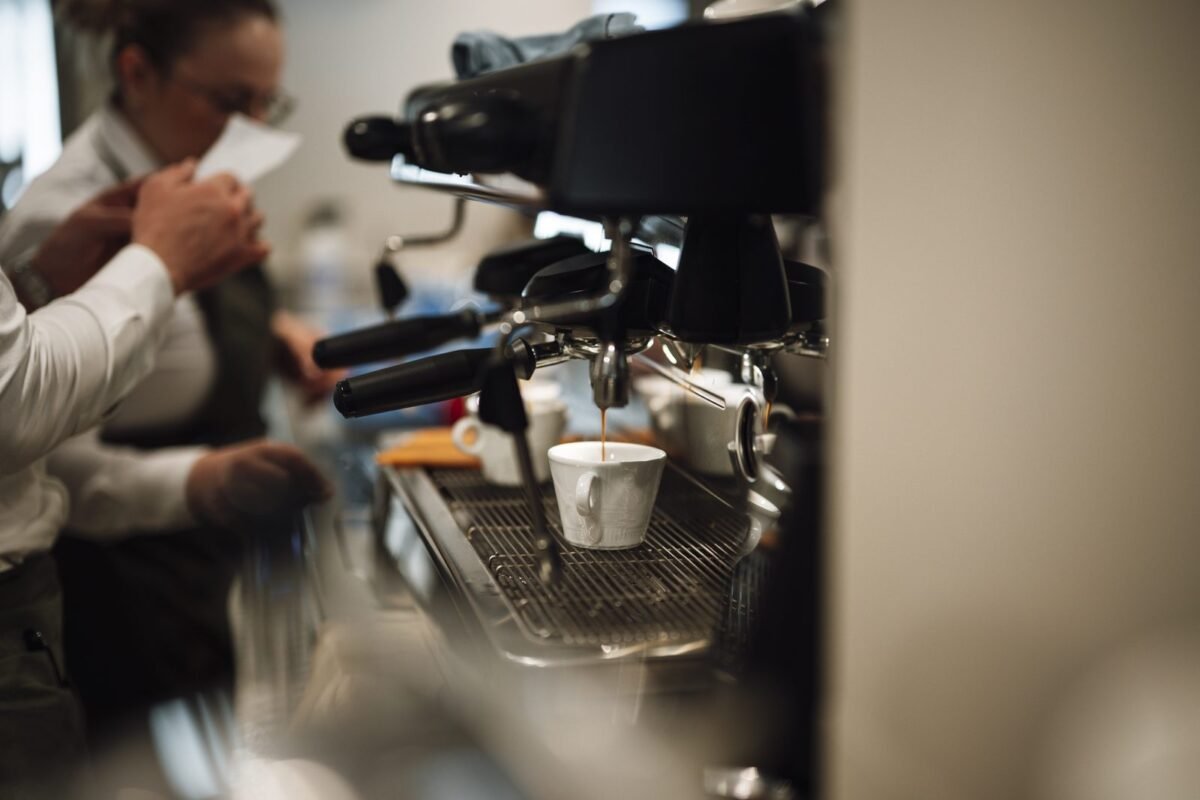
Walk past any Moroccan café at ten in the morning and you will see the same scene from Tangier to Dakhla: a terrace full of small glasses, the hiss of an espresso machine that never stops, and men — mostly men, more on that later — settled in for the long haul. The café is Morocco’s living room, debating club and football stadium, all poured into a glass that costs a few dirhams.
For a visitor, the café is the cheapest and most honest window into daily Moroccan life. The words on the menu are not quite the words you know, and the rituals around the table are not the ones you grew up with. Say the right word and you blend in. Say the wrong one and the waiter will still serve you — politely — while everyone around knows exactly where you are from.
How a Moroccan café actually works
Forget everything about host stands and waiting to be seated. You walk in, you pick a table, you sit down. Terrace for people-watching, inside for shade. Within a few minutes a waiter comes to you — in Morocco he is often called the barman, even though no alcohol is served, and the one working the espresso machine is the presseur.
There may be a short drinks list, or there may be nothing printed at all. Regulars order from memory, and you can too once you know the six or seven words that matter (see below). Your drink arrives, usually in a glass rather than a cup, often with a small glass of water on the side.
Here is the part that surprises most visitors: the table is yours for as long as you want it. One coffee can legitimately last two hours — nobody will bring the bill unasked or hover. When you are ready, ask for l’addition or pay at the counter on your way out. The same signal-when-you-are-done logic applies when you order like a local in a Moroccan restaurant.
📸 Photo spot: your own shot of a café terrace in the morning — the rows of small glasses and the street waking up tell the story better than any description.
The vocabulary that matters: what to actually say
Moroccan café French is its own dialect. A café crème here is not quite the café crème of Paris, and if you ask for a cappuccino you will get a polite pause. Learn these and you will never be stuck:
Nous-nous — the one word to remember
Nous-nous (pronounced “noos-noos”) literally means “half-half”: half espresso, half hot steamed milk, served in a glass. It is the default order across the country — the thing most Moroccans mean when they say “let’s go for a coffee.” A 2022 study of Morocco’s coffee culture notes that in most traditional cafés the two basic orders are café noir and nous-nous, and that the nous-nous is barely found outside Morocco. If your French is shaky, this single word carries you through every café in the kingdom.
Café noir / express — for the purists
A tiny cup of straight espresso, short and strong — what the old regulars drink, usually knocked back in two sips. Do not order it expecting a large mug.
Café cassé — “broken” coffee
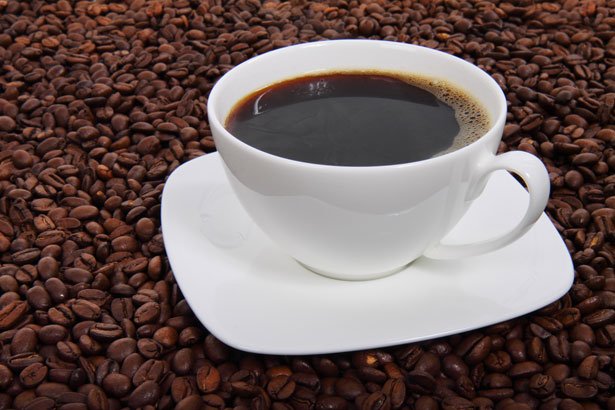
An espresso “broken” with just a splash of milk — enough to cut the bitterness, not enough to make it milky. The connoisseur’s compromise between noir and nous-nous.
Café crème — the milky one
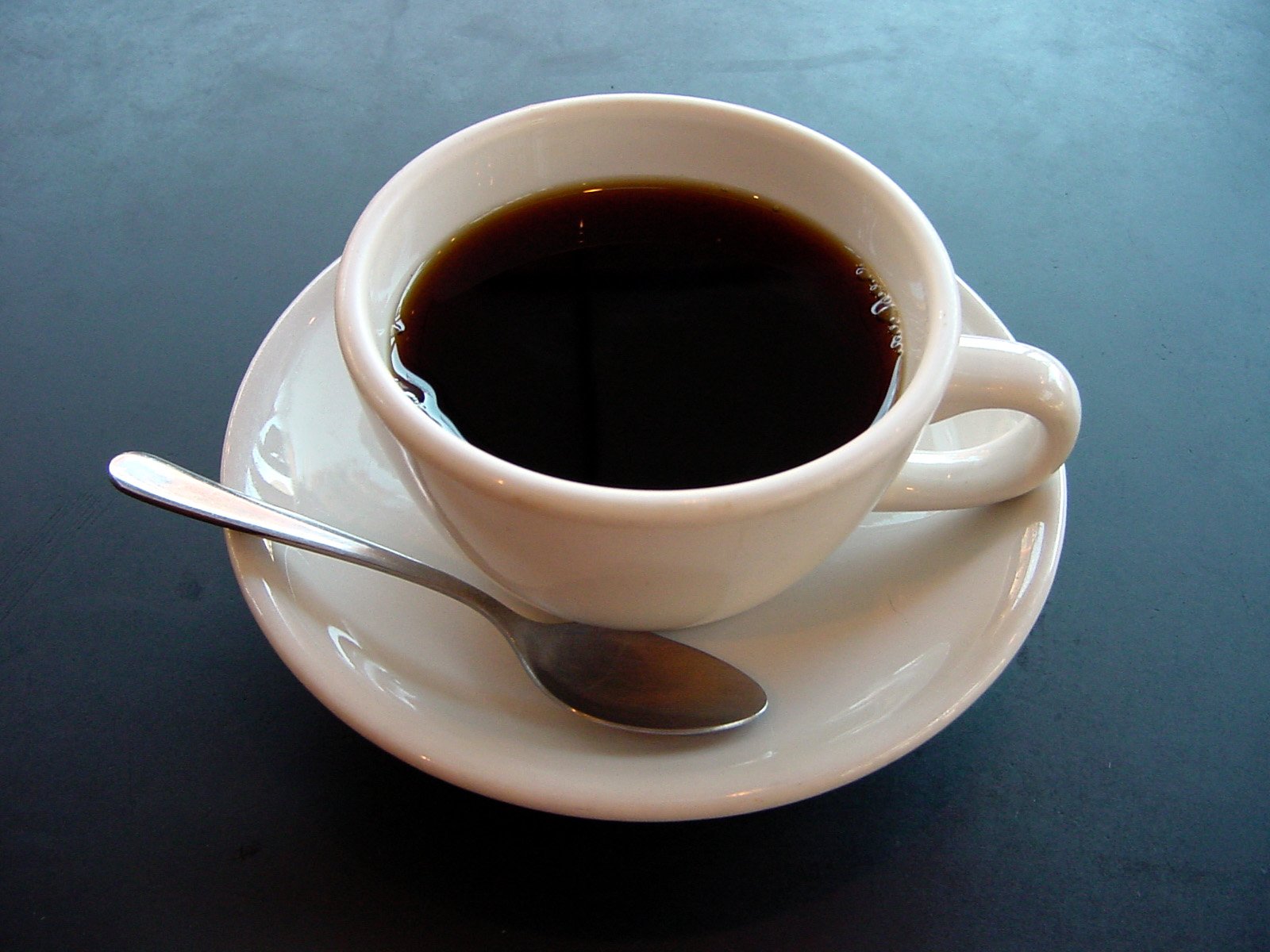
Espresso with a generous pour of hot milk — the closest thing to the milky coffee most visitors picture.
Thé / atay — mint tea, the other national drink
At the café, tea means mint tea: Chinese gunpowder green tea brewed with a handful of fresh spearmint and sugar, poured from a height so it lands with a small crown of foam. It arrives pre-sweetened in the classic small painted glass — do not add sugar, the sweetness is the recipe. In cafés it is an afternoon drink; one glass is perfectly normal.
Panaché — the layered glass
A tall glass of stacked fresh-fruit layers — mango nectar at the bottom, strawberry in the middle, almond or avocado on top, in whatever combination the presseur is proud of that day. It is dessert and refreshment in one.
Jus d’avocat — avocado juice
Ripe avocado blended with milk, sugar and often crushed almonds into something closer to a milkshake than a juice. Rich, filling, almost a meal — Moroccans order it as an afternoon snack, not as a side dish.
Jus d’orange — fresh orange juice
Squeezed to order, especially in winter when the oranges are at their best.
The café as a second living room
To understand the Moroccan café, stop thinking of it as a place that sells coffee. It is where the day happens: retired men play ronda — the Spanish card game that crossed the Strait decades ago and never left — and dominoes slammed with theatrical force, and on match nights the café television draws a crowd that spills onto the pavement.
Because alcohol is absent from the traditional café, the café itself fills the social role a pub fills elsewhere: the after-work drink, the business meeting, the place you go when you have nowhere to be. The waiter often knows the regulars’ orders by heart. Some cafés are famous for exactly this atmosphere — Tangier’s Café Hafa, open since 1921 above the Bay of Tangier, kept its terraces and its clientele of writers for a century on little more than mint tea and a view.
📸 Photo spot: a wide shot of a café interior during a football match, or a close-up of a ronda card game — this is the living-room side of the culture.
Café vs. salon de thé: know the difference
Not every place with tables and tea is the same thing, and mixing them up is the most common category error visitors make:
- The traditional café serves coffee, tea and fresh juices. Its clientele has historically skewed heavily male — field research in Casablanca documented working-class cafés whose customers were almost exclusively men, with women present mainly as servers. The décor is functional: plastic or cane chairs, a television, an espresso machine.
- The salon de thé is the family-friendly counterpart: tea-focused, with Moroccan pastries (kaab el ghazal, chebakia, cornes de gazelle), a mixed clientele, and often a prettier setting — tiled fountains, carved plaster, a patio. This is where families go on Sunday afternoon.
- The modern city-centre café sits between the two: espresso-based drinks, Wi-Fi, mixed crowd, slightly higher prices. In Casablanca, Rabat or Marrakech’s new towns, this is the default.
The practical rule: if you want the deep traditional atmosphere, find an old café; if you want comfort and pastries, find a salon de thé. Our guide to Moroccan restaurant types maps the same logic onto restaurants.
Women, tourists and the unwritten terrace rules
Here is the honest version. In city centres, tourist zones and modern neighborhoods, cafés are mixed and a woman sitting alone on a terrace is completely unremarkable.
The old neighborhood café is a different world: rows of men, dominoes, the match on TV. A foreign woman walking in will not face hostility, but she will face curiosity — long looks, a pause in the conversation. It is novelty, not aggression, but it can feel uncomfortable. Choose a salon de thé, a busy avenue café, or any terrace with a mixed crowd instead. Couples can sit anywhere without a second thought.
Paying and tipping
You pay at the end, at the table or at the counter — never upfront. A coffee in a neighborhood café costs a few dirhams; on a famous terrace with a view, expect to pay more for the location. Prices vary by city and spot — see our Morocco food prices guide for the current picture.
Tipping at the café is simple and small: leave a coin or two on the saucer, or round up the bill. The 10–15% rule from home does not apply to a coffee that costs a few dirhams — the gesture matters more than the percentage. As a visitor, a couple of dirhams in small change says you understood the custom.
Cash is still king at the traditional café. Modern cafés take cards, but the old places with the best atmosphere usually do not — keep small bills and coins on you.
Mistakes tourists make (and how to avoid them)
- Ordering a cappuccino. Say nous-nous or café crème instead — that is what you actually want.
- Asking for the bill the moment the cup is empty. Lingering is the entire point of the place. Stay, watch, order a second round if you feel like it.
- Adding sugar to the mint tea. It arrives pre-sweetened by design; adding more marks you as someone who missed the memo.
- Tipping a Western percentage. A couple of dirhams on the saucer is the custom, not fifteen percent.
- Expecting fast turnover. The waiter will not rush you, and you should not rush the waiter.
- Assuming “coffee” means a big mug. Everything here is small: small glasses, small cups, strong coffee. Order two if you need volume.
FAQ
Can I really sit for two hours over a single coffee?
Yes — that is the custom, not an abuse of it. Regulars nurse one nous-nous through an entire football half; nobody will ask you to leave.
Do Moroccan cafés serve food?
Drinks are the core business, but most cafés also serve bottled water, pastries, and in the morning a simple breakfast — msemen, eggs, olives. For a real meal, go to a restaurant; the café is for the hours between meals.
Is it okay for women to go to cafés alone?
Yes. Choose a mixed city-centre café, a salon de thé, or a busy terrace and you will be treated like any other customer. The only places to think twice about are the old men-only-feeling neighborhood cafés — not dangerous, just not built for you.
How do I get the bill?
Catch the waiter’s eye and say “l’addition, s’il vous plaît”, or pay at the counter on your way out. There is no ceremony to it.
Photo credits: “Cup of coffee in saucer surrounded by coffee beans” — Frei sein, CC0 1.0, via Wikimedia Commons; “A small cup of coffee” — Julius Schorzman, CC BY-SA 2.0, via Wikimedia Commons; “Barista prepares coffee at a busy café” — Nenad Stojković, CC BY 2.0, via Wikimedia Commons.